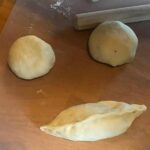
Pirozhki, Japan-style, with Russian soul. You’ll bake Hakodate baked pirozhki at a relaxed local café, then roam on foot to churches and lesser-seen spots while your dough works. I love how the class blends Russian recipes with Hakodate ingredients like Ezo-shika (Hokkaido deer) and Ezo-maitake mushrooms, and I also like that the pacing stays calm thanks to the timed walk and an English city guide during fermenting.
My favorite part is the hands-on work: rolling dough, choosing from a set of fillings (sweet and savory), and stuffing like you mean it. The setting helps too—this café is in a renovated old house (around 80 years), and the instruction feels friendly and beginner-safe, not intimidating. One thing to flag: this experience cannot accommodate gluten-free requests, so plan accordingly.
In This Review
- Key Things That Make This Workshop Worth Your Time
- Hakodate’s Russian-Japanese Story Starts Long Before the First Bite
- Finding Marutama Goya: A Renovated Café Base in Motomachi
- Pirozhki Baking in Real Time: Dough, Fillings, and Oven Results
- Choosing Fillings and Getting Confident Fast
- The Walking Part: Churches, Parks, and Off-the-Map Corners
- What You Eat When the Oven Finishes Its Job
- Price and Timing: Is $43.57 Good Value Here?
- Who This Pirozhki Class Suits Best (and Who Might Rethink It)
- Should You Book This Hakodate Pirozhki Workshop?
- FAQ
- How long is the cooking experience?
- What’s the meeting point for the workshop?
- What time does the experience start?
- What’s included in the price?
- Are food and drinks included?
- Can the workshop accommodate gluten-free requests?
- Is there Wi-Fi at the café?
Key Things That Make This Workshop Worth Your Time
- Oven-baked pirozhki: in Hakodate, baked beats deep-fried, so the texture feels lighter and more bread-forward
- Local ingredient focus: Ezo-shika and Ezo-maitake show how Hakodate’s food isn’t just imitation
- A café that’s part of the neighborhood: renovated older home, easygoing vibe, and proper time to work at your pace
- English guidance while you walk: you get context for what you’re seeing during the dough’s resting period
- Small group size (max 10 people): easier questions, smoother flow, and less waiting around
Hakodate’s Russian-Japanese Story Starts Long Before the First Bite
Hakodate has a way of feeling like a meeting place. It drew people from different countries early on, and that mix shows up in everyday life—from architecture and neighborhoods to food stories. If you’ve ever wondered why Russian dishes exist in Japan in such a natural way, Hakodate is one of the best places to learn without reading a textbook.
This class leans into that cultural overlap in a very practical way. You’re not just eating a themed meal—you’re making the stuffed bread itself using an original café approach. Along the way, you’ll also pick up a sense of how Hakodate served as a hub for international connections, including the fact that Japan’s first Russian consulate was founded here.
And the theme stays grounded. Even if you’re not a history nerd, the experience stays about your hands, your food, and the streets you walk—so it’s not “culture” as a lecture.
You can also read our reviews of more tours and experiences in Hakodate.


Finding Marutama Goya: A Renovated Café Base in Motomachi
You meet at Marutamagoya (2-3 Motomachi, Hakodate). Motomachi is a smart base for this kind of experience because it’s close to classic Hakodate sightseeing—especially if you want to tack on extra exploring before or after your baking time.
The café itself is part of the draw. It’s a stylish spot made from a renovated old house (about 80 years), and it feels more like a local hangout than a staged cooking studio. The staff run it in a way that’s designed for calm, not chaos, which matters when you’re learning dough technique.
A couple practical notes I’d take seriously: there’s a Western-style toilet available, and it’s near public transportation. Free Wi-Fi isn’t available at the café, but you can find free Wi-Fi at Mt. Hakodate Ropeway near Marutama Goya—handy if you’re trying to plan the rest of your day.
Pirozhki Baking in Real Time: Dough, Fillings, and Oven Results
This is a 2-hour hands-on workshop starting at 11:00 am. The timing is built around the dough process, so you’ll do the work that needs your attention first, then the schedule helps you move naturally into sightseeing while the dough rests and ferments.
Pirozhki are stuffed buns—bread wrapped around filling—and they’re popular in Japan. But Hakodate keeps a traditional style here: in many places, you’ll see deep-frying, while this experience focuses on oven-baked pirozhki. That difference changes the whole feel of the final result: less greasy, more bread-forward, with a crust that you can actually notice.
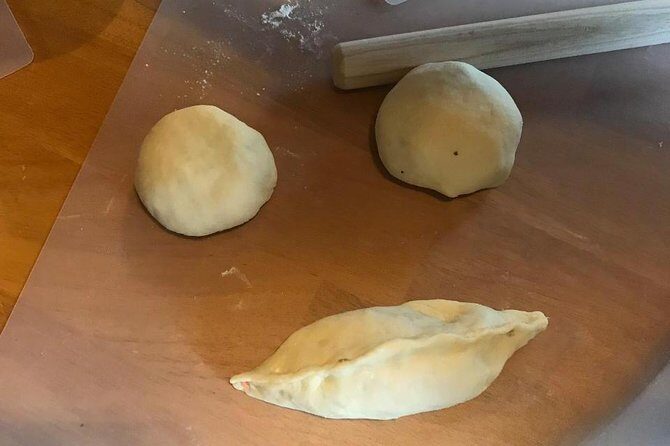
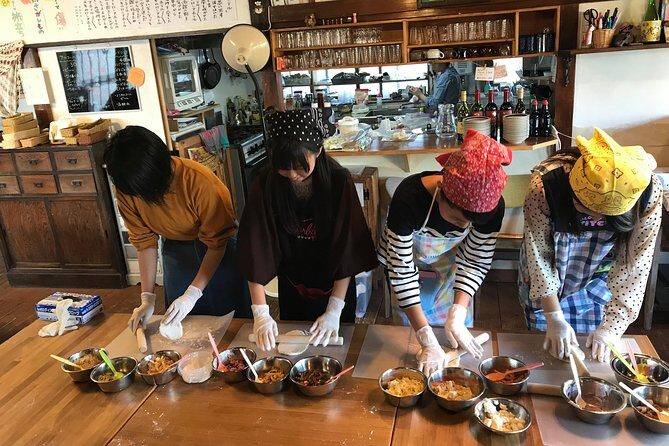
What’s genuinely useful is that the workshop isn’t just about watching. You’ll actively roll dough, stuff it, and shape the pastries. You’ll also get a choice of fillings that cover both sweet and savory options. If you’ve never made stuffed pastries before, you’ll still be able to follow along because the instruction is designed to be careful and easy to join.
And the ingredient story is real, not symbolic. The recipe uses Hakodate-area flavor anchors such as Ezo-shika and Ezo-maitake. Those aren’t the kind of ingredients you casually find in every city, so the cooking class becomes a way to taste local food culture without hunting specialty shops.
Choosing Fillings and Getting Confident Fast
One reason this class works well for beginners is the structure. You’re not thrown into advanced technique. You’re guided through steps you can repeat: dough handling, portioning, filling placement, and sealing.
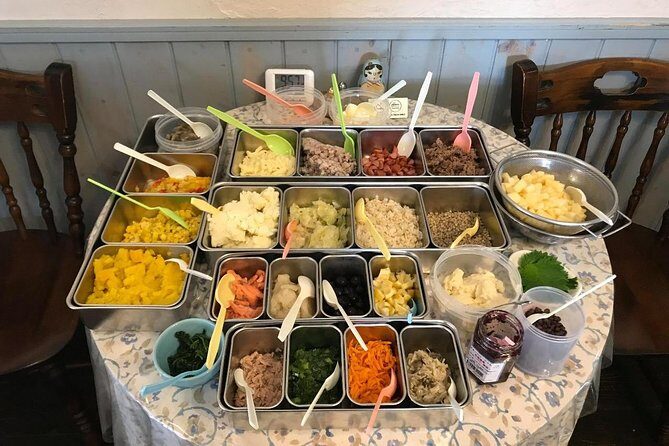
I also like how the workshop gives you variety without overwhelming you. Instead of one fixed filling, you’ll be able to sample an array and craft your own pirozhki. That means you can aim for what you actually like—meat-based comfort, mushroom-forward savory, or something sweet if that’s your mood.
If you’re the kind of person who learns by doing, this is your format. And if you’re the kind of person who overthinks dough, this still helps because the class keeps you moving step-by-step.
Just know one limitation up front: gluten-free requests can’t be accommodated. If you have celiac disease or a strict gluten requirement, don’t count on substitutions here.
The Walking Part: Churches, Parks, and Off-the-Map Corners
The standout twist is that baking time doesn’t trap you indoors. As your dough ferments, you’ll head out for a guided walk. The pacing is designed for safe sightseeing, and it’s timed so you’re not wandering while your food is overproofing.
You’ll visit famous churches and also quieter places that don’t show up prominently in guidebooks. That’s a big deal in Hakodate because the city can feel divided into distinct areas, and the best atmosphere often hides between the postcard views. Having a guide who knows where to go saves you from guesswork.
This is also where the English city guide helps most. You’re not just getting directions. You’re getting context while you move—what you’re looking at and why it matters in the city’s story.
If you’re trying to plan your day, this section is valuable because it turns a cooking class schedule into a mini city experience. You can come straight from sightseeing, or use the walk as your first taste of Hakodate before you do more later.





What You Eat When the Oven Finishes Its Job
The payoff comes after shaping and baking. You end up with your own baked pirozhki, with the flavor built from the local ingredients and the fillings you chose.
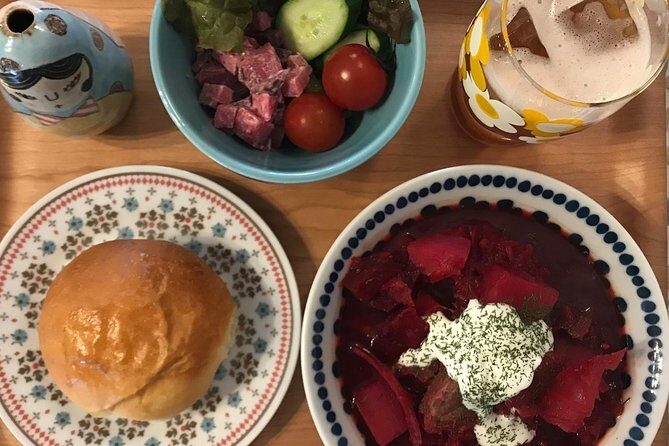
There’s also an option to try borscht. It may not be the center of every moment, but it’s one of those comfort-food bonuses that fits the Russian theme naturally. If you like warm soups and hearty flavors, it’s worth paying attention when it comes up.
In practical terms, you’ll likely finish the main experience feeling satisfied rather than hungry. Still, remember that food and drinks outside the workshop are not included, so if you plan to snack afterward, keep a little extra in your budget.
The overall structure—make, bake, then eat—keeps the class from feeling like a demo. You’re building the meal from scratch.
Price and Timing: Is $43.57 Good Value Here?
At $43.57 per person for about 2 hours, this class is priced like a midrange cooking experience. The value comes from what’s included: everything needed for the workshop. That covers the ingredients and the tools and instruction you’d otherwise have to source yourself.
Where the cost becomes more honest is what’s not included. Food and drinks beyond the workshop aren’t included, so you’re not being asked to eat full meals here. The workshop price is really paying for hands-on baking instruction plus the sightseeing guide during the downtime.
Also, the class timing matters. Starting at 11:00 am helps you slot it between morning sightseeing and afternoon viewpoints—especially if you’re heading toward Mt. Hakodate Ropeway later. With the walk portion, you get more than just a kitchen task, which helps justify the price.
One more value factor: the group stays small (max 10). Small groups cost money, but they also make the experience easier to enjoy because you can ask questions and move at a human pace.
Who This Pirozhki Class Suits Best (and Who Might Rethink It)
This is ideal if you want a hands-on food activity that also gives you Hakodate context. If you like Russian flavors, comfort foods, or simply want to try something you can’t easily replicate at home, you’ll probably have a great time.
It’s also a strong fit for people who like walking and want a guide to steer them toward churches and quieter corners. You’re not stuck watching dough rise in silence; you’re out seeing the city while the class runs on schedule.
Where it may not be ideal: if you need gluten-free options, you’ll have to skip this. And if you dislike walking during meal prep moments, you might find the schedule less relaxing—though the walk is described as safe and enjoyable, so it’s not an all-day trek.
Should You Book This Hakodate Pirozhki Workshop?
Book it if you want an experience that mixes real cooking work, local Hakodate ingredients, and a guided walk that adds meaning to the city beyond one famous view. The oven-baked focus also makes it feel different from what you might expect in other parts of Japan.
I’d pass if gluten-free is required. And I’d also make sure you’re comfortable doing both cooking and walking within a two-hour window, since the schedule is structured around dough timing.
If that sounds like your kind of day, this is an efficient way to eat well and see Hakodate with less guesswork.
FAQ
How long is the cooking experience?
It runs for about 2 hours.
What’s the meeting point for the workshop?
You meet at Marutamagoya, 2-3 Motomachi, Hakodate, Hokkaido 040-0054, Japan.
What time does the experience start?
It starts at 11:00 am.
What’s included in the price?
Everything necessary for the workshop is included.
Are food and drinks included?
No. Food, drinks, and personal expenses are not included.
Can the workshop accommodate gluten-free requests?
No. Gluten-free requests cannot be accommodated.
Is there Wi-Fi at the café?
Wi-Fi is not available at the café, but free Wi-Fi is available at Mt. Hakodate Ropeway near Marutama Goya.