REVIEW · AKITA PREFECTURE
Samurai Food Walk in Kakunodate
Book on Viator →Operated by Akita INAKA Travel · Bookable on Viator
A street snack hunt in samurai town. This guided walk threads together Kakunodate samurai sights and real local food stops, including a three-sake comparison at a sake shop. I like that it’s not just eating, it’s learning the why behind what you’re tasting—while you move through the town’s Edo-era atmosphere. One thing to consider: alcohol is part of the experience, so have a plan if you’d rather go easy.
In the reviews, the guides were praised for turning ordinary tastings into quick history lessons—names you’ll see mentioned include Miki-san and Mac. The group is capped at 8, so you’re not stuck yelling over a crowd, and you’ll use a mobile ticket. It also runs about 2 hours 30 minutes, which is just enough time to feel full and informed without turning the day into a marathon.
In This Review
- Key highlights you’ll care about
- Kakunodate’s Samurai District Meets Food and Sake
- Price and what’s included (and why it feels fair)
- Group size, timing, and where the walk begins
- Stop 1 and Stop 2: Kakunodate town flavors and Samurai Street context
- Stop 3: 地酒のふじた and the smart way to taste sake
- Stop 4: Ando Jozo Brewery Honten in the merchant-town setting
- Stop 5: Goto Fukushindo and sweets with a long memory
- Stop 6: Iwahashi Samurai House and what “middle class” means here
- Stop 7: Bukeyashiki no chaya and kiritanpo comfort food
- Last stop: Kaba-zaiku (cherry bark craft) and the Cherry Bark Woodcraft Museum
- Tips to enjoy your 2.5 hours without rushing
- Who this tour fits best
- Should you book the Samurai Food Walk in Kakunodate?
- FAQ
- What is the duration of the Samurai Food Walk in Kakunodate?
- How much does the tour cost?
- What’s included in the tour?
- Is there a mobile ticket?
- Does the tour include sake tasting?
- How big is the group?
- Where does the tour start and end?
- Is private transportation included?
- Can I cancel for a full refund?
Key highlights you’ll care about
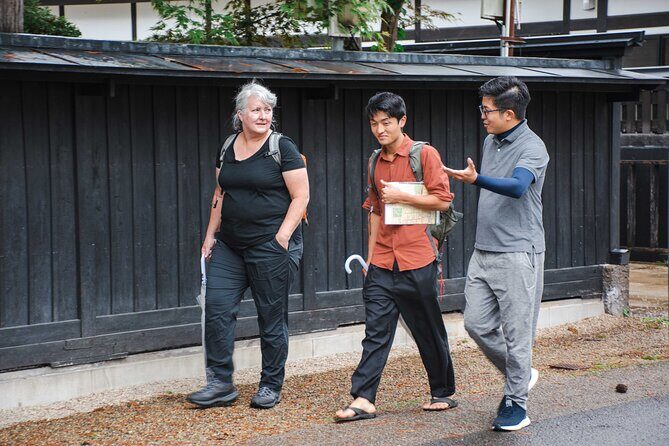
- Three-drink sake tasting at 地酒のふじた, with a comparison format
- Samurai Street + residence-area walking in a compact 2 km-style district
- Long-running sweets stop at Goto Fukushindo (over 140 years)
- Miso/soy-style brewery visit at Ando Jozo Brewery Honten in the outer town area
- Kiritanpo at the teahouse (Bukeyashiki no chaya) made famous by local home cooking
- Rain-ready setup, with umbrella and boots available to rent
Kakunodate’s Samurai District Meets Food and Sake
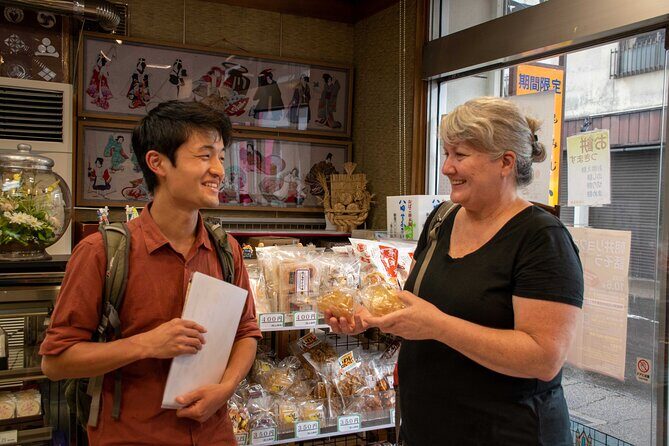
Kakunodate is one of those places where the past still shows up on the street. This walk is built around that feeling, but it keeps things practical: you’re not wandering randomly—you’re guided from one food and drink stop to the next, and each one ties into the town’s old-town layout.
A big reason this works is the pacing. You get a mix of quick shop stops and a couple of “look around and understand” moments. That combo matters because Kakunodate’s samurai area can look similar street-to-street unless someone explains what you’re seeing. The tour also leans hard into Akita’s favorites: sake, soy-related flavors, and sweets you can’t really recreate at home.
You’ll also pick up a useful mental map. Kakunodate has an inner samurai-residence area and an outer merchant-house area, and the food stops follow that split. That means your tasting journey lines up with what kind of neighborhood you’re in, not just what’s convenient.
You can also read our reviews of more walking tours in Akita Prefecture
Price and what’s included (and why it feels fair)
The price is $100.99 per person for about 2 hours 30 minutes, and on average it gets booked around 75 days ahead. That timing hint is your clue: this is popular, and it’s not a huge-group factory tour.
What you get for the money is the real story. This isn’t just a “here’s a bite, move along” tasting. Included is:
- Alcoholic beverages with a three-drink comparison at a local liquor shop
- Snacks including dumplings from a local Japanese sweets shop that’s been in business for 100 years
- A local street food stall stop
- Entrance fees for a samurai house
- Umbrellas and boots for rainy days (rental is provided)
- Insurance
So the value comes from stacking multiple categories: food + drink + admissions + comfort gear. If you were trying to replicate this on your own, you’d quickly pay for tastings and entry tickets, and you’d still need a plan for what to do in what order.
Group size, timing, and where the walk begins
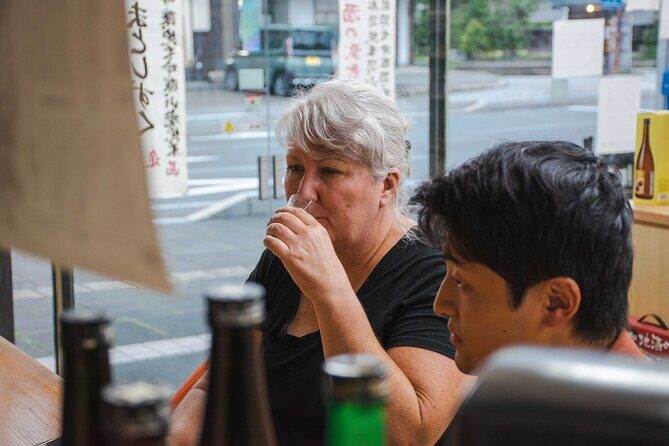
This is designed for small groups: maximum 8 travelers. That’s a sweet spot in old towns where the streets can get narrow. It also makes it easier for the guide to check in, explain details, and keep the group together without feeling rushed.
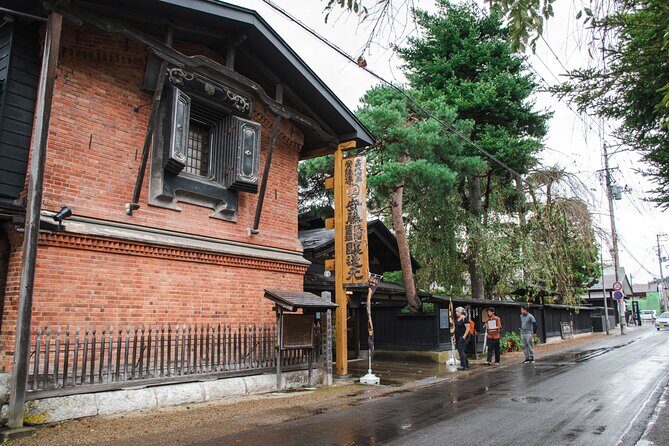
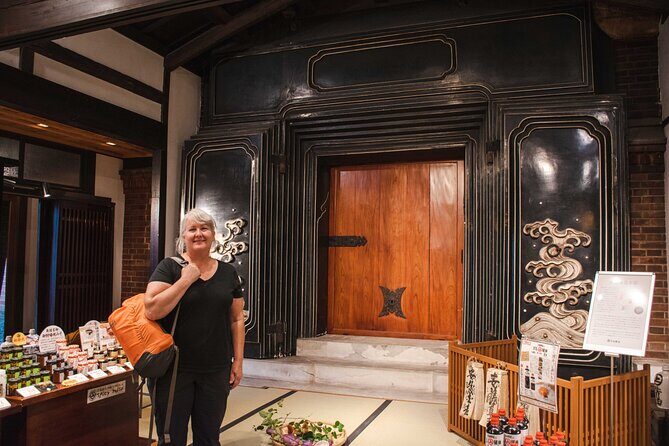
You start at Inaka Travel Akita (94-7 Nakasugasawa, Kakunodate, Semboku, Akita). The end point is on Samurai Street, at the Kakunodate Cherry Bark Woodcraft Museum (10-1 Kakunodatemachi Omotemachishimochō, Semboku, Akita). The museum building is described as brick with a black wall, and it sits in the center of the action near the samurai area.
One more practical point: you’ll receive a mobile ticket. That saves time once you arrive. The start location is also listed as near public transportation, so you don’t have to wrestle with private transport just to get there.
Stop 1 and Stop 2: Kakunodate town flavors and Samurai Street context
Your first stretch is all about getting your bearings and letting the town’s everyday food culture set the stage. You’ll visit a local sake shop plus a mix of small food stops that feel like what locals actually grab—think Japanese sweets, a green grocery type stop, and a local snack along the way. These early tastings are a good warm-up because they’re lighter and varied, not just one style of bite.
Then the tour shifts into the historical zone. Kakunodate is often called Michinoku’s Little Kyoto, and the guide uses that to explain what’s special about this place: samurai residences and old buildings sit in a compact area, making it walkable without needing a car. You’ll spend time at the Kakunodate Samurai Residence Street area, where the point isn’t to memorize facts—it’s to see how the town was organized and why that organization still shapes how you experience the streets today.
If you only do one “look around” part of Kakunodate, make it this. The area is walkable on your own, but you’ll get far more out of it when someone points out what to notice as you go.
Stop 3: 地酒のふじた and the smart way to taste sake
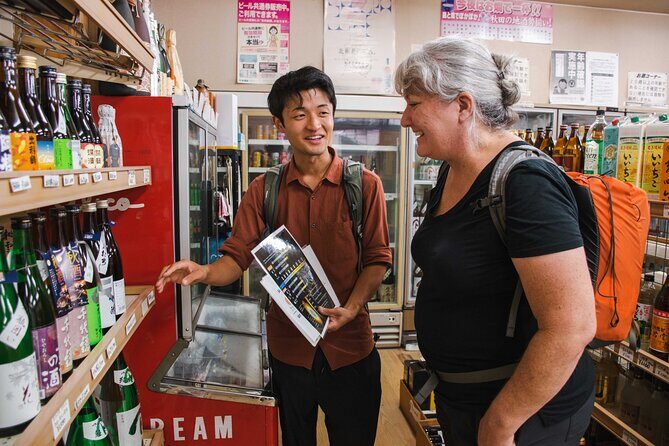
Akita is famous for sake, and this tour focuses on the tasting instead of just pointing at a sign. At 地酒のふじた (Fujita), you get a structured experience: a chance to try three different types of Japanese sake through a tasting format.
That comparison matters. Instead of drinking three random samples, you can actually notice differences in flavor and style. Even if you’re not a “sake person,” this format helps you connect taste to meaning: how sake can shift from one version to another, and what that says about local production.
Practical tip: if you’re sensitive to alcohol, pace yourself. This is included, so you’re choosing how to manage it—not whether it’s there.


Stop 4: Ando Jozo Brewery Honten in the merchant-town setting
Next comes Ando Jozo Brewery Honten. Kakunodate has that inner/outer town rhythm—samurai residences closer in, merchant houses farther out. This brewery sits in the outer town side, which changes the vibe. You’re not just stepping into a pretty Edo-themed street; you’re seeing the kind of place that produced staples.
The tour frames it around flavors you actually use in everyday cooking, especially miso and soy-related production. Even without technical details (which may vary by guide), you’ll come away with a better sense of why these ingredients show up across Japanese cuisine. It’s one thing to buy a product in a store; it’s another to connect it to where it’s made and why it mattered to local life.
Stop 5: Goto Fukushindo and sweets with a long memory
Then you turn a corner into traditional sweets at Goto Fukushindo. This stop is specifically called out as a shop running for more than 140 years, which tells you you’re not chasing a trendy dessert—it’s a long-standing local favorite.
You’ll likely sample items such as manju, dorayaki, and mochi sweets. The guide’s job here is to help you notice what makes them “local,” not just what they taste like. That means you’re tasting more than sugar: you’re tasting tradition.
If you’ve got a sweet tooth, this is one of the stops that can genuinely leave a mark. If you don’t, it still works because the earlier snack variety keeps you from feeling like the whole tour is one food category.
Stop 6: Iwahashi Samurai House and what “middle class” means here
At Iwahashi Samurai House, you’ll get a look at a mid-level samurai family. The Iwahashi family were chief retainers for the Ashina clan, rulers of Kakunodate from 1603 until 1653. Later, after the Ashina clan ended, the Iwahashi family continued in a role tied to the new order.
This is where the tour becomes more than a tasting line. You get context for the people behind the buildings. “Middle class samurai” also helps you avoid the caricature of samurai life as only dramatic warriors. It’s a more grounded view: rank, duty, and daily reality.
Entrance to this samurai house is included, so you don’t waste time buying tickets or guessing which houses are worth it.
Stop 7: Bukeyashiki no chaya and kiritanpo comfort food
Across the street from Aoyagi Samurai Manor, you’ll reach Bukeyashiki no chaya, the Samurai Street Teahouse. Here, the tour shifts into Akita comfort food.
You can expect kiritanpo, which the tour notes is usually made at home. That’s a key point: when something is home-style, it’s easy to miss when you only eat out. A teahouse setting makes it more accessible, but it still carries the flavor of local cooking.
Alongside kiritanpo, you’ll get Akita local dishes and sweets. This stop is a good “settle your stomach” moment before the final craft segment.
Last stop: Kaba-zaiku (cherry bark craft) and the Cherry Bark Woodcraft Museum
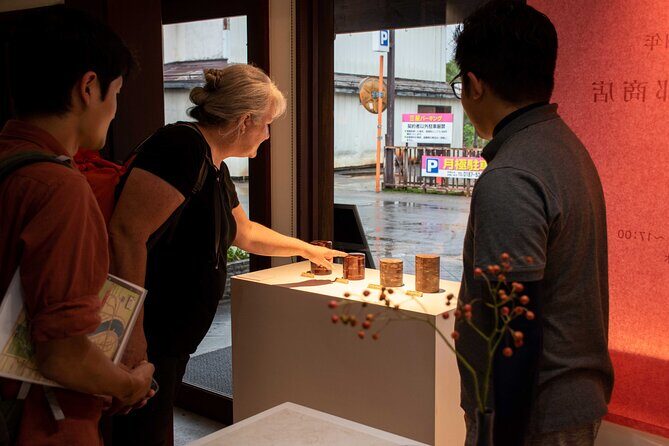
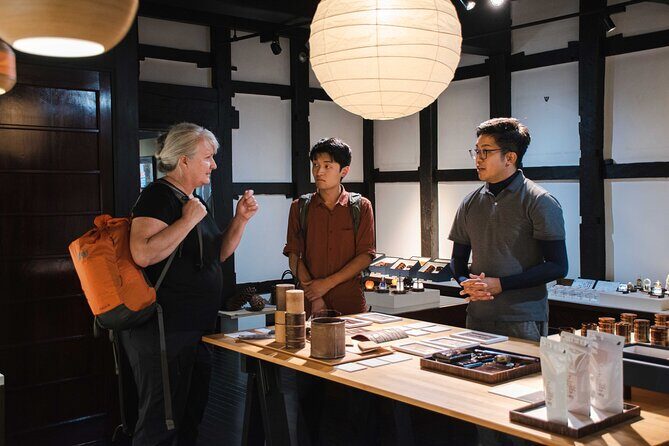
To close the tour, you move into kaba-zaiku, a craft made from the bark of mountain cherry trees. During the Edo period, the craft developed as a hand-making option for lower-ranked samurai. Like samurai makers creating small items such as inro or eyeglass cases, this wasn’t about mass production—it was about work that supported identity and livelihood.
The experience ends at the Kakunodate Cherry Bark Woodcraft Museum, located in the center of Samurai Street. The museum description notes a brick building with a black wall, which should make it easy to spot when you’re finishing up and wandering on your own.
This craft stop is a smart finale because it turns your understanding of samurai-era life from “houses and streets” into “tools and materials.” If you like the connection between food, place, and old local production, you’ll probably enjoy this capstone.
Tips to enjoy your 2.5 hours without rushing
This walk is compact, but it still covers multiple stops, including tastings and at least a couple of time-on-foot moments.
- Wear comfortable shoes. Old-town streets can be uneven, and your feet will notice it in a 2+ hour walk.
- Use the rain gear if needed. Umbrellas and boots are available for rainy days, so you don’t have to guess or buy gear last minute.
- Pace the sake. Alcohol is included (with a three-drink comparison), so take your time between pours.
- Go hungry, not stuffed. You’ll have snacks plus a meal-style teahouse stop, so a heavy breakfast might fight the experience.
- Keep an eye on the end point. You’ll finish at the Cherry Bark Woodcraft Museum on Samurai Street. If you want to keep exploring, plan to stay in that area right after.
If you like your travel days to have a clear arc—start, learn, taste, and end with a craft tie-in—this format fits that style well.
Who this tour fits best
This is a strong match if you want:
- Food and drink with local context, not just sampling
- Sake exposure in a structured tasting format
- A small-group experience in a compact historic area
- A balanced mix of shops, samurai sights, and artisan culture
It might be less ideal if you don’t drink alcohol at all, because tastings include alcoholic beverages. It also may not be your best choice if you’re looking for a long “sit-down dining” meal style day, because the tour is built as a walking sequence of stops.
Should you book the Samurai Food Walk in Kakunodate?
I think it’s worth booking if you want Kakunodate to feel like more than a pretty historic district. The best part is the way it links what you taste—sake, sweets, soy-related flavors, and kiritanpo—to where you’re walking in the town.
The price is not low, but the inclusions make it feel grounded: tastings, snacks, admissions, insurance, and even rainy-day boots and umbrellas. Add in the small group size (max 8) and the high rating (4.9 out of 5), and it’s the kind of tour that’s easier to justify.
If you’re excited by sake and local food, and you don’t mind a drink comparison during the walk, book it. If you want a strict non-alcohol itinerary, you’ll want to think twice before committing.
FAQ
What is the duration of the Samurai Food Walk in Kakunodate?
It lasts about 2 hours 30 minutes.
How much does the tour cost?
The price is $100.99 per person.
What’s included in the tour?
You get a three-drink alcoholic comparison, snacks (including dumplings from a sweets shop that has been in business for 100 years), a locally loved street food stall, rainy-day umbrella and boots rental, entrance fee of a samurai house, and insurance.
Is there a mobile ticket?
Yes. The tour uses a mobile ticket.
Does the tour include sake tasting?
Yes. At 地酒のふじた, you can try three types of Japanese sake through a tasting experience.
How big is the group?
The maximum group size is 8 travelers.
Where does the tour start and end?
It starts at Inaka Travel Akita (94-7 Nakasugasawa, Kakunodate area) and ends at the Kakunodate Cherry Bark Woodcraft Museum on Samurai Street.
Is private transportation included?
No. Private transportation is not included.
Can I cancel for a full refund?
Yes. You can cancel up to 24 hours in advance for a full refund. If you cancel less than 24 hours before the start time, the amount paid is not refunded.