REVIEW · NAGOYA
Nagoya: 2026 Hida Takayama Shirakawa-go Light-up Winter Tour
Book on Viator →Operated by Hakuu · Bookable on Viator
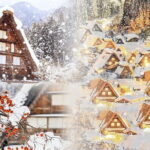
Winter lights in rural Japan. This Nagoya trip strings together Edo-era Takayama and UNESCO Shirakawa-go, and on a few winter dates the thatched roofs glow during the Winter Illumination. I love the two major heritage stops packed into one long day, especially if you’re short on time in central Japan.
My other favorite part is how the day is structured for momentum: you start at the Miyagawa Morning Market, get a strong setup from the guide, and then have room to roam on your own at each site. One consideration: the group can be mixed-language, so if you need fully English-only narration the whole time, you may find the language switching inconsistent across guides and dates.
In This Review
- Key takeaways before you go
- Nagoya to the mountains: what a 10-hour winter day feels like
- Hida-Takayama Miyagawa Morning Market: the food stop that sets the tone
- Takayama on foot: pacing, guidance, and time to wander
- Shirakawa-go UNESCO: gassho farmhouses and the Shiroyama deck
- Winter Illumination dates: what changes on Jan 25 and Feb 1
- Rakuto café at Shirakawa-go: a warm break with a pop-culture link
- Price and logistics: is $176 a fair deal?
- Who should book this tour, and who should skip it
- Should you book the Nagoya Hida Takayama Shirakawa-go Winter Light-Up Tour?
- FAQ
- What is the duration of the Nagoya Hida Takayama Shirakawa-go Winter Light-Up Tour?
- Where does the tour start from in Nagoya?
- Is food included in the price?
- Are tickets included for the stops?
- Does the Winter Illumination happen every day?
- What happens if Shirakawa-go is closed due to bad weather?
- How large is the group?
- What is the cancellation window?
Key takeaways before you go

- Two UNESCO stops in one day: Takayama’s preserved streets plus Shirakawa-go’s gassho-zukuri village.
- Miyagawa Morning Market time is real time: 2 hours gives you a chance to eat and browse without rushing.
- Shiroyama Observation Deck views: expect snow-and-mountain scenery when the weather cooperates.
- Light-up only on select dates: Jan 25 and Feb 1 are specifically called out for the Winter Illumination.
- A warm reset at Rakuto: a gassho-style café linked to the ONE PIECE manga world.
- Weather fallback to Gujo Hachiman: if roads close, the itinerary swaps to keep the day running.
Nagoya to the mountains: what a 10-hour winter day feels like
This is a long day trip by bus, starting at 8:30am from Nagoya Station (Nagoya Eki Taikodoriguchi, 6 Tsubakicho, Nakamura Ward). You’re on an air-conditioned vehicle, and the tour runs for about 10 hours, ending back where you started. With a maximum group size of 25, it’s not a chaotic cattle call—but it’s still a full-day schedule, so plan for a lot of sitting and a lot of walking.
Winter matters here. Snow can make everything feel more cinematic, but it can also slow down roads. The tour explicitly notes that if Shirakawa-go is blocked by severe weather or road closures, the destination will be replaced with Gujo Hachiman so the day continues. That’s a big deal for planning your expectations: you’re buying a day-trip experience built around winter conditions, not just a fixed photo spot.
One more practical note: the tour uses a mobile ticket, and the meeting point is near public transportation. In other words, you’re not stuck figuring out obscure side streets at 8:30am with cold hands.
A few more Nagoya tours and experiences worth a look
Hida-Takayama Miyagawa Morning Market: the food stop that sets the tone
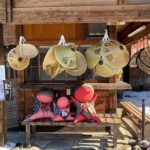
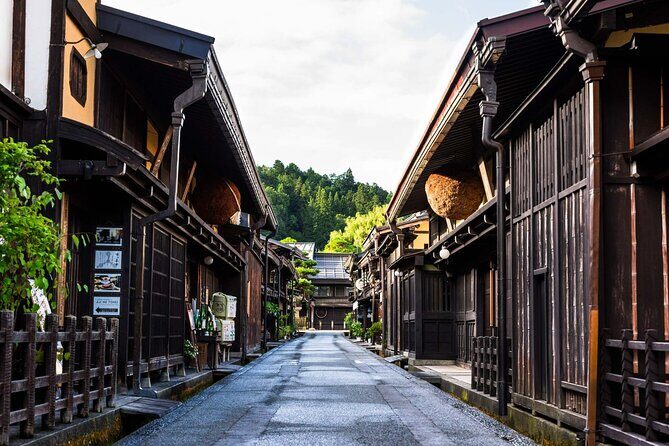
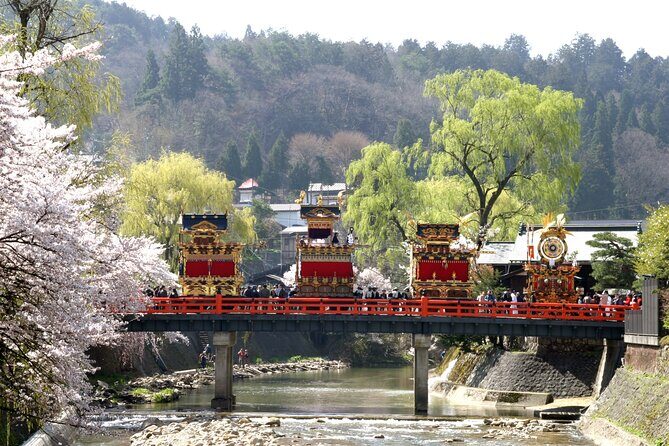
You start with a scenic bus ride into Hida-Takayama, often nicknamed Hida’s Little Kyoto. The first on-the-ground stop is the Miyagawa Morning Market, with about 2 hours on site and admission listed as free. This is where the day stops feeling like transportation and starts feeling like Japan-in-real-life—wooden facades, stalls, and quick bites that are meant for eating on the move.
The market is especially good for snacks you can actually use in winter. You’ll see things like fresh produce, handmade crafts, and classic street treats such as Hida beef skewers and dango. If you’ve ever shown up to a market hungry and left disappointed, this is the opposite: the food is the point.
If you want specific meal ideas, the tour information calls out two places in Takayama:
- Ajizo Heaven (4-147 Huali, Takayama City), known for Hida beef platters in a cozy setting.
- Maruaki Hida Takayama Store (listed as 6-8-1), famous for melt-in-your-mouth Hida beef barbecue.
Even if you don’t sit down for a full meal, use this stop strategically. Get something hot and salty early, then you’ll have more energy for the walking later in Takayama and Shirakawa-go. It’s also a good time to buy a small snack to carry—winter days add up fast.
Takayama on foot: pacing, guidance, and time to wander
After you arrive in the Takayama area, the tour’s value is the way it balances direction with freedom. Guides are there to help you get situated, suggest what’s worth your time, and keep departures on schedule. In past trips, guides such as Amy and Jin were specifically praised for giving useful on-site suggestions and helping guests manage timing.
But here’s the important part for how this tour will feel for you: the market is guided and then the rest of Takayama has a lot of room to explore. Some reviews describe a style that’s more “transport + tips” than a tightly scripted walking commentary, and that’s worth knowing. If you want every street explained like a walking textbook, you might feel underfed.
What you can do to get the most out of your Takayama time:
- Take your photos early, while the morning light is still clean.
- Use the guide’s recommendations as a short list, not as a strict plan.
- Don’t overpack your schedule on-site; the day is long and Shirakawa-go is the heavier visual payoff.
The upside is flexibility. You’re not glued to a flag or a rigid route the whole day. That matters in winter, when you’ll naturally want to pause, warm up, or simply look longer at the streets.
Shirakawa-go UNESCO: gassho farmhouses and the Shiroyama deck
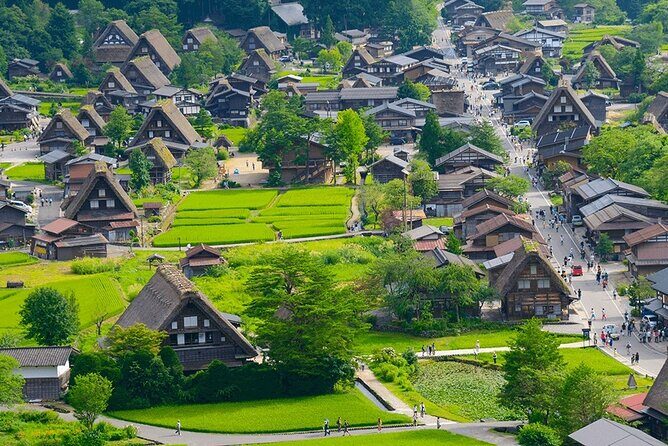
Next comes the big one: Shirakawa-go, a UNESCO World Heritage site known for gassho-style farmhouses with steep thatched roofs. The village is easy to recognize even before you arrive because the roofs are such a signature look. In winter, that visual identity can feel even more storybook-like, especially when snow caps the thatch.
The tour includes time to see the Shiroyama Observation Deck, where the snow-capped Hakusan Mountains form a striking backdrop. That deck viewpoint is often why people build their Japan winter travel around Shirakawa-go in the first place: it turns the village into a scene, not just a cluster of buildings.
On your visit, you’ll also get a stop at Rakuto, a gassho-style café linked to the ONE PIECE manga world. You have around 2 hours in this Shirakawa-go segment, with admission listed as free for the café stop.
One caution: observation points are weather-dependent. If visibility is poor, the deck won’t give you the same mountain drama. This is another reason the tour’s weather fallback to Gujo Hachiman is more than a footnote—it protects your day.
Winter Illumination dates: what changes on Jan 25 and Feb 1
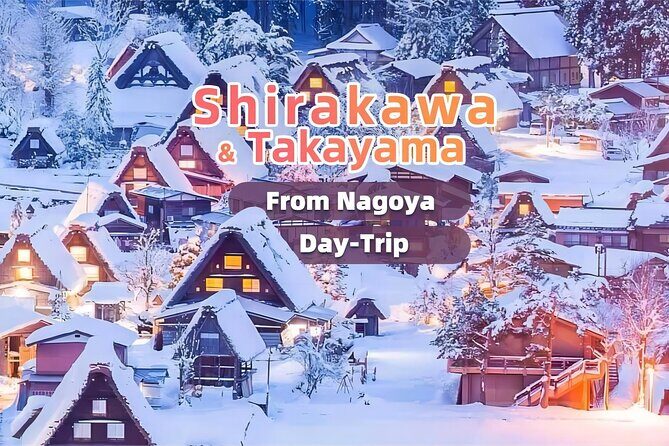
For the magical twist, the tour calls out specific winter dates for Shirakawa-go Winter Illumination, including Jan 25 and Feb 1. If you’re traveling on those dates, this is the reason to consider the tour over a regular daytime Shirakawa-go visit.
Here’s how to think about it: illumination doesn’t just add lights. It changes the atmosphere. You’re no longer looking at the roofs as an architectural daytime feature; they become glowing shapes against the night sky. That’s where winter pays off.
Two practical ways to make sure you enjoy it instead of just surviving it:
- Dress for cold waits. Illumination timing can mean you’re standing longer than you expect.
- Don’t plan an ultra-tight snack schedule. You’ll likely want warm food and drink during the evening hours.
Also, keep your calendar flexible if the roads are messy. The tour notes that Shirakawa-go may be replaced by Gujo Hachiman if access is blocked. If your trip date is right on the illumination window, that weather risk becomes part of your planning math.

Rakuto café at Shirakawa-go: a warm break with a pop-culture link
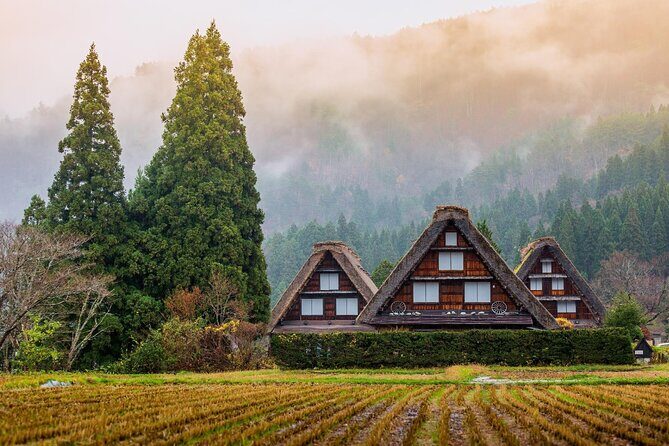
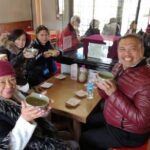
One of the more fun, practical stops in the itinerary is Rakuto, described as a charming gassho-style café featured in the ONE PIECE manga. The tour specifically mentions trying items like red bean porridge and dango. In winter, that’s not just a novelty stop—it’s your built-in warm reset.
This is the kind of break that makes the whole day easier. When you’re combining Takayama market walking with Shirakawa-go’s outdoor viewing, you need a place to warm up and take a breath without losing your place on the schedule.
If you’re sensitive to crowds, use the moment wisely. Rakuto is there to refuel, so don’t treat it like a long museum. Eat, warm up, and then head back out to look again with fresh energy.
Price and logistics: is $176 a fair deal?
The price listed is $176 for an approx. 10-hour day trip. For that money, you’re getting:
- an air-conditioned vehicle
- an English tour guide
- gratuities and a fuel surcharge
- a mobile ticket
Food is on your own, so plan a budget for snacks and a meal during the market and/or later in the day. The tour information is clear on that point, and it matters because winter food costs can add up quickly if you keep buying small items.
So is it worth it? In my view, it’s a strong value if you want:
1) an efficient way to see two major destinations in one day, and
2) help getting from Nagoya into the mountains without driving yourself in winter.
Where the value can wobble is in language expectations. The tour is marketed with an English guide, but past experiences include mixed-language narration. Some guides were praised for balancing English and Chinese explanations, while others felt language switching created friction. If your top priority is tightly delivered English-only commentary at every moment, you should look at your date and guide setup carefully.
What you can do to avoid disappointment:
- Confirm that you’ll be comfortable with a potentially mixed-language group format.
- Bring your patience for bus timing and winter road conditions.
- Keep your plan flexible if Shirakawa-go access gets swapped.
Who should book this tour, and who should skip it
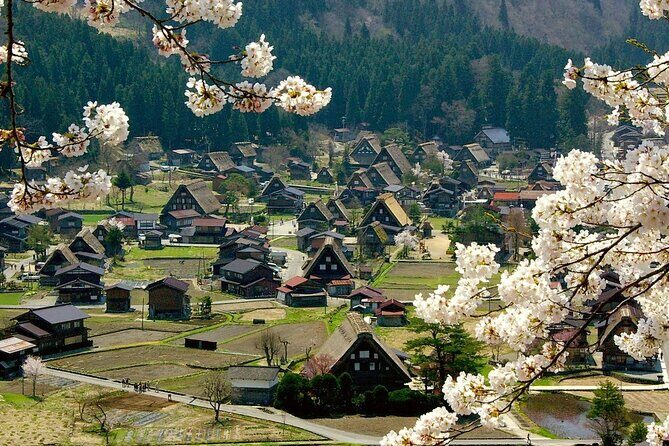
This tour is a good match if you want a budget-friendly day that hits the highlights: preserved Takayama streets, a market with real snacks, and Shirakawa-go with winter views. The small group size (up to 25) also helps; you’re not stuck in an oversized group where it’s hard to move.
It’s also smart for first-time visitors who want an organized route and don’t want to puzzle out transport details between Nagoya, Takayama, and Shirakawa-go in winter.
Skip it or consider a different format if:
- you need a fully English-only guide style the entire day,
- you’re expecting an in-depth, stop-by-stop lecture with constant interpretation,
- or you strongly dislike the idea of weather-related itinerary changes.
One more tip: if you’re traveling with older adults or anyone who hates tight schedules, lean into the tour’s guidance. Clear departure instructions were specifically praised, and the driver experience was also mentioned as a reason timing worked out well.
Should you book the Nagoya Hida Takayama Shirakawa-go Winter Light-Up Tour?
Book it if your priority is seeing Takayama and Shirakawa-go in one day and you’re traveling on a date that includes the Winter Illumination. At $176, the package feels reasonable because you’re paying mostly for transit time, guide support, and a structured route into snowy rural Japan.
Don’t book it if you want a quiet, English-only experience with deep narration at every street and stop. The best way to decide is to match the tour to your travel style: you want convenience and classic sights, or you want a highly controlled language and commentary experience.
If you can handle mixed-language group reality and you’re ready for a full winter day, this tour is a practical way to turn Nagoya into a storybook winter escape.
FAQ
What is the duration of the Nagoya Hida Takayama Shirakawa-go Winter Light-Up Tour?
The tour runs for approximately 10 hours.
Where does the tour start from in Nagoya?
The meeting point is Nagoya Eki Taikodoriguchi, 6 Tsubakicho, Nakamura Ward, Nagoya, Aichi 453-0015, Japan, starting at 8:30am.
Is food included in the price?
No. Food and beverage are at your own expense.
Are tickets included for the stops?
The listed admissions for the market and the Rakuto café stop are free in the itinerary, and the tour includes the guide and transportation.
Does the Winter Illumination happen every day?
No. The Shirakawa-go Winter Illumination is mentioned for select winter dates, including Jan 25 and Feb 1.
What happens if Shirakawa-go is closed due to bad weather?
If access to Shirakawa-go is blocked because of severe weather or road closures, the destination is replaced with Gujo Hachiman to keep the tour running.
How large is the group?
The tour has a maximum of 25 travelers.
What is the cancellation window?
You can cancel for a full refund up to 24 hours before the experience start time (free cancellation). If you cancel within 24 hours, the amount paid is not refunded.
If you tell me your exact travel date in 2026 and whether you want a strict English-only experience, I can help you decide if this tour’s format fits your needs.