REVIEW · NAGOYA
Takayama and Shirakawa-go Day Tour from Nagoya
Book on GetYourGuide →Operated by イ一エストラベル株式会社 · Bookable on GetYourGuide
Two towns, one packed day. This Takayama and Shirakawa-go tour is a smart way to see Edo-era Takayama and the UNESCO gasshō-zukuri village without fighting train times. You get a guided structure that keeps the day moving, plus two real “wow” settings: preserved old-town streets in Takayama, then steep-roofed farmhouses in Shirakawa-go. The main thing to weigh is the pace: it’s a full 10-hour outing, and lunch is on your own, so bring a plan (and warm clothes) for long outdoor walking.
I like that the schedule gives you real free time, not just a drive-by. In Takayama you can wander the old streets and hit the Miyagawa Morning Market, then in Shirakawa-go you get walking time through the lanes and a chance to reach the observatory point. The trade-off is simple: you’re on a coach for multiple stretches, so comfort matters and you’ll want good shoes.
In This Review
- Key moments worth carving out
- From Nagoya Taiko-dori to the Hida mountains: what the coach day really feels like
- Takayama Old Town: Sanmachi Suji strolls and the Morning Market payoff
- Lunch timing in Takayama: how to handle Hida beef without getting rushed
- The drive to Shirakawa-go: crossing into UNESCO country
- Shirakawa-go Gassho Village: walking the thatched-roof lanes and visiting Wada House
- The observatory deck views: how to get the panoramic moment without overthinking it
- Price and value: is $49 a good deal for Takayama and Shirakawa-go from Nagoya?
- Who this day tour suits best (and who might want a different plan)
- Small details that prevent big headaches
- Should you book this Takayama and Shirakawa-go day tour from Nagoya?
- FAQ
- How long is the Takayama and Shirakawa-go day tour from Nagoya?
- Where is the meeting point in Nagoya?
- What are the main stops during the day?
- Is lunch included?
- What language is the guide?
- Can I cancel for a full refund?
Key moments worth carving out
- Takayama Sanmachi Suji: preserved Edo streets with plenty of time to stroll and photo
- Miyagawa Morning Market: a quick, local flavor stop in the morning
- Hida beef lunch time: regional food opportunity (lunch isn’t included, but the timing works)
- Shirakawa-go UNESCO village: gasshō-zukuri farmhouses built for heavy snow
- Wada House visit: a specific historic house stop inside the village
- Observatory deck views: panoramic scenery overlooking the valley area
From Nagoya Taiko-dori to the Hida mountains: what the coach day really feels like
Your day starts at Nagoya Taiko-dori Exit (Shinkansen North Exit), a clear landmark on the Nagoya side. From there, you’ll board a comfortable coach and head into the Hida region. Expect about 2.5 hours of travel before you’re in Takayama.
That long bus stretch is the deal with this route. It’s not a “quick hop”; it’s an all-day commitment. But the payoff is you don’t have to coordinate intercity trains or transfers by yourself. If you’re working from Nagoya and want both Takayama and Shirakawa-go in one day, this is the practical setup.
One more thing to keep in mind: departures are scheduled and you should arrive early. The tour will leave on time, and latecomers don’t get special handling. That means if you’re coming in from another part of the city, give yourself buffer time around the station.
Also, the vehicle rules are straightforward: no smoking in the coach, and no food or drinks in the vehicle. So if you’re sensitive to long rides, plan to get water and snacks outside the bus (or time your meals around the stops).
You can also read our reviews of more tours and experiences in Nagoya.


Takayama Old Town: Sanmachi Suji strolls and the Morning Market payoff
Once you reach Takayama, the vibe changes fast. Takayama is often called the Little Kyoto of Hida, and on this tour it’s basically your Edo-era “walk around and look up” portion. You’ll have about 2 hours for Takayama Old Town, with photo stop time and a mix of sightseeing and walking.
The highlight area is Sanmachi Suji, a historic district known for preserved wooden houses and old-street charm. This is the kind of place where you’ll enjoy slowing down. The streets are made for wandering: small lanes, traditional building fronts, and plenty of spots that make it feel like you’ve stepped into an older Japan.
Then there’s Miyagawa Morning Market, included in the experience as part of your time there. This is a nice counterbalance to the historic streets. Instead of only looking at buildings, you get a chance to sample the energy of the region through food and local items. Even if you don’t buy much, it helps you connect Takayama to what locals actually do in the morning.
Practical note: because your time is limited, I recommend you treat Takayama like a menu. Pick what you want most—streets, market browsing, or food—then enjoy the rest without turning it into a checklist war.
Lunch timing in Takayama: how to handle Hida beef without getting rushed
Lunch is not included, and that matters for your planning. You’ll have free time for lunch during the Takayama portion, so you can choose where and how you eat.
The tour experience is set up to make regional food easy to fit in. The mention of premium Hida beef is a strong clue about what most people come for in this area. If you want that classic Takayama meal, use your Takayama free time to get seated early rather than waiting until the last 20 minutes. Popular spots can have lines, and your schedule is built around set walking blocks.
Here’s a practical way to approach it:
- Decide in advance whether you want a full sit-down meal or something quicker.
- If you’re aiming for Hida beef, prioritize that over extra shopping.
- Keep an eye on time so you’re back for the next coach segment (when the bus is leaving, it’s leaving).
If you’re traveling with mixed preferences, this is where you’ll appreciate that the tour gives you a window of freedom instead of forcing one group meal.
The drive to Shirakawa-go: crossing into UNESCO country
After Takayama, you’ll board the coach again for about 1 hour to reach Shirakawa-go. This is where the day starts to feel more rural, more open, and less “city Japan.”
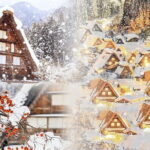
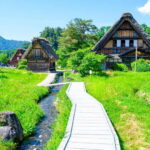
Shirakawa-go is a UNESCO World Heritage area known for gasshō-zukuri farmhouses. The defining feature is the steep thatched roofs, built to handle heavy snow. Even before you walk the village lanes, you’ll probably notice how the rooflines shape the whole scene.
Expect the village visit itself to last about 2 hours, including a photo stop plus time to explore.
Because this is an outdoor walking stop, dress for weather. Warm clothing is listed for a reason. If it’s chilly or misty, the walk feels longer than you expect, and comfortable shoes will save your feet.
Shirakawa-go Gassho Village: walking the thatched-roof lanes and visiting Wada House
In Shirakawa-go, your time is structured around walking and sightseeing, with room to browse on your own. You’ll get free time to explore the village lanes and see iconic farmhouses up close.
One specific historic highlight is the Wada House. Seeing a named house adds context. Instead of only viewing architecture from the outside, you get a chance to understand how these structures were used and why they were designed the way they were. (Exact interior details depend on what’s accessible during your visit, but the value of the stop is getting a real sense of the farmhouse type.)
This is the part of the tour where the UNESCO label makes practical sense. The village isn’t just “pretty.” The design responds to climate: those steep thatched roofs aren’t decoration, they’re a solution to heavy snow loads. When you walk around, that idea becomes easier to grasp than if you only read about it.
You’ll also see plenty of photo opportunities. Just remember: photos take time, and your village time is finite. If you’re serious about pictures, plan to spend your best moments at the most important vantage points, then use the rest of your time for wandering and soaking in the scale.




The observatory deck views: how to get the panoramic moment without overthinking it
After or around the main village walking time, the tour includes panoramic viewpoints from an observatory deck overlooking the valley area. This is one of the best payoff sections of the day because it turns individual houses into a bigger story: you see how the village sits in the terrain and how the whole area connects.
If you like photos, this is your moment. If you don’t, it’s still worth it because the view helps you understand why Shirakawa-go looks the way it does from different angles. A steep-roof village in a valley isn’t only an aesthetic scene; it’s a functional setting.
The key is timing and weather. Clouds and mist can change the mood quickly. Dress warm and be ready to wait a few minutes if you find a better angle works better with light and visibility.
Price and value: is $49 a good deal for Takayama and Shirakawa-go from Nagoya?
At $49 per person for a 10-hour day trip, the value is strongest if you want both destinations in one go. You’re paying mainly for the logistics: coach transport from Nagoya to Takayama and onward to Shirakawa-go, plus an English-speaking guide (and the experience notes also indicate English/Chinese-speaking support).
What you get for that price:
- Transportation covering both towns and the long road time
- Guided stops in the key sightseeing areas
- Visit to the Shirakawa-go gasshō village
What you don’t get:
- Lunch (you plan it yourself)
- Meals and personal expenses generally
So the true cost equation depends on your food choices. If you treat lunch as a chance to go for Hida beef, you’ll probably spend more, but it’s also one of the region’s major draws. If you’re okay with a lighter lunch, you can keep the total day spend more controlled.
My practical take: this price works well for travelers who want structure and don’t want the hassle of independent transfers. If you’re the type who loves building your own route and you’re comfortable with schedules, you might compare options. But for most people starting in Nagoya, this is a straightforward way to hit the highlights.
Who this day tour suits best (and who might want a different plan)
This tour is a great match if you:
- Want to see Takayama Old Town and Shirakawa-go UNESCO in one day
- Prefer coach convenience over planning trains and connections
- Like walking through historic streets and villages with scheduled free time
It may feel less ideal if you:
- Hate long coach rides. You’ll spend multiple hours on the bus total.
- Need very frequent stops or long breaks. The schedule is designed for motion.
- Are extremely sensitive to weather. Both Takayama and Shirakawa-go involve outdoor strolling, and warm clothing is strongly recommended.
Overall, it’s a solid “best-of” day: enough guided structure to keep you oriented, enough freedom to make the stops feel personal.
Small details that prevent big headaches
A few items that make a noticeable difference on this specific route:
- Bring comfortable shoes. You’ll walk in historic districts and inside the village.
- Wear warm clothing. The outdoors in the mountainous region can feel colder than you expect.
- Be punctual at the meeting point. The tour departs on time with no special allowances noted for late arrivals.
- The tour order and timing can change due to traffic or road conditions. That’s normal for road travel, so keep your expectations flexible.
Should you book this Takayama and Shirakawa-go day tour from Nagoya?
If your goal is to see Takayama and Shirakawa-go without turning your trip into an logistics project, I’d book it. The biggest win is that you get both the historic urban charm of Takayama and the UNESCO thatched-roof atmosphere of Shirakawa-go, all organized in one day from Nagoya.
I’d skip or reconsider only if you know you can’t handle long travel time, or if you’d rather spend a slower, overnight stay in the mountains. For a one-day taste with a clear payoff, this tour hits the right notes.
FAQ
How long is the Takayama and Shirakawa-go day tour from Nagoya?
The tour lasts about 10 hours.
Where is the meeting point in Nagoya?
Meet at Nagoya Taiko-dori Exit (Shinkansen North Exit). The address provided is 6 Tsubakichō, Nakamura Ward, Nagoya, Aichi 453-0015 Japan.
What are the main stops during the day?
You’ll go to Takayama Old Town for sightseeing and free time, then continue to Shirakawa-go for visits and free time in the gasshō village.
Is lunch included?
No. Lunch is not included, and there is free time scheduled for you to eat.
What language is the guide?
The tour includes an English guide, and the experience also notes English/Chinese-speaking support.
Can I cancel for a full refund?
Yes. You can cancel up to 24 hours in advance for a full refund.