REVIEW · NAGOYA
Nagoya to Hida Takayama, Shirakawa-go Gassho Village Day Tour
Book on Viator →Operated by 株式会社KKT · Bookable on Viator
From Nagoya, you can reach two of Japan’s most scenic regions. This day trip makes it easy to see Takayama’s old merchant streets and then the UNESCO gassho-style village of Shirakawa-go without juggling trains and transfers. What I like most is the simple, value-priced setup and the fact that you’re not rushed through the highlights like a checklist.
I also like that the schedule gives you proper blocks of time: Takayama for a real stroll (with lunch time included) and Shirakawa-go for a short walk that still leaves room for photos. The possible drawback is that the format is more transport with guidance than a long, detailed lecture—so if you’re looking for deep storytelling, you may find the guide’s main job is keeping everyone on time and the bus running smoothly.
In This Review
- Quick hits: what this Nagoya–Takayama–Shirakawa-go trip does well
- Why this day trip feels smarter than DIY from Nagoya
- Starting in Nagoya: meeting point and the “be on time” rhythm
- Takayama first: old merchant streets and a real stroll window
- What you should do with that time
- Kanda House: a short architecture stop that’s optional
- The ride to Shirakawa-go: just enough transit time
- Ogimachi Castle Old Site Observatory: best views without paying extra
- Shirakawa-go Ogimachi Village: UNESCO sights in one guided hour
- How to make the most of only one hour
- Weather note that matters
- The guide and group pace: friendly help, mostly schedule-first
- Comfort and limits: what this tour costs you in time
- Value check: what you really get for $61.13
- Who this tour fits best (and who should skip it)
- Should you book this Nagoya to Takayama and Shirakawa-go day tour?
- FAQ
- How long is the Nagoya to Takayama and Shirakawa-go day tour?
- Where do I meet the tour, and what time should I arrive?
- What’s included in the price?
- What isn’t included?
- Is admission included for the Ogimachi viewpoint and Shirakawa-go?
- How big is the group?
Quick hits: what this Nagoya–Takayama–Shirakawa-go trip does well
- Good value for a long day: air-conditioned coach, parking, fuel, and a guide in one price.
- Takayama time that works: you get a block to explore Sanmachi-dori streets and stop for lunch.
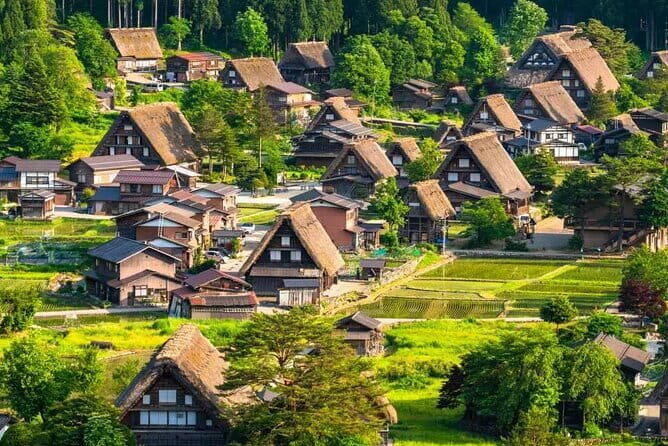
- Shirakawa-go at the right moment: you’ll visit Ogimachi with time to walk and take in the gassho views.
- A top viewpoint included: Ogimachi Castle Old Site Observatory is free and made for skyline photos.
- Group size capped at 45: large enough to be efficient, small enough to feel manageable.
- Optional architecture stop: Kanda house is your choice, but admission isn’t included.
Why this day trip feels smarter than DIY from Nagoya
If you’ve tried to line up Nagoya to Takayama and then onward to Shirakawa-go, you already know the frustration: your day can turn into one long chain of tickets, seats, and connections. This tour is built for people who want the scenic payoff without doing the math and sprinting between stations.
The price (listed at $61.13 per person) is the first reason it’s attractive. One-way public transit using Shinkansen plus bus can run above ¥10,000 just to get there. Even if you think you’d be comfortable doing it yourself, you’re still spending time and money just to move the same distance twice. Here, you’re paying for a full-day transport plan plus a guide, with parking and fuel handled.
The second reason it feels worth it: it’s not just “get on a bus, look out the window.” You’re given structured time in two places that actually reward walking. Takayama’s old-town streets are made for strolling, and Shirakawa-go is all about short paths, viewpoints, and careful photo angles.
You can also read our reviews of more tours and experiences in Nagoya.


Starting in Nagoya: meeting point and the “be on time” rhythm

You meet at MinistopJapan, 〒453-0015 Aichi, Nagoya, Nakamura Ward, Tsubakichō, 5−10 CORE meiekiビル 1F. The start time is 8:20 am, and the departure notice is clear: 8:30 departure on time.
That matters, because the day is tight. You’ll ride about 120 minutes to Takayama in the morning, then you’ll have a few focused blocks of walking before heading to Shirakawa-go and back. If you like slow starts, this tour will feel less forgiving. If you’re the type who likes to get moving and then enjoy the day, it fits nicely.
It’s also a good sign that the tour uses a mobile ticket. Less hassle with printed vouchers, more time spent preparing your shoes, snacks, and camera settings.
Takayama first: old merchant streets and a real stroll window
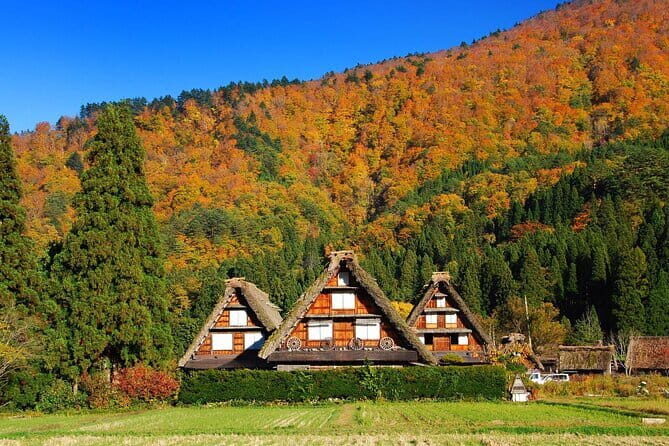
Takayama is often where people fall in love with regional Japan. This plan gives you a solid 150 minutes in the Takayama Historical District, including lunch time. That’s long enough to do what you actually came for: walk Sanmachi-dori, browse small shops, and soak in the old merchant-town layout.
The key streets here are the three main lanes known together as Sanmachi-dori. They’re recognizable by the traditional architecture and the shopfronts that still line the area today. Even when you’re not shopping, the streets are a visual experience—wooden facades, narrow lanes, and the sense of a town that’s kept its shape.
What you should do with that time
I’d treat the morning like this: get oriented early, then slow down. Spend the first part locating where you want to return for photos, and the middle part for food. Lunch is included in the time block, but lunch itself is not included in the price, so you’ll be choosing where and what to eat on your own.
If you’re photo-focused, don’t just aim straight down the street. Turn your camera to capture corners and building details. The charm in Takayama is in the small textures, not just the street view.
Kanda House: a short architecture stop that’s optional
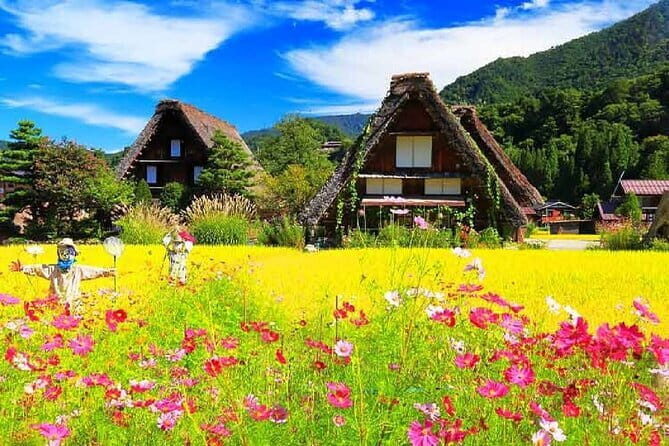
One of the nicer touches is the Kanda house stop. It’s a gassho style house with around 160 years of history, and the estimate for the construction is listed as around 1850. It’s also associated with a family branch connected to a brewery, after the family settled there.
This stop is described as a refined example of gassho-style architecture, with details like the floor plan and long roof beams that show careful carpentry. There’s even mention of carpenter’s handwriting on the roof frame, which is the kind of thing you might not notice unless the visit is guided enough to point it out.
Two important practical points:
- It’s a free choice visit (so you’re not locked in).
- The admission fee is not included, so treat it like a paid add-on.
If you love architecture and wooden building techniques, this is worth your attention. If you’d rather spend that time staying on Sanmachi-dori, you can skip it and still keep a good day.




The ride to Shirakawa-go: just enough transit time

After your Takayama time, you’ll transfer to Shirakawa-go. The schedule shows a 60-minute transfer from Takayama to the area.
This is one of those “you’ll either love it or you won’t” portions. On one hand, it’s restful—an air-conditioned vehicle helps on travel days. On the other hand, it’s still a long day, so don’t expect room to roam or stop for extra detours. The tour is designed to deliver a few set moments, not a flexible itinerary.
Ogimachi Castle Old Site Observatory: best views without paying extra
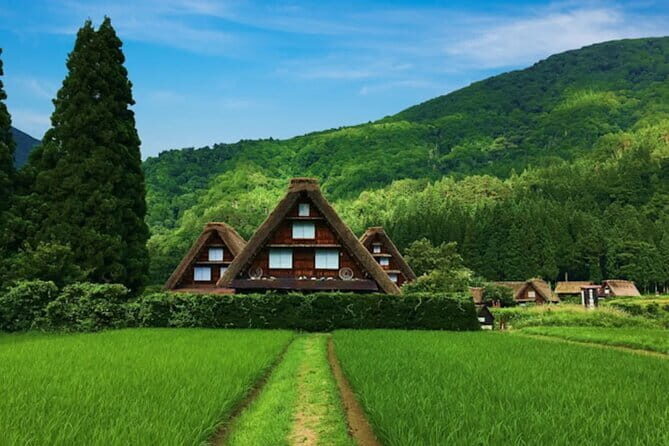
Once you’re in Ogimachi, you get a top viewpoint: Ogimachi Castle Old Site Observatory, tied to the Shiroyama castle keep. The visit is 20 minutes, and the admission ticket is free.
This is the part I’d call your “orientation with photos” stop. From up here, the gassho-style houses look like a planned cluster, arranged in a way that makes the village feel big even when you only have limited time on the ground. It’s also one of the easiest ways to understand what makes gassho-zukuri architecture work in a harsh winter.
Because it’s short, your job is simple: stand, look, take photos, then move on. If you spend too long at one angle, you might run out of time later on the walk.
Shirakawa-go Ogimachi Village: UNESCO sights in one guided hour
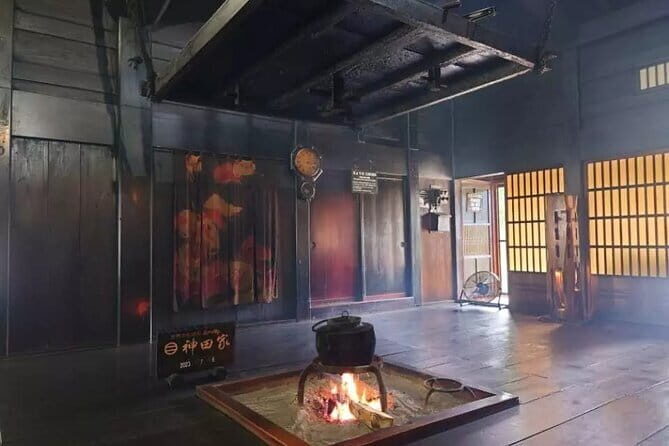
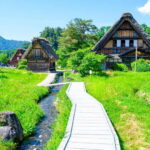
Your main Shirakawa-go walk is 15:00 to 16:00, listed as 60 minutes. The tour calls out Ogimachi as the largest village and main attraction, and it notes it became a UNESCO World Heritage Site in 1995.
What you’re seeing are the gassho-zukuri farmhouses, with the area known for a large number of over 100 remaining gassho-zukuri buildings. The descriptions emphasize that some are more than 250 years old, and that many farmhouses are preserved and still part of village life.
The architecture matters. These buildings were designed to survive harsh winters, with roof structures that can handle heavy snow while keeping a working-and-living space. In other words, it’s not only pretty. It’s practical design for a specific environment.
How to make the most of only one hour
With a 60-minute window, I’d avoid the trap of trying to see every corner. Instead:
- Walk a main path first to get your bearings.
- Stop for photos where rooftops line up well.
- If you find a farmhouse you want to read about, spend a few minutes—then move. Time is your real limit here.
Also, keep your expectations realistic. Many farmhouses are described as restaurants, museums, or minshuku (overnight lodging). If you want the full experience—like staying overnight—you won’t get that in a day tour. But you will get the overview and the feeling of the place.
Weather note that matters
The tour data includes a weather requirement. If weather is poor, the tour can be canceled and you’ll be offered another date or a full refund. On travel days, I’d dress for a temperature shift and keep an eye on rain forecasts, because Shirakawa-go is best enjoyed when visibility is good.
The guide and group pace: friendly help, mostly schedule-first
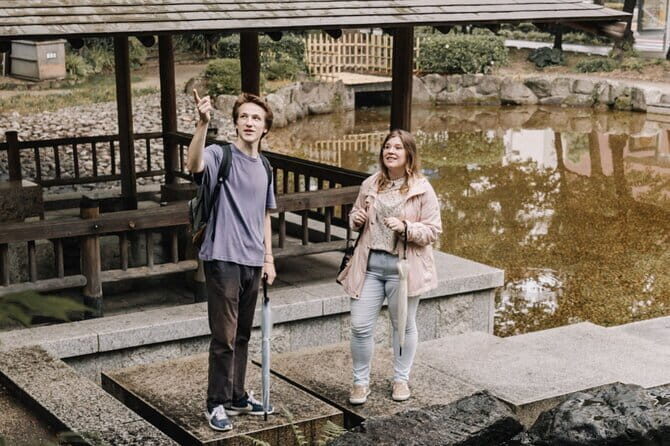
One of the strongest positives is the guide experience. The format here includes a guide, and the tone described in the feedback points to someone friendly and helpful with site information.
At the same time, the guidance style is practical. The guide’s role is not to linger for deep rabbit-hole history. The guidance is focused on making sure people stay on time and keeping the bus in decent shape—so everyone can enjoy the stops without chaos.
That’s not a bad thing. It just tells you what kind of experience this is. Think of it as a well-run day trip where the logistics are handled and you’re given blocks of time to enjoy each location.
Comfort and limits: what this tour costs you in time
This is a 10 to 11 hour day, and that’s the trade. You’re spending a lot of hours in transit and then hitting multiple stops. You don’t get long stays or lots of “wait, let’s go back” time.
You’ll ride an air-conditioned vehicle, and parking fees are included, which helps when you’re doing a day-long round trip. Still, you should plan for fatigue. Wear shoes you can walk in on uneven village paths, and keep your phone charged for photos and map checks.
Also note what isn’t included: lunch, and the tour does not list a restroom on board. That means you’ll need to time your bathroom breaks around the schedule.
Value check: what you really get for $61.13
Let’s break down value in a way you can trust. This tour includes:
- A/C vehicle
- Fuel surcharge
- Parking fees
- Guide
What it doesn’t include:
- Lunch
- Restroom on board
- GST
- Admission fees
Now for the good news: some key admission items are marked as free. The Ogimachi Castle Old Site Observatory is free, and the Shirakawa-go entry in the plan is listed as free. The Kanda house, however, is a “maybe pay” stop since admission isn’t included.
So in practice, your out-of-pocket costs should mostly be food and any paid museum/house admissions you choose. That’s why it can be a strong deal compared to paying separate transit and then trying to coordinate on your own.
Who this tour fits best (and who should skip it)
This is a great choice if you:
- Want one-day access to both Takayama and Shirakawa-go from Nagoya.
- Prefer a plan where the transport is handled and you can just focus on walking and photos.
- Like moderate pacing: enough time to see, not so much time you lose the day to travel.
It may not be ideal if you:
- Want long, detailed explanations at every stop.
- Need lots of free time in Shirakawa-go (you’ll have about 60 minutes).
- Are the type who hates strict timing. The guide’s job is keeping the group on schedule.
Should you book this Nagoya to Takayama and Shirakawa-go day tour?
Book it if your priority is simple access and good value. The free viewpoint and free village entry help keep costs predictable, and Takayama’s Sanmachi-dori time is a real walking window, not a quick photo stop.
Skip it if you’re craving a slower experience or deeper, uninterrupted storytelling. This tour is built to move you between highlights efficiently, and you’ll feel that in how the day flows.
If you’re visiting Japan for the first time and want a “wow” day without overplanning, this is a solid way to do it.
FAQ
How long is the Nagoya to Takayama and Shirakawa-go day tour?
It runs about 10 to 11 hours.
Where do I meet the tour, and what time should I arrive?
You meet at MinistopJapan, 〒453-0015 Aichi, Nagoya, Nakamura Ward, Tsubakichō, 5−10 CORE meiekiビル 1F. The start time is 8:20 am, and the tour notes 8:30 departure on time, so arrive a bit early.
What’s included in the price?
Included are an air-conditioned vehicle, fuel surcharge, parking fees, and a guide.
What isn’t included?
Not included are lunch, restroom on board, GST (Goods and Services Tax), and any admission fees.
Is admission included for the Ogimachi viewpoint and Shirakawa-go?
The plan lists Ogimachi Castle Old Site Observatory as free admission, and Shirakawa-go admission as free for the visit included in the itinerary. Kanda house admission is not included.
How big is the group?
The tour has a maximum of 45 travelers.
If you want, tell me your travel month (and whether you care more about photos or food), and I’ll suggest how to spend your short Shirakawa-go hour for the best results.