REVIEW · NAGOYA
Experience Being a Shinto Priest or Shrine Maiden at NAGOYA
Book on Viator →Operated by Koto Chikage · Bookable on Viator
White and red, then prayer. This one-hour Shinto experience in Nagoya lets you wear traditional Miko or priest attire and learn the etiquette behind the rituals. You also get a rare look at parts of the shrine usually kept for staff, which is where this tour feels most special.
What I like most is the hands-on element. You’re not just watching from the side; you learn proper behavior and ritual basics, and you even get time to talk with a Shinto priest during your visit. I also really like the commemorative photo session, which turns a quiet religious space into a moment you can actually remember clearly.
One thing to consider: the whole experience is about 1 hour, so it moves at a good pace. If you prefer long, unhurried shrine time, you’ll want to plan extra independent time around Wakeoe Shrine after your session.
In This Review
- Key Things You’ll Notice
- Meet Koto Chikage at Wakeoe Shrine
- What the Miko and Priest Attire Communicates
- A One-Hour Flow That’s Built Around Ritual Etiquette
- Stepping Into Sacred Areas Usually for Staff
- The Commemorative Photo Session (and How to Use It)
- Talking with a Shinto Priest: The Part You’ll Remember
- Price and What You’re Actually Getting at $42.27
- Practical Tips for Getting the Most From a Shrine Experience
- Who Should Book This Shinto Priest or Miko Experience
- Should You Book It?
- FAQ
- Where does the experience start?
- How long is the experience?
- What is the price per person?
- What is included with the tour?
- Is there a ticket type mentioned?
- How many people are in the group?
- Will I receive confirmation after booking?
- Are service animals allowed?
- Is it suitable for most travelers?
- What is the cancellation policy?
Key Things You’ll Notice
- Staff-only access areas: You step into sacred space typically restricted to shrine staff.
- Hands-on ritual learning: You’re taught proper Shinto etiquette, not just general facts.
- Photo moment built in: There’s a dedicated commemorative photo capture in traditional attire.
- Conversation time with the priest: You’ll have a chance to talk with a Shinto priest.
- Small group format: Maximum of 3 travelers, which usually keeps things calm and personal.
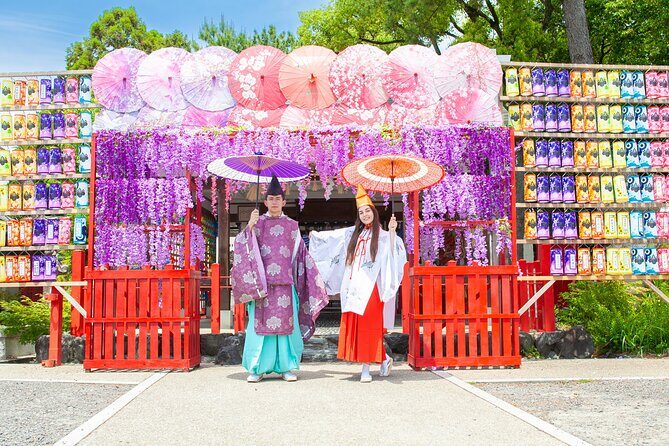
- Traditional outfit details: You may dress in Miko style, including the white shirt and red skirt look described in reviews.
Meet Koto Chikage at Wakeoe Shrine
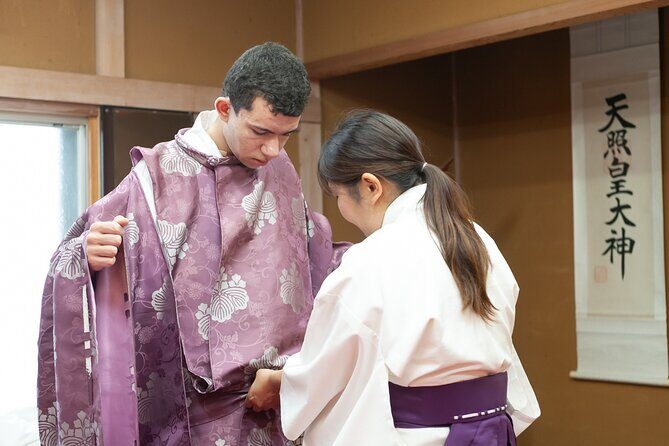
This experience centers on Wakeoe Shrine in Nagoya’s Kita Ward. The provider listed is Koto Chikage, and the whole event is designed to feel respectful and grounded in real shrine practice, not a costume show.
It’s also structured to keep it manageable. You’re there for about 45 minutes on-site for the main activity, and the overall duration is roughly 1 hour. That timing matters because it sets expectations: you’ll learn, participate, and take photos, but you won’t have hours to wander and linger like you would on a self-guided shrine stroll.
The group size helps too. With a maximum of 3 travelers, you’re far less likely to feel rushed by a crowd. That’s especially useful in a place like this, where silence, focus, and appropriate behavior are part of the experience.
You can also read our reviews of more tours and experiences in Nagoya.



What the Miko and Priest Attire Communicates
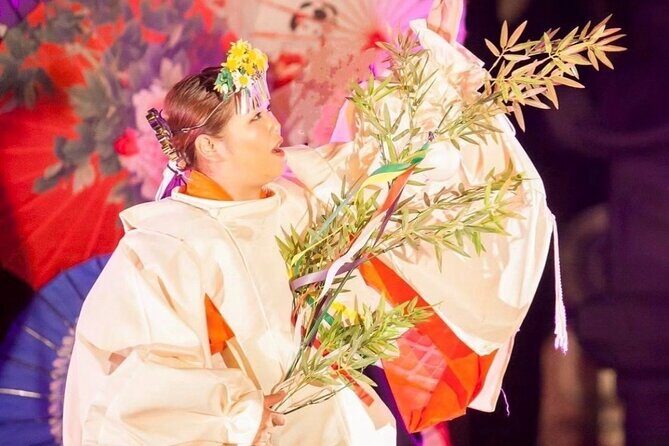
The big visual change is the clothing. You’ll have the chance to wear attire associated with Shinto shrine roles, including Miko (shrine maiden) style. Reviews describe a classic Miko look: a white shirt and red skirt, and the red was explained as symbolizing energy. Even if you’re not getting the exact same explanation, the point is consistent: the colors and formality signal devotion and identity inside the shrine setting.
Why this matters for you: wearing the outfit changes your posture and your awareness. It’s not just photo-friendly. It pushes you to slow down and act in a more formal way because you’re literally in a role people wear for ceremony and daily practice.
You should also expect that your instructor will guide you on how to carry yourself while wearing it. Think of it as learning how to behave in the clothing you’re given, not just trying on fabric for a few minutes.
A One-Hour Flow That’s Built Around Ritual Etiquette
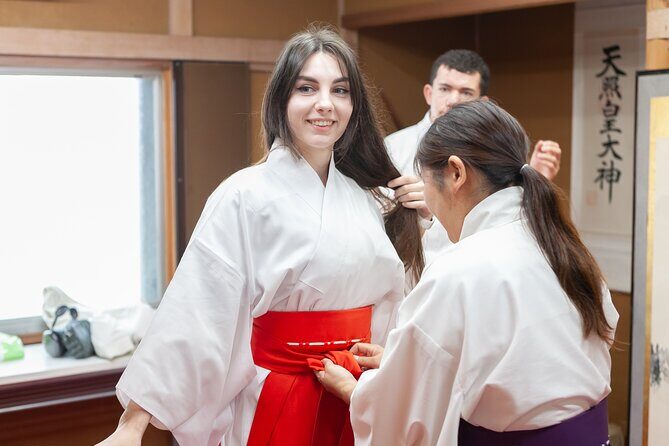
Even though the schedule is short, it’s planned with clear beats. You start at Wakeoe Shrine, and the main activity includes learning the basics of Shinto ritual etiquette and how to behave properly in a shrine environment.
Here’s what that looks like in practical terms:
- You’ll receive instruction focused on how to act respectfully during the visit.
- You’ll learn the basics of the devotional rhythm of shrine practice—enough to understand what you’re seeing and doing.
- You’ll participate in a devotional atmosphere that’s described as holy and peaceful, which matches what you’d expect from a serious, traditional setting.
This is one of those experiences where you get better value the more you lean in. If you keep your questions ready and pay attention to cues, the “lesson” part turns into an understanding you can carry with you the next time you visit a shrine in Japan.
A possible drawback is that with a 1-hour format, you won’t have time to go deep on every tradition. If you love studying religion as a hobby, you’ll still come away with a sense of how etiquette works, but you may want to follow up with extra reading or a longer, self-guided shrine visit after.
Stepping Into Sacred Areas Usually for Staff
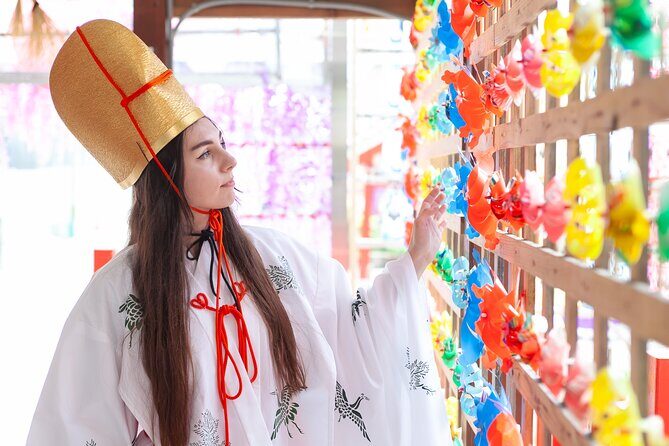
One of the most compelling promises here is access. You get the chance to step into sacred areas that are typically restricted to shrine staff.
That’s important for two reasons. First, it helps you understand how shrines are organized. There’s a clear sense of what’s public and what’s for those who work there. Second, staff-only access makes it easier to understand the space as living religious practice, not just a viewpoint.
And because the tour is small, you’re less likely to feel like you’re in the way. In a staff-only setting, your ability to keep respectful quiet and follow instructions is the whole deal. If you’re comfortable being guided and acting appropriately in a formal environment, this part will likely be the highlight.
The Commemorative Photo Session (and How to Use It)
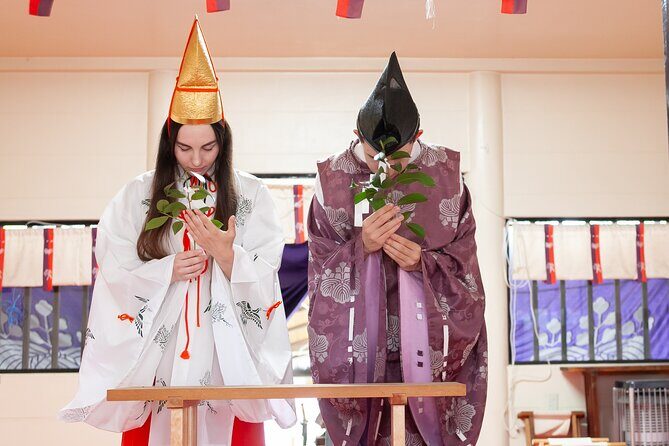
You’ll have time for commemorative photos during the visit. This isn’t just a quick selfie moment. It’s set aside as part of the experience, and it gives you a chance to look like what you’re experiencing—someone connected to shrine tradition in ceremonial attire.
If you want the best photos with the least stress, treat it like a small workshop. Pay attention when the guide explains how to stand or position yourself. Also, don’t rush your own brain just because you’re holding still. The photos work better when you’re calm and present.
This photo component also adds real value to the $42.27 price. For many culture experiences, you leave with memories and photos from your phone in ordinary clothes. Here, you leave with both a story and images that match the story.


Talking with a Shinto Priest: The Part You’ll Remember
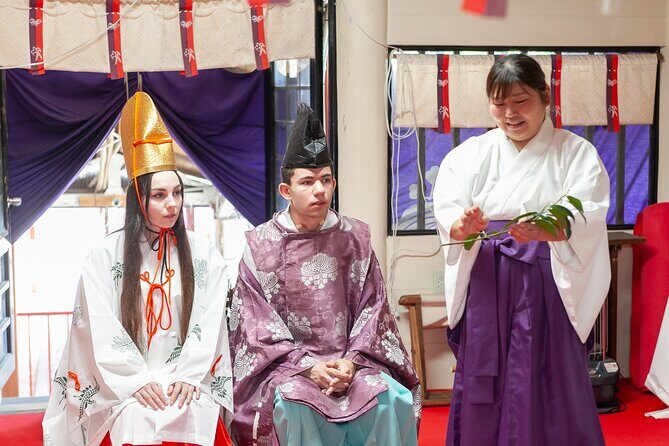
A real strength of this experience is the human interaction. You’ll be able to talk with a Shinto priest during your time at the shrine.
In the reviews you provided, people highlighted that the atmosphere and instruction felt peaceful, and one account specifically praised the guide’s clear communication in excellent English. That matters because Shinto etiquette can feel confusing if you don’t have context. When the guidance is clear, you start to see why people do what they do, and you stop guessing.
If you’re deciding whether this is for you, ask yourself: do you want to learn the meaning behind the behavior? If yes, the priest conversation can be the glue that turns a dressed-up moment into genuine understanding.
Price and What You’re Actually Getting at $42.27
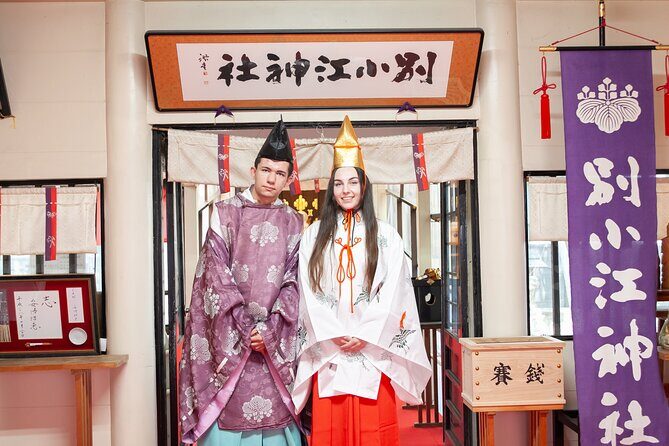
At $42.27 per person, this isn’t the cheapest thing you can do in Nagoya. But it also isn’t just a ticket to enter a shrine. You’re paying for a guided, role-based experience with multiple included pieces:
- Traditional attire for the role you’re assigned
- Instruction on ritual etiquette
- Time with a priest
- Access to sacred areas usually reserved for shrine staff
- A commemorative photo session
- An included admission ticket
- A mobile ticket and a small group limit of 3 travelers
For value, the key is the bundle. If you tried to recreate this on your own, you’d still need guidance on etiquette and access, plus you’d have to figure out attire and photography by yourself. Here, the logistics are handled as part of the experience design.
One more detail worth noting: on average, this is booked 13 days in advance. That usually suggests it’s not a “show up whenever” style activity. If you’re set on doing it, I’d plan ahead so you don’t end up compromising.
Practical Tips for Getting the Most From a Shrine Experience
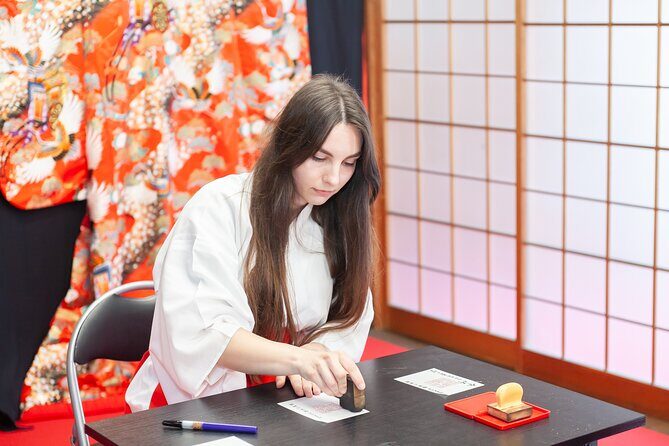
This is one of those tours where small behavior choices matter. Keep your expectations aligned with a religious site, not a theme attraction.
- Dress comfortably and follow the guidance from your host once you arrive.
- Be ready to follow instructions quickly during a short, structured session.
- Keep your phone use low during the ritual and only use devices when you’re told it’s appropriate.
- Ask questions during the talk time, especially if you’re curious about what etiquette is meant to do.
If you’re the kind of person who likes learning while walking through real places—quietly, respectfully—this will feel like a strong use of your time in Nagoya.
Who Should Book This Shinto Priest or Miko Experience
This experience fits best if you want:
- A hands-on culture activity, not just a viewing ticket
- A small-group setting where you can actually ask questions
- A guided understanding of shrine etiquette
- A memorable souvenir beyond typical photos
It may not be ideal if you prefer long free time to explore without structure, or if you’re uncomfortable participating in formal, traditional settings. But for most people who enjoy Japanese culture and want something more meaningful than a standard sightseeing stop, it’s a smart pick.
Should You Book It?
Yes—if you want a short, guided, role-based shrine experience that includes instruction, staff-only area access, and a dedicated photo moment. The price feels fair because you’re getting more than entry: you’re getting context, ritual etiquette guidance, and real time with a priest.
You might skip it if your schedule allows only casual shrine wandering or if you dislike structured activities. But if you’re curious about how Shinto practice works in daily space—and you want to experience it respectfully—this is the kind of Nagoya add-on that actually changes how you’ll see shrines afterward.
FAQ
Where does the experience start?
It starts at Wakeoe Shrine, 4-chōme-14-14 Yasui, Kita Ward, Nagoya, Aichi 462-0023, Japan.
How long is the experience?
It lasts about 1 hour (approx.), with 45 minutes allocated to the main activity.
What is the price per person?
The price is $42.27 per person.
What is included with the tour?
The activity includes an admission ticket and a commemorative photo session.
Is there a ticket type mentioned?
Yes, the tour uses a mobile ticket.
How many people are in the group?
The maximum group size is 3 travelers.
Will I receive confirmation after booking?
Confirmation is received at the time of booking.
Are service animals allowed?
Yes, service animals are allowed.
Is it suitable for most travelers?
The information says most travelers can participate.
What is the cancellation policy?
This experience is non-refundable and cannot be changed for any reason. If you cancel or ask for an amendment, the amount paid will not be refunded.