REVIEW · OSAKA
Best of Kyoto and Nara Highlights Day Tour from Osaka (7~9 spots)
Book on Viator →Operated by TOURSTORY · Bookable on Viator
Kyoto and Nara fit neatly into one day. This is one of those rare full-day plans that actually respects your time: you get well paced highlights with an English-speaking guide, plus the best “first look” moments like Kasuga lanterns, Todai-ji’s Great Buddha, and either Fushimi Inari or Arashiyama’s bamboo. I also really like how the guide approach feels calm and practical, with examples like Yuri, Min, and Soae Lee noted for patient explanations and even helping solo travelers with photos. The main downside to plan for: it’s a long day and some major hall entrances cost extra, so you’ll want to budget for optional admissions.
The tour runs on a clear schedule: depart at 8:00 AM from Tsurutontan Soemoncho, reach your first stop at about 9:00 AM, and return around 6:00 PM. You’ll choose one of two different routes based on the day of the week: Kyoto & Nara + Fushimi Inari (Mon/Wed/Fri) or Kyoto & Nara + Arashiyama (Tue/Thu/Sat). You also get a mobile ticket, which keeps the start of the day painless.
One more practical note: meals aren’t included, and the itinerary includes several short stop windows (often around 25–50 minutes). That means you’ll see a lot, but you won’t linger the way you might if you were doing Kyoto on your own.
In This Review
- Key things to know before you go
- Kyoto and Nara in One Day: why this 10-hour loop works
- 8:00 AM departure and a 6:00 PM return: the rhythm you’ll feel
- Kasuga Grand Shrine and Nara Park: lanterns, deer, and quick orientation
- Todai-ji’s Great Buddha plus a viewpoint break behind Nara Park
- Route A (Mon/Wed/Fri): Fushimi Inari, Byodoin, and Uji Omotesando
- Route B (Tue/Thu/Sat): Arashiyama bamboo, Nonomiya Shrine, and Togetsukyo Bridge
- Nishiki Market (or Maruyama Park) and Kiyomizu-dera: Kyoto’s best finales
- Price and value: $55.17 plus the optional fees you should plan for
- Group size, guide style, and why “patient” matters on a packed day
- Practical tips that keep you comfortable from shrine to bamboo
- Who this Kyoto and Nara highlights tour is best for
- Should you book this day tour?
- FAQ
- What time does the tour start and end?
- Where is the meeting point?
- How long is the tour?
- Which route do I get, Kyoto with Fushimi Inari or Kyoto with Arashiyama?
- Are temple and shrine admission fees included?
- How much are the optional main hall admissions?
- Is lunch included in the price?
- What if the weather or traffic affects the schedule?
Key things to know before you go
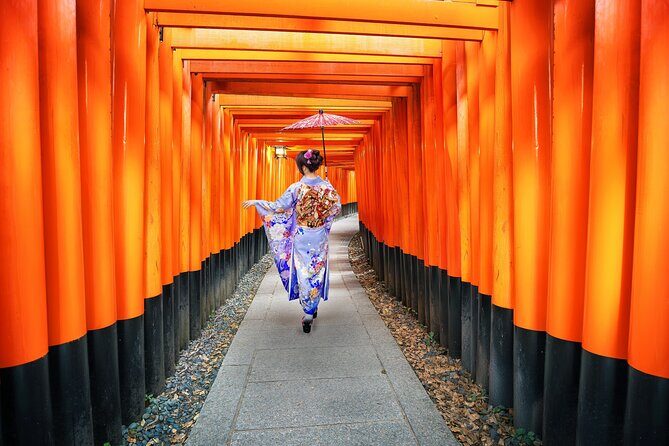
- Two routes depending on the day: Fushimi Inari + Uji-style sights (Mon/Wed/Fri) or Arashiyama bamboo + bridges (Tue/Thu/Sat).
- A tight highlight schedule: most stops are about 25–50 minutes, with longer time saved for big hitters like Kiyomizu-dera.
- Some temples are pay-to-enter: Todai-ji, Byodoin Temple, and Kiyomizu-dera have optional main-hall admissions.
- Lunch is on your own: there’s a built-in lunch break during the Uji area stop for the Fushimi Inari route.
- Cherry blossom tweak: during cherry blossom season, the Nishiki Market stop may swap to Maruyama Park and the order adjusts.
Kyoto and Nara in One Day: why this 10-hour loop works

If you’re starting from Osaka and you want Kyoto and Nara without turning your trip into a logistics project, this tour format makes sense. The big win is that the day is designed like a sampler plate: Shinto in Nara, giant Buddha in Todai-ji, then the Kyoto side with either the famous orange torii trails or Arashiyama’s bamboo-and-bridge scenery.
This matters because Kyoto and Nara can eat your time fast. One temple can turn into an hour of queues, winding streets, and transit confusion if you’re winging it. Here, the plan keeps you moving with transportation included and a guide to tell you what to look for so you don’t waste your limited time.
It also helps that the tour keeps groups reasonably sized (it has a maximum of 49 travelers). Some departures have felt even smaller in practice—one group was roughly 16 people—so you’re not swallowed by a huge crowd.
You can also read our reviews of more tours and experiences in Osaka.
8:00 AM departure and a 6:00 PM return: the rhythm you’ll feel
Your day begins at Tsurutontan Soemoncho at 8:00 AM. The schedule expects you to be at the first destination by around 9:00 AM, then you’re back at the same meeting point at 6:00 PM. That means you can plan your Osaka evening without the stress of a late return.
The day is built around short, focused stops:
- Some places are free-entry (so you can spend time just looking around).
- Others list optional admissions—so you choose how deep you want to go.
- There are also a few scenic breaks where the goal is views and photos, not a long guided lecture.
Keep in mind the tour can adjust based on traffic and weather, and the guide may adjust the order or the exact time spent at each stop. That’s normal for a day trip, and it’s also why going in with realistic expectations helps a lot.
Kasuga Grand Shrine and Nara Park: lanterns, deer, and quick orientation
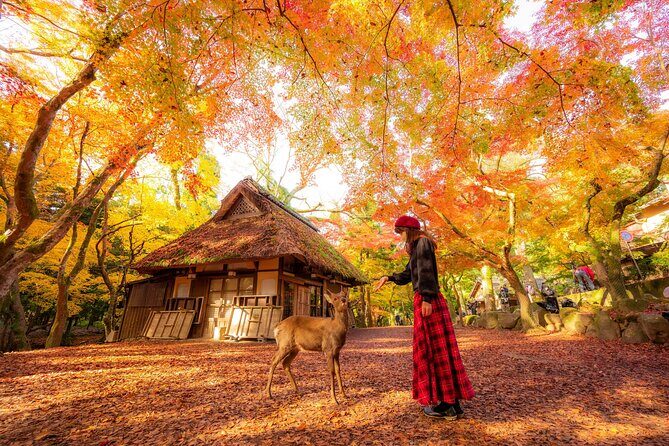
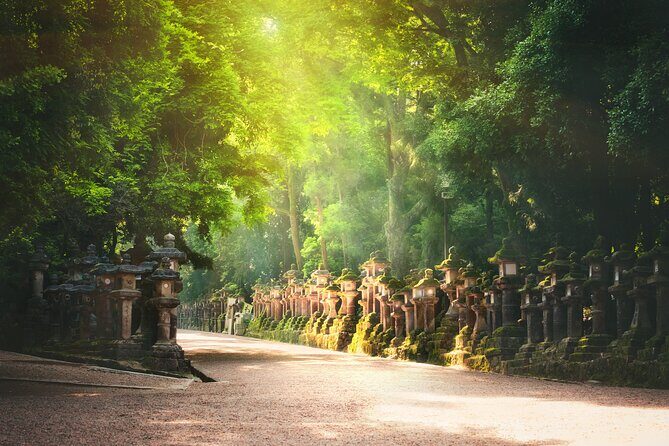
Your day starts with Kasuga Grand Shrine—a sacred Shinto site known for hundreds of stone and bronze lanterns. Even if you’re not a shrine-specialist, this stop gives you instant atmosphere. You’re basically thrown into the visual language of Nara: stone paths, quiet spaces, and a setting that feels older than your travel plans.
Then you head to Nara Park, one of Japan’s most famous green landmarks. The highlight here is simple: you’ll see the deer roaming freely while you move between the open areas and nearby temple zones. The tour keeps this to about 30 minutes, which is enough to get a feel for the park without turning it into a half-day detour.
If you want the best deer moments, think “early, then walk with intention.” You won’t have time to slow down for every photo request—so choose a couple of good angles and keep moving.
Todai-ji’s Great Buddha plus a viewpoint break behind Nara Park
Next up is Todai-ji Temple, home to the Great Buddha statue inside a massive wooden hall. The stop is about 30 minutes, with main hall admission not included. In other words: you’re likely to spend your time outside and in accessible areas, then decide whether to pay for the main hall if it’s offered during your visit.
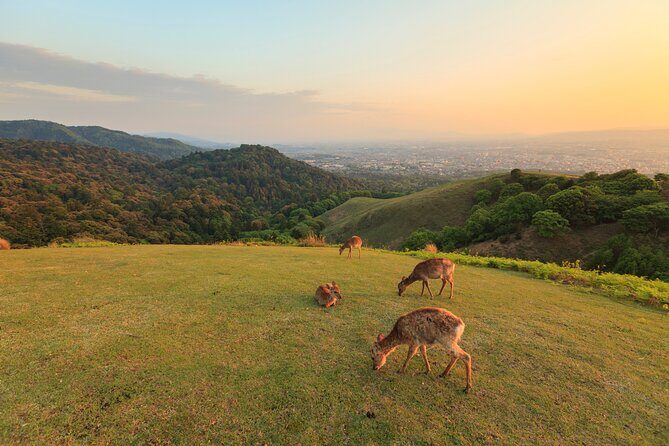
The plan also includes a short scenic add-on tied to the Arashiyama-style route: a gentle grassy hill behind Nara Park (listed as a quick hike for panoramic views of Nara City and major landmarks, including Todai-ji’s roof). It’s a small “step away from crowds” moment—short enough to fit into a busy day, but meaningful because it gives you perspective on what you’re seeing below.
Even with a limited time window, this combination works. Todai-ji gives you scale, and the hill gives you context.
Route A (Mon/Wed/Fri): Fushimi Inari, Byodoin, and Uji Omotesando
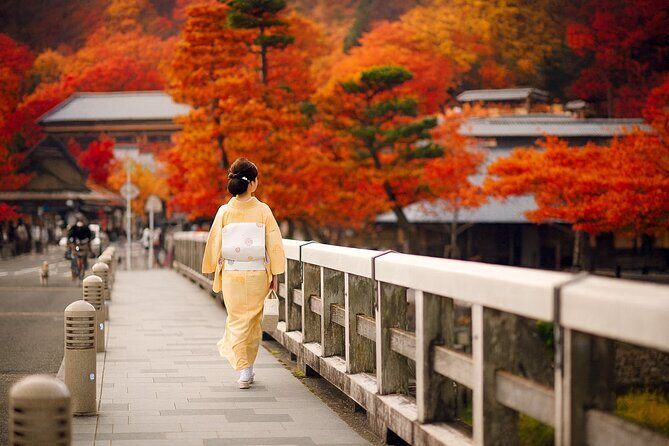
If your tour day falls on Mon/Wed/Fri, you’ll follow the Kyoto & Nara + Fushimi Inari route. After Todai-ji and the Nara-side viewpoints, you’ll head to the Uji area and then into Kyoto’s iconic Inari shrine zone.
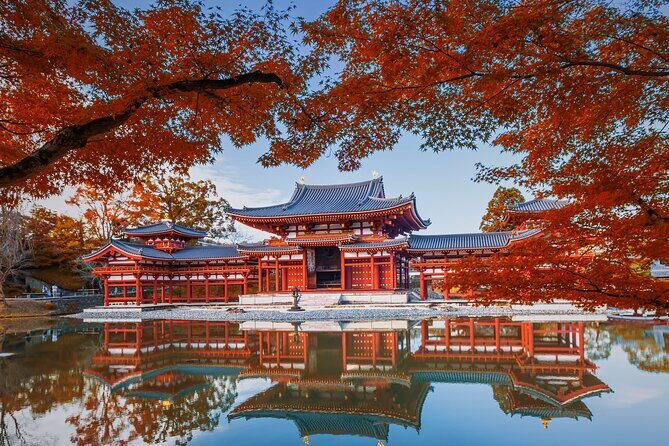
Byodoin Temple is one of the emotional highlights of the route. You’re going to see the famous Phoenix Hall image associated with the 10-yen coin, and the design is built around calm reflections over a pond. Main hall admission is optional here (not included), so plan your budget if you want to step inside.
Then you’ll reach Byodoin Omotesando, a traditional shopping street known for tea houses. The tour gives you around 50 minutes, and this is one of the clearest lunch windows of the day. Meals aren’t included, so you’ll pay for food yourself—but it’s a good moment to try Uji-style matcha treats since the stop is specifically designed for that.
Finally, you’ll climb into Fushimi Inari Taisha Shrine, famous for its thousands of vermillion torii gates winding up Mount Inari. This stop is about 50 minutes, and the goal is to experience the corridor of gates and the sacred atmosphere—not to conquer every last staircase.
Tip: if you want the best torii-gate photos, try to move a bit higher than the very first clusters, but don’t sprint. Your time here is limited, and Inari rewards steady wandering rather than rushing.


Route B (Tue/Thu/Sat): Arashiyama bamboo, Nonomiya Shrine, and Togetsukyo Bridge
If your tour day is Tue/Thu/Sat, you’ll take the Kyoto & Nara + Arashiyama route, which trades Inari and Uji street time for Arashiyama’s nature-and-heritage vibe.
You’ll start with Arashiyama Bamboo Forest, a classic walk where the tall bamboo stalks form a canopy and light filters down. Your stop is about 25 minutes, so this is more of a quick stroll than a long photo session. Still, it’s usually enough time to get your bearings and take a few good shots in different spots.
Right nearby, you’ll visit Nonomiya Shrine, a small Shinto shrine inside the forest area, with a history stretching back more than a thousand years (as described on the tour). The stop is around 30 minutes, so you’re not just passing through—you get a brief chance to slow down.
Then comes Togetsukyo Bridge, the “Moon Crossing Bridge,” spanning the Katsura River. You’ll have about 25 minutes here, with the tour framing it as a landmark connected to the Heian period (and later reconstruction). In plain terms: this is your big scenic payoff before you pivot back toward the bus and the rest of Kyoto.
If you’re the type who likes scenery more than shopping, this route tends to feel like a better match. But even if bamboo isn’t your thing, the bridge view is a strong anchor.
Nishiki Market (or Maruyama Park) and Kiyomizu-dera: Kyoto’s best finales
After Nara and the morning/early afternoon Kyoto-side highlights, you’ll hit two late-day anchors.
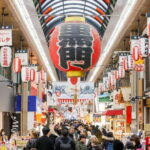
First: Nishiki Market Shopping District, often called Kyoto’s kitchen. You get about 1 hour to stroll stalls for snacks and local specialties. This is great when you’re hungry and want easy choices without hunting. The tour notes that during cherry blossom season, Nishiki Market may be replaced by Maruyama Park, and the stop order adjusts—so expect a seasonal swap rather than a strict template.
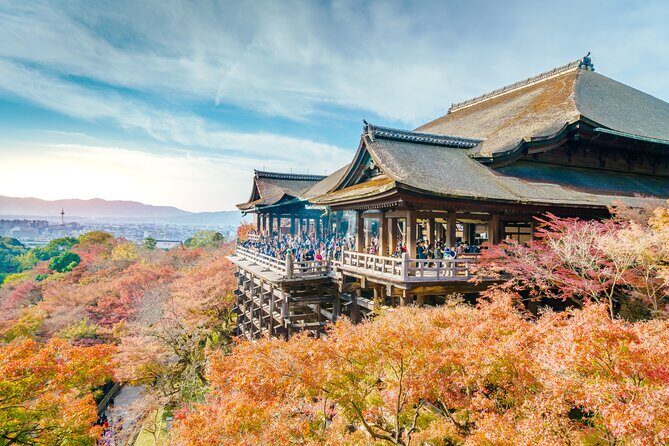
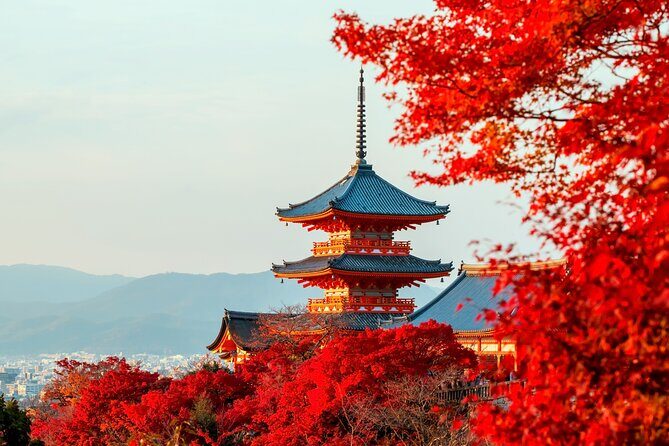
Then you’ll finish with Kiyomizu-dera Temple, a UNESCO World Heritage site. This stop is the longest in the day—about 1 hour 20 minutes—and it has optional main hall admission (not included). Even without paying, Kiyomizu-dera is known for its wide views over Kyoto, and the tour also points out seasonal beauty like cherry blossoms or autumn maple leaves.
If you want to maximize the Kiyomizu-dera experience, treat your time like this:
- Give yourself a few minutes to orient and find view points.
- Decide early whether you’ll pay for the main hall so you don’t end up short on time.
Price and value: $55.17 plus the optional fees you should plan for
At $55.17 per person, the value comes from the structure: transportation and an English & Korean speaking guide are included, and the day pulls together major sights that would be harder (and slower) to coordinate on your own from Osaka.
What’s not included matters for your final budget:
- Meals are not included.
- Optional main-hall admissions are listed for:
- Todaiji Temple: 800Yen
- Byodoin Temple: 700Yen
- Kiyomizu-dera Temple: 500Yen
The tour also notes various stops are free-entry (for example Kasuga Grand Shrine and Nara Park are free), so you’re not paying at every single stop. Still, if you plan to do all the paid main halls, your day’s total will be noticeably higher than the base price.
My practical advice: decide on your “must pay” list before you go. For many people, Kiyomizu-dera is the big yes, Todai-ji is the big yes, and Byodoin depends on your interest in Buddhist architecture and the Phoenix Hall setting.
Group size, guide style, and why “patient” matters on a packed day
In a day trip like this, guide quality isn’t a luxury—it’s the difference between feeling rushed and feeling oriented.
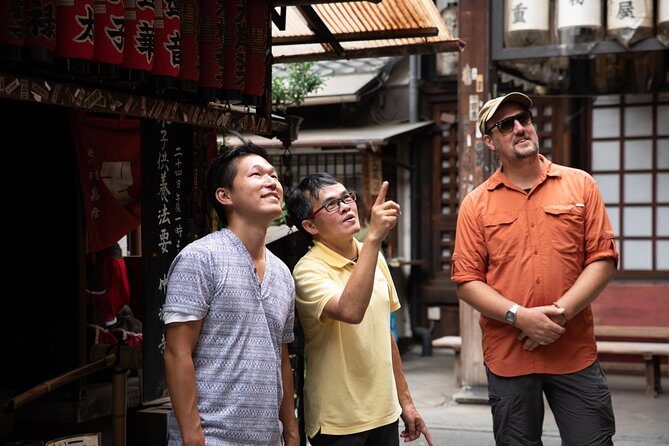
You’ll meet a guide at the start and then get continuous explanations in English & Korean. The comments around guides like Yuri and Soae Lee highlight patience and clear explanations, which is exactly what you want when you have limited time and a lot of walking.
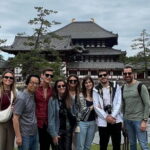
There’s also a practical detail that sounds small but matters: one guide, Min, was praised for offering to help solo travelers take photos they might otherwise miss out on. That’s the kind of service that makes a highlight tour feel more personal, even when you’re in a group.
Pace-wise, the schedule is designed to keep you moving, but the stops themselves are short enough that you don’t feel trapped. Your best strategy is to ask the guide smart questions at each stop—like where the best viewpoint is or what to prioritize—so you can move confidently.
Practical tips that keep you comfortable from shrine to bamboo
Here’s what I’d plan around, based on how the day is structured:
- Bring comfy shoes. You’re visiting multiple heritage sites with walkable routes and at least one short grassy viewpoint section.
- Have small-change or payment ready. Optional main hall fees are listed in yen, and you’ll decide on the spot.
- Use the free-entry stops well. Free doesn’t mean “wait around.” It means you can spend time appreciating details without worrying about whether you’ll need to pay at that exact moment.
- Plan your lunch mentally even if you skip it. On the Fushimi Inari route, there’s a lunch time window in the Uji Omotesando area. If you’re hungry, that’s the moment to grab something.
- If you have a stroller, notify ahead. The tour asks you to inform them if you’ll be bringing one, because it affects how the guide and group move.
Also remember: the day can shift based on weather and traffic, so don’t plan a tight Osaka dinner reservation for immediately after 6:00 PM.
Who this Kyoto and Nara highlights tour is best for
This tour is a good fit if:
- You’re using Osaka as a base and want a first, high-impact taste of Kyoto and Nara.
- You prefer guided efficiency over doing everything solo.
- You like seeing icons like Fushimi Inari torii or Arashiyama bamboo, but you don’t want to plan separate transit days.
It might be less ideal if:
- You want long, slow temple stays where you can sit and read every sign.
- You’re traveling mainly for one specific experience (like only Nara temples or only Arashiyama), because the day is designed to cover both cities.
Think of it as “highlights with context,” not “deep study.”
Should you book this day tour?
Yes, if you want maximum Kyoto and Nara payoff with a guide and transportation from Osaka, and you’re okay with a schedule that prioritizes key sights over long lingering.
Book it especially if:
- You like the idea of two route options and you can choose the day that matches your interests.
- You’re the type who values clear explanations and group help (even with practical things like photo taking).
- Your must-sees include major icons like Fushimi Inari or Kiyomizu-dera.
Skip or downgrade expectations if you hate optional fees, because Todai-ji, Byodoin, and Kiyomizu-dera main hall admissions can add up, and meals are on you. But if you go in with that figured out, this tour is one of the more sensible ways to do Kyoto and Nara in a single day.
FAQ
What time does the tour start and end?
The tour starts at 8:00 AM and returns to the meeting point at around 6:00 PM.
Where is the meeting point?
You’ll meet at Tsurutontan Soemoncho.
How long is the tour?
The duration is approximately 10 hours.
Which route do I get, Kyoto with Fushimi Inari or Kyoto with Arashiyama?
Mon/Wed/Fri includes Kyoto & Nara + Fushimi Inari, while Tue/Thu/Sat includes Kyoto & Nara + Arashiyama.
Are temple and shrine admission fees included?
Some are free, but main hall admissions at Todai-ji, Byodoin Temple, and Kiyomizu-dera are listed as not included.
How much are the optional main hall admissions?
Todai-ji is listed at 800Yen, Byodoin Temple at 700Yen, and Kiyomizu-dera at 500Yen.
Is lunch included in the price?
No. Meals are not included, and lunch is at your own expense during the Byodoin Omotesando time window on the Fushimi Inari route.
What if the weather or traffic affects the schedule?
The itinerary is subject to traffic and weather conditions, and the guide may adjust the itinerary and time spent based on real-time conditions.