REVIEW · HAKONE
Hakone 8 hour Private Tour with Government-Licensed Guide
Book on Viator →Operated by Japan Guide Agency · Bookable on Viator
Hakone in one day, minus the chaos. This 8-hour private walking tour lets you tailor 4 to 5 stops with a government-licensed English guide, so you actually get answers instead of just photos. You’ll start the day with meet-up on foot in Hakone, then hop between scenic viewpoints, temples, art, and volcanic sights at a pace that fits your group.
What I love most is the control. You pick the morning start time and choose the mix of sights, from the classic Fuji-and-lake views at Lake Ashinoko to art stops like the Hakone Open-Air Museum. I also like the way the guides manage timing and real-world friction. In my reading of guides’ styles, people repeatedly mention guides like Ryuta (Dragon), Hide, Hiro, and Yoshi getting the day to flow even when the weather turns or when they needed to solve practical problems like finding food.
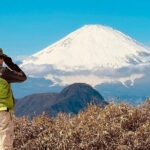
One thing to consider: this is a walking tour with no private vehicle, and many entry fees are not included. Also, Mt. Fuji views are weather-dependent—some days you get lucky, other days you don’t, and you’ll want a guide who can pivot.
In This Review
- Key highlights worth planning around
- A private Hakone day that doesn’t feel like a race
- Walking logistics: the good and the annoying parts
- Lake Ashinoko and Hakone Shrine: the classic calm start
- Owakudani: black eggs, steam, and close-up geology
- Art museums and slow strolls: Gora, open air, glass, and more
- Hakone Open-Air Museum
- Hakone Museum of Art and sister museum context
- Okada Museum of Art
- Glass and specialty museums: Hakone Glass no Mori and Dollhouse Museum
- POLA Museum of Art and other art styles
- Sengokuhara, Choanji Temple, Shisseikaen, and Gora Park: the quiet wins
- How guides make the day work: weather, timing, and real answers
- Price and value: what $201.46 per person really buys
- Should you book this private Hakone tour?
- FAQ
- How long is the Hakone private tour?
- How many sites will we visit?
- Is this tour private?
- Is transportation included?
- Are entrance fees included?
- Where do we meet the guide?
- Can we choose a start time?
- Do we need a reservation for the Owakudani Nature Research Trail?
- Is Mt. Fuji guaranteed during the day?
- Can we cancel and get a full refund?
Key highlights worth planning around
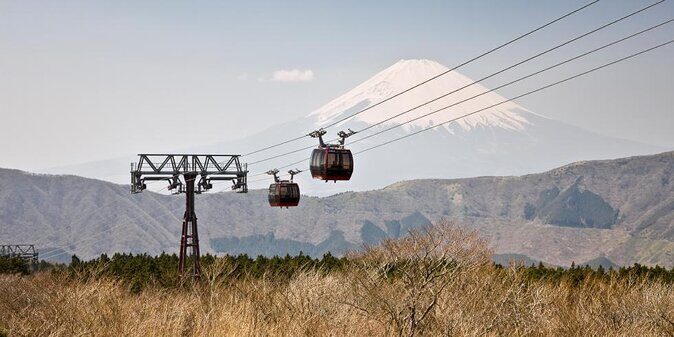
- Pick 4 to 5 sights from the Hakone mix, so the day doesn’t turn into a checklist marathon
- Multiple morning start times lets you match your energy and connection plans
- Licensed local English guidance means you get context at every stop, not just directions
- Volcanic Hakone + art variety in one day, from Owakudani black eggs to museums and gardens
- Weather-smart pacing shows up in how guides reroute when skies don’t cooperate
A private Hakone day that doesn’t feel like a race
Hakone can chew up a day fast. Stations are spread out, boats and ropeways are popular, and the most famous spots draw crowds. A private guide changes the vibe immediately: you’re not stuck with someone else’s tempo, and you can ask the annoying questions you actually care about, like why the lake looks like it does or what’s going on under those steam vents.
Your day runs about 8 hours, and you’ll choose 4 to 5 sites from a menu of nature, temples, museums, and volcanic areas. That small number matters. It leaves breathing room for the real stuff—short walks, resting your legs, and time to look carefully instead of sprinting.
The tour is also designed for flexibility in the morning. Instead of starting at one fixed time, you can choose from multiple morning start times, which is a lifesaver if you’re connecting in from Tokyo, staying at a ryokan, or just want to beat the worst crowds.
You can also read our reviews of more guided tours in Hakone
Walking logistics: the good and the annoying parts
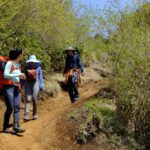
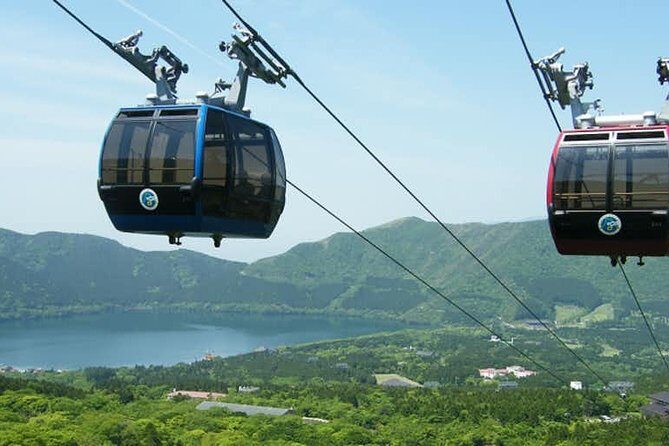
This is labeled as a walking tour, and that’s real. A private vehicle is not included, so you’ll rely on public transit links and the Hakone transport network between areas. The benefit is that walking keeps you close to the neighborhood details—shops, viewpoints, and small side streets you’d miss if someone shuttled you door-to-door.
The tradeoff is simple: you should plan for walking time and transfers. In a few accounts, people noted long lines at big transport nodes when the day got busy. With a private guide, you can often make smarter choices about timing, but you can’t erase physics—ropeways and popular boat routes can still have waits.
Meet-up is on foot within a designated area in Hakone. So instead of expecting the guide to meet you at a specific platform with a car, your job is to arrive at the meeting zone and then link up. A guide can also help you route between stops so you spend less time zigzagging across the map.
Lake Ashinoko and Hakone Shrine: the classic calm start
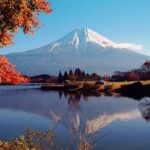
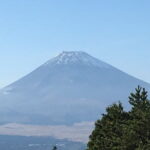
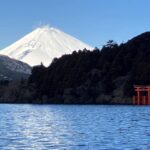
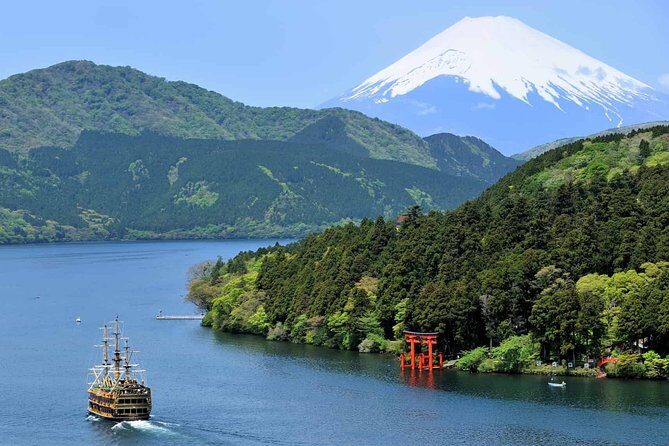
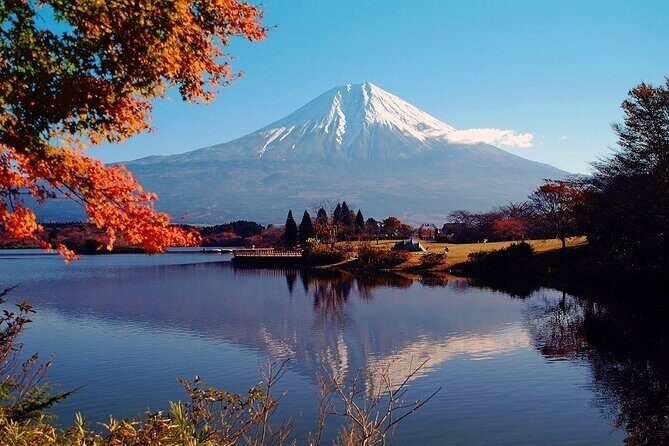
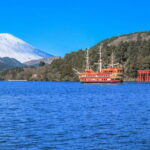
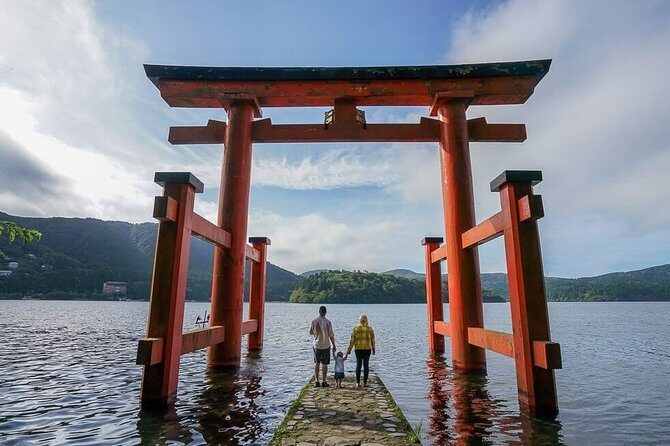
Most Hakone days work best with an early “reset” stop. Lake Ashinoko (Ashinoko) is a natural starting point because it’s iconic: the lake sits in a volcanic caldera, and the whole area often frames Mt. Fuji in the background when the weather allows. Even when Fuji stays hidden, Lake Ashinoko still gives you that postcard scale—big water, mountain walls, and a sense of place.
Plan for about 15 minutes here. That sounds short, but in a private tour it can be enough to orient yourself, snap a few shots from a good angle, and decide if you want to add a boat ride on the lake. In guides’ stories, Hide’s group enjoyed a boat ride on Lake Ashinoko, which is a great way to change perspective without adding an extra day.
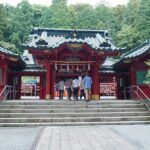
Right after the lake, Hakone Shrine keeps the tempo gentle. It’s a tranquil worship site with roots going back more than 12 centuries, rebuilt multiple times after fires. You’re in the area for a quick, respectful stop—again, about 15 minutes, usually long enough to walk the approach, soak in the atmosphere, and learn what makes this shrine meaningful in Hakone.
Why this pairing works: you’re not yet tired from climbing, you’re still fresh for the volcanic side later, and you build a clear mental map of Hakone’s geography.
Owakudani: black eggs, steam, and close-up geology
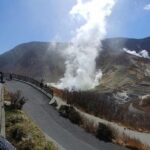
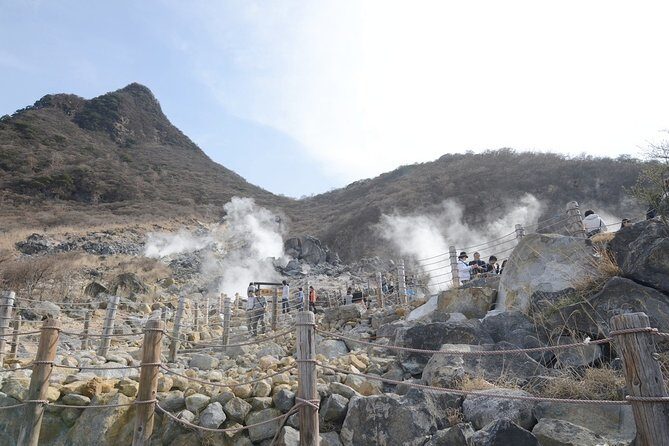
This is the stop many people remember most: Owaku-dani Valley, the active volcanic zone tied to Hakone’s hot springs. It’s famous for black boiled eggs, and guides often explain the volcano science in a way that makes the eggs feel less like a gimmick. One guide’s approach (Hide) was to talk about the chemistry of the black eggs, turning the snack into a story about the steam and minerals.
Your time here is about 15 minutes. That can feel fast if you want photos at every angle, but it’s usually enough to see the geothermal activity and do the egg tasting without turning it into a theme park detour.
Two extra notes:
- Entry costs aren’t included for this stop, so budget for that in your daily math.
- If you want to go deeper, there’s the Owakudani Nature Research Trail, which takes about 40 minutes and requires advance reservation plus an 800 yen entrance fee. The tradeoff is more planning on your side, but it can be worth it if you like walking through active volcanic terrain.
Art museums and slow strolls: Gora, open air, glass, and more
Hakone has a secret weapon: you can mix world-class-looking art with nature. And that’s exactly where a custom private day shines. If your feet are tired, you can pick museums that keep you inside or partially inside. If you’re feeling energetic, you can choose the open-air sites.
Here are some standout options from the typical menu:
You can also read our reviews of more private tours in Hakone

Hakone Open-Air Museum
This is often the centerpiece art stop. It’s known as the first open-air art museum in Japan, built to balance nature and art, and it covers a site of about 70,000 square meters. It’s a great choice if you want a walk that feels curated but not rigid, and you can pace yourself through sculptures and exhibits. The stop time is about 15 minutes on this tour, which is short for the grounds—so ask your guide what to prioritize based on your interests (classic names, modern pieces, or just a highlights route).
Hakone Museum of Art and sister museum context
If you’d rather do a more traditional museum visit, Hakone Museum of Art (in Gora) can fit the vibe. It was founded by Okada Mokichi in 1952. The tour gives you about 15 minutes, so treat it as a “choose what matters” visit unless you buy extra time on your own.
Okada Museum of Art
Okada Museum of Art is another museum option, with a longer time slot at about 30 minutes. It’s privately owned and spans art across antiquity to modern eras. If you’re the type who likes seeing one well-selected collection, this can be a strong pick.
Glass and specialty museums: Hakone Glass no Mori and Dollhouse Museum
Want something light and quirky? Hakone Glass no Mori features Italian-styled buildings and a strolling garden with a canal-like pond around it. It’s a good mid-day palate cleanser when you want a break from big crowds at the most famous transport zones.
For whimsy, Dollhouse Museum Hakone is a completely different mood—centuries-old dollhouses from around the world. You get about 15 minutes, which often works perfectly for a niche museum without draining the day.
POLA Museum of Art and other art styles
If you like beauty products history turned into art space, Pola Museum of Art opened in 2002 and focuses on the company’s private collection. If you prefer Japanese-style painting, Narukawa Museum of Art highlights nihonga, or Japanese-style painting. The point isn’t that you’ll see everything—it’s that you can pick the art lane that matches you.
Sengokuhara, Choanji Temple, Shisseikaen, and Gora Park: the quiet wins
Not every great Hakone moment needs steam or a ticketed museum. Several options are about slowing down and enjoying the setting.
Sengokuhara is known for pampas grass, especially beautiful in autumn. The stop is about 15 minutes, so it’s ideal as a scenic break between bigger attractions.
Choanji Temple is a Soto Zen Buddhist temple established in 1356. It’s in the Sengokuhara area at the base of a hill, and it’s described as atmospheric and quiet. The admission is free, and you get about 15 minutes, which is perfect for a short reset.
Hakone Shisseikaen is the botanical garden of wetlands in the Fuji Hakone Izu National Park area, founded in 1976 to preserve local plant life. If you like nature without heat or huge crowds, gardens can be a smart swap when the weather makes viewpoints miserable.
Gora Park is a western-style landscape park above Gora Station, meant for relaxing and taking in scenery. It’s a “sit and breathe” kind of stop—again, around 15 minutes.
Why I like these stops on a private tour: they give your eyes variety. After walking around volcanic zones and transport hubs, these feel like a pause button.
How guides make the day work: weather, timing, and real answers
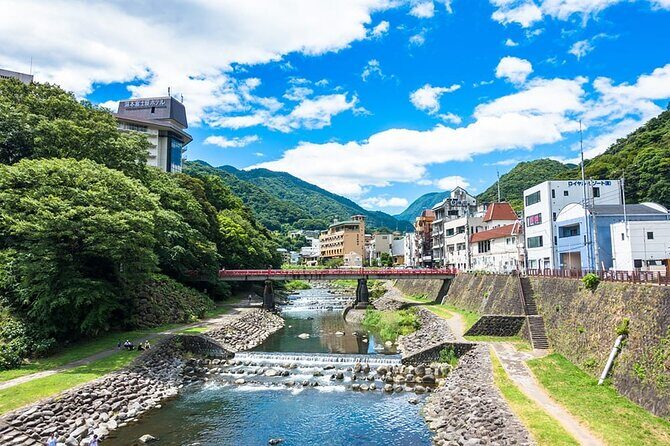
A good private guide isn’t just a human GPS. What repeatedly shows up in guide styles is timing discipline and willingness to adjust.
When conditions were rainy or cold in one case, a guide like Masa-san changed the plan to include an art museum while weather cleared up. Another guide, Ryuta (Dragon), adapted to wet weather and picked strategic ways to keep the day rewarding. Shuji is described as organizing well with clear English explanations, and Hiro’s group got quick, smooth movement through transport.
Even when Mt. Fuji didn’t show, the best guides still kept momentum by steering to the strongest version of the day available. One guide Yoshi specifically helped groups catch the right buses, boats, cable cars, and even taxis to speed up the day and cover more ground.
So what should you do? Use your first 10 minutes with the guide to set the tone:
- Tell them what you care about most: Fuji views, volcanic sights, art, or a mix
- Mention your walking limits
- Ask for a weather-based plan, not just a list of stops
Price and value: what $201.46 per person really buys
At $201.46 per person, this isn’t a budget DIY option. The value is in three places:
1) A government-licensed, local English guide for about 8 hours.
That’s what turns scattered attractions into a coherent day, with context and pacing.
2) Custom selection of 4 to 5 sites.
Instead of paying for a full pre-made route you might not love, you’re paying for your priorities.
3) Guide entry fees are covered for the included stops you choose.
But keep your expectations realistic: transportation fees, entrance fees, lunch, and other personal expenses are not included. So your final daily spend will depend on which museums and paid attractions you select.
Also note: there’s Hakone Freepass mentioned as not included. That doesn’t mean it’s a bad idea. It just means you’ll need to decide if it fits your chosen route and how much you’ll use the Hakone transport network.
Bottom line: if you want Fuji-and-volcano classics plus art, and you only have one day (or one main block) in Hakone, paying for private guidance usually makes the day feel less stressful and more meaningful.
Should you book this private Hakone tour?
I’d book it if:
- You have about 8 hours and want to hit 4 to 5 high-impact places without wasting time
- You care about getting explanations (history, geology, culture) while you walk
- You want a guide who will adjust for weather and keep your route smart
- Your group includes mixed interests—like one person who wants art museums and another who wants Owakudani black eggs
I’d think twice if:
- You hate walking and long transfers between Hakone nodes, since no vehicle is included
- You want a fully ticketed, all-in-one price. Most entrance fees and transport are on you
- You expect Mt. Fuji to be guaranteed. It’s weather-dependent, and Hakone won’t apologize for that
If you go in with the right mindset—choose your top priorities early, plan for paid attractions, and let your guide handle the timing—this is a strong way to do Hakone with less stress and more substance.
FAQ
How long is the Hakone private tour?
It lasts about 8 hours.
How many sites will we visit?
You’ll visit 4 to 5 sites that you choose from the available options.
Is this tour private?
Yes. It’s a private tour/activity, and only your group participates.
Is transportation included?
No. It’s a walking tour, and a private vehicle isn’t included. Transportation fees aren’t included.
Are entrance fees included?
No. Entrance fees for the sights are not included (and lunch is also not included). Some stops list free admission, but many are ticketed.
Where do we meet the guide?
You meet the guide on foot within a designated area in Hakone.
Can we choose a start time?
Yes. You can select from multiple morning start times.
Do we need a reservation for the Owakudani Nature Research Trail?
Yes. The Owakudani Nature Research Trail requires advance reservation and has an 800 yen entrance fee.
Is Mt. Fuji guaranteed during the day?
No. Mt. Fuji views depend on weather, and some days people get lucky while other days they don’t.
Can we cancel and get a full refund?
Yes. Free cancellation is available if you cancel at least 24 hours before the experience’s start time.