REVIEW · TOKYO
Tokyo: Best Samurai Experience
Book on GetYourGuide →Operated by 株式会社テイク · Bookable on GetYourGuide
A sword lesson can be fun and still feel serious. Here you step into kimono and hakama, learn traditional sword handling, then do a playful chanbara-style fight with samurai flair. I especially like the hands-on instruction and the way the staff helps you capture every moment on your phone, not just pose afterward. One consideration: it is only 1 hour, so it is best if you want a high-energy introduction, not deep, day-long practice.
The setting is part lesson, part performance. The dojo is packed with weapons like swords and spears, plus armor on display, and it feels more old-world than modern the moment you walk in. With a small group (up to 10), you get more attention and less waiting around, which makes the time feel efficient.
In This Review
- Key Things You’ll Notice Right Away
- Why This One-Hour Samurai Training Feels Like the Real Thing
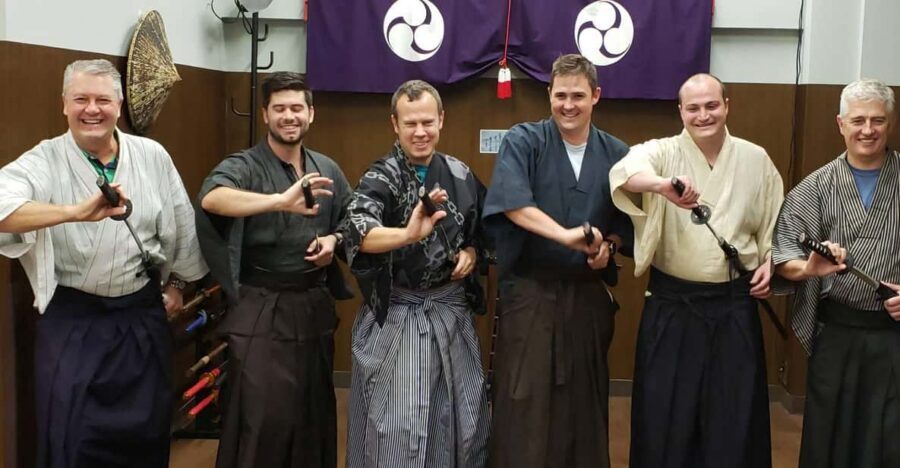
- Kimono and Hakama: Getting Costumed Without Making It Complicated
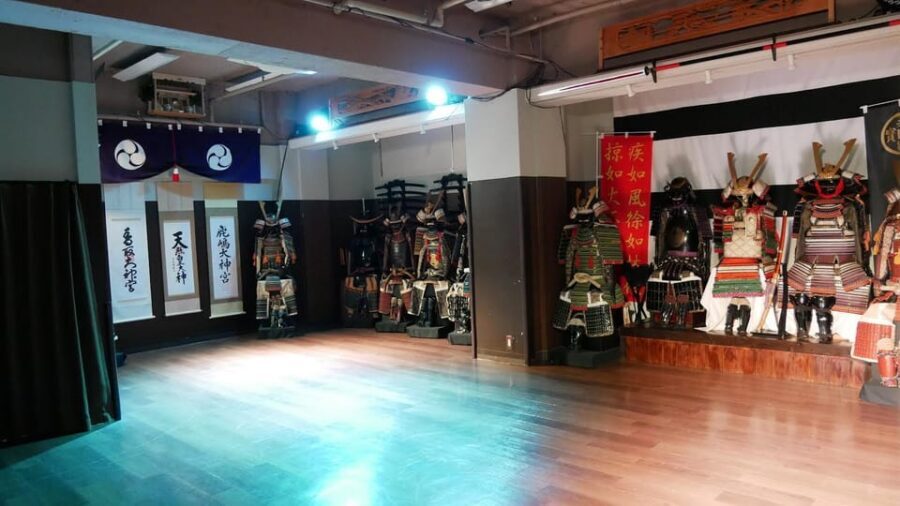
- Inside the Dojo: Weapons on Display and How the Lesson Starts
- From Sword Parts to Safe Practice: What You Actually Learn
- Your Chanbara Sparring Session and the Music-Driven Finale
- Photos, Videos, and the Fun Way to Remember It
- Price and Value: Why $63 Can Be a Good Deal
- Who This Is Best For (and Who Should Skip)
- How to Get There at Samurai Theater Tokyo
- Should You Book This Samurai Experience?
- FAQ
- How long is the Samurai experience?
- What is included in the $63 price?
- Do I use a real sword?
- Where do I meet the group?
- Can I wear the armor on display?
- Is it okay to bring my own phone for photos and videos?
Key Things You’ll Notice Right Away
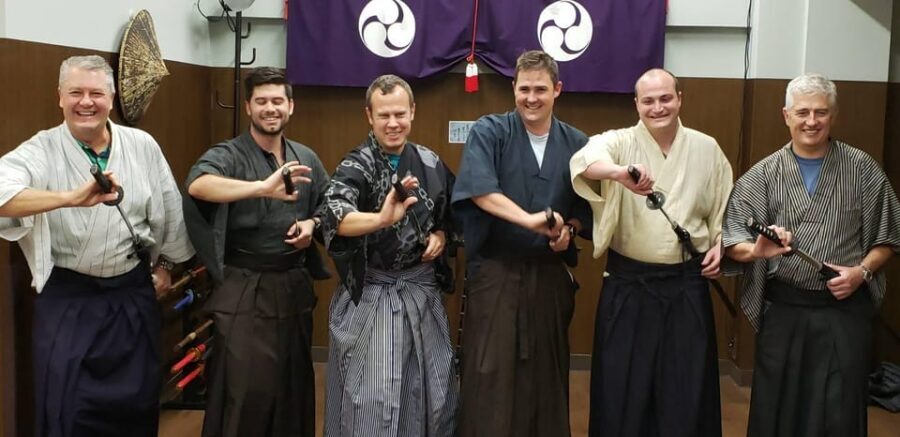
- Costume first: you pick your kimono and hakama before the sword lesson starts
- Safety-focused weapons: you use a fake sword that cannot cut
- Real dojo vibes: swords, spears, and armor are on display in a non-modern space
- Learn the basics in stages: draw, hold, swing, retract, then combine it into a short fight
- Staff captures your action: photos and videos happen during the training, not just at the end
Why This One-Hour Samurai Training Feels Like the Real Thing
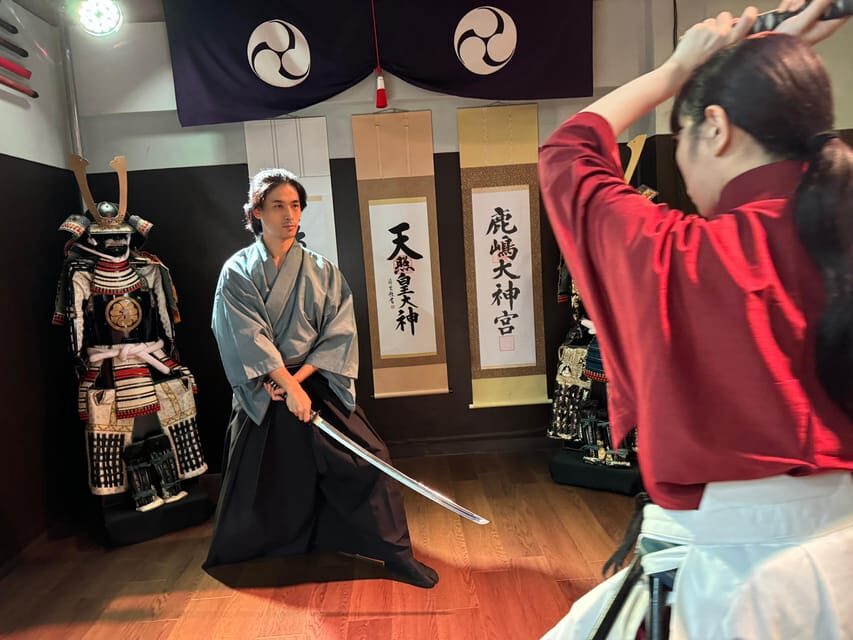
This is not a museum stop where you stand back and watch. It is a short, structured class where you actively move, learn the vocabulary of what you are doing, and end up fighting alongside the instructor and other participants. Even if you are new to swords, the pace makes it easy to keep up.
What makes it work is the mix of costume, instruction, and performance. You start in traditional clothing, then you learn sword handling step by step, then you take part in a simple sword-fight sequence. The finale is tied to music and stage energy, so you leave feeling like you did something cinematic, not just educational.
The group size matters here. With up to 10 participants, you are not lost in a crowd. I like experiences that do not waste time, and this one keeps you moving from the first costume change to the last photo moment.
You can also read our reviews of more tours and experiences in Tokyo.



Kimono and Hakama: Getting Costumed Without Making It Complicated
Before any sword work, you choose your favorite kimono and hakama. That sounds simple, but it is a big part of why this experience works. The outfit is your immediate switch into the samurai-world mindset, and it makes the photos look right from the start.
You should also plan for practical comfort. Kimono and hakama require some fit and movement control, and this tour is not listed as wheelchair-friendly. If you have any mobility limitations, you will want to reconsider. If you are comfortable walking and wearing traditional clothing, you will probably settle into it quickly.
Also note the armor option. Armor is on display in the dojo, and wearing it requires an optional fee. Think of that as a chance to level up the look if you want it, not an expectation built into the base price.
Inside the Dojo: Weapons on Display and How the Lesson Starts
When you arrive, you meet your samurai-themed space and a lineup of gear: swords and spears on display, plus armor. You do not just see props. You get that old-school training atmosphere, which helps you take the lesson seriously once the sword work begins.
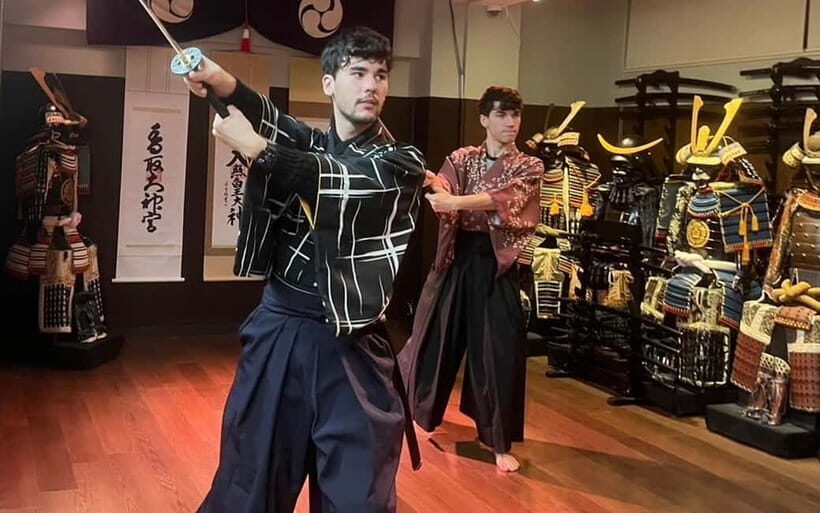
Then the instruction kicks off. The focus is on basics you can actually use: how to draw a sword, how to hold it, how to swing it, and how to retract it. They teach parts of the blade as well, so you are not only copying motion. You are learning what the parts are called in Japanese, which gives the whole experience more meaning than a generic sword show.
One more detail I like: the teachers are described as authentic instructors who have appeared in major Japanese dramas and movies. You might not care about that fact at first, but it usually correlates with better staging and clearer instruction. In other words, you are less likely to get a shaky, perform-only session.
From Sword Parts to Safe Practice: What You Actually Learn
The sword you use is a fake sword that cannot cut. That matters because it lets the class focus on form and rhythm instead of fear. You can practice the motions the way you see them in classic samurai films without worrying about safety in the same way you would with real blades.
Here is the learning sequence as you can expect it to feel:
- Get basics of the sword: you get an explanation of blade parts, which helps you understand what you are looking at
- Learn the handling: draw, hold, swing, and retract in a controlled way
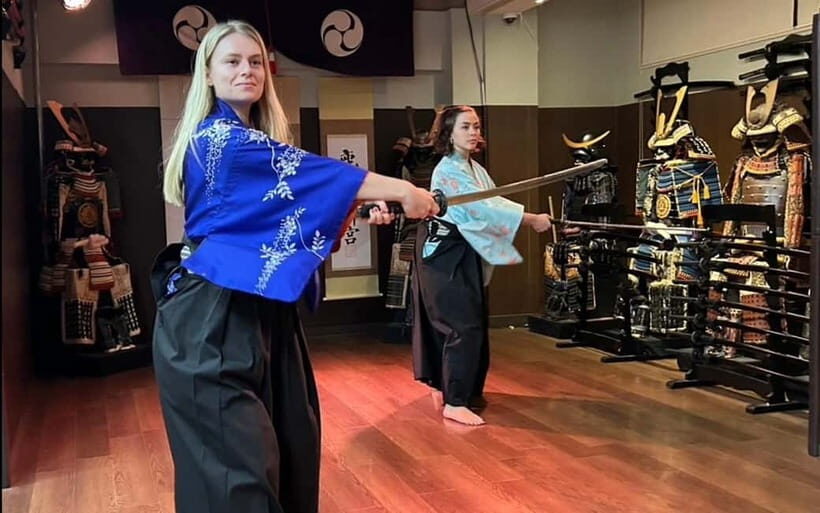
- Practice a simple set fight: a basic chanbara-style exchange
- Go live in the final scene: a fight finale with music and stage energy
In the reviews, people call out learning stance names and even blade parts in Japanese. That lines up with what the lesson is designed to do: give you vocabulary for what you are doing, so the movements connect to actual training concepts.
If you want a quick self-check, think of this as a “try the fundamentals” experience. You are not getting belt-rank training, but you are getting enough structure to feel competent by the end of the hour.
Your Chanbara Sparring Session and the Music-Driven Finale
After you learn basic motions, you practice a simple chanbara sword fight. This is the moment where the experience stops being classroom-like and turns into interactive training. You will fight in a controlled, staged way, following the instructor and using the safe sword to execute a mock exchange.
Then comes the finale. They describe it as exterminating bad guys to the music, and the feeling from descriptions and strong ratings is that the finale is more show than drill. People highlight the full performance style, with lights and soundtrack, and the staff helps you capture it as it happens.
This is where you should set expectations correctly. You are not going to become a swordsman in an hour. But you will learn enough to participate. The finale gives you that satisfying payoff: you walk in as a visitor and walk out as someone who did a coordinated fight sequence.
Also, the instructors and assistants have a reputation for energy and patience. That is important in any class that involves physical movement and costumes, because nerves can show up fast. When the guidance is upbeat and clear, you spend time learning instead of guessing.






Photos, Videos, and the Fun Way to Remember It
This experience is unusually good about memory-making. Reviews specifically mention instructors recording everything on participants’ mobile phones, and assistants taking videos and photos throughout the session. That is a major value point because sword-fighting moves are hard to film while you are doing them.
You also get a photo with a samurai, which is listed as included. The staff seems geared toward making sure you get both posed photos and action clips. In practice, that means you are more likely to end up with usable content for social posts and keepsakes, not just blurry shots from the sidelines.
If you want the best results, bring a phone with enough storage and charge it beforehand. Also, keep your phone safe and secure during the costume and sword handling parts. You are better off letting the staff film while you focus on the movements.
Price and Value: Why $63 Can Be a Good Deal
At $63 per person for a 1-hour experience, the price can feel like a splurge at first glance. But when you compare what is included, it starts to make more sense.
You are paying for:
- Costume changing into kimono and hakama
- Sword instruction with explanation of parts
- A safe practice sword you can actually handle
- Participation in a chanbara-style fight
- Staff support for photos and videos
- A photo with a samurai
For many visitors, the value is not just the skill. It is the total package: instruction plus costume plus stage-style finale plus captured memories. If you are in Tokyo for a short stay, this is also a time-efficient option. You get a lot of “Japan-in-one-session” without committing to a half-day activity.
Optional armor has an extra fee, so factor that in if you are tempted by the full look. But the base experience still includes plenty, and you can choose how far to take it.
Who This Is Best For (and Who Should Skip)
This experience is a strong match if you:
- Love martial arts movies and want something hands-on instead of just watching
- Want an interactive activity that still teaches real basics
- Like taking home photos and videos you did yourself, not just selfies
- Prefer small groups so instruction stays personal
Age and health limits are clearly part of the plan. It is not suitable for children under 2, under 3, under 4, or anyone under the listed height limit (under 3 ft / 90 cm). It is also not suitable for pregnant women, wheelchair users, visually impaired people, babies under 1 year, and people over 95 years.
If you are in that range, do yourself a favor and choose a different activity that matches your needs. The class involves physical movement and traditional clothing adjustments, so it is not the kind of tour that can be easily adapted.
If you are unsure whether you will fit costume and move comfortably, pick your safest option: wear practical shoes for getting there, and be ready to spend a short time changing into traditional clothing.
How to Get There at Samurai Theater Tokyo
For the meeting point, search Google Map for Samurai Theater Tokyo. That is the clearest path if you are navigating on foot or using public transit.
Plan to arrive a little early so you have time to settle in before the costume change and instruction. This is not a “linger and browse” experience. It runs as a tight 1-hour session, and the action starts soon after you’re in costume.
Also remember the languages offered: English and Japanese. If you speak English, you can follow the class comfortably. The instructor and staff are set up for mixed-language groups.
Should You Book This Samurai Experience?
I think you should book it if you want an hour of real physical participation in a samurai-themed setting. The strongest points are the hands-on sword basics, the fun chanbara sparring, and the fact that the staff actively captures your action with photos and video. That combination is rare, and it is why the ratings are so high.
You might skip it if you are looking for long, slow, technical sword training. This is designed as an intro that lands quickly and finishes with a performance. Also, if you fall into any of the stated age, health, or accessibility limits, choose something else.
If you can do the basic physical requirements and you want memorable photos plus a safe sword practice session, this is an easy yes for Tokyo. Book your time slot, bring a charged phone, and expect to leave smiling like you just joined the story for an hour.
FAQ
How long is the Samurai experience?
The experience runs for 1 hour.
What is included in the $63 price?
It includes changing into kimono and hakama, an explanation of sword parts, using a fake sword (cannot cut), a sword fight with samurai, and a photo with a samurai.
Do I use a real sword?
No. You use a fake sword that cannot be cut.
Where do I meet the group?
Meet at Samurai Theater Tokyo. Use Google Maps and search for Samurai Theater Tokyo.
Can I wear the armor on display?
Armor is optional. An extra fee is required if you want to wear the armor on display.
Is it okay to bring my own phone for photos and videos?
Yes. The experience includes photo opportunities, and the staff also records video and takes photos on your mobile phones during the session.