REVIEW · HAKONE
Private Tour – Hakone Day Trip! A Tour to Explore All Must-Sees!
Book on Viator →Operated by OTOMO Travel Guide · Bookable on Viator
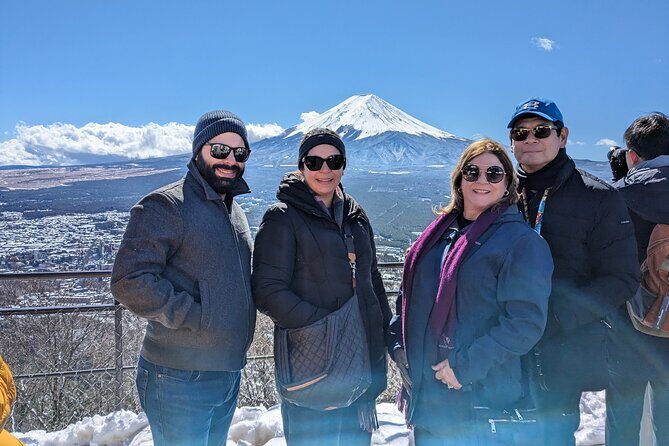
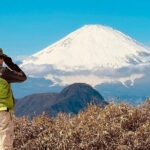
Hakone is one of those places where one good viewpoint changes the whole day. This private 7.5-hour tour strings together the big hits—especially Lake Ashi and Mount Fuji viewpoints—while your guide keeps the route smooth and personal. I also like that you’re not stuck with a rigid group plan; it’s built for your pace. One possible drawback: if clouds roll in, Mount Fuji can be partially or fully hidden, and your guide may adjust stops.
You’ll likely meet your guide at Hakone-Yumoto Station, and in the past you could be paired with guides like Koji, Tatsu, Nanako, Akira, Mike, or Hori—each known for tailoring the day and handling the moving parts. I’m a big fan of tours where someone actually watches the clock, lines up transport, and explains what you’re seeing so the sights feel like more than just photo ops.
Here are the key reasons this Hakone private day trip tends to work so well.
In This Review
- Key Points You’ll Care About
- Why This Private Hakone Day Trip Fits Together So Well
- Price and What You’ll Likely Pay for Separately
- Meeting at Hakone-Yumoto: Where Your Day Gets Organized
- Ajisai Bridge: Vermilion Photos Near Hakone-Yumoto
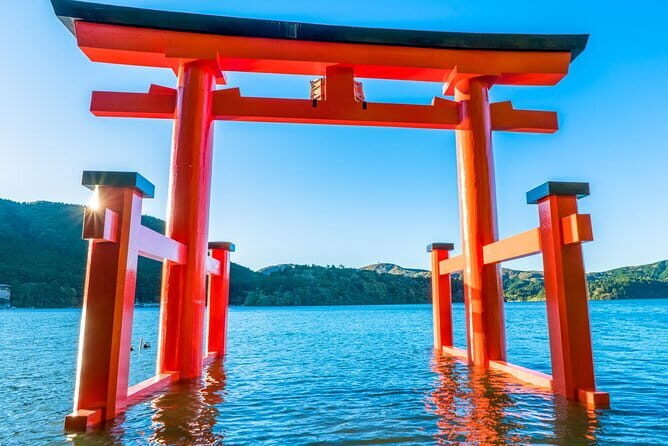
- Hakone Shrine and the Lake Torii Photo Moment
- Lake Ashi Cruise from Motohakone Pier: Views Without the Hassle
- Togendai View Restaurant: Fuel With Lake and Pirate-Ship Views
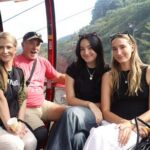
- Hakone Ropeway Toward Owakudani: Steam Right in Front of You
- Cu-mo Hakone: Footbaths and the 757-Meter View Break
- Owakudani: Where the Volcano Still Shows Up
- Hakone Tozan Cable Car: A Classic Old Line Between Gora and Sounzan
- How Weather Can Change What You See (Especially Mount Fuji)
- What You’ll Get From the Guide (Beyond a Script)
- Who This Tour Is Best For
- Should You Book This Private Hakone Day Trip?
- FAQ
- How long is the Hakone private day trip?
- Is this tour really private?
- Where do we meet, and where does the tour end?
- What’s included in the tour price?
- What is not included?
- Which attractions have free admission on this route?
- What happens if the weather is bad?
- Is there a chance to see Mount Fuji?
- Is there a footbath, and should I bring a towel?
- What’s the cancellation policy?
Key Points You’ll Care About
- Private, just your group means fewer waiting games and more time at the best angles
- Lake Ashi + cruise gives you views you simply can’t get from the shoreline
- Owakudani and the ropeway put you right by Hakone Volcano’s smoking valley
- Shrines and photo spots like Hakone Shrine’s lake torii add variety beyond museums and rides
- Cu-mo Hakone footbaths are a fun, low-pressure break if you like small wellness moments
Why This Private Hakone Day Trip Fits Together So Well
Hakone is spread out in tiers: lakeside towns, museum-area hills, and volcanic high points. That’s great for views, but it’s a pain if you’re trying to plan it yourself—trains, cable cars, ropeways, boats, and timing all compete with each other.
This tour is basically the antidote. You get a guide who helps you move efficiently between the key zones, then fills the day with classic Hakone stops: Ajisai Bridge, Hakone Shrine (including the lake torii photo spot), a Lake Ashi cruise, the Hakone Ropeway toward Owakudani, and the volcanic valley itself. The plan also includes Hakone Open-Air Museum, which is one of those places that’s easier to enjoy when someone tells you where to focus and how to fit it into the day.
The best part? You’re not just collecting checkboxes. With a good guide, the stops start to connect: Japan’s lake-and-volcano setting, why hydrangeas matter here, why the torii gate is positioned how it is, and what you’re actually looking at when steam curls out of Owakudani.
You can also read our reviews of more private tours in Hakone
Price and What You’ll Likely Pay for Separately
The tour price is $181.64 per person, for a private day with a guide and coverage for the guide’s necessary expenses. But you should budget for add-ons on the day too.
The estimated extra costs listed are 6,900 JPY per person, broken down as:
- 5,000 JPY for transportation and admissions
- 1,800 JPY for meals
- Optional experience costs of 100 JPY
Here’s the value angle: Hakone’s transport isn’t just one train ride. You’re combining a cruise, ropeway, and likely a cable car, plus multiple paid attractions. Paying those costs yourself isn’t a surprise in Hakone—it’s the normal price of admission for variety. What you’re really paying for with this tour is time, routing help, and a private guide to keep the day feeling intentional.
If you want maximum value, come hungry for multiple experiences (not just one “big” site). If you’d rather spend all day at museums or all day at the lake, you may feel the schedule is too full.
Meeting at Hakone-Yumoto: Where Your Day Gets Organized
Most Hakone trips start with Hakone-Yumoto, and this one does too. The meeting point is Hakone-Yumoto Station, and the tour ends back near there.
This matters because it’s the easiest hub for building your day:
- You can hop between the lake route and the mountainside routes more efficiently.
- Your guide can use local transport options without you juggling transfers.
Also, Hakone can slow down during congestion—especially on weekends. The tour notes that waiting time for transport can get long, and the guide may shorten stays at spots or skip something if schedules tighten. In practice, that’s not a deal-breaker; it’s a sign they’re protecting the whole itinerary rather than forcing you to miss the next ride.
Ajisai Bridge: Vermilion Photos Near Hakone-Yumoto
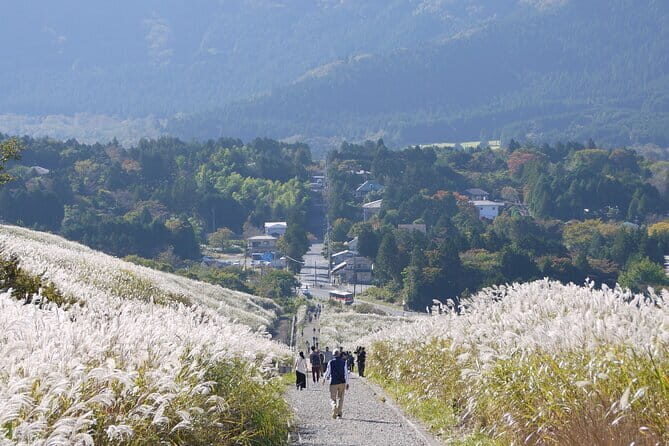
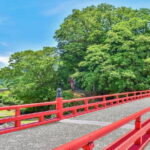
Stop one is Ajisai Bridge, the Hydrangea Bridge near Hakone-Yumoto Station. It’s a vermilion bridge and a classic photo stop—especially in June when hydrangeas bloom and the whole area leans into that seasonal look.
Why I like starting here: it’s quick, easy, and it gets you oriented right away. You’re not burning your morning with travel uncertainty. You’re stepping into the Hakone vibe—bright color, lake-adjacent scenery, and a photogenic landmark that feels distinctly local.
Good to know:
- The admission is free.
- It’s a short stop (about 10 minutes), so don’t over-plan here. Use it for photos and a quick walk, then move on.
Hakone Shrine and the Lake Torii Photo Moment
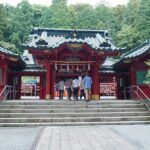
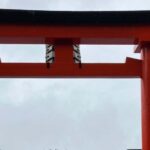
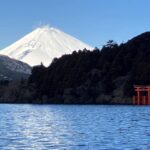
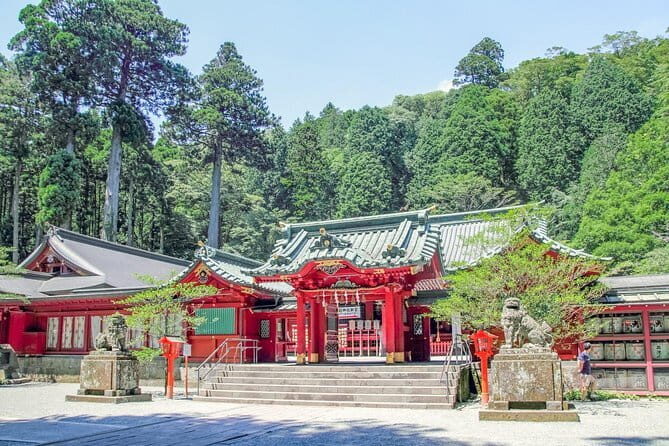
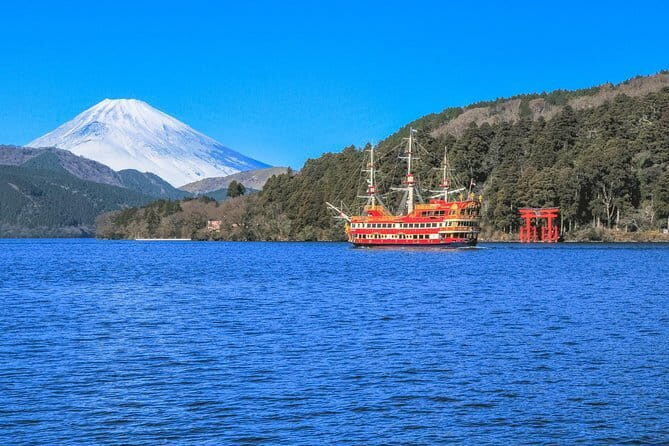
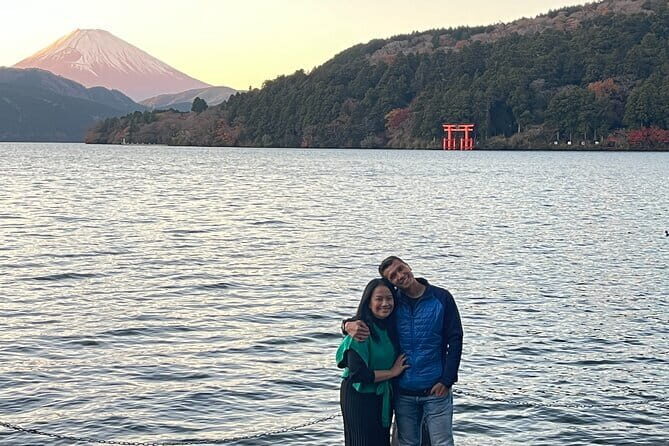
Next up is Hakone Shrine / Kuzuryu Shrine, a shrine complex with 1,200+ years of history. The highlight here is the torii gate standing on the lake, which has been getting popular as a unique photo spot.
This is one of those places where timing and weather matter. If it’s clear enough to see the water conditions nicely, the torii-and-lake composition photographs well. If it’s misty or rainy, it can still be atmospheric—you just trade sharp views for mood.
Stop time is around 45 minutes. That’s enough time to:
- stroll at your own pace,
- check out the shrine atmosphere,
- and take photos without feeling rushed.
Since admission is listed as free, you’re paying for time and walking—not tickets.
A few more Hakone tours and experiences worth a look
Lake Ashi Cruise from Motohakone Pier: Views Without the Hassle
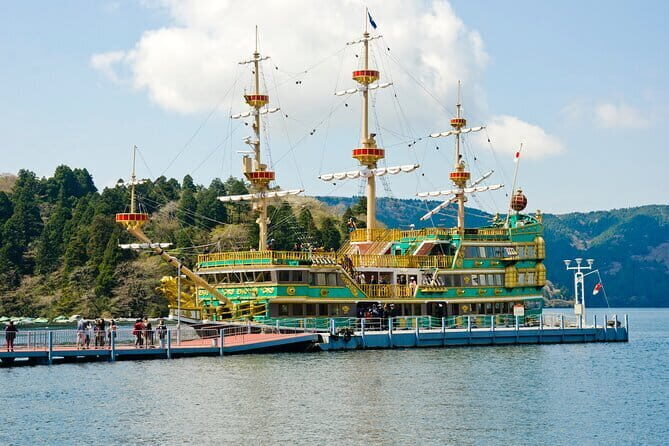
Then comes one of Hakone’s best “time-to-wow” moves: a cruise on Lake Ashi from Motohakone-ko (Motohakone Port).
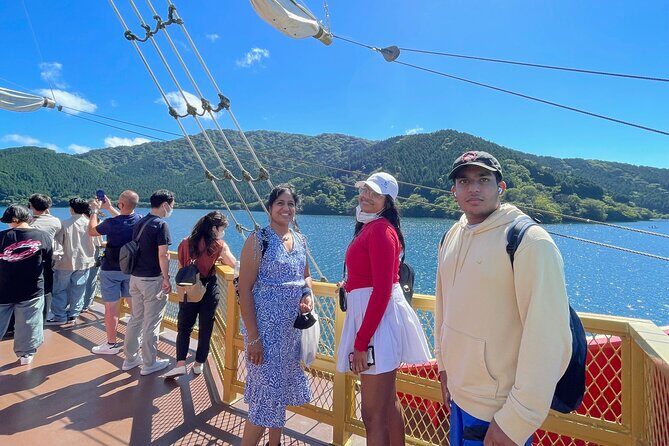
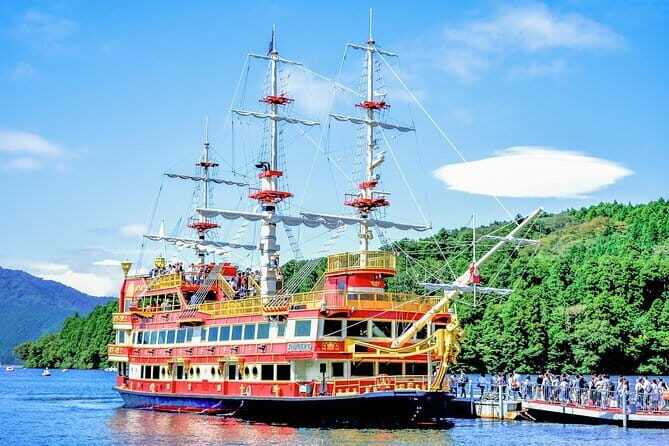
You’ll ride the Hakone pirate ship (often referred to as the Motohakone Port option). Onboard, you’re not in a plain commuter boat—there’s a decorated interior with ship models (French, British, Swedish are mentioned), which gives the ride a playful feel.
This stop is about 50 minutes, and the cruise admission is not included in the tour fee.
Why this cruise is worth it:
- It gives you a perspective on the shoreline that you can’t replicate from land.
- It creates a moving viewpoint between lakeside landmarks.
- If Mount Fuji is visible, the angle can be great—assuming clear weather.
If you dislike boats, I’d still consider it for the viewpoint alone. It’s short enough to stay manageable, but long enough to feel like a real break.
Togendai View Restaurant: Fuel With Lake and Pirate-Ship Views
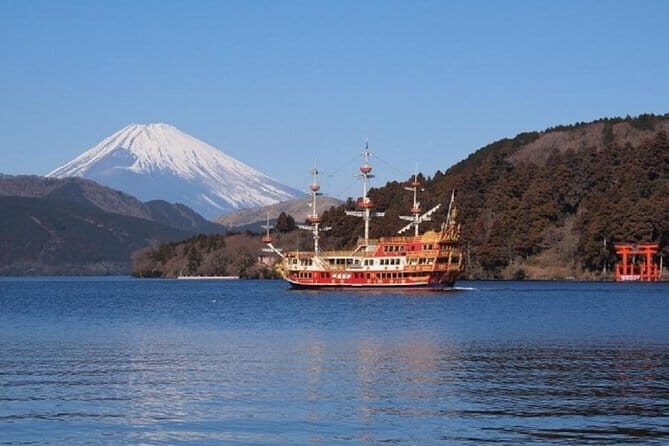
After the cruise, you’ll head to Togendai View Restaurant inside Togendai Station. This is where you can eat grilled dishes and items made with local ingredients while looking out over Lake Ashi and the pirate ships.
The listed time is about 50 minutes, but meals are not included. Think of this as a practical pause that also keeps you in the view corridor.
Two things to keep in mind:
- If you’re hungry, plan to order something that matches your pace. Don’t treat it like a sit-down dinner if you want a fast flow to the ropeway.
- If weather is rough, this kind of indoor-with-views break can actually save your day.
Hakone Ropeway Toward Owakudani: Steam Right in Front of You
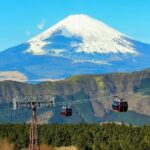
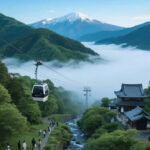
Next is the Hakone Ropeway, typically the route tied to the Owakudani area. Right before you reach the key area, the experience described is that you’re suddenly met by the billowing smoke of Owakudani.
On clear days, the ropeway also gives a chance at sweeping views—especially for the classic “Hakone + Fuji if the sky cooperates” scenario. Admission for the ropeway is not included in the tour fee.
Stop length is around 50 minutes, and here’s why this segment feels special: it connects the calm lake zone with the volcanic zone fast. You go from “cute and scenic” to “Hakone is alive” in a way that’s hard to replicate by bus.
Tip: wear layers. Ropeways and higher points can feel cooler, and you’ll likely be standing around for your turn and photos.
Cu-mo Hakone: Footbaths and the 757-Meter View Break
At about 757 meters altitude, you reach cu-mo Hakone, a newer spot with a view and a chance to try foot baths. Admission is listed as free here, and the stop is about 20 minutes.
This is a quick reset in the middle of a day that can involve a lot of rides and walking. If you’ve been on your feet since Hakone-Yumoto, a short soak can make the rest of the day feel easier.
Practical note: the tour recommends bringing your own towel because there’s a footbath spot you can try.
Owakudani: Where the Volcano Still Shows Up
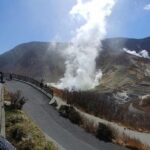
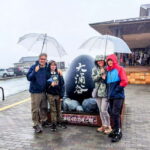
Finally, you get to Owakudani, the volcanic valley created by Hakone Volcano eruptions roughly 3,000 years ago. It’s famous for emitting white smoke from all over the valley, and the terrain is exposed rock with less vegetation than the greener parts of Hakone.
This stop is about 45 minutes, admission is free, and it’s one of the best reality checks of the day. You’ve spent hours moving through scenic viewpoints, but Owakudani is the reminder that Hakone’s beauty comes from something powerful underneath.
If you’re visiting in cold or foggy weather, you may see less of the distant panorama, but the steam itself can still be striking. Just keep your footing secure on uneven or gritty paths, and don’t rush—there’s usually enough to look at without sprinting to every corner.
Hakone Tozan Cable Car: A Classic Old Line Between Gora and Sounzan
The itinerary also includes the Hakone Tozan Cable Car between Sounzan and Gora. It’s described as the oldest cable car in the Kanto region, and it opened in 1921 (Taisho 10).
Cable cars like this are less about speed and more about atmosphere: you get a gentle ride that connects the layers of Hakone. The time listed is around 25 minutes, and admission isn’t included in the tour fee.
If you love historic transport, you’ll enjoy this segment. If you’re ride-weary, think of it as a short scenic connector rather than a destination.
How Weather Can Change What You See (Especially Mount Fuji)
This is the big reality check for Hakone: weather matters. The tour notes that it’s weather-dependent, and if weather is poor, transportation, destinations, and routes may change. That’s smart planning, not a failure.
What that means for your day:
- If clouds are low, Mount Fuji views may be limited.
- You’ll still get a great Hakone experience because the volcanic smoke and shrine settings don’t vanish just because the sky is gray.
- Your guide may swap or adjust timing to keep you from wasting hours in conditions that won’t deliver views.
One more practical angle: congestion adds pressure. Long waits can shorten your time at each stop, so you’ll want comfortable shoes and a relaxed attitude. You’ll enjoy the day more if you treat it as a guided “route through Hakone” rather than a strict checklist of perfect photos.
What You’ll Get From the Guide (Beyond a Script)
This is a private tour, and the guide is doing more than pointing at buildings. The experience is built around:
- explaining history and culture at the shrines,
- narrating what you’re seeing during the ropeway and volcanic valley,
- and making the day match your interests so it doesn’t feel generic.
In the past, guides associated with this experience have been praised for being flexible—especially when weather and family energy don’t cooperate. That kind of adaptability matters in Hakone because plans often hinge on visibility and transport timing.
Also, since the tour includes the guide’s necessary expenses, the day feels less like you’re “hiring someone to walk with you” and more like you’re paying for a functioning plan.
Who This Tour Is Best For
This Hakone private day trip is a great fit if you:
- want lots of highlights without spending hours planning,
- prefer a just-your-party pace,
- care about viewpoints and practical sightseeing flow (lake cruise + ropeway + volcano),
- and don’t mind paying separate costs for rides and meals.
It’s especially good for couples, small families, and travelers who want to see many different sides of Hakone in one day without stressing over connections.
If you’re the type who hates schedules or wants to linger for hours at one place, consider whether you’d feel rushed. The itinerary is built to cover multiple zones.
Should You Book This Private Hakone Day Trip?
If your goal is to see the classic Hakone highlights in one efficient day—Ajisai Bridge, Hakone Shrine’s lake torii, a Lake Ashi cruise, Owakudani by ropeway, and a volcanically dramatic finish—this tour is a strong choice. The private format is where it earns its keep: you get a guide who can adjust pacing, handle transport decisions, and help the day feel organized instead of chaotic.
I’d book it if you’re okay with two realities:
1) you’ll pay some on-the-day costs for transport/attractions and meals, and
2) Mount Fuji depends on the sky, not the itinerary.
But if you want maximum control and you enjoy building routes yourself, you might do it independently. Still, for most people, the convenience plus the guide-driven flow makes this day feel like less work and more payoff.
FAQ
How long is the Hakone private day trip?
The tour duration is about 7 hours 30 minutes.
Is this tour really private?
Yes. It’s a private tour with only your group participating.
Where do we meet, and where does the tour end?
You meet at Hakone-Yumoto Station in Hakone, Kanagawa. The tour ends back at the meeting point.
What’s included in the tour price?
The included items are a tour guide, a private tour, and the necessary expenses for the guide during the tour.
What is not included?
You’ll pay for transportation and admission fees, plus meals and food and drink at the visited spots. The tour also lists an estimated extra cost of 6,900 JPY per person (transport/admissions 5,000 JPY, meals 1,800 JPY, plus optional experience costs of 100 JPY).
Which attractions have free admission on this route?
Admission is listed as free for spots like Ajisai Bridge, Hakone Shrine / Kuzuryu Shrine, Cu-mo Hakone, and Owakudani. Other items like the Lake Ashi cruise, Togendai restaurant (meal costs), Hakone Ropeway, and Hakone Tozan Cable Car are not included.
What happens if the weather is bad?
The tour notes that bad weather can lead to changes in transportation, destinations, and routes. The experience requires good weather, so visibility (including Mount Fuji views) may be affected.
Is there a chance to see Mount Fuji?
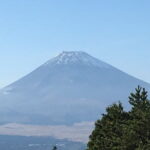
The tour is designed to get excellent views of Mount Fuji and Lake Ashi, but weather affects what you can actually see on the day.
Is there a footbath, and should I bring a towel?
There is a foot bath at cu-mo Hakone, and it’s recommended that you bring your own towel.
What’s the cancellation policy?
You can cancel for a full refund up to 24 hours before the experience starts. If it’s canceled due to poor weather, you’ll be offered a different date or a full refund.