Eight hours, ten Tokyo neighborhoods, one private plan. You’ll appreciate the hotel pickup convenience and the onboard Wi‑Fi that keeps your route and translation apps working while you move city to city.
I also like the fact that you’re not doing Tokyo like a conveyor belt. You get a real back-and-forth with your guide, and many groups end up with a slightly smarter day (often including food stops that feel genuinely local). One thing to watch: the schedule is full, and lunch isn’t included, and at least one major site (Hama Rikyu Gardens) has admission on top of the tour.
In This Review
- Key things that make this Tokyo private tour work
- A one-day Tokyo route that’s built for a private pace
- Price per group and when it feels like good value
- Comfort, pickup, Wi‑Fi: the practical “quality of day” stuff
- Tsukiji Outer Market: food streets without the wholesale chaos
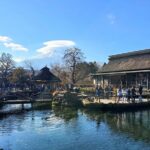
- Hama Rikyu Gardens: a feudal past in a calm pocket
- Ginza: shopping flash, architecture moments, and an easy reset
- Imperial Palace grounds and the National Diet building: power, rebuilt after war
- Akihabara: anime, gaming, and the electronics-lab vibe
- Senso‑ji Temple in Asakusa: Tokyo’s oldest landmark energy
- Omotesando and Harajuku: architecture meets youth fashion
- Meiji Jingu Shrine: a real breather before Shibuya Crossing
- Shibuya Crossing and Daikanyama: peak chaos, then quieter cool
- Your guide is the difference between seeing Tokyo and understanding it
- How the day actually feels: timing, walking, and lunch planning
- Should you book this Tokyo private tour?
- FAQ
- How long is the Tokyo private tour?
- What’s the price for this private tour?
- Is hotel pickup included?
- Is Wi‑Fi included during the tour?
- What’s included in the tour package?
- Is lunch or dinner included?
- What places are visited during the day?
- Is this a private tour?
- Can I cancel for a full refund?
Key things that make this Tokyo private tour work
- Hotel pickup + AC comfort: it’s designed to keep the day easy, especially when Tokyo heat and crowds kick in
- Wi‑Fi on board: helpful for maps, messaging, and quick research between stops
- Tsukiji Outer Market, still worth it: the inner wholesale market shifted to Toyosu, but the outer area stays a fun food-and-shops walk
- A “big sights + culture” mix: imperial-era landmarks, temples, youth fashion districts, and tech/anime in one line
- A calm reset is built in: Meiji Jingu gives you a breather before you hit Shibuya Crossing
- Your guide’s flexibility shows up: multiple guides (like Soya, Riley, Tomoya, Richie, Udi, and Moe) are described as tailoring and adjusting on the fly
A one-day Tokyo route that’s built for a private pace
Tokyo is huge. The hardest part for first-timers isn’t the sights, it’s the logistics: where to go first, how to connect neighborhoods, and how to avoid wasting half the day in transit. This private tour is built to solve that problem. You get an air-conditioned vehicle, a guide handling the driving and timing, and a plan that hits major districts while still leaving room for conversation.
The best part is how the day balances “Tokyo postcard” moments with places that help you understand what you’re looking at. You start with Tsukiji’s outer market atmosphere, slide into Ginza’s polished shopping streets, then pivot into shrines, temples, and the youth-fashion energy of Harajuku and Omotesando. By the time you reach Shibuya Crossing, you’re already oriented, not just watching from the outside.
You can also read our reviews of more private tours in Tokyo

Price per group and when it feels like good value
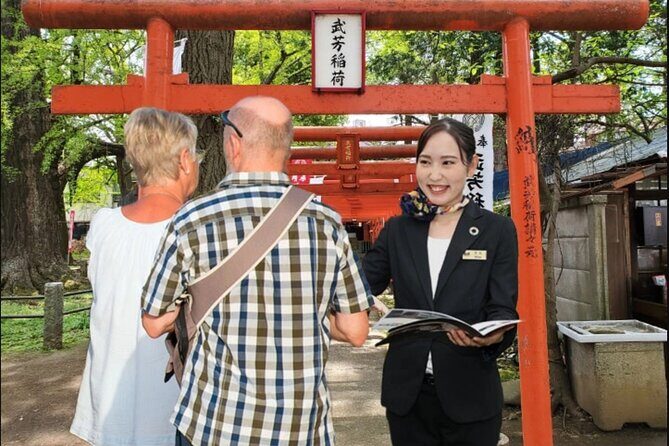
This tour costs $743.26 per group for up to 9 people. That’s not a budget price if you’re traveling solo. But for families or small groups, it can start to make sense fast—because you’re paying for private transport plus a guide for a full day.
Here’s the value logic I’d use: Tokyo taxi bills add up quickly, and train transfers with multiple people (bags, kids, grandparents) can turn into a stressful game of timing. This tour swaps that for one vehicle, one meeting point flow, and a guide to keep the day on track. If you’re comparing to renting your own car or paying for multiple separate guide hours, the private-per-group structure is what makes the math work.
Also note what you do pay for yourself: lunch and dinner aren’t included, so budget for meals. And some stops may have extra admission depending on what you choose to do on the day.
Comfort, pickup, Wi‑Fi: the practical “quality of day” stuff
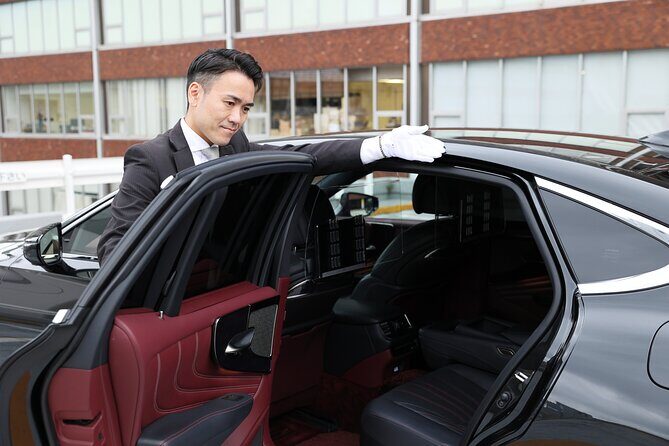
The tour includes hotel pickup, private transportation, bottled water, snacks, and Wi‑Fi on board. That combination sounds basic until you’re in Tokyo in the summer or juggling kids. Having AC transport means you can actually enjoy the walking parts, not just survive them.
I especially like the Wi‑Fi piece. Tokyo navigation is easy when you’re not on the clock. With Wi‑Fi available in the car, you can quickly check opening times, confirm directions, or look up a landmark detail before you arrive.
One small real-world note: the tour listing says most travelers can participate. In past experiences with this tour, groups have been able to use a wheelchair that the driver helped arrange (for a senior traveler). That’s not a universal guarantee, but it suggests the team tries to solve mobility needs when they can.
Tsukiji Outer Market: food streets without the wholesale chaos
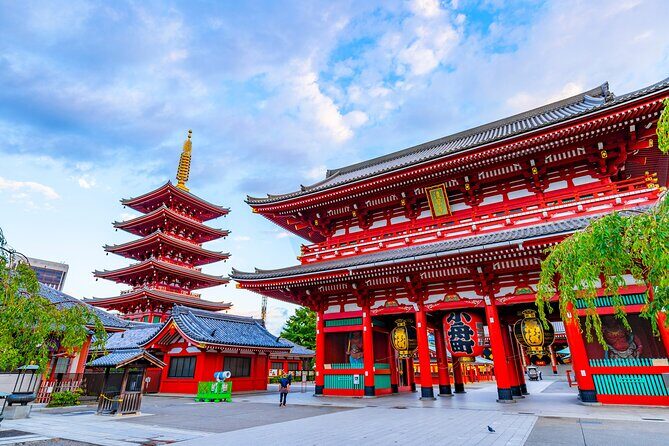
You’ll begin at Tsukiji Jogai Market, the outer market area. The famous inner wholesale market moved to Toyosu in 2018, but the outer market remains active. That matters because the outer streets are where you get the more casual, walk-in restaurants and snack culture—easy to browse even if you’re not hunting a specific booth.
You’ll spend about 40 minutes here, which is the right length for Tsukiji’s style. You don’t need hours of browsing to get the feeling: grilled seafood smells, small shops, and quick bites you can sample on the spot. The time limit also helps you keep momentum for the rest of the day.
If you’re picky about food timing, plan to treat this as a tasting-and-stroll stop, not a full meal unless your guide suggests a specific place.
Hama Rikyu Gardens: a feudal past in a calm pocket
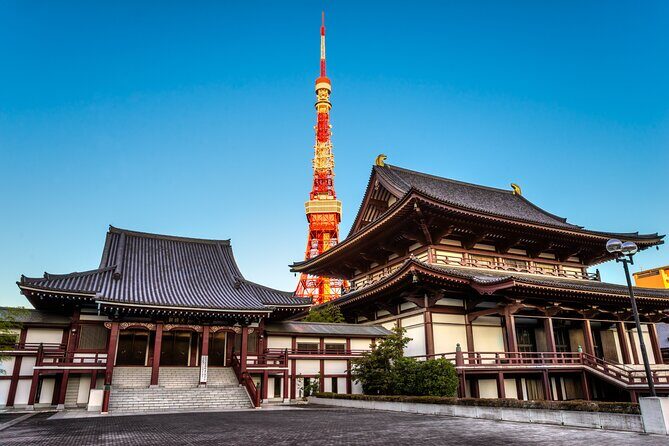
Next is Hama Rikyu Gardens for about 40 minutes. Admission is not included, so you’ll pay separately if you want to go in. Still, it’s a smart stop because it gives your day a breather.
The garden has been used for centuries. It began as a feudal lord’s Tokyo residence and even served as duck hunting grounds between the 17th and 19th centuries. Today, you get that historical backstory alongside a much quieter atmosphere than the shopping streets.
What to expect: this is a walk-around-and-look stop. If your group loves photo angles and water views, you’ll enjoy it. If your group is more “move fast, see lots,” you’ll still get value, but you might want to commit to what you want to photograph so you don’t lose time inside.





Ginza: shopping flash, architecture moments, and an easy reset
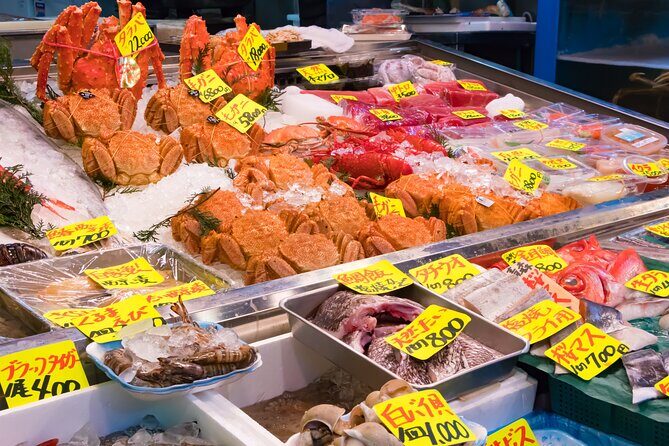
Then it’s Ginza for about 1 hour. Ginza can look like a different planet compared to older Tokyo districts: boutiques, galleries, traditional craft shops, and a strong mix of modern architecture. It’s a great place to see how Japan blends old craftsmanship with cutting-edge design.
This stop is “free” in the sense that there’s no admission ticket required. That makes it flexible. Your guide can steer you toward what fits your interests—shopping lanes for some groups, design details for others, and restaurant streets for those who want a meal later.
The main practical consideration: Ginza is expensive. Even if you don’t buy anything, it can still be worth browsing for the vibe.
Imperial Palace grounds and the National Diet building: power, rebuilt after war

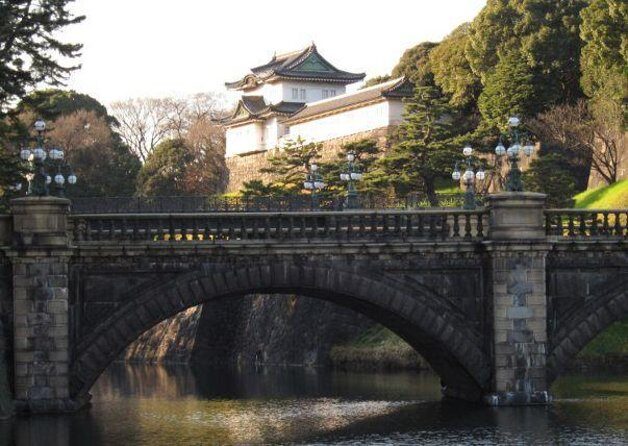
You’ll also see the Imperial Palace area (about 30 minutes, no admission ticket noted), plus a stop at the National Diet building.
A helpful way to understand this stretch: this is modern Japan framed by the changes of the 1800s and the rebuilding after World War II. The Imperial Palace grounds were once the Tokugawa shogun family castle site (1603–1868), then it became the Imperial Palace when political power returned to Emperor Meiji.
The National Diet building is especially striking for history-minded visitors. It was built in 1936 and is one of the few Tokyo buildings that survived the air raids of 1945. That survival detail gives you a concrete link between what you see now and what endured.
Time is shorter here than you might want if you’re a museum person. But as a guided “context stop” it works well.
Akihabara: anime, gaming, and the electronics-lab vibe
Akihabara takes about 1 hour. If you like anime and gaming culture, this is one of Tokyo’s most direct hits. You’ll also find hundreds of electronics shops—from tiny stalls focused on particular components to bigger retail stores.
I like this stop because it’s not just sightseeing—it’s a sensory experience. Bright storefronts, gadget curiosity, and lots of people shopping or browsing. Your guide can help you pick where to spend time so you don’t end up wandering in circles.
Two practical notes:
- Some shops sell niche items that won’t be useful to everyone, so it helps to have a guide steer you toward what fits your interests.
- If your group is sensitive to crowds, Akihabara can feel intense. Your guide can help you choose the best side streets and what to skip.
Senso‑ji Temple in Asakusa: Tokyo’s oldest landmark energy
Next is Senso‑ji Temple (about 1 hour). Senso‑ji is described as the oldest temple in Tokyo, which explains why it has such gravity. Even if you only spend an hour, it’s long enough to absorb the atmosphere and understand why locals care so much.
The name Asakusa first appears in Japanese history around 628, connected to a story about a small Kannon statue being found by fishermen. That kind of context turns the visit from just looking at a gate into understanding the legend behind the place.
This stop is usually a good “everyone in the group enjoys it” moment—temples have a universal appeal, and it’s easy to take breaks nearby if needed.
Omotesando and Harajuku: architecture meets youth fashion
You’ll move through Omotesando (about 30 minutes) and Harajuku (about 30 minutes). These two stops together give you a strong sense of modern Tokyo’s fashion identity.
Omotesando is known for buildings designed by major architects and a heavy presence of famous fashion brands. It’s an eye-candy walk, especially if you like the way Tokyo designs its streets.
Harajuku shifts the energy toward youth culture. You’ll see unique fashion trends and some of the more outrageous design choices in clothing and buildings. It’s the kind of place where your guide’s judgment helps. Ask them what to prioritize based on your group’s taste—some people want street fashion photos, others want calmer corners for looking and walking.
Meiji Jingu Shrine: a real breather before Shibuya Crossing
Then comes Meiji Jingu Shrine (about 30 minutes). This stop is built as a reset. After the fashion districts, the shrine’s atmosphere is calmer, and that contrast makes the experience feel bigger than the sum of its stops.
You might catch a traditional Japanese wedding ceremony on Saturdays and Sundays, if timing lines up. Even if you don’t see it, the “slow down” feeling is the point.
This is also a great spot for your group to drink water, rest legs, and regroup before the final rush of city energy.
Shibuya Crossing and Daikanyama: peak chaos, then quieter cool
You’ll finish with Shibuya Crossing (about 15 minutes) and Daikanyama (about 30 minutes).
Shibuya Crossing is described as the busiest intersection in the world. That’s one of those claims you can argue about, but you don’t need to. The experience is about the scale: multiple directions of pedestrians, constant movement, and that unmistakable Tokyo modernity.
Fifteen minutes is enough. You’re there to see it, orient yourself, and take a couple of photos—not to turn it into a long event. After that, the day shifts to Daikanyama, a district known for boutiques and cafes with a less hectic pace than the bigger names.
That contrast is why I like this ending. You don’t leave exhausted. You end with a neighborhood feel that’s easier to enjoy slowly.
Your guide is the difference between seeing Tokyo and understanding it
The route would be fine on paper. The real value comes from the guide behavior: timing tweaks, explanation level, and making sure your group stays comfortable.
From past experiences with this tour, I saw a pattern of guides who communicate clearly in English and adapt to different ages and interests. Names that come up include Soya, Riley, Tomoya, Richie, Danish, Udi, Gen, Takumi, Ryu, Moe, Leonardo, Tomo, and Aimi. Not every guide will match your exact style, but the consistency is that they aim to make the day work for your group.
What that adaptation can look like:
- Changing the day plan based on what you’re most excited to see
- Helping you avoid wasting time in the wrong places for your group’s priorities
- Steering toward good food options, including spots where you’ll feel the local touch
- Working with families, including kids, and adjusting engagement so everyone stays involved
If you want the day to feel smooth, do what these groups often do: start with a short list of must-sees and add a few preferences (food, photos, history, shopping style). Then let your guide do the connecting work.
How the day actually feels: timing, walking, and lunch planning
With an 8-hour day and 11 stops (including quick transitions), this is not a slow stroll tour. It’s a guided sampler with short-to-medium visits: 15 minutes for Shibuya, 30 minutes for places like Harajuku and Meiji Jingu, and around an hour for heavier-hitter areas like Akihabara and Senso‑ji.
So here’s my practical advice: decide what “success” means. If your goal is to tick off the famous sights fast and see multiple districts, this fits well. If your goal is deep, unhurried exploration, you might feel the time pressure.
Lunch and dinner are your job. The tour provides snacks and bottled water, which can help you avoid hunger crashes, but you should still plan for a full meal somewhere during the day. If you have dietary needs, tell your guide early so they can suggest a practical place that fits.
Should you book this Tokyo private tour?
Book it if you want:
- One guided day that covers major Tokyo districts without wrestling train connections
- Comfort (AC vehicle, water, snacks) and the convenience of pickup
- A guide who can adjust and tailor the flow so you don’t feel stuck in a fixed script
- A smart mix of old-meets-new Tokyo: Tsukiji, temple and shrine stops, then Harajuku/Shibuya energy
Consider skipping it (or adding extra days elsewhere) if:
- You hate a packed schedule and want long stays in fewer places
- You’re expecting lunch to be included
- You want guaranteed entry to paid attractions beyond what’s naturally planned (some sites can have extra admission)
If you’re planning your first full day in Tokyo and want to get your bearings fast, this private tour is a strong bet.
FAQ
How long is the Tokyo private tour?
The tour duration is listed as 8 hours (approx.).
What’s the price for this private tour?
The price is $743.26 per group, for up to 9 people.
Is hotel pickup included?
Yes. Hotel pickup is offered, and the tour is near public transportation as well.
Is Wi‑Fi included during the tour?
Yes. There is Wi‑Fi on board included.
What’s included in the tour package?
Included items are bottled water, snacks, an air-conditioned vehicle, Wi‑Fi on board, and private transportation.
Is lunch or dinner included?
No. Lunch and dinner are not included.
What places are visited during the day?
Stops include Tsukiji Jogai Market, Hama Rikyu Gardens, Ginza, the Imperial Palace area, the National Diet building, Akihabara, Senso‑ji Temple, Omotesando, Harajuku, Meiji Jingu Shrine, Shibuya Crossing, and Daikanyama.
Is this a private tour?
Yes. It’s private, and only your group participates.
Can I cancel for a full refund?
Yes. Free cancellation is available, with a full refund if you cancel up to 24 hours in advance of the experience start time.