REVIEW · MIE PREFECTURE
Ise Jingu(Ise Grand Shrine) Half-Day Private Tour with Government-Licensed Guide
Book on Viator →Operated by Japan Guide Agency · Bookable on Viator
Sanctuary time goes fast. This half-day private tour in Ise Jingu pairs you with a government-licensed local English guide, so you spend your hours at the right places and in the right order instead of guessing. I especially like the focus on the two main shrine areas—Naiku and Geku—and the way the guide connects the sacred spaces to everyday Shinto customs. One thing to plan for: entrance fees and transportation are not included, so your total day cost can creep up if you rely on taxis or add extra stops.
I also like that the plan is flexible. You can choose 2–3 sites from the core options like Isuzugawa, Okage Yokocho, and the Meoto Iwa area, which helps if you want more walking, more shopping street time, or a quicker look at the ocean rocks. Pick-up is offered, but you meet the guide within a designated area on foot/public transport, so it’s not a door-to-door taxi tour. On busy days, that efficient flow matters, and guides such as Tetsuya Tanahashi, Yoshi, and Nishio are repeatedly praised for making short time feel well-used.
In This Review
- Key highlights you’ll feel in 4 hours
- Why Ise Jingu feels different with a private, licensed guide
- The half-day plan: Naiku, Geku, and the “in-between” stops that give context
- Stop 1: Naiku (the shrine area dedicated to Amaterasu)
- Stop 2: Geku (another major shrine compound, same big deity focus)
- Stop 3: Isuzugawa River for purification-and-nature context
- Stop 4: Okage Yokocho for Edo-to-Meiji town nostalgia
- Stop 5: Meoto Iwa (wedded rocks) and the Futami viewpoint
- Pickup, timing, and why “meeting on foot” can be a feature
- Price and value: what $108.38 gets you (and what it doesn’t)
- Who this tour suits best
- One more thing: Shinto etiquette is easier when someone points it out
- Should you book this Ise Jingu private tour?
- FAQ
- How long is the Ise Jingu half-day private tour?
- What does the tour price include?
- Are entrance tickets included?
- Is transportation included?
- Can I choose which stops to visit?
- Is this tour truly private?
- Do I need lunch included?
- Is a mobile ticket provided?
- Is it okay to bring a service animal?
- What is the cancellation policy?
Key highlights you’ll feel in 4 hours
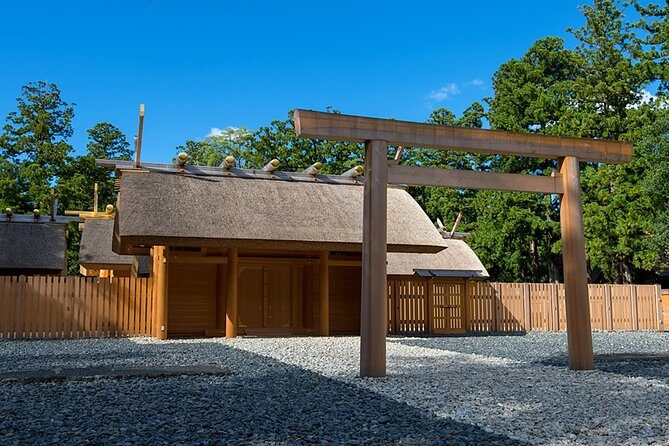
- Naiku + Geku in one outing so you get the full “supreme deity worship” arc without re-planning
- Isuzugawa River added for the purification-and-nature angle of the Naiku grounds
- Okage Yokocho for a more time-travel feel in front of the Naiku gate
- Meoto Iwa (wedded rocks) paired with the nearby shopping street area in Futami
- Private, only-your-group pace with a government-licensed English-speaking guide
- Mobile ticket included, plus advice to keep you from rushing or missing key moments
Why Ise Jingu feels different with a private, licensed guide
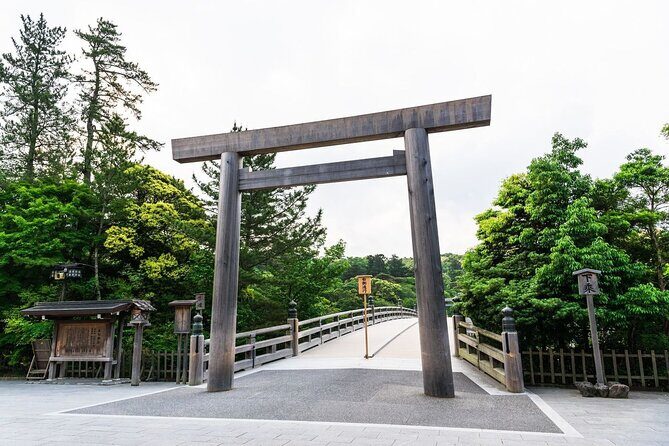
Ise Jingu is not a “checklist only” kind of place. It’s sacred ground with rules, rhythms, and quiet etiquette that can be hard to decode if you’re reading your phone while walking. A private guide helps you slow down in the right moments and speed up where you’d otherwise stall.
The best part is interpretation that stays practical. You’re not just told what something is. You’re pointed to how people behave around it—where to pause, how to think about purification, and what certain structures mean in Shinto belief. That’s where the private format shines: you can ask questions as you go, instead of waiting for a group to catch up.
Another plus is time efficiency. In four hours, there’s no room for wandering. The route is built to move you between the big shrine areas and the most meaningful nearby stops. Guides like Tetsuya Tanahashi and Yoshi are highlighted for keeping the tour organized, which matters on crowded days.
You can also read our reviews of more guided tours in Mie Prefecture
The half-day plan: Naiku, Geku, and the “in-between” stops that give context
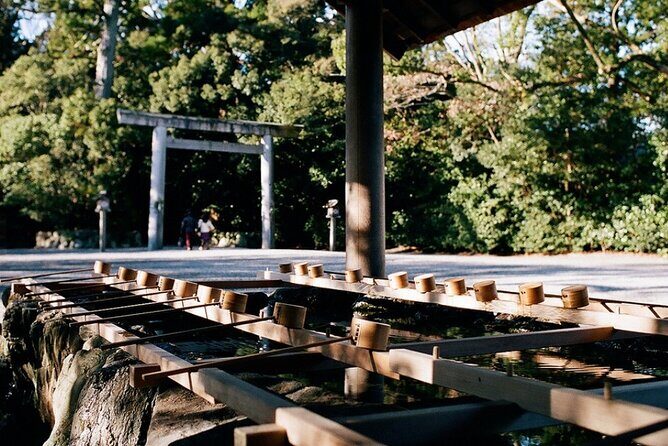
This is a 4-hour private outing focused on 2–3 selected sites. The basic flow is built around the two anchor shrine areas—Naiku first, then Geku—plus optional add-ons that explain how Ise works as a living spiritual and cultural space.
Here’s the kind of mix you can expect:
- You start at Ise Jingu: Naiku (the main shrine compound)
- You move on to Ise Shrine Geku (the other major shrine complex)
- You add context with Isuzugawa (river/purification atmosphere) and Okage Yokocho (street townscape)
- If you want scenery and symbolism, you’ll include Meoto Iwa near Futami, plus the nearby yokocho-style street area
Because it’s private, you’re not stuck with a rigid script. If your group wants more shrine etiquette and less shopping, you can shift the balance. If you want souvenirs and snacks after temple time, you can. That’s a big deal in Ise, where the “between places” can be part of the experience.
Stop 1: Naiku (the shrine area dedicated to Amaterasu)
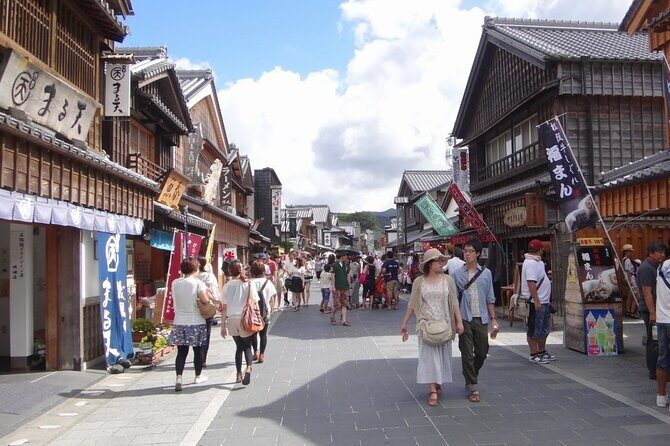
Naiku is the one you’re here for if you care about the core story of Ise. It’s the site where the supreme deity Amaterasu Omikami (the sun goddess) is enshrined. Even if you’ve read about Shinto before, Naiku’s scale and sacred feel can make the ideas click in a physical way.
What you’ll do here is spend about 1 hour, with your guide helping you notice details that most first-time visitors miss. Expect explanations tied to structures, the meaning behind how worship happens, and how the shrine compound reflects belief.
Practical note: admission tickets are not included for this stop. So if you’re budgeting, assume the shrine entry cost will be added on top of the tour price.
Stop 2: Geku (another major shrine compound, same big deity focus)
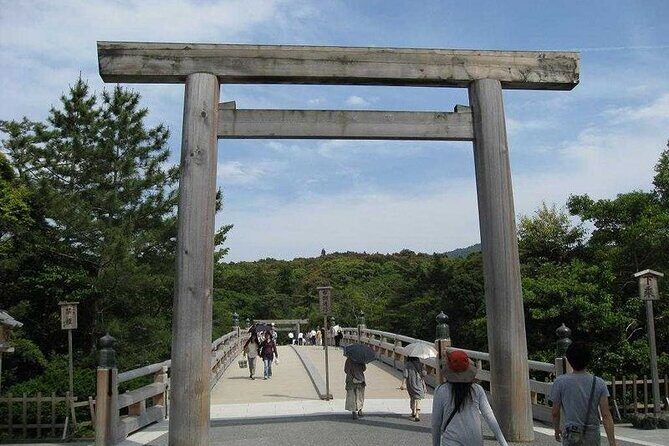
Next comes Ise Shrine Geku, also tied to the worship of Amaterasu. The important thing to understand is that while both major shrine complexes relate to the Ise tradition, they’re different places with their own atmosphere. Geku is often the part visitors “think they know” until they actually stand inside and experience how the layout shapes your movement and attention.
You’ll get about 1 hour here. Your guide’s job is to translate the spiritual logic of the place into things you can observe: why certain areas matter, how people participate, and what parts of the complex are worth your time.
Like Naiku, entrance fees are not included for this stop, so plan for that in your total costs.
Stop 3: Isuzugawa River for purification-and-nature context
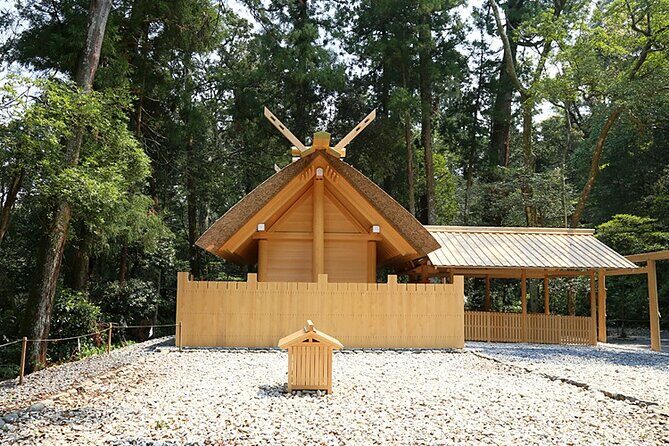
Between the big shrine compounds, you can add Isuzugawa for the nature-and-purification element. The river runs along the Naiku grounds, and it’s a key part of the atmosphere here. It gives Ise a softer texture than pure stone-and-wood symbolism.
This stop is free (no admission fee listed), and it’s a smart choice if you want a break from heavy shrine-only time. It also helps you understand that Shinto isn’t just buildings. It’s daily rituals tied to water, cleanliness, and the natural setting.
Even if you only have time for one “context” stop, Isuzugawa is usually the one that makes the whole area feel more complete.
You can also read our reviews of more private tours in Mie Prefecture
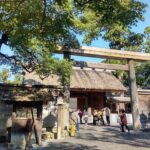
Stop 4: Okage Yokocho for Edo-to-Meiji town nostalgia
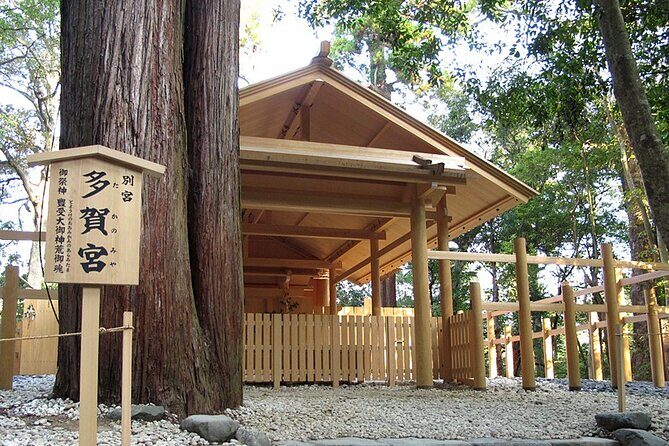
After the formal shrine spaces, you can swing into Okage Yokocho, the lane-style street built in 1993 in front of Naiku’s gate area. This is where Ise shifts from strict ritual rhythm to a more human, strolling rhythm.
You’ll typically spend about 1 hour here. Your guide will help you orient yourself and decide what fits your group. It’s also a great place to pick up small gifts without losing the sacred-day flow.
One caution: admission tickets are not included for this stop. That doesn’t mean you’re stuck paying for everything there, but it means you should not assume it’s free just because it’s a street. Budget for any entry costs associated with shops or attractions you choose inside the area.
Stop 5: Meoto Iwa (wedded rocks) and the Futami viewpoint
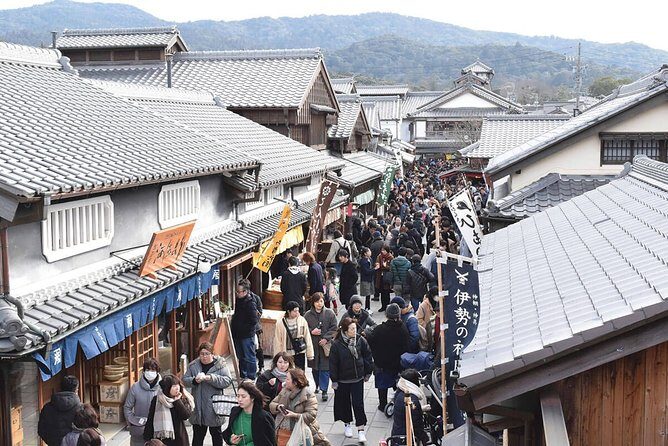
If you choose the Futami side option, you’ll spend time at Meoto Iwa—the famous “wedded rocks” out in the ocean near the town of Futami. This is the kind of stop that’s visual first and symbolic second. The bigger rock and the smaller rock are paired in a way that ties directly into the idea of sacred union.
You’ll get about 1 hour for this, and it’s one of the stops that helps Ise feel like more than just shrines. It’s also a useful contrast to the inner shrine compounds, since you get open views and salt-air atmosphere.
Like the other added stops, admission tickets are not included, so factor that into what you choose to pay for once you’re there. Still, it’s usually worth it if your group likes scenery with meaning.
Pickup, timing, and why “meeting on foot” can be a feature
This is a private tour, but it’s not a chauffeur-service plan. The pickup/meetup is described as on foot/public transport within a designated area. That means you’ll likely spend your time getting to the correct starting neighborhood more like a local, not like a hotel-to-car-to-door itinerary.
Why that can be good:
- You avoid wasting part of your short 4-hour window on long rides
- You arrive already in the walking rhythm that Ise expects
- Your guide can keep you moving efficiently once you meet up
Why it can be a hassle:
- If you’re carrying lots of bags or dealing with mobility limits, “on foot/public transport” might be less convenient than true door-to-door pickup
- If you’re already pressed for time on your schedule day, you’ll want to confirm exactly where to meet and how to get there before the tour starts
A practical tip that shows up in guide feedback: if you’re considering a taxi to compress travel time, ask your guide ahead of time what makes sense for your exact order of stops. One guide specifically helped plan taxi timing so the tour still fit Geku, Naiku, and Meoto Iwa without feeling rushed.
Price and value: what $108.38 gets you (and what it doesn’t)
At $108.38 per person for about 4 hours, this isn’t a bargain-bin tour. You’re paying for four things that usually matter in a place like Ise:
- A government-licensed local English-speaking guide
Translation and interpretation are included, which is huge here. Shrine etiquette and symbolism aren’t always intuitive.
- Private format (only your group)
You get a pace that matches your questions, your walking comfort, and your interest level in shopping streets vs. sacred spaces.
- Choose 2–3 sites
You can right-size the experience. If you don’t need every optional stop, you’re not paying for a one-size-fits-all “drag you everywhere” plan.
- Mobile ticket included
It reduces friction and helps you keep momentum.
What you still need to budget:
- Transportation fees (not included) and there is no private transportation included
- Entrance fees (not included) for stops like Naiku and Geku and others marked as not included
- Lunch and personal expenses
So the value equation is simple: if you’ll otherwise spend your time piecing together routes, hunting down where to go, and trying to decode Shinto etiquette with limited context, this tour can feel like a good trade. If you’re already confident navigating and you don’t care about the meaning behind structures, you might find a self-guided approach cheaper. But you’d be choosing to trade convenience and explanation for savings.
Who this tour suits best
This private Ise Jingu tour is a great fit if:
- You want a short, focused visit that doesn’t spill into a full day
- You care about what you’re seeing, not just where photos are taken
- Your group has different interests and you want a flexible plan
- You prefer a guided flow rather than figuring out timing and etiquette on your own
It may be less ideal if:
- You want every possible stop in the area. This tour stays tight by design.
- You prefer minimal paid guidance and more independent exploring.
- Your schedule is extremely flexible and you’d rather wait and decide later.
One more thing: Shinto etiquette is easier when someone points it out
Even without getting too technical, Shinto practice at Ise has patterns. Your guide’s commentary helps you understand things like purification and how worship works in context. That’s exactly the kind of “small knowledge” that makes your visit smoother and more respectful.
In the feedback about different guides, what stands out isn’t just facts. It’s how they explain practical actions: where people focus their attention, how workers and visitors move, and what certain pathways mean. That turns your time on the grounds from watching into participating in the right way—without you having to guess.
And yes, there’s also the human side: guides like Yoshi are mentioned as friendly, and guides such as Nishio are described as easy to coordinate with through email after booking. That helps when you want to align your route with your day.
Should you book this Ise Jingu private tour?
Book it if you want a confident, time-smart visit to the two major shrine areas, plus at least one context stop like Isuzugawa or Okage Yokocho and possibly Meoto Iwa. The government-licensed guide and private pace are the reason this works, especially in a place where etiquette and meaning matter.
Skip it if your priority is minimizing cost and you’re comfortable wandering shrine areas without explanations. Also skip if your group needs door-to-door convenience, since the meet-up is described as on foot/public transport.
If you’re on the fence, I’d make the decision based on one question: do you want your Ise visit to be mostly photo-taking, or mostly understanding? This tour is built for understanding, without wasting your half day.
FAQ
How long is the Ise Jingu half-day private tour?
It’s approximately 4 hours.
What does the tour price include?
It includes a licensed local English-speaking guide, customizable selection of 2–3 sites from the listed options, and a mobile ticket. Pickup/meetup is on foot within a designated area.
Are entrance tickets included?
Entrance fees are not included. The information specifically notes admission ticket not included for Naiku, Geku, Okage Yokocho, and Meoto Iwa-related stop, while Isuzugawa is listed as free.
Is transportation included?
Transportation fees are not included, and private transportation is not part of this tour.
Can I choose which stops to visit?
Yes. The tour is customizable so you can choose 2–3 sites from the provided set of options.
Is this tour truly private?
Yes. Only your group participates.
Do I need lunch included?
No. Lunch is not included, along with other personal expenses.
Is a mobile ticket provided?
Yes. The experience includes a mobile ticket.
Is it okay to bring a service animal?
Yes. Service animals are allowed.
What is the cancellation policy?
Free cancellation is available if you cancel up to 24 hours in advance for a full refund.