REVIEW · TAKAYAMA
Takayama Local Cuisine, Food & Sake Cultural Tour with Government-Licensed Guide
Book on Viator →Operated by Japan Guide Agency · Bookable on Viator
Takayama food has a way of pulling you in fast. This guided walking tour blends Edo-period culture with real tastings at long-running breweries, with a government-licensed local interpreter steering you through the why behind the flavors. I especially like that it is not just eating on the go; it comes with context at each stop, from town history to how sake and soy foods are made.
I also like the flexibility. You choose your must-see spots from a list, so your 6 hours can lean more toward markets, old streets, or sake. The only real drawback to plan for: it is a walk-first tour (pickup is on foot), and you do not get lunch or entrance fees covered for every site, so you may need a little extra cash for food and an optional tasting.
In This Review
- Key highlights you’ll feel in your feet (and on your palate)
- Takayama’s Edo-era streets, explained by a government-licensed guide
- Walking logistics: pickup on foot, about 6 hours, and private time with your group
- Stop-by-stop: Takayama Jin’ya and why you start with the government headquarters
- Morning market energy: Asa-ichi and Miyagawa Morning Market
- Sanmachi Suji old town stroll: preserved streets and craft-shop rhythm
- Onoya Brewery miso and soy: smelling tradition in the making
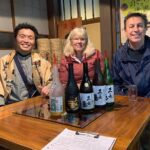
- Harada Sake Brewery: Sansha dry sake and sake-made sweets
- Kawashiri Sake Brewery and matured tasting: when optional charges matter
- Price and value: what you get for about $154.37 per person
- Who this tour suits best (and who might want a different plan)
- The human factor: guides like Mitsu and Yoko
- Should you book this Takayama food and sake tour?
- FAQ
- How long is the Takayama local cuisine, food & sake cultural tour?
- What is the price per person?
- Is pickup offered, and how does meeting work?
- How many sites do we visit, and can we choose them?
- Are entrance fees included?
- Is lunch included?
- Are sake tastings included?
- Is this tour private or shared?
Key highlights you’ll feel in your feet (and on your palate)
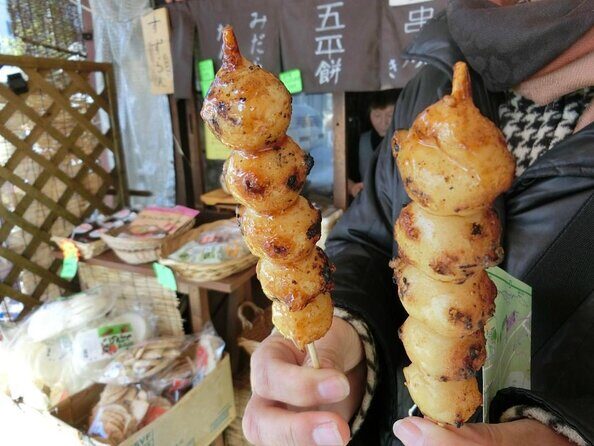
- Government-licensed English guide who knows Japanese culture and history, not just restaurant names
- Two morning market stops to see how locals shop before the day gets busy
- Sanmachi Suji old town walk through preserved streets and traditional craft-shop energy
- Brewery visits focused on real Takayama staples like miso/soy and dry sake
- Optional extra charge tastings at the matured sake brewery, so you control how much you sample
Takayama’s Edo-era streets, explained by a government-licensed guide
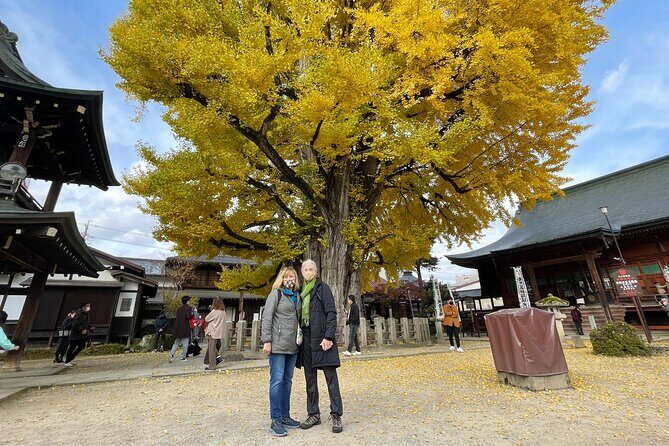
The best part of this tour is how quickly it turns Takayama from scenery into story. You get a licensed local English-speaking guide, and that matters. The guide interpreter certification is issued by the Japanese government, which usually translates into a stronger grasp of cultural context and history than a standard tour script.
This is also the kind of town where small details carry weight. You walk through lanes that have kept their rhythm for generations, and you learn how those lanes connect to everyday life in Hida. The guide’s job is not to lecture; it is to point you toward what you should notice, then explain the connections in plain language.
I like the pacing because it feels designed for understanding, not just checking boxes. Even the shorter stops have a purpose—like a quick look at the former government headquarters, then a hop into the morning market scene right after.
You can also read our reviews of more food & drink experiences in Takayama

Walking logistics: pickup on foot, about 6 hours, and private time with your group
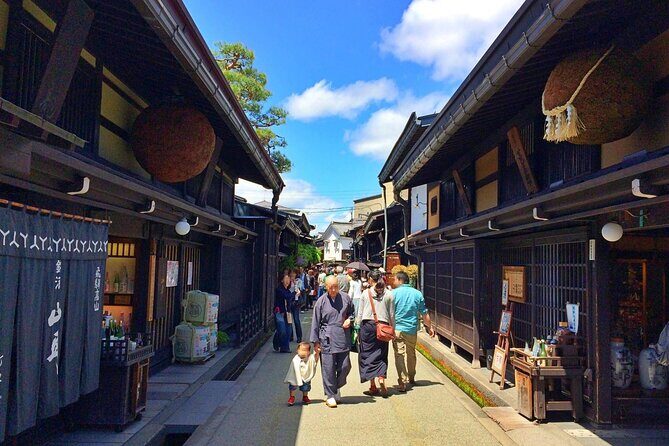
This tour is listed as a private activity, meaning only your group participates. That usually helps if you want more questions answered in real time, or if your group moves at a slightly different pace than a big bus tour.
The schedule runs about 6 hours, and it stays in walking mode. Pickup is offered, but it is on foot and you meet your guide within a designated area of Takayama. That is great for actually seeing the town at street level, but you should plan for comfortable shoes.
Another practical note: you customize. The tour includes a walking plan where you choose 3–4 sites from the options on the experience list. That helps you avoid the classic mistake of doing too many stops that do not match your interests.
Stop-by-stop: Takayama Jin’ya and why you start with the government headquarters
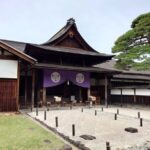
Your first stop is Takayama Jin’ya, a surviving Edo period jin’ya (a kind of administrative headquarters). It served as the government base for Hida Province under the Tokugawa shogunate from 1692 to 1871. That time span matters, because it explains why Takayama developed the kind of steady, local focus you can still feel today.
What to expect here is a short, history-forward introduction. You are not stuck for long; you spend about 30 minutes there. You should also plan for the entrance ticket separately—this stop is marked as admission ticket not included—so keep a little extra cash or have a plan for purchasing.
Why start here? Because once you know what a jin’ya was for, the rest of the tour clicks. Markets, craft shops, breweries—everything feels linked to a town that ran on local production and local life.
Morning market energy: Asa-ichi and Miyagawa Morning Market
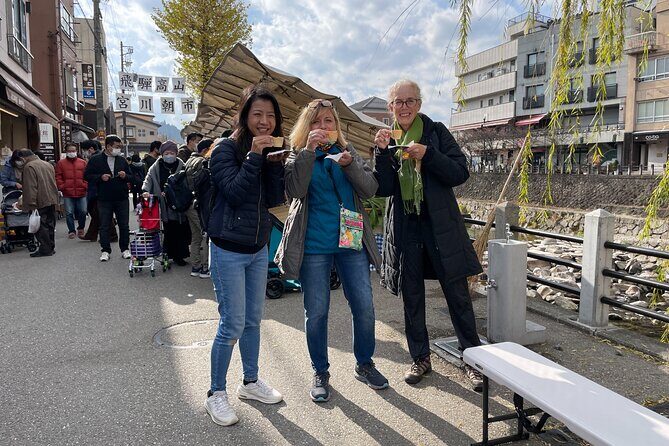
Two market stops are a big deal on this tour: Asa-ichi (Jinya-Mae Morning Market) and Hida-Takayama Miyagawa Morning Market.
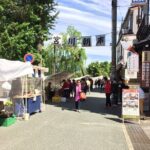
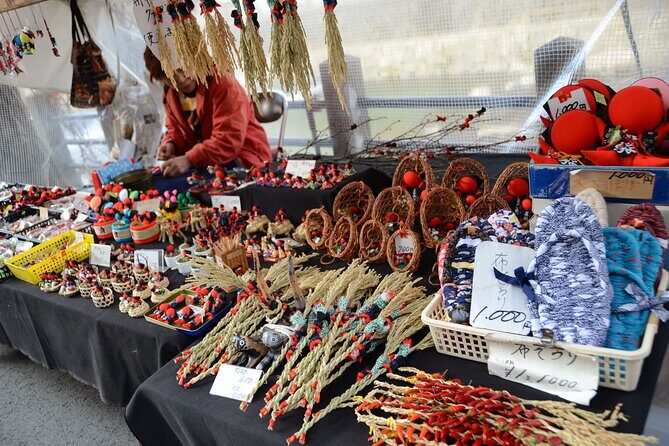
Asa-ichi is described as a small morning market tradition tied to daily Takayama life. It is also where you get the feel of locals shopping for fresh produce and local crafts. The stop is about 30 minutes, so it is enough time to browse without turning into a marathon.
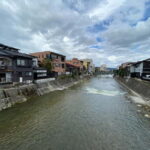
Then you head to Miyagawa Morning Market, which has existed in some form for more than two centuries. It is located on either bank of the Miya River between bridges, which is exactly the kind of placement that keeps the market social and scenic. Again, you get about 30 minutes, and the focus stays on fresh produce and what’s being sold right now, not just photo ops.
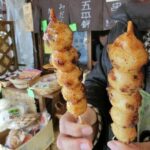
A tip that tends to help: go hungry for small tastes, but do not plan to eat a full meal at the markets. This tour does not include lunch, so you’ll likely want to treat market browsing as an appetizer mission—snack, sample, then keep walking.
Sanmachi Suji old town stroll: preserved streets and craft-shop rhythm
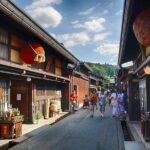
Next comes Sanmachi Suji, the heart of Takayama’s preserved old-town area. This is the place you can understand visually. During the Edo period, Takayama was a busy hub for craftsmen, merchants, and farmers, and the preserved buildings help you picture that daily mix.
Expect a 30-minute walk through the restored and preserved streets. The tour framing here is cultural, not just architectural. You are learning how the town functioned—where people worked, where they traded, and how traditional shops managed to stay relevant through changing eras.
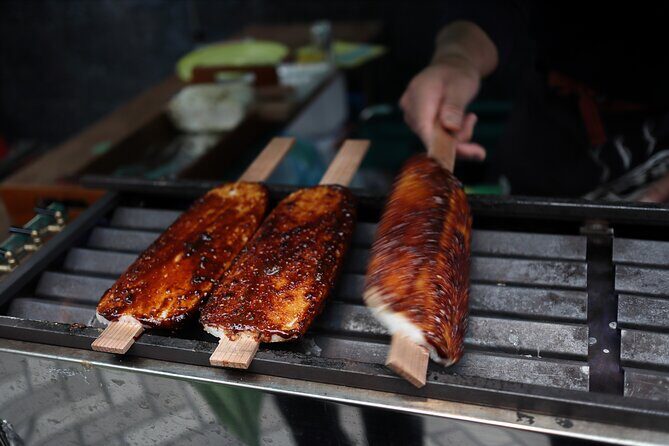
This is also where “find something small” becomes part of the experience. If your guide is doing their job well, they steer you toward practical souvenirs and edible gifts that make sense for Takayama specifically, not generic Japan mass-market items.
In conversations I’ve seen from guide-style, a friendly guide approach shows up here. People talk about routes and small discoveries, like spotting local snackable specialties along the way.
A few more Takayama tours and experiences worth a look
Onoya Brewery miso and soy: smelling tradition in the making
At Onoya Brewery, the tour shifts from town history to food chemistry. Ohno ya is a traditional miso and soy sauce brewery and shop founded 250 years ago in Takayama. That age signals something important: it is not a pop-up concept. It is a long-running craft.
This stop is shorter (about 15 minutes), which keeps it easy to fit into the overall walk. You’re not expected to be a fermentation expert by the end, but you do get a chance to connect the flavors you’ll likely eat elsewhere in Japan to how they began in a local production setting.
What I like about this approach is that it explains why the flavors feel grounded. Instead of just tasting, you get a quick line back to local ingredients and time-tested methods.
Harada Sake Brewery: Sansha dry sake and sake-made sweets
Then it is sake time at Harada Sake Brewery. This is where you get a more hands-on tasting approach.
The tour notes a signature brand called Sansha, described as a dry sake with umami strength. You can buy a small tasting cup and sample more than ten types of sake. That is a lot of variety for a walking tour, and it makes the whole experience feel like more than a quick brewery stop.
It also includes sake-made food—steamed manju buns and cakes made with sake. If you like the idea of pairing flavor with a story, this is where you get it. Sweet + dry, aroma + texture, all within the same stop.
Plan a little mental room here: if you are sensitive to alcohol, go slow and focus on aroma and taste notes instead of trying to finish everything. The tour gives you choice through the tasting cup system.
Kawashiri Sake Brewery and matured tasting: when optional charges matter
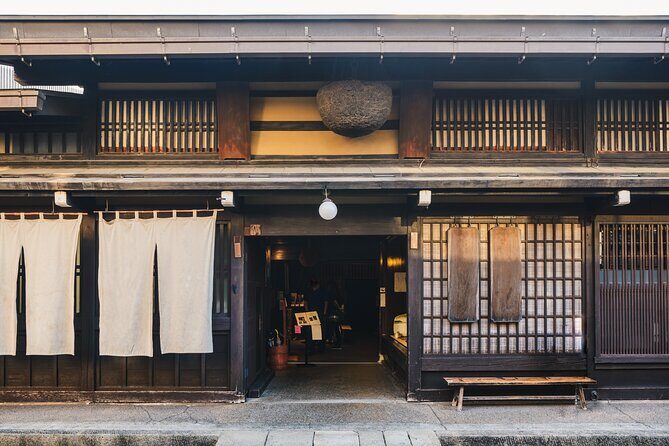
Your last sake stop is Kawashiri, specializing in artisanal matured sake. If you want something different from a basic tasting of fresh styles, this is a smart contrast.
The tour description says that for a small charge you can taste a trio of fine brews, including Hidamasamune. This stop is still about 30 minutes, and the admission to the tasting itself is marked as an additional charge.
That option is useful. It means you can scale your sampling to your comfort level, your budget, and your interest. If you already tasted a lot at the previous brewery, you can keep this one lighter.
Price and value: what you get for about $154.37 per person
At $154.37 per person for roughly 6 hours, the key value is not just the food stops. It is the licensed guide and the structure that turns multiple locations into a coherent route.
Here’s what you are effectively paying for:
- A government-credentialed interpreter guiding the history and culture, not just translating
- A customizable plan that lets you pick 3–4 stops so you are not wasting time on irrelevant stops
- Multiple food-focused sites, including breweries, plus market access
- A private group setup, which often improves the quality of the Q&A
Your budget should also account for what is not included: transportation fees, entrance fees (notably Takayama Jin’ya), lunch, and personal expenses. The tour also says guide entry fees are covered only for sights listed under what to expect, which is a normal way tours limit costs—but it means you should still expect a few spots to be pay-as-you-go.
When I look at the balance, the tour feels like good value if you care about context and you want more than casual sightseeing. If you only want food with minimal explanation, a cheaper self-guided market + bakery day might suit better.
Who this tour suits best (and who might want a different plan)
This tour fits well if you:
- Want a food-and-sake day that includes history and local culture
- Like markets and old streets, not just museum stops
- Prefer a guided route that helps you order, sample, and understand what you are eating
It may be less ideal if you:
- Hate walking or have limited stamina (it’s a walking tour with on-foot pickup)
- Want a guaranteed full meal included (lunch is not included)
- Are looking for a purely nightlife-style drinking experience (this is tasting-focused and time-boxed)
Also, if you want a very specific set of stops, the customization option is your friend. Choose based on what you genuinely want to prioritize: markets vs old town vs more tasting.
The human factor: guides like Mitsu and Yoko
A recurring theme in the experiences shared for this tour is the guide style—warm, responsive, and attentive to what the group wants.
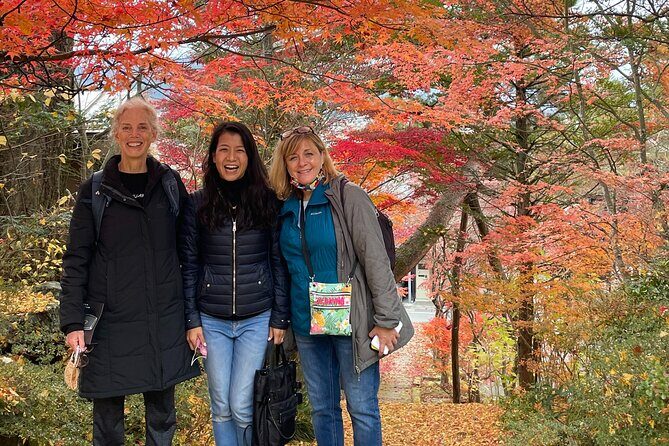
Guides including Mitsu and Yoko are described as meeting promptly and tailoring the itinerary to interests, mixing food, culture, and arts-and-crafts elements where it fits. One example mentions walking with a family through fresh morning air, along the river edge with wind chimes, and paying attention to how the group listens and engages.
That matters because a tasting day can feel awkward if nobody explains how to approach it. With a good guide, you know what to sample, what to skip, and how to connect the dots between miso, soy, and sake.
Should you book this Takayama food and sake tour?
Book it if you want a guided walk that turns Takayama’s food culture into something you can actually explain after the day is over. The combination of markets, old-town streets, and brewery stops is a strong use of time, especially with a licensed guide doing the cultural translation work.
Skip it (or change approach) if you mainly want a casual, self-guided day with no extra interpretation, or if you are counting on lunch being included and don’t want to pay separate entrance fees for any major stop.
If you do book, do two things: bring comfortable shoes, and decide ahead of time how much you want to taste at the breweries so the optional charges feel like choices, not surprises.
FAQ
How long is the Takayama local cuisine, food & sake cultural tour?
It runs for about 6 hours.
What is the price per person?
The price is listed at $154.37 per person.
Is pickup offered, and how does meeting work?
Pickup is offered, but the tour is a walking experience. You meet the guide on foot within a designated area of Takayama.
How many sites do we visit, and can we choose them?
The walking tour is customizable. You select your must-see spots, and the tour is set up for 3–4 chosen sites from the provided list.
Are entrance fees included?
Entrance fees are not included for all stops. Takayama Jin’ya is marked as admission ticket not included, while the other listed market and brewery stops are marked as free.
Is lunch included?
Lunch is not included.
Are sake tastings included?
Tastings are available, but some are specifically noted as an additional charge—especially the matured sake tasting option at Kawashiri.
Is this tour private or shared?
It is private. Only your group participates, and you cannot combine multiple tour groups.