REVIEW · OSAKA
Japanese Calligraphy Experience in Osaka
Book on Viator →Operated by 日本の書道 · Bookable on Viator
Japanese calligraphy can feel strangely calming. In Shinsaibashi, Osaka, Ryusho (27 years teaching) guides you from tool basics to writing your own kanji in about 90 minutes.
I especially love the step-by-step teaching style and the way you actually make something. You’re in a small group (max 10), so the instruction stays practical and your work gets real attention.
One consideration: you create one character (chosen from 16 popular kanji samples), so if you want a multi-character calligraphy project, this class may feel a bit focused.
In This Review
- Key things to know before you go
- Shinsaibashi Hotel Meeting Point: Quick Access in Osaka
- Ryusho’s Teaching Style: Tools, Letters, and How to Hold the Brush
- Picking Your Kanji: The Part That Makes Your Souvenir Feel Personal
- The Stroke Practice and Brush Feel: Where You Get Real Progress
- Finishing Your Work: From Practice Board to Hanging Scroll Keepsake
- Tea, Sweets, and the Commemorative Photo Moment
- Price and Value: Is $51.24 Worth It?
- Who This Osaka Calligraphy Class Fits Best
- Should You Book This Japanese Calligraphy Experience in Osaka?
- FAQ
- How long is the Japanese calligraphy experience in Osaka?
- Where is the meeting point?
- What do I make during the class?
- Are there kanji options, or do I have to use a specific character?
- What happens at the end?
- Is there a cancellation window?
Key things to know before you go
- Shinsaibashi, first-floor hotel setting: easy walk from the subway, centered in Osaka.
- Stroke-by-stroke guidance: you learn how to control the brush before you write your final kanji.
- Choose from 16 prepared kanji: you pick a character popular overseas, then practice it.
- You take home the finished art: your work ends up as a hanging scroll in a special, foldable display case.
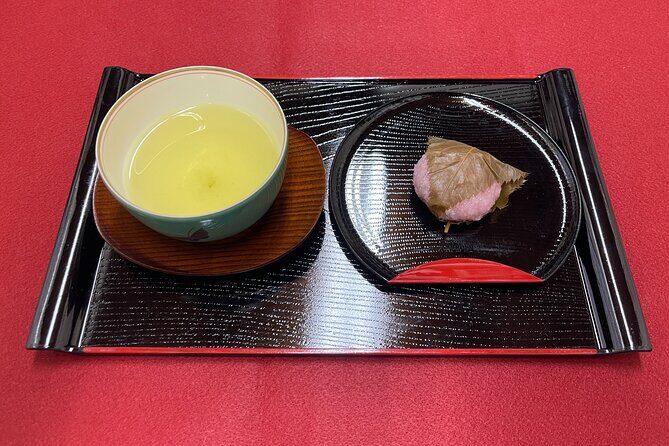
- Green tea, Japanese sweets, and a photo: the experience ends with a nice cultural send-off.
Shinsaibashi Hotel Meeting Point: Quick Access in Osaka
This calligraphy experience takes place on the first floor of a hotel in Shinsaibashi, which is one of the most convenient areas for shopping and easy walking in Osaka. The meeting point is listed at 1-chōme-1-3 Higashishinsaibashi, Chuo Ward, Osaka 542-0083, and it’s about a one-minute walk from the subway.
Start time is 2:00 pm, and the class runs about 1 hour 30 minutes. That timing works well if you’re sightseeing in the morning and want something hands-on in the afternoon without eating up your whole day.
Practical tip: since it’s inside a hotel building, I’d plan to arrive with a little buffer to find the exact corner where the class setup is. Once you locate the entrance, the rest is straightforward.
You can also read our reviews of more tours and experiences in Osaka.


Ryusho’s Teaching Style: Tools, Letters, and How to Hold the Brush
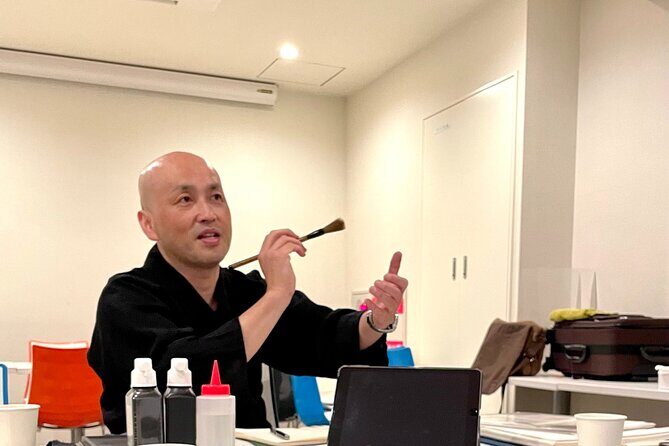
Before you write anything on your final board, you get the part that usually makes calligraphy click: what the tools do and why the technique matters. The course starts with a story of Japanese culture and the role calligraphy has played for over a thousand years. It’s not just trivia. The point is to understand that calligraphy isn’t only about looking pretty—it’s a way of expressing attention, control, and mindset.
Then you get a clear rundown of calligraphy tools. You learn what to do with the brush, how to handle it, and what “one stroke at a time” actually means in practice. This is the part where the class feels especially beginner-friendly, because the teacher doesn’t throw you straight into copying a character.
Ryusho’s background shows in how the lesson flows: letters first, tools next, and then the brush demonstration. In the reviews, people highlight that instruction is engaging and thoughtfully organized, and that the demonstrations make the stroke mechanics easier to understand. One writer even noted that Ryusho teaches writing with the discipline of a single stroke, then having you practice it.
Picking Your Kanji: The Part That Makes Your Souvenir Feel Personal
Here’s the exciting twist: you don’t get assigned a random character. You choose one of 16 kanji that are popular overseas. That means you’re likely to recognize the general idea of what you’re writing, even if you’re not fluent in Japanese.
The lesson includes samples of the kanji, so you can compare shapes before committing. When you pick your character, you’re not just making a craft. You’re making a personal piece of Japanese writing that you can hang at home and explain later.
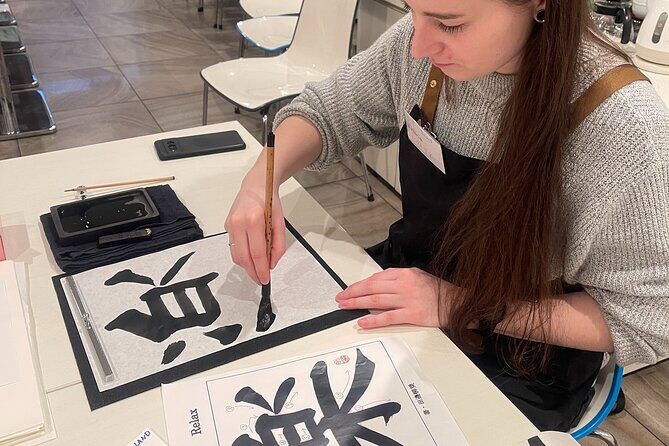
After you choose, you practice. You don’t just trace and hope. You work through the brush feel and stroke timing until the character starts to look like it belongs together. The class sequence is built around treating brush contact carefully, then completing the kanji with control.
The Stroke Practice and Brush Feel: Where You Get Real Progress
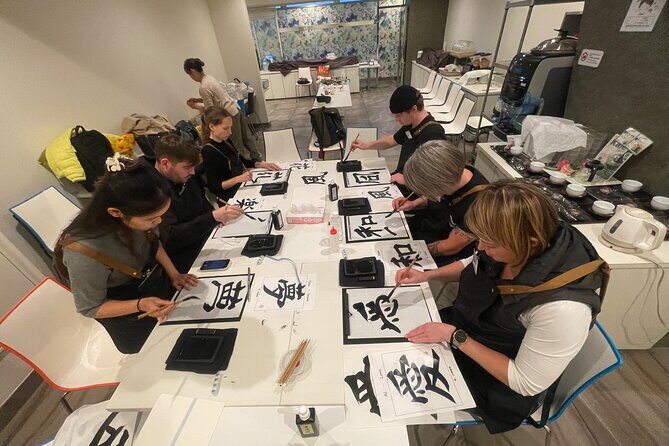
The hands-on portion matters most, and the course is designed to walk you there. You start by practicing the brush itself, then you move toward forming the character through repeated attention to strokes.
You’ll see the difference between a stroke that’s rushed and one that’s placed on purpose. You also start noticing how the calligraphy style depends on the direction and pressure you use—small changes that can alter the look of the final kanji.
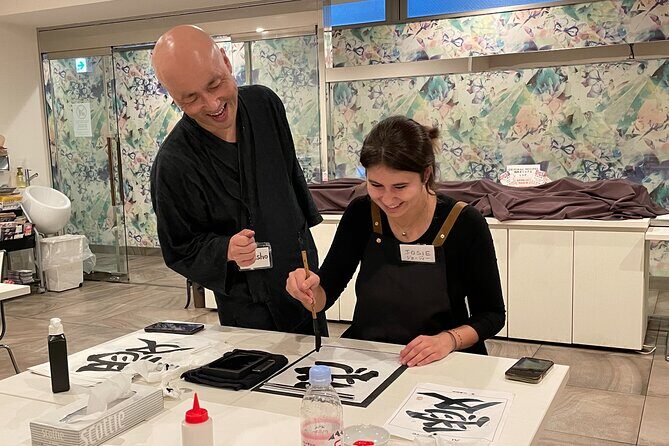
This is also where a small group is a big deal. With a maximum of 10 people, you’re not stuck at the back, hoping someone notices. Ryusho can guide and correct in a way that helps you get unstuck faster—especially on the part that trips most beginners: getting the brush to behave consistently as you move through the character.
Finishing Your Work: From Practice Board to Hanging Scroll Keepsake
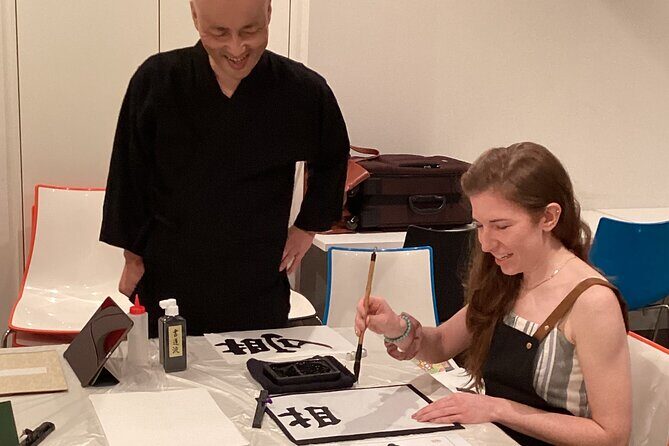
Once you’re ready, you write your chosen kanji on the final board. The finished work uses a special board size of 242 × 273 mm. That size feels like the sweet spot: big enough to look impressive on a wall, but not so huge that it becomes hard to handle.
After you complete the character, you add your signature, then place your work into a special art frame. From there, the art becomes a hanging scroll format. The display case is designed to be foldable and more portable than a fragile flat artwork.
This is the difference between doing a quick souvenir and bringing home a piece that looks like actual Japanese calligraphy. The class doesn’t just hand you a finished character. It guides you through the steps so your final product has structure and presentation.
If you like keeping memories that feel tactile—something you can frame, store, or display—this format is a strong fit.




Tea, Sweets, and the Commemorative Photo Moment
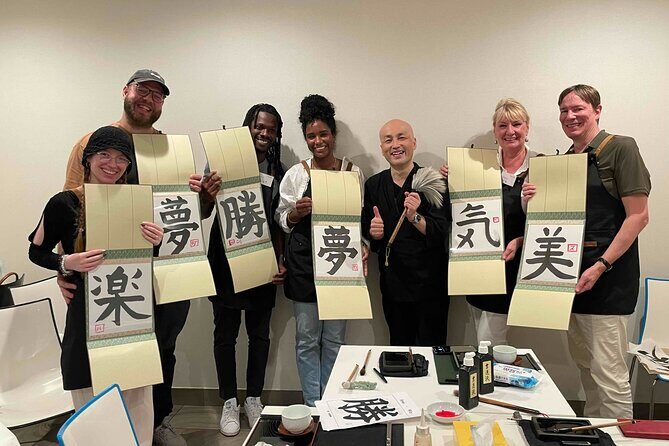
The final stretch is part skill-building, part celebration. You end by tasting green tea and Japanese sweets, and you also get a commemorative photo.
This matters more than it sounds. Calligraphy is one of those activities that makes you slow down. The photo and tea close the loop, giving you a natural moment to look at what you made and feel proud without rushing out the door.
If you’re traveling with friends or family, the photo also makes the experience easier to share later. And it gives you something to remember besides the character itself.
Price and Value: Is $51.24 Worth It?
At $51.24 per person, this class isn’t trying to be a free-for-all workshop. You’re paying for a guided lesson, tool instruction, and the chance to take home a finished hanging scroll style keepsake in a special display format.
For me, the value is strongest in two places. First, the class includes real coaching before you commit ink to your final work. That coaching is what turns beginners into people who can produce something they’ll actually want to hang.
Second, the take-home piece is built into the experience. You’re not leaving empty-handed or only with a worksheet. You get a framed board, transformed into a portable hanging-scroll style souvenir, plus the tea and sweets that make it feel complete rather than transactional.
One reason it holds a high satisfaction rate is that the structure is clear: story, tools, demonstration, selection of kanji, practice, completion, then display and photo.
Who This Osaka Calligraphy Class Fits Best
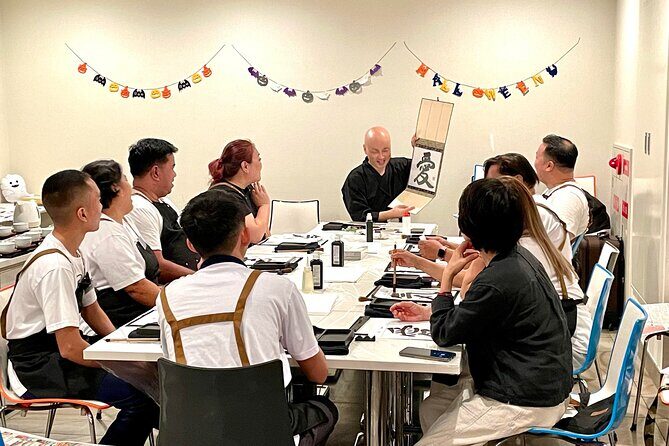
This experience is a great match if you want Japanese culture you can touch. If you’ve ever watched calligraphy videos and thought, I want to try that but don’t know where to start, you’ll like how the class begins with the basics.
It’s also ideal for people who want a small-group activity with a calm pace. You get a focused 90 minutes with a clear end goal: one kanji you chose, finished with your signature, ready to take home.
Where it may not fit as well is if you’re expecting multiple characters, long artistic experimentation, or advanced lessons. The course is set up around one finished kanji project, so you’ll get depth in that one target—not breadth across many.
Should You Book This Japanese Calligraphy Experience in Osaka?
Book it if you want a small, structured, beginner-friendly calligraphy class in a convenient Osaka location. The meeting point in Shinsaibashi makes it easy to slot into your day, and the format is designed so you leave with something you can display at home.
Skip it or look for a different style of workshop if your goal is to produce several works or to explore calligraphy beyond writing one character. This class is focused on helping you succeed at one kanji—then celebrating it with tea, sweets, and a photo.
If you’re aiming for a memorable souvenir that isn’t generic, this one has the right ingredients: clear teaching, a real final product, and a peaceful pace that matches what calligraphy is supposed to feel like.
FAQ
How long is the Japanese calligraphy experience in Osaka?
The experience lasts about 1 hour 30 minutes.
Where is the meeting point?
You meet at 1-chōme-1-3 Higashishinsaibashi, Chuo Ward, Osaka 542-0083, Japan. The session is held on the first floor of a hotel in Shinsaibashi.
What do I make during the class?
You choose one kanji, practice it, then write it on a special board (242 × 273 mm). You also sign your name, and your work is placed in a special art frame and finished as a hanging scroll you can take home.
Are there kanji options, or do I have to use a specific character?
You choose from 16 kanji options that are prepared as popular overseas kanji samples.
What happens at the end?
After you finish your work, you enjoy green tea and Japanese sweets, and you take a commemorative photo. Your finished piece is something you can take home.
Is there a cancellation window?
Yes. You can cancel for a full refund if you cancel at least 24 hours in advance. Free cancellation is available.