REVIEW · HYOGO PREFECTURE
Kinosaki Onsen Cycling Tour Kinosaki & Riverside Experience
Book on Viator →Operated by 城崎サイクリング 城崎&リバーサイドエクスペリエンス · Bookable on Viator
Hot springs meet coastal cycling.
This Kinosaki Onsen cycling tour mixes living hot-spring town life with big-nature lessons: earthquake-era recovery stories, Siebold-linked craft history, and the topography behind the San-in Coast Geopark. You also ride through wetland country tied to an internationally important Ramsar site, all while keeping things easy with a slow pace and an almost-flat course.
I love that the ride is designed for actually seeing how people live, not just ticking off sights. You’ll get your bearings on the town’s onsen streets, then move along the river past rice fields toward the Sea of Japan, with a guide who pays attention to seasonal plants and the sky. In my book, that combo of town texture plus nature explanations is what makes the experience feel personal.
One thing to consider: this is a bike tour that still takes moderate physical fitness, runs on good weather, and has a height requirement of 140 cm or more. If you’re expecting a super-short, mostly-stroll outing, plan on settling in for about 15 km over roughly 3 hours.
In This Review
- Key highlights to know before you go
- Entering Kinosaki Onsen’s street life without getting lost
- The guide factor: Natsuko’s patient, easygoing style
- Along the river: rice fields, greenery, and a gentler kind of Japan
- Geopark and earthquake recovery: nature with a reason
- Ramsar Wetland country: storks, waterfowl, and real ecology
- The Sea of Japan viewpoint: why the payoff is worth it
- Pace and distance: an easygoing 3 hours (but not a nap ride)
- Price and value: what $110.76 buys you in real travel time
- Getting the most out of it: how to ride smarter
- Weather and timing: the tour depends on good riding conditions
- Should you book this Kinosaki & Riverside Cycling Tour?
- FAQ
- How long is the Kinosaki Onsen cycling tour?
- What distance will I cycle?
- Is the route hilly?
- Where does the tour start and finish?
- What group size should I expect?
- Is there a height or fitness requirement?
- What if the weather is bad or I need to cancel?
Key highlights to know before you go
- Small group size (max 5) means more time with your guide and fewer gaps in the story
- Almost-flat route (~15 km) keeps the effort reasonable while you watch the scenery change
- Ramsar Wetland + San-in Coast Geopark context turns what you see into something you can explain
- A Sea of Japan viewpoint gives your legs a payoff and your photos a strong ending
- Guide-led pace and nature focus (seasonal plants, sky, local area) makes the ride feel unhurried
Entering Kinosaki Onsen’s street life without getting lost
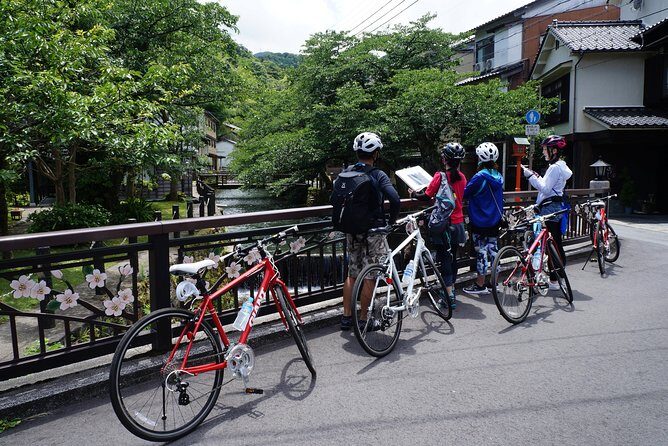
Kinosaki is the kind of place where the small details matter—lanes, stonework, signs, the rhythm of a town built around hot springs. Starting right in the area of Koyado EnnJapan gives you a practical launch point, and being near public transportation makes it easier to tack this onto the rest of your day.
You begin with a stop on the street of Kinosaki Onsen, which is smart because it sets the scene before you scatter into countryside. Instead of treating onsen streets like a photo backdrop, the guide helps you understand what you’re seeing—why certain traditions still feel current, and how the town’s identity shaped itself after major disruptions. That earthquake recovery piece isn’t just trivia; it’s a reminder that heritage is something people rebuild, not something that sits untouched.
If you like destinations where you can feel the “local pace,” this opening works. You’re not rushed, and you’re not stuck reading a plaque from a distance. You’re on a bicycle and moving, which means you learn faster because the town is unfolding around you.
You can also read our reviews of more cycling tours in Hyogo Prefecture
The guide factor: Natsuko’s patient, easygoing style
The best part of a guided ride is whether the person on the front sets the mood. In this tour, you’ll likely travel with a guide such as Natsuko—and based on the tone people described, she’s patient and laughs easily. That matters more than it sounds, especially if you’re not used to bike tours or you just don’t want to feel “performance-paced.”
Your guide also has a clear nature habit: paying attention to seasonal plants and the sky. That tells me this isn’t a lecture-on-a-bike setup. You’ll get prompts to look at things as they change along the route—light, greenery, river shape, and how the scenery transitions from town edge to open coastal country.
And because the group is capped at 5 travelers, you’re less likely to feel like a number. You can ask what something means, or ask for help understanding a place you’re passing through. It’s the difference between hearing about a region and actually connecting the dots while you roll along it.
Along the river: rice fields, greenery, and a gentler kind of Japan
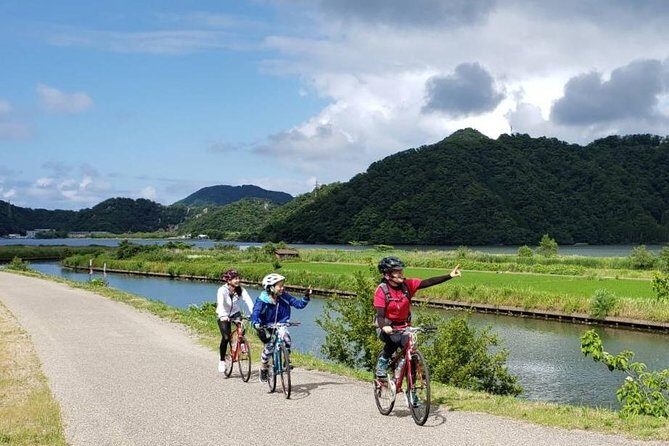
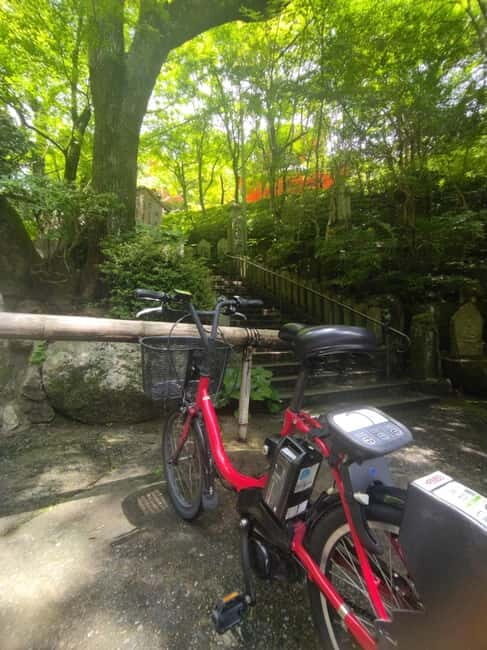
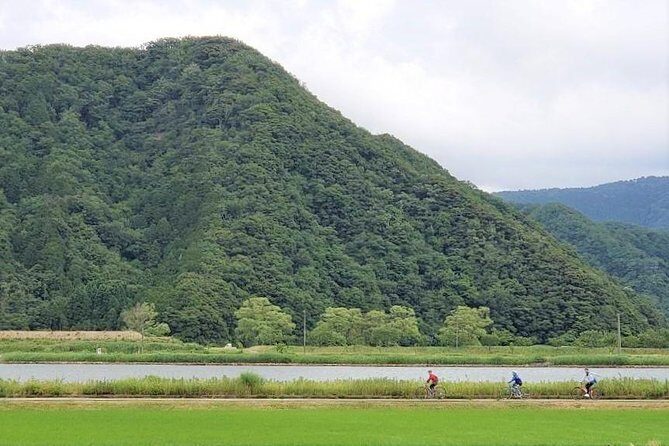
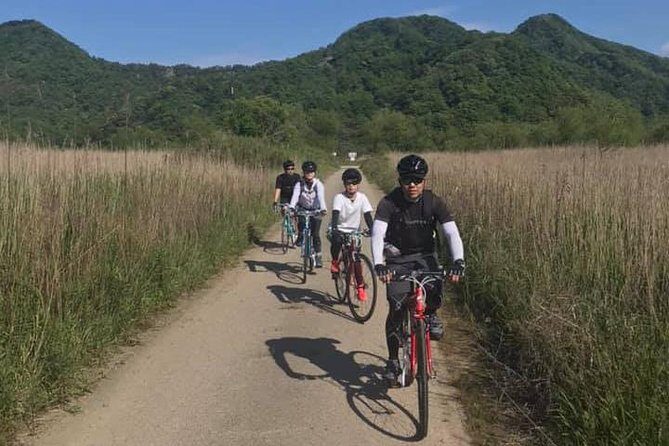
After the onsen street start, the route follows a river corridor that feels made for cycling. The ride is described as almost flat, and it truly makes the outing approachable: you get to watch the country rather than fight your pace.
As you head out, you’ll pass rice fields and lots of greenery around the outskirts of Kinosaki. The river setting helps, because rivers give you steady direction and visual variety. One moment you’re viewing town edges and small structures; the next you’re seeing fields that look like they belong to a slower calendar. Even when you’re not “touring” museums, you’re still learning the geography: how water shapes settlement, farming, and travel routes.
This is also one of those rides where you feel the season more than you notice it. If it’s warm, you’ll probably sense the comfort of open air along the water. If it’s cooler, the river corridor can feel crisp and clean. Either way, it’s a reminder that Japan’s countryside isn’t a static postcard—it’s a working environment with patterns you can recognize from the bicycle seat.
Geopark and earthquake recovery: nature with a reason
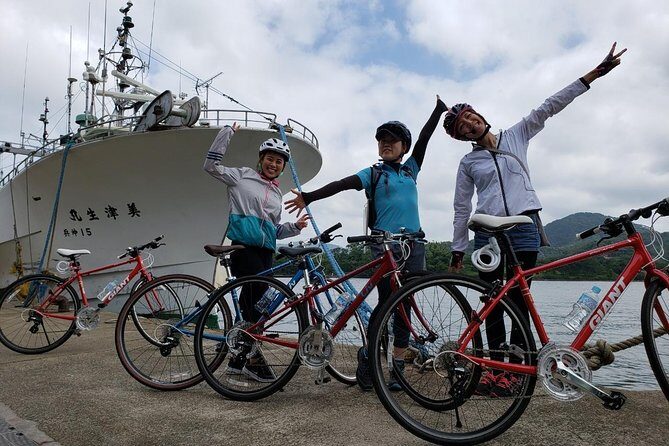
The route is built to help you “read” the land. You’ll learn about the world heritage of topography associated with the San-in Coast Geopark, and you’ll hear how Kinosaki’s story connects to geology, coastlines, and the way people recovered and adapted over time.
Why I like this approach: geoparks often get explained in big, technical terms. On a cycling tour, the explanations land differently. You can point at the terrain you’re riding through and connect it to what the guide says about formation, coastal influence, and how the region’s history shaped its present look.
The earthquake recovery angle also helps you travel with more empathy. When a place has been rebuilt, it’s usually because residents decided what mattered most to keep. That gives extra weight to the traditions you see on the onsen streets and in the everyday town layout.
You won’t need a geology background. You just need to look out the window—and then listen for how the guide translates what you’re seeing into meaning.
Ramsar Wetland country: storks, waterfowl, and real ecology
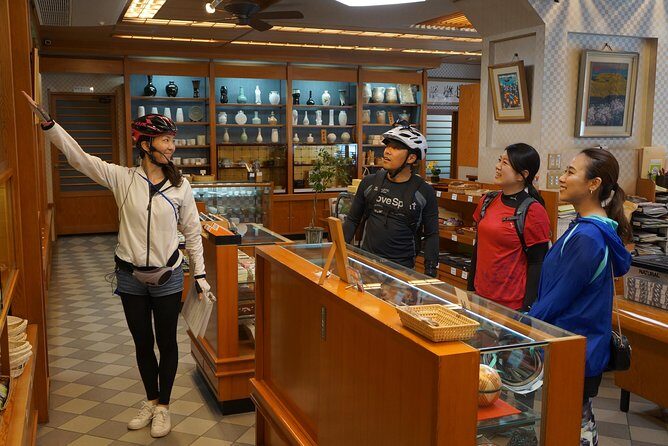
One of the standout themes in this experience is the Ramsar Wetland, described as an internationally important wetland for waterfowl. The tour context notes that this area is home to storks and that it’s recognized as a natural monument.
Even if you don’t spot every bird on every day, the value comes from understanding what the habitat supports and why the region matters beyond tourism. When you cycle through wetland country, you start to notice the cues: water presence, flat ground, and the way the area stays productive for wildlife.
This is one of those times when “nature learning” doesn’t feel like school. It feels practical. You learn what you’re looking at, and you gain respect for why people protect areas like this.
If you care about conservation or you simply like nature facts you can use, this tour is a strong match.

The Sea of Japan viewpoint: why the payoff is worth it
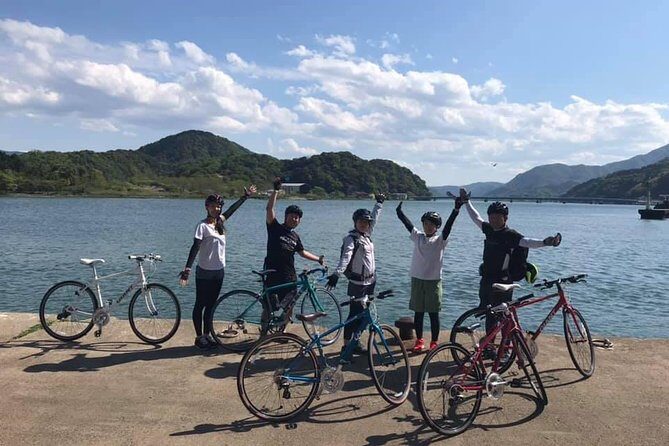
The ride ends with a Sea of Japan viewpoint, and that’s a big deal for two reasons. First, it gives your legs a reason to keep moving. Second, coastal viewpoints can compress an entire region into one view—mountain lines, shoreline shape, and weather patterns—things you can’t fully sense from town streets.
People specifically call out the viewpoint as a highlight, and I can see why. After biking through onsen-town life, rice fields, and river country, switching to open sea scenery feels like a reset. Your eyes get a final “wide screen” moment after the more textured, close-up inland scenes.
It’s also a good moment for photos that don’t look like the usual main-street shots. This is the kind of view that makes your trip feel more complete because you traveled sideways across the region, not just straight through it.
Pace and distance: an easygoing 3 hours (but not a nap ride)
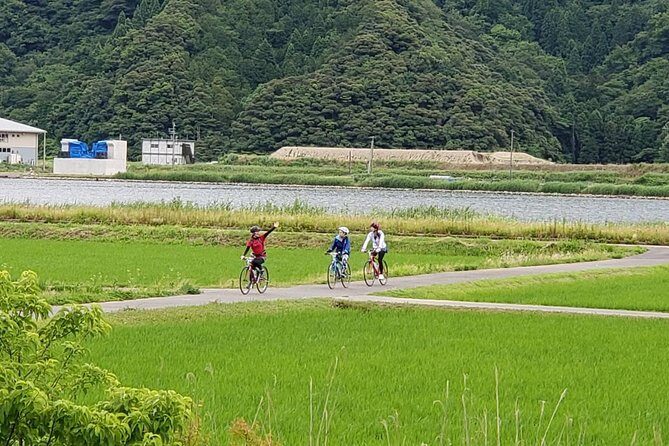
You’re on the course for about 3 hours and cover about 15 km, progressing at a slow pace. “Almost flat” helps, and the structure fits people who want active sightseeing without turning the day into a workout.
Still, there’s no pretending this is effortless. It’s a bike ride, and the description asks for moderate physical fitness. You’ll likely be fine if you can handle a 15 km cycling day without expecting frequent stops.
Group size matters here too. With a maximum of 5 travelers, the guide can keep everyone together at the same relaxed tempo. You won’t feel stuck waiting endlessly, and you also won’t feel pressured to sprint ahead.
If you’re traveling with kids or teens, there’s the 140 cm or more height requirement. Adults with average fitness should find it friendly, especially since the course is designed for easy participation, including women as mentioned in the tour overview.
Price and value: what $110.76 buys you in real travel time
At $110.76 per person, this isn’t a free “wander and guess” style outing. But it’s also not overpriced for what you get: a guided, small-group ride with cultural and ecological context, plus a coastline payoff.
Here’s the value math in plain terms:
- You’re getting around 3 hours of guided time, not a quick 30-minute gimmick.
- You cover about 15 km, meaning you see more than you could on foot without tiring out.
- The explanations are part of the product: onsen town history, earthquake recovery context, and nature/geopark learning along the way.
- The max 5 travelers limit reduces the “everyone gets ignored” problem that happens on bigger tours.
Also, the tour is typically booked about 81 days in advance on average. That doesn’t guarantee scarcity, but it does hint this is a popular way to do Kinosaki without overplanning. If you’re set on going, I’d treat it as something you should reserve early, especially during busy seasons.
Getting the most out of it: how to ride smarter
This is a cycling tour where your best strategy is simple: pay attention in layers.
- First layer: use the bike time to notice the physical changes—town → river edge → fields → wider view.
- Second layer: when the guide points out stories tied to what you’re passing, pause in your mind and connect the explanation to the scenery.
- Third layer: save your questions for when you’re slowed by the route’s natural transitions. Those moments make it easier to keep up with the conversation.
Because the guide loves seasonal plants and the sky, you’ll likely get better results if you look up sometimes, not just straight ahead. Weather and light can change what you see, especially near water.
And if you’re the kind of traveler who wants one “anchor moment,” make the Sea of Japan viewpoint your goal. That gives you a finish line that feels rewarding instead of arbitrary.
Weather and timing: the tour depends on good riding conditions
This experience is described as requiring good weather, and if it’s canceled due to poor conditions you’ll be offered a different date or a full refund. Since you’re on a bicycle and part of the route involves outdoor stretches, this makes sense.
Timing also matters because the tour is about 3 hours. If you’re pairing it with other plans in Kinosaki, keep some buffer time. You don’t want to feel rushed right before you start pedaling.
If you like travel peace of mind, note that you’re working with a mobile ticket and confirmation is received at booking. That’s the kind of small modern convenience that reduces stress when you’re juggling train times and onsen check-ins.
Should you book this Kinosaki & Riverside Cycling Tour?
Book it if you want Kinosaki to feel like a place, not a checklist. This tour offers a rare blend: onsen street context, easy cycling, and meaningful nature/geology stories tied to the San-in Coast Geopark and Ramsar Wetland. If you enjoy guides who actually notice details like plants and the sky, you’ll probably have a great time.
Skip it if you’re looking for a totally sedentary experience, or if you hate the idea of riding for about 15 km even at a slow pace. Also consider the weather dependence—this one works best when conditions are ride-friendly.
If you want a guided way to experience the life of a small hot spring town and then see how the land opens out toward the Sea of Japan, this is a strong choice.
FAQ
How long is the Kinosaki Onsen cycling tour?
The tour lasts about 3 hours.
What distance will I cycle?
The route is about 15 km.
Is the route hilly?
The course is described as almost flat and progresses at a slow pace.
Where does the tour start and finish?
It starts at Koyado EnnJapan, 〒669-6101 Hyogo, Toyooka, Kinosakichō Yushima, 219 小宿 縁 1F, and ends back at the meeting point.
What group size should I expect?
The tour has a maximum of 5 travelers.
Is there a height or fitness requirement?
It’s for travelers with moderate physical fitness and it corresponds to height 140 cm or more.
What if the weather is bad or I need to cancel?
It requires good weather. If it’s canceled due to poor weather, you’ll be offered a different date or a full refund. You can cancel up to 24 hours in advance for a full refund.