REVIEW · KYOTO
Kyoto Ramen Bowl Painting and Michelin Cooking Class
Book on Viator →Operated by 無双心ラーメンアカデミー · Bookable on Viator
Noodles, art, and Kyoto temples in 90 minutes. What makes Musoshin Ramen Academy different is the combo: you cook Michelin-style ramen and then paint a ramen bowl, with a chef-led format that includes vegetarian and vegan adjustments. The experience is run by Musoshin Ramen (a ramen restaurant with multiple locations), and your host, Shin, is the kind of person who talks through the process clearly and with real passion.
One thing to plan for is the optional bowl-baking setup: if you choose to fire your painted bowl in a special oven, you’ll need to pick it up the next morning or later. For a tight itinerary day, that’s the only real wrinkle.
In This Review
- Key highlights you’ll care about
- Kyoto Ramen Workshop With Temple Stops: Why This Tour Feels Practical
- Getting Oriented: What the Class Structure Actually Looks Like
- Michelin-Style Ramen You Can Cook, Not Just Admire
- Vegetarian and Vegan Ramen: How the Class Adjusts
- Chef Shin at the Center: What Makes the Teaching Style Work
- The Ramen Bowl Painting Step: A Real Souvenir Plan
- How the Three Temple Stops Fit Into a Food Day
- Price and Value: What $78.18 Buys You (and Why That’s Not Just a Meal)
- Logistics That Matter: Time, Mobile Ticket, and Small Group Comfort
- Who This Experience Is Perfect For
- Should You Book This Kyoto Ramen and Bowl Painting Class?
- FAQ
- How long is the Kyoto Ramen Bowl Painting and Michelin Cooking Class?
- Is the ramen class offered in vegetarian or vegan versions?
- What souvenir do I get besides the painted bowl?
- Can I take my painted ramen bowl home?
- Is the group size limited?
- Can I cancel for free?
Key highlights you’ll care about
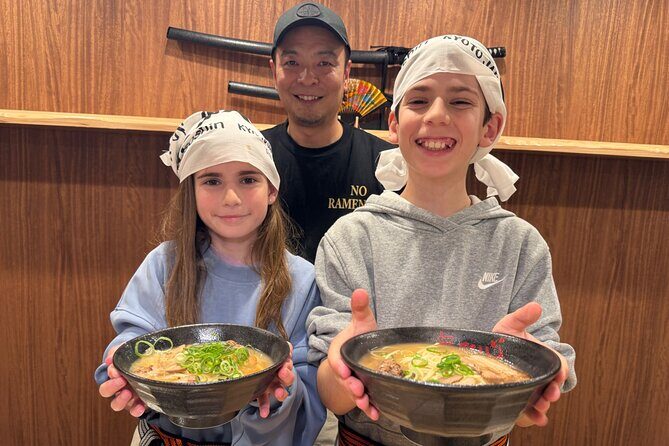
- Hands-on Michelin-style ramen cooking instruction, not just watching
- Chef Shin leads the workshop and answers recipe/process questions
- Ingredients brought from Musoshin Gion and prepared ahead (day-before chef ingredients)
- Vegetarian and vegan ramen can be made in the class
- Ramen bowl painting plus an optional bake-and-pick-up souvenir plan
- Small group size with a maximum of 12 travelers
Kyoto Ramen Workshop With Temple Stops: Why This Tour Feels Practical

This is the kind of Kyoto experience I like because it stacks value into a short window. You’re not only learning how ramen comes together; you’re also doing sightseeing at the same time, with three major temple stops: Kiyomizu-dera, Kennin-ji, and Sanjusangendo. That pairing makes sense in Kyoto, where meals, craft, and culture live close together.
Musoshin Ramen Academy is positioned as a dedicated ramen workshop tied directly to Musoshin Ramen. That matters because you’re not getting a generic “Japanese cooking show.” You’re cooking with ingredients that come from a nearby Musoshin location (Musoshin Gion), and the class is built around how their chef ramen is made.
Your group stays small (up to 12), which also changes the feel. You’re more likely to get direct attention during cooking and have time to ask questions.
You can also read our reviews of more cooking classes in Kyoto
Getting Oriented: What the Class Structure Actually Looks Like
The workshop is split by floor, and the flow is part of the fun.
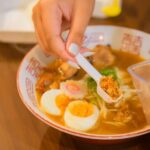
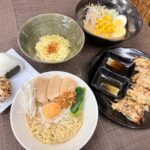
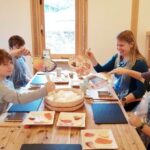
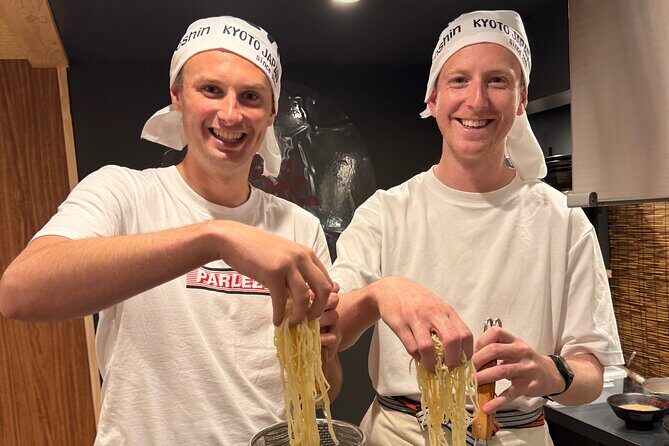
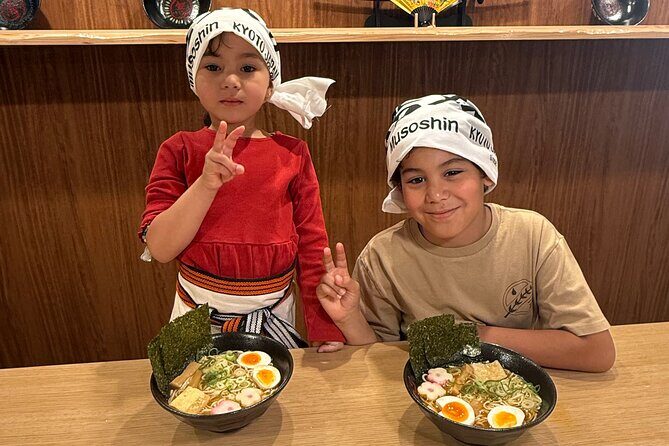
On the first floor, a chef instructor guides you through making your own Michelin-starred ramen. The point is hands-on participation: you’re not just tasting while someone else handles the work. You cook, you build flavor steps, and you’ll eat the ramen you made.
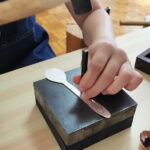
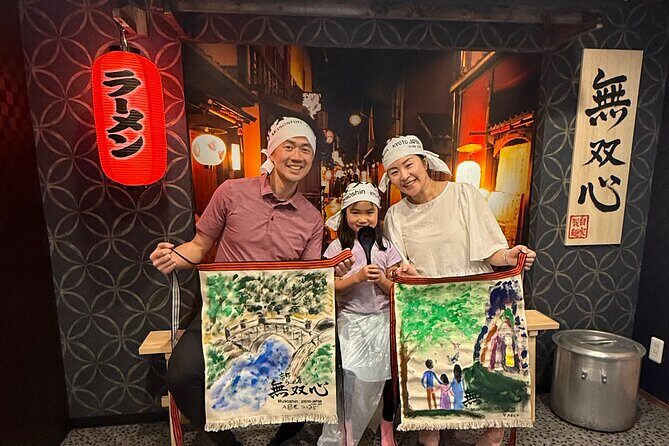
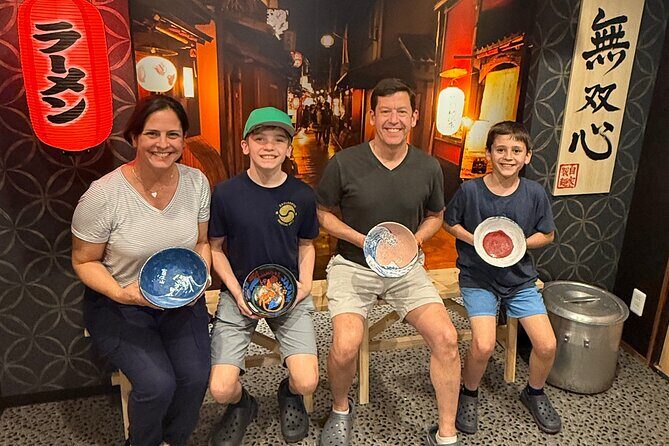
On the second floor, the focus shifts to creativity. That’s where you paint your ramen bowl. If you want to take home something that feels made-for-you, this step is the difference between a normal meal and a real souvenir.
You also receive a bandana as a take-home item. Small, yes, but it’s consistent with the academy-style branding and adds to the “made here” feeling.
Michelin-Style Ramen You Can Cook, Not Just Admire
The ramen part is the heart of the day. The academy teaches you how to make Michelin-starred ramen recipes, using ingredients brought in from the nearby Musoshin Gion store. The class ingredients are described as ramen ingredients that the chef prepares the day before.
That “day-before prep” detail is more than trivia. It means you’re working with what a restaurant would want you to work with—consistent components—so you spend your time learning steps rather than waiting around for everything to come together. In a 1 hour 30 minute experience, efficiency matters.
You’ll also see that Musoshin frames this as ramen culture you can carry home. The workshop is run by Musoshin Ramen (and not just a random cooking studio). Musoshin has multiple locations worldwide, including three Kyoto locations and three in Toronto, and their Toronto operation has been nominated for Michelin three times. Even if you’re not tracking awards, it signals that the organization treats ramen like a craft, not a gimmick.
Vegetarian and Vegan Ramen: How the Class Adjusts
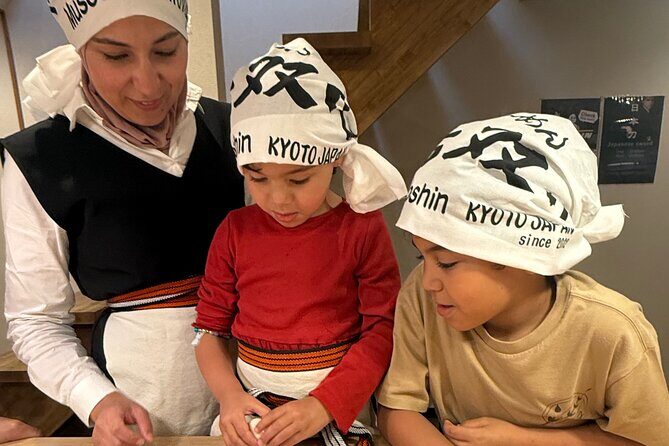
A big plus for me, if you eat vegetarian or vegan, is that the workshop explicitly offers modifications. Ramen can be changed to vegetarian or vegan versions in the class.
That’s important because ramen can be tricky when you’re used to meat-based broth assumptions. Here, you’re not being told to “choose sides” or skip the main thing. You’re still participating in the ramen you came to make, just with adjustments that fit your dietary needs.
If you have dietary constraints, this is exactly the kind of class where you want to confirm your needs during booking so your ramen can be adapted correctly.
Chef Shin at the Center: What Makes the Teaching Style Work
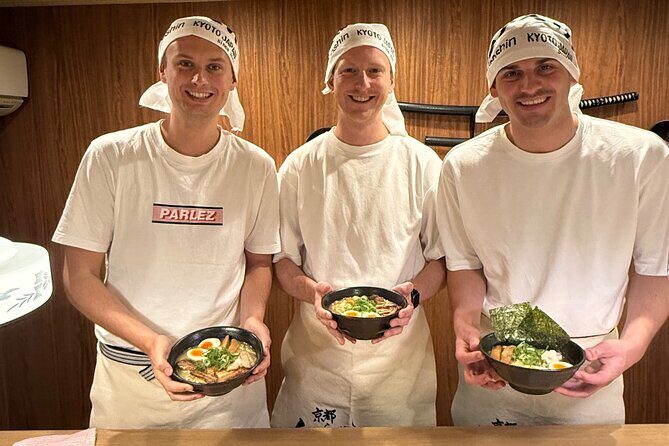
Your chef host is Shin. The class vibe described in the feedback is consistent: he’s talented, enthusiastic, and fun, and he answers questions about the recipe and the process.
That teaching approach matters more than it might sound. Ramen-making isn’t one trick; it’s a chain. When you understand why each ingredient step matters, you can recreate it later rather than just remembering what you did.
From the feedback, the best part is how obvious his passion is while he explains. People also highlight that they learned how every ingredient plays a role. So if you love food as a science-and-art combo, this is a good match.
A few more Kyoto tours and experiences worth a look


The Ramen Bowl Painting Step: A Real Souvenir Plan
After cooking, you switch gears and paint a ramen bowl. This is on the second floor, and you’ll leave with your painted bowl as a take-home item.
The tour also offers an optional extra step: you can put the painted bowl into a special oven to bake it. If you choose that, the plan is:
- Keep the original bowl as a souvenir you can use for future meals
- Return later (next morning or later) to pick up the baked version
That setup is clever because it gives you both: the emotional souvenir (your painting) and a baked keepsake you can hold onto longer. It also reduces the stress of whether the art will survive handling, since you can decide to bake it.
Practical tip: think about your schedule when you pick this. If you’re leaving Kyoto soon, the “pick up later” element can complicate things.
How the Three Temple Stops Fit Into a Food Day
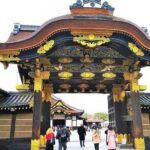
The experience includes three temple stops: Kiyomizu-dera, Kennin-ji, and Sanjusangendo. They’re big-name Kyoto sites, and the itinerary makes them part of the same overall outing.
What you can reasonably expect during the temple portion is classic Kyoto pacing: walking between areas, taking in temple grounds, and getting photo time where it fits the route. The time is limited, though, so don’t treat this as a slow, solo exploration of each temple.
Instead, think of the temple stops as context—Kyoto’s atmosphere around your meal and workshop. If you want a day of ramen-making plus a quick taste of Higashiyama temple energy, this combo works.
Because the experience is short overall, wear comfortable shoes. Temple areas are not where you want blisters.
Price and Value: What $78.18 Buys You (and Why That’s Not Just a Meal)
At $78.18 per person, you’re not paying for one thing. You’re buying several parts that usually cost more when separate:
- A hands-on ramen workshop with Michelin-style instruction
- Time to eat the ramen you make
- A ramen bowl painting activity
- A souvenir bandana
- An optional baking step that can extend the keepsake value
Most cooking classes charge you for instruction and tasting. Here, the package adds the creativity component (your painted bowl) and ties ingredients to a ramen restaurant’s prep process via Musoshin Gion.
Also, group size helps value. With a max of 12, you’re more likely to get real guidance during cooking rather than feeling like you’re watching a performance.
If you’re someone who likes to do one “big brain” food activity in a city, this is a solid choice.
Logistics That Matter: Time, Mobile Ticket, and Small Group Comfort
The experience runs about 1 hour 30 minutes. That’s short enough to fit into many Kyoto days without eating the whole schedule.
You’ll use a mobile ticket, and the tour includes confirmation at booking. The meeting point is listed at 440-5 Nishigomonchō, Higashiyama Ward, Kyoto, 605-0816, Japan, and it’s noted as being near public transportation—handy if you don’t want to rely on taxis.
Small group size (up to 12) is the other logistics detail I’d call out. It generally translates to less waiting and more hands-on participation.
Who This Experience Is Perfect For
This is a strong fit if you:
- Want a hands-on ramen experience with Michelin-style techniques
- Care about taking something home that isn’t just photos (painted bowl, bandana)
- Prefer a class run by a ramen restaurant rather than a generic cooking studio
- Need vegetarian or vegan options
It may be less ideal if you:
- Need a fully flexible schedule because of the optional baked bowl pick-up timing
- Want leisurely temple exploration, since the itinerary is brief
Should You Book This Kyoto Ramen and Bowl Painting Class?
If your plan includes Kyoto temples and you also want one memorable food workshop, I’d book it. The teaching is chef-led with Shin at the center, the ramen is the real work (not just tasting), and the bowl painting turns the experience into a keepsake.
If you want to avoid any schedule stress, decide early whether you’ll use the baking oven option. When that pick-up matters, it can shape the rest of your Kyoto day.
Overall, it’s a compact, fun, and surprisingly practical way to experience ramen culture in a real restaurant-run setting.
FAQ
How long is the Kyoto Ramen Bowl Painting and Michelin Cooking Class?
It runs for about 1 hour 30 minutes.
Is the ramen class offered in vegetarian or vegan versions?
Yes. The ramen can be changed to vegetarian or vegan ramen.
What souvenir do I get besides the painted bowl?
You receive a bandana as a souvenir.
Can I take my painted ramen bowl home?
Yes. You can take the painted bowl home as it is. There is also an optional baking step where you can pick up the baked bowl later.
Is the group size limited?
Yes. The experience has a maximum of 12 travelers.
Can I cancel for free?
Yes. Free cancellation is available up to 24 hours in advance for a full refund. If you cancel less than 24 hours before the start time, you won’t receive a refund.