REVIEW · NAHA
Kintsugi Accessory Experience in Naha, Okinawa
Book on Viator →Operated by Okinawa Kintsugi Experience · Bookable on Viator
Kintsugi turns damage into something you can wear. In a calm Naha studio, you’ll mend a broken ceramic piece using a simplified kintsugi method and finish with your own necklace or bracelet. It’s hands-on, beginner-friendly, and the kind of craft session that feels quietly meaningful instead of rushed.
Two things I like right away: you’re not just watching—you’re making, with all tools and materials provided—and you can choose between gold or silver-colored lacquer for your repair. One consideration: because you’re working with lacquer and finishing your accessory within a set time (about 1 hour 30 minutes), you should expect a guided pace rather than a slow, open-ended art day.
In This Review
- Key points before you go
- A calm Urushi Studio start in central Naha
- Kintsugi philosophy you can actually feel while you work
- The 1.5-hour workflow: what happens from first step to finish
- 1) Pick from pre-prepared ceramic pieces
- 2) Learn the simplified kintsugi technique (gold or silver look)
- 3) Assemble your design into a wearable accessory
- 4) Walk out with your one-of-a-kind piece
- Necklace vs. bracelet: the design choices that matter
- What you’ll learn beyond the final object
- Price and value: what $50.30 really buys
- The small-group factor: why max 8 makes a difference
- Where this workshop fits in your Okinawa plans
- Who should book this, and who might not love it
- Quick practical notes for a smoother workshop day
- Should you book this Kintsugi accessory workshop?
- FAQ
- How long is the Kintsugi accessory experience in Naha?
- What will I make during the workshop?
- Do I need any prior art or craft experience?
- What materials are used for the kintsugi repair?
- How many people are in a class?
- Where does the workshop start?
- How do I get my ticket?
- What is the cancellation policy?
- Is the workshop near public transportation?
Key points before you go
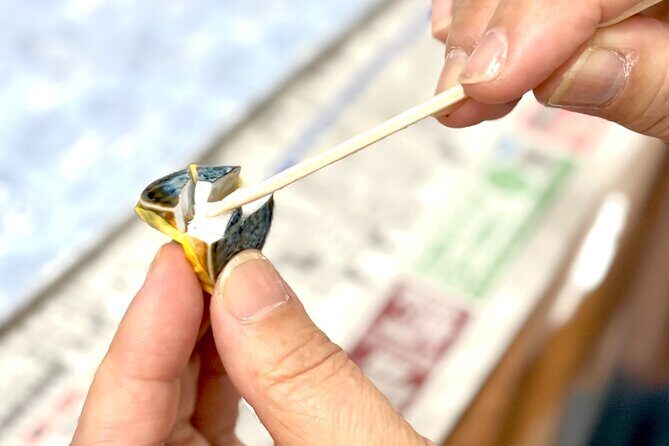
- You make wearable kintsugi art: the end result is a necklace or bracelet, not just a repaired dish.
- Beginner-safe technique: you’ll use simplified steps and beginner-friendly materials.
- Small group setting: capped at 8 travelers, so you get real help at the bench.
- A real studio atmosphere: the workshop space is described as clean, and you may see repaired ceramic pieces for sale.
- A team approach: the studio staff includes people like Mia, Asa, Mayo, and Keiko, who are known for being welcoming and helpful.
A calm Urushi Studio start in central Naha
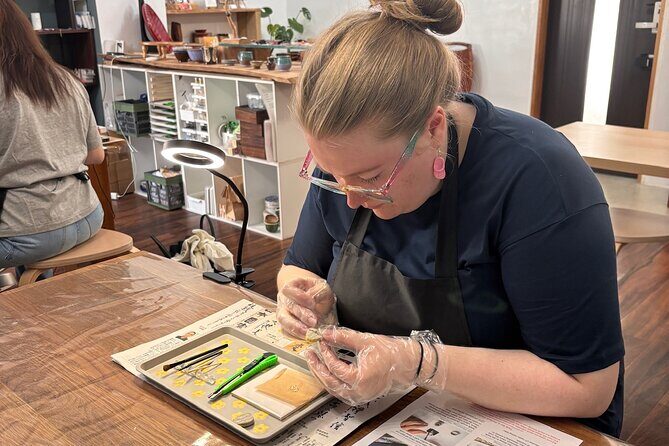
Your workshop begins at 漆工房 小手毬 (Urushi Studio Kodemari) in Maejima, Naha (2-chōme-16-6). It’s listed as near public transportation, which matters because you don’t want the whole experience to be you hunting for the last bus or the correct corner.
One of the practical perks here is that the class is only about 1 hour 30 minutes. That’s a sweet spot for travel days. You get a satisfying activity without eating a whole morning or afternoon. And because the group size is limited to up to 8 people, the studio doesn’t feel like a big production line. You’ll have room to focus on your piece and ask questions.
The tone you’re aiming for is simple: you’re here to slow down a little and work carefully. Kintsugi isn’t about hiding flaws. It’s about treating breakage like part of the object’s story, then turning the repair into something visible and intentional. That mindset shows up in how the workshop is taught.
You can also read our reviews of more tours and experiences in Naha.



Kintsugi philosophy you can actually feel while you work
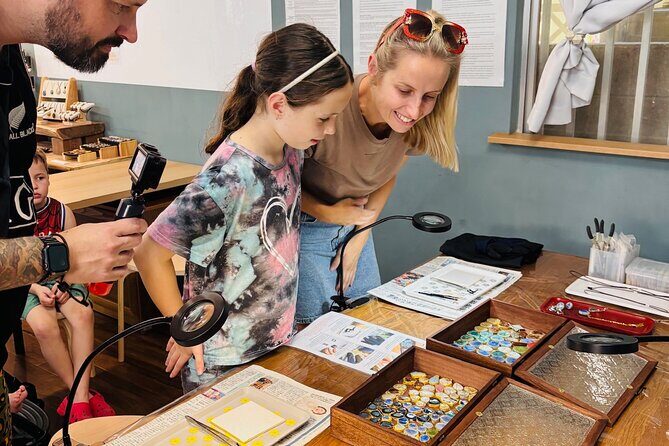
Kintsugi is often described as art, but at the bench it’s more like problem-solving with patience. You start with something already broken—pre-prepared ceramic pieces are provided—and then you learn how to mend it using a precious-metal look. In this class, that precious-metal look comes from gold or silver-colored lacquer.
Here’s what you’ll likely notice as you work: the repair isn’t only structural. It’s aesthetic. You’re making decisions about how the lacquer lines follow the break, where the joinery becomes the design, and how your accessory turns out as a finished object you can wear.
That’s why this experience sticks with people. The craft itself is tactile and repeatable, but the result carries a message: imperfection isn’t a defect to erase. It’s something to highlight.
And because you’ll be making a wearable item (necklace or bracelet), you’re not just practicing the technique—you’re walking away with a daily reminder. Even if you treat it as a special-occasion piece, it’s still a story you can carry.
The 1.5-hour workflow: what happens from first step to finish
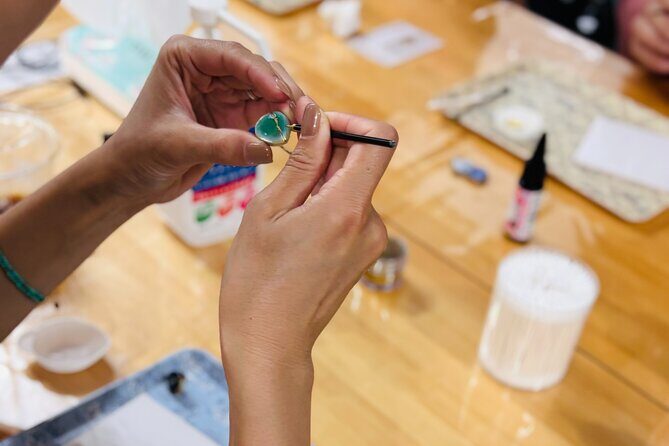
This workshop is guided from start to finish, which is great when you’re traveling and don’t want to figure out tools, steps, or timing on your own.
Here’s the flow you can expect in plain terms:
1) Pick from pre-prepared ceramic pieces
You’ll choose from pre-prepared ceramic pieces. This is a big deal for first-timers. It means you’re not responsible for finding a break-worthy item or bringing something fragile from home. The studio sets you up with a starting point that matches what they teach.
2) Learn the simplified kintsugi technique (gold or silver look)
You’ll learn simplified kintsugi techniques using gold or silver-colored materials. The key practical benefit is stated clearly: it’s safe for beginners. So you can focus on technique and design instead of worrying whether you’re doing something hazardous or too advanced.





3) Assemble your design into a wearable accessory
The workshop goal isn’t just a repaired ceramic surface. You’ll design and assemble your own original accessory—typically a necklace or bracelet.
This is where the experience becomes more personal. You’ll be making choices about how the accessory should feel and look, and how the repair lines translate into something you’d actually want to wear.
4) Walk out with your one-of-a-kind piece
At the end, you take home your finished accessory. That’s part of the value: you’re not buying a souvenir you’ve seen in a shop window. You’re leaving with something created by your own hands, even though the studio provides the materials and instruction.
In the tone of the workshop, it can feel both therapeutic and informative. People also mention how helpful and welcoming the instructors are—so you’re not left alone with a difficult task.
Necklace vs. bracelet: the design choices that matter
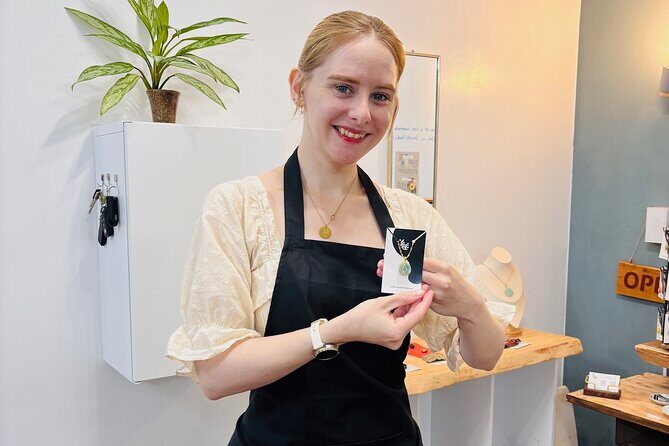
The workshop is set up so you can make either a necklace or a bracelet, depending on what you want to wear (or what would make the best gift).
Here’s how I’d think about choosing:
- If you want something that gets attention right away, go for the necklace. It sits where people notice details fast.
- If you want a piece that’s simpler to style with everyday outfits, consider a bracelet. It’s easier to match with sleeves and casual wear.
Because the ceramic repair becomes part of the visual identity of the piece, your color choice matters too. Gold-colored lacquer leans warm and classic. Silver-colored lacquer can feel more modern and crisp. If you’re the kind of traveler who likes clean, neutral aesthetics, the silver option can be a good match. If you want that traditional gold-joinery look, go gold.
Also, the team at this studio has a reputation for walking people through each step closely. Reviews highlight how staff members explain the traditional process of mending pottery and then guide you through making the necklace step-by-step. So if you’re nervous about your own design sense, don’t be. The structure is there.
What you’ll learn beyond the final object
A great workshop doesn’t just hand you a finished product. It teaches you how to see.
Even with a simplified method, you’ll pick up core ideas behind kintsugi:
- Breakage isn’t erased: the join becomes part of the decoration.
- Craft means intention: careful placement matters, because repairs show.
- Repair can be beautiful: the repair lines aren’t a cover-up; they’re the design language.
In conversations you’ll have at the bench, you might also hear how the studio frames the philosophy as resilient and meaningful. People describe the experience as therapeutic and as giving them a better understanding of craftsmanship in Japan. That’s not fluff. When you’re physically placing lacquer and assembling a wearable piece, you start to understand what “craft” means as a mindset, not just a product.
And since the studio is a working shop, you may also notice repaired ceramics displayed and even pieces for sale. That’s a nice bonus for context: you can compare what you made to what else they’re able to repair.
Price and value: what $50.30 really buys
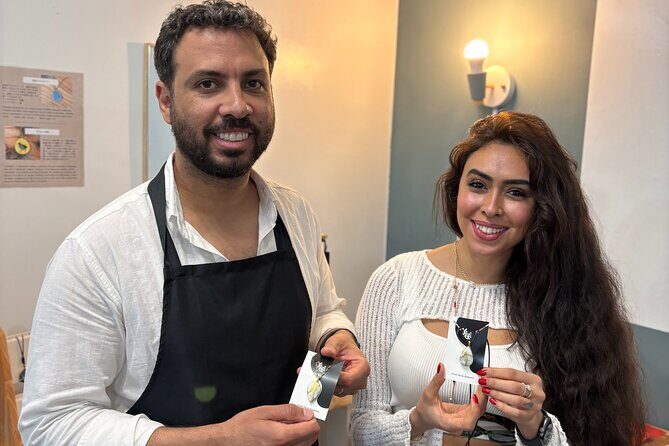
The price is $50.30 per person for an experience that runs about 1 hour 30 minutes and includes a takeaway piece.
To judge value, look at the parts you don’t have to supply:
- You don’t need to bring tools.
- You don’t need materials.
- You don’t need a practice piece.
- You’re guided through simplified technique and assembly.
Most importantly, you’re taking home something handmade that you can wear. A typical souvenir purchase gives you a decorative object. Here, you get an object with meaning and personal effort behind it. That difference is often what makes people want to come back—one of the most consistent themes in feedback is the desire to return and try another item, like a plate, after making the jewelry first.
So yes, this is an actual workshop cost, not a low-cost ticket. But when you factor in the guided instruction, beginner-safe materials (gold or silver lacquer), and a one-of-a-kind accessory you can wear, it’s a fair deal.
The small-group factor: why max 8 makes a difference
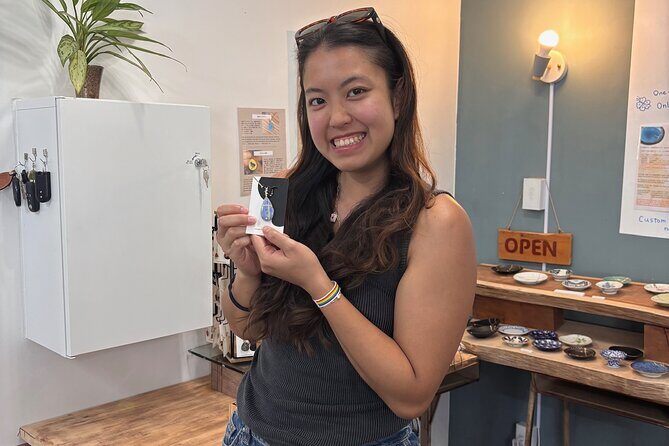
With a maximum of 8 travelers, this workshop feels more like a studio class than a large-group activity. That matters for kintsugi because the steps are hands-on.
If you’ve ever done a craft where the instructor is constantly saying, Watch the example while I help someone else, you’ll know the difference. Here, small group size supports a closer coaching style. You can ask for help at the moments you need it—especially when you’re assembling your accessory and want it to look right.
Reviews also point to the staff being friendly and helpful, with guides like Mia and team members such as Asa, Mayo, and Keiko. That kind of support is the difference between a fun workshop and a stressful one.
Where this workshop fits in your Okinawa plans
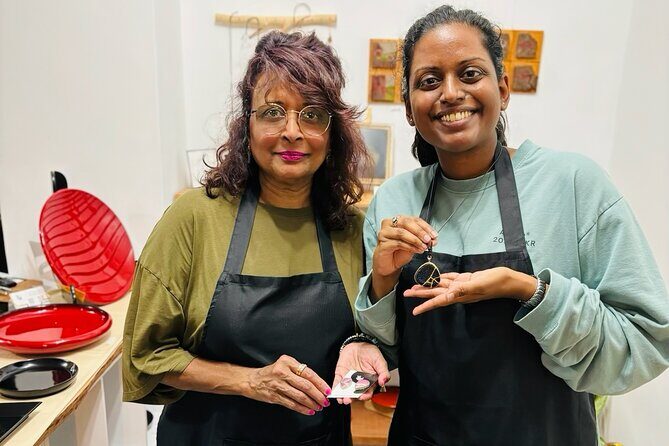
Naha is a good base for activities, and this workshop is nicely timed for travel rhythm. It’s short enough to slot into a day when you also want to explore markets, coastlines, or local food.
I’d pair it with:
- A morning stroll around central Naha, then the workshop as a focused indoor activity.
- A slower afternoon where you don’t have to rush from one big sight to the next.
- A day built around crafting and food, since this is creative without requiring a full day.
Also, it’s a good option if you’re traveling as a couple or family. The workshop is beginner-friendly and supports individuals and small groups, so you’re not stuck doing something that only works for one type of traveler.
Who should book this, and who might not love it
This experience is a strong match if you want a hands-on cultural activity with a tangible takeaway. It’s also ideal if you like crafts that feel calm and purposeful rather than chaotic.
You’ll probably enjoy it if you:
- Want to make an actual object, not just take photos.
- Like the idea of repairing something and turning that into visible beauty.
- Appreciate Japanese craftsmanship philosophy, but you don’t want a lecture-only experience.
- Travel with someone and want a shared activity that still lets you create your own piece.
You might want to think twice if:
- You strongly prefer high-impact sightseeing over slower craft work.
- You’re looking for a long, deep instructional art course. This is still a guided workshop in about 1 hour 30 minutes.
- You’re uncomfortable with working with materials like lacquer (even if it’s stated to be safe for beginners, you’ll still be handling it).
Quick practical notes for a smoother workshop day
A few tips make these workshops more fun:
- Wear clothes you’re okay with getting tiny marks from craft work. Even careful classes can be messy in small ways.
- Plan a little buffer afterward. You’ll be taking home your accessory, and you’ll likely want time to pack it properly.
- Choose your color based on how you dress. Gold and silver joinery look different against metal accessories and skin tones.
And because the meeting point is near public transportation in Naha, you can plan around transit rather than needing a taxi. You’ll start and end at the same point.
Should you book this Kintsugi accessory workshop?
If you want a meaningful souvenir that you helped create, I’d book it. The value is strong because you’re paying for instruction, materials, and a wearable final piece in a reasonable 1.5-hour block. The small group cap helps you get real attention, and the fact that simplified, beginner-safe technique is taught makes it low-stress for first-timers.
Book it especially if you like the idea of carrying a story—something about resilience and repair—on your body. And if you’re the type who likes to return to places to learn more, this is the kind of workshop that can turn into a “next time I’ll make a different item” tradition.
FAQ
How long is the Kintsugi accessory experience in Naha?
The experience lasts about 1 hour 30 minutes.
What will I make during the workshop?
You’ll create a wearable kintsugi accessory, such as a necklace or bracelet, using repaired ceramic pieces.
Do I need any prior art or craft experience?
No prior experience is needed. The workshop is designed to be beginner-friendly.
What materials are used for the kintsugi repair?
You’ll use simplified kintsugi techniques with gold or silver-colored lacquer materials.
How many people are in a class?
The activity has a maximum of 8 travelers.
Where does the workshop start?
You’ll meet at 漆工房 小手毬 Urushi Studio Kodemari, 2-chōme-16-6 Maejima, Naha, Okinawa 900-0016, Japan, and it ends back at the meeting point.
How do I get my ticket?
You’ll receive a mobile ticket.
What is the cancellation policy?
You can cancel for a full refund up to 24 hours in advance of the experience’s start time. If you cancel less than 24 hours before the start time, the amount paid will not be refunded.
Is the workshop near public transportation?
Yes, it’s listed as near public transportation.