REVIEW · NAHA
Okinawa: Shurijo Castle & Tamaudun Guided Tour – UNESCO Site
Book on GetYourGuide →Operated by DeepExperience, Inc. · Bookable on GetYourGuide
Shurijo Castle feels like a whole world compressed into stone. You’ll get a guided walk through the Ryukyu Kingdom power center at Shurijo, then cross a short distance to the royal mausoleum of Tamaudun, where the story shifts from rule to remembrance. I especially like that the tour doesn’t treat these sites like museum exhibits. It explains why the castle wasn’t built like a fortress, and why the mausoleum is placed right next to it—politics and spirituality were tied together.
Two other things I like: you’re led along the Kinjo Stone-Paved Road on foot (so you actually experience the slope and old-capital feel), and you finish with time to connect the sites through the guide’s commentary rather than just snapping photos and moving on. The one consideration: Shurijo’s main Seiden burned in 2019 and is still under restoration, so parts may look incomplete compared with older photos you’ll see online.
In This Review
- Key highlights worth planning around
- Shurijo Castle: where the Ryukyu Kingdom mixed power and belief
- The Seiden fire and what restoration changes about your visit
- Tamaudun: royal mausoleum, Ryukyuan views on death
- Kinjo Stone-Paved Road: walking into daily life
- Optional sunrise Opening Gate Ceremony vs starting from Naha Airport
- If you choose the early morning version: Opening Gate Ceremony
- If you choose to start from Naha Airport
- Price and pacing: is $97 good value for you?
- What I’d watch for in the guide experience (Sara-style storytelling)
- Who should book this tour?
- Should you book this Shurijo & Tamaudun guided tour?
- FAQ
- How long is the Okinawa Shurijo Castle & Tamaudun guided tour?
- Where does the tour start?
- What sites are included?
- Is the guide available in English?
- What’s the deal with Shurijo Castle’s Seiden area?
- Is there an early morning option?
- Can I start the tour directly from Naha Airport?
- What is the cancellation policy?
Key highlights worth planning around
- Shurijo Castle as a diplomatic palace: vermilion buildings, Chinese-inspired details, and curved limestone walls, not a war fortress.
- Tamaudun’s royal mausoleum: early 16th-century tombs with thick stone walls and Ryukyuan limestone.
- Kinjo Stone-Paved Road walk: stone steps, forested paths, old homes, and boundary walls.
- The Seiden restoration reality: the center hall was destroyed by fire in 2019 and the restoration is ongoing.
- Optional sunrise Opening Gate Ceremony: rare, solemn, and only held at sunrise.
Shurijo Castle: where the Ryukyu Kingdom mixed power and belief
Shurijo Castle is the cultural heart you came for. This wasn’t just a place where kings lived. From the 15th century, it served as the royal court and spiritual center of the Ryukyu Kingdom, and it became the seat of King Sho Hashi after he unified Okinawa’s three regional powers.
What I like about the way the tour frames Shurijo is the design choice. The castle is described as a palace of diplomacy and sacred authority, not a fortress. That matters for how you read what you see. If you walk in expecting battlements and war stories, you’ll miss the point. Instead, you’re looking at authority expressed through ritual, symbolism, and proximity to sacred spaces.
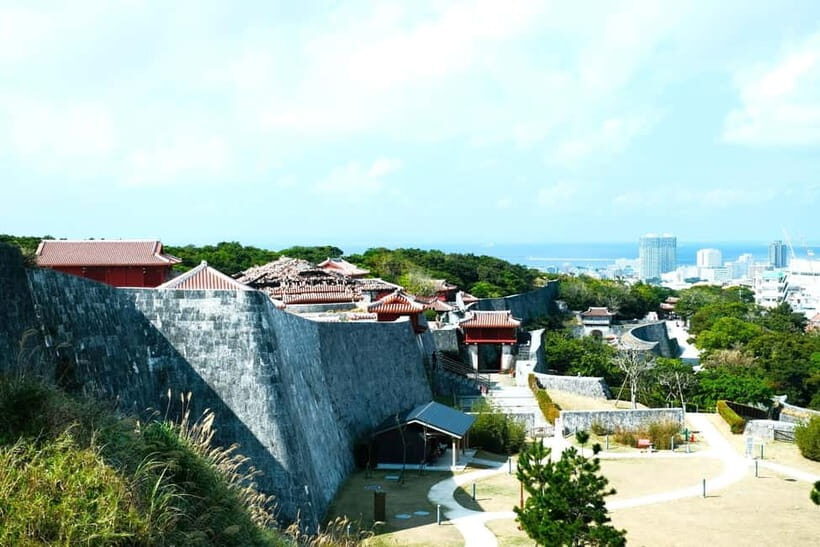
You’ll get guided time here (about 1.5 hours), including photo stops and a full visit. The standout visual details are the vermilion buildings and the Chinese-inspired design touches, plus the gracefully curved limestone walls. Even if you’ve seen palace architecture elsewhere in Japan, Shurijo’s mixture of influences feels specific to Ryukyuan history.
Then there’s the spiritual layer. Even with the Seiden’s restoration situation (more on that below), you still have multiple utaki on the castle grounds—sacred sites tied to Ryukyuan religious life. If you’re curious about how governance and spirituality worked together, this is where it clicks. The guide’s explanations give you context for why the site layout matters, not just the view.
Practical note: Shurijo is a walking experience. Wear shoes you’re comfortable with for uneven stone. Plan for time to look up as well as around; a lot of the meaning is in how spaces connect.
You can also read our reviews of more guided tours in Naha


The Seiden fire and what restoration changes about your visit
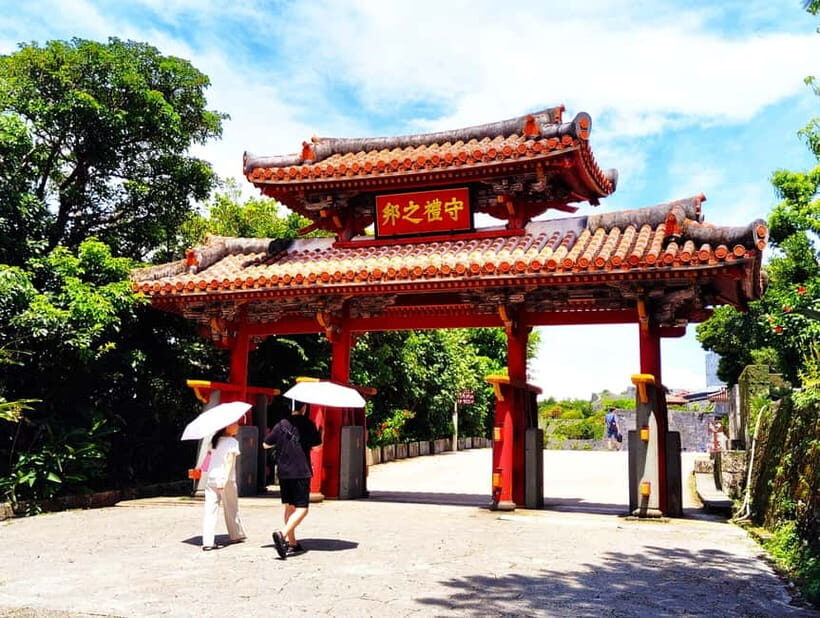
Here’s the honest catch before you go: Shurijo’s central Seiden (Main Hall) was destroyed by fire in 2019. Restoration is underway now, using historical documents and traditional craftsmanship. That means the site may not look like the polished, fully intact postcard version.
This matters in two ways.
First, your photos might include scaffolding, partial structures, or areas that feel different from older images. That’s not a deal-breaker—it’s part of the story. You’re seeing a living heritage site being repaired with methods meant to match its past, not just covered and forgotten.
Second, it shifts where you focus during the visit. The tour keeps you moving toward the remaining sacred elements on the grounds and gives you time to understand what still exists and why it still matters. Behind the Seiden, you can gaze toward Kudaka Island, revered in Ryukyuan mythology as the spiritual birthplace of life. That viewpoint gives you something “complete” even when the main hall is mid-repair.
If you’re the type who hates anything under construction, this might annoy you. If you like understanding how history survives, you’ll probably appreciate the restoration context more than you expected.
Tamaudun: royal mausoleum, Ryukyuan views on death
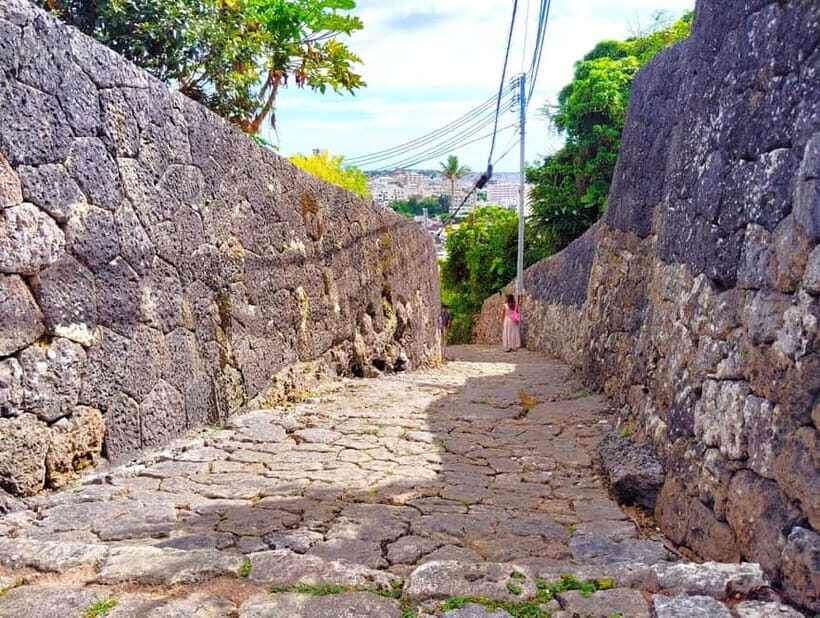
Just a short walk from Shurijo brings you to Tamaudun, the royal mausoleum built in the early 16th century to enshrine kings and queens of Ryukyu. This is the part of the tour that changes the tone—less ceremonial “presence” and more solemn remembrance.
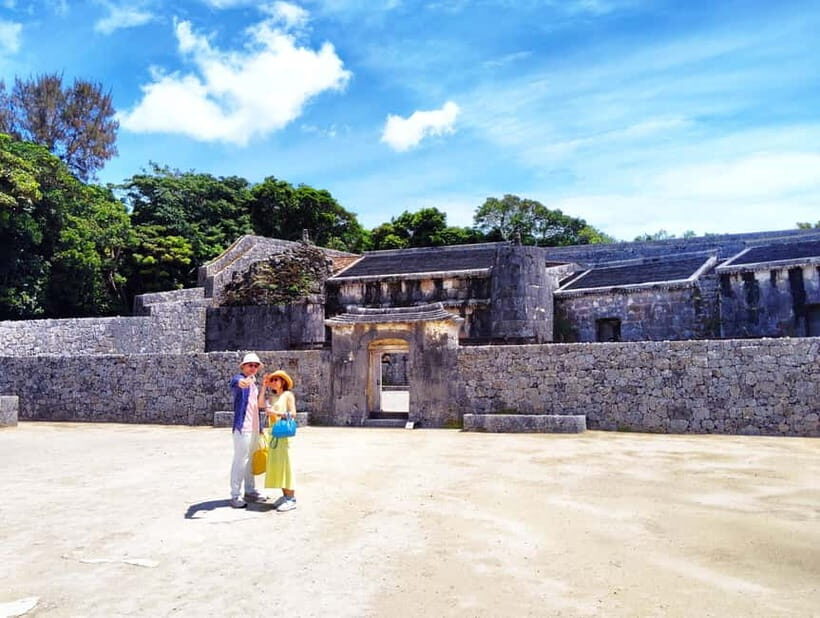
Tamaudun is built from Ryukyuan limestone, and it’s surrounded by thick stone walls. The physical feeling here is quiet and enclosed, which fits the subject. This isn’t a random cemetery stop. The tour explains how Ryukyuan views on death connected to ancestral reverence and dynastic continuity—basically, the royal line wasn’t only political. It was also spiritual and ongoing.
What I like about including Tamaudun right after Shurijo is the way it clarifies the whole system. Shurijo represented rule and sacred authority. Tamaudun represents what comes after—how remembrance, legitimacy, and lineage carry forward. Because they’re close, you can connect the dots quickly instead of treating each site like a separate postcard.
The guided time here is about 45 minutes. You’ll typically get a photo stop and a focused guided visit rather than a rushed glance. That pacing is helpful because this isn’t the kind of place where you want to sprint. Give yourself a minute to slow down and let the stone and walls do their job.
Kinjo Stone-Paved Road: walking into daily life
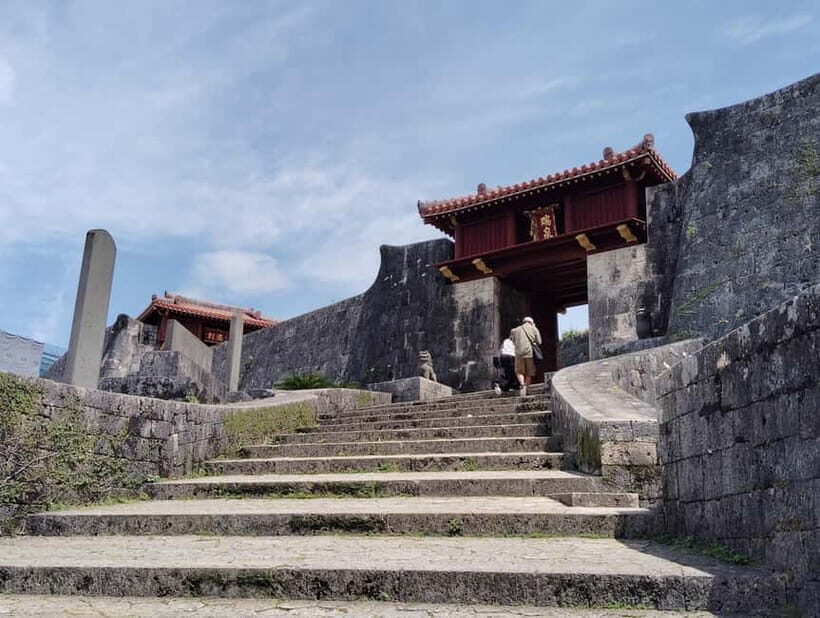
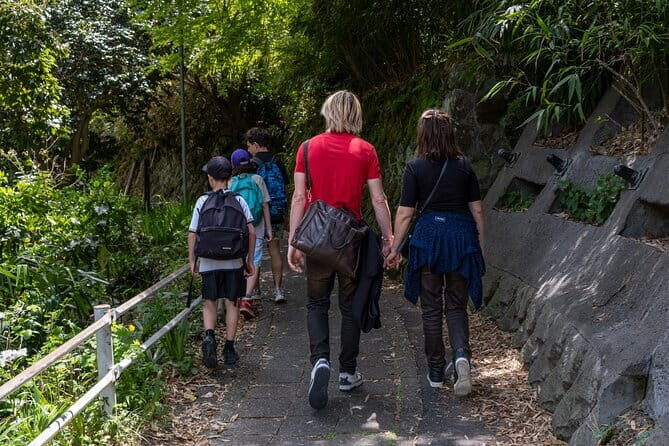
After the palace and the mausoleum, you transition to something more human-scale: the Kinjo Stone-Paved Road. The tour describes it as an atmospheric slope paved with traditional Ryukyuan stone. That word “stone” is the whole point. You’re not looking at history from behind a fence; you’re moving along the surface that shaped how people traveled through the old capital.
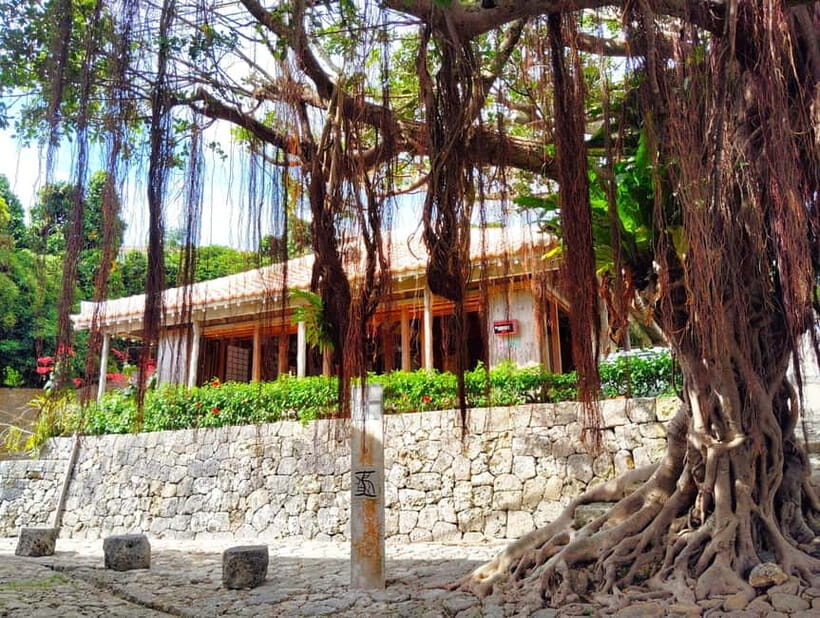
The route runs with forested paths, old homes, and stone walls lining the way. Even if you don’t know every detail yet, the setting creates a feeling of distance from modern street life. You start understanding that the capital wasn’t only ceremonial plazas and royal sites—it was also homes, boundaries, and everyday movement.
This stop is about 30 minutes, with photo moments and guided explanation. The value here is the guided framing. Without it, you might treat it as “a nice walkway.” With the guide, it becomes a physical link to how daily life sat next to governance and ritual.
Practical tip: keep an eye on your footing. Stone paving can be slippery after rain. If you’re visiting in hotter months, bring water and pace yourself—this is a walking tour across multiple stops.
Optional sunrise Opening Gate Ceremony vs starting from Naha Airport
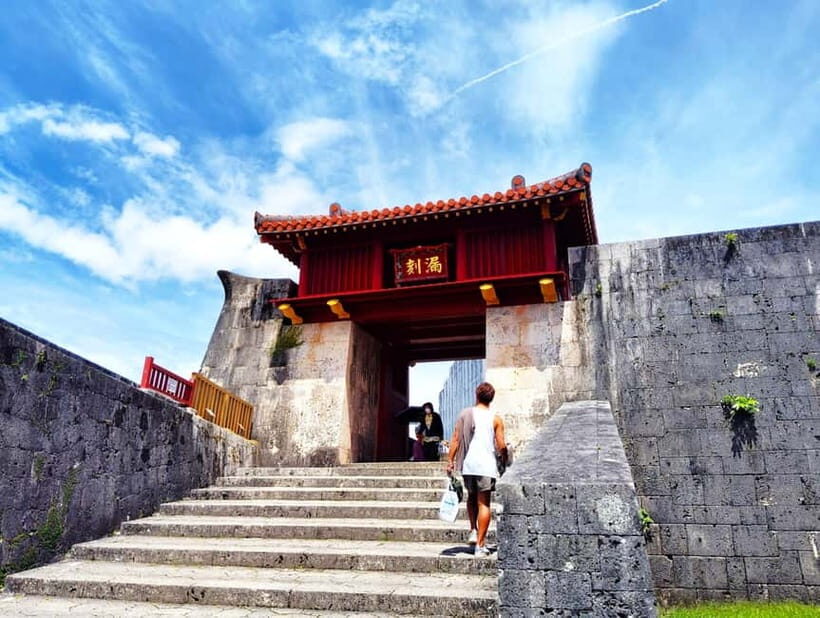
You get two different ways to tailor the timing, depending on your energy level and how you’re building the rest of your Okinawa day.






If you choose the early morning version: Opening Gate Ceremony
There’s an optional early morning tour that lets you witness the Opening Gate Ceremony. It’s held only at sunrise, and it’s described as rare and solemn. If you like quieter, more ritual-heavy experiences—especially before crowds—this option can feel more meaningful than a typical midday site visit.
The “consideration” is obvious: you’re trading sleep for access. If you’re traveling with a tight schedule or you’re not a morning person, weigh that honestly.
If you choose to start from Naha Airport
Another option lets you start directly from Naha Airport. Your guide meets you at the monorail station and accompanies you to Shurijo Castle. This is a big help if you’re trying to reduce Okinawa transit stress. Instead of spending your morning figuring out logistics, you’re already “in the tour” when you arrive.
If you’re doing other island hopping or city plans after Shurijo, this airport-start format can keep your day from unraveling.
Price and pacing: is $97 good value for you?
At $97 per person for about 3–4 hours, the value hinges on what you care about.
You’re paying for three things:
1) Expert English guidance during multiple stops
You’re not just seeing Shurijo and Tamaudun—you’re walking between them and getting context at each location.
2) A structured itinerary that covers the major sacred and historical points
Shurijo (about 1.5 hours), Tamaudun (about 45 minutes), then Kinjo Stone-Paved Road (about 30 minutes), with photo stops and walking time that keeps you from piecing it together yourself.
3) A smoother start depending on your option
Transportation to and from Naha Airport is mentioned as optional, and the airport-start option can save you time and confusion.
If you’re a solo traveler who likes learning from a human guide, this can be a solid deal because it compresses what could take you a lot longer to research and route on your own. If you’re traveling with others, a private-group experience can also make the price feel more reasonable per person, since you get a more personal pacing than a larger tour.
The main thing to sanity-check: Shurijo’s Seiden is under restoration, and Tamaudun and Kinjo are calm, stone-and-meaning stops. If you’re only here for high-energy entertainment or shopping, you may feel underwhelmed. If you want the “why” behind Ryukyuan royal culture, this is where your money goes.
What I’d watch for in the guide experience (Sara-style storytelling)
One review highlights a guide named Sara, and the tone of that feedback is consistent with the goal of this kind of tour: bring Okinawa history to life with clear, engaging explanations. That same review also notes Sara went above and beyond with extra tips after the tour ended, plus additional historical spots she thought the group would like.
So here’s how to use that information wisely. When a tour guide offers extra recommendations, it usually means they understand your constraints—what you can fit next, where it’s worth your time, and how to avoid wasting hours. If you’re the type who likes using a first day tour to set up the rest of your trip, this format is a good match.
Also, the tour is described as an English live tour guide and a private group, which typically means you can ask questions and keep the pacing from feeling too rushed.
Who should book this tour?
This guided route is a great fit if you want:
- A focused introduction to Shurijo’s Ryukyuan royal court and sacred spaces
- A clear, guided explanation of Tamaudun’s place in Ryukyuan beliefs about death and lineage
- A walking experience that includes Kinjo Stone-Paved Road, not just seated sightseeing
- The option to go early for the Opening Gate Ceremony or to start from Naha Airport
It may be less ideal if:
- You only want fully restored, uninterrupted viewpoints and don’t want to see restoration in progress
- You prefer quick “see-and-leave” stops with minimal walking
- You’re expecting a fortress-style military tour (Shurijo is framed as diplomatic and sacred authority)
Should you book this Shurijo & Tamaudun guided tour?
Yes, if your trip style leans toward meaning, not just landmarks. The combination of Shurijo Castle plus Tamaudun gives you a strong two-part story: authority in life, remembrance in death, all tied together by proximity. Add Kinjo Stone-Paved Road, and you get a bridge from royal spaces to everyday old-capital texture.
Before you book, decide which option fits your energy:
- Want something rare and ceremonial? Pick the sunrise Opening Gate Ceremony.
- Want less transit stress? Choose the Naha Airport start.
Also keep your expectations flexible about the Seiden. Restoration is underway because the hall was destroyed in 2019. If you treat that as part of the ongoing heritage work, your visit will feel more honest—and often more interesting—than if you expect everything to look like it did before the fire.
FAQ
How long is the Okinawa Shurijo Castle & Tamaudun guided tour?
The tour is listed as 3–4 hours.
Where does the tour start?
You can start from either Naha Airport station or Shurijo Castle’s Shureimon area. The meeting point may vary depending on the option you book.
What sites are included?
The tour includes a visit to Shurijo Castle, Tamaudun, and a walk down the Kinjo Stone-Paved Road. It finishes at 金城村屋(かなぐしくむらやー).
Is the guide available in English?
Yes. The live tour guide is listed as English.
What’s the deal with Shurijo Castle’s Seiden area?
The central Seiden (Main Hall) was destroyed by fire in 2019, and restoration is underway.
Is there an early morning option?
Yes. An early morning option includes the Opening Gate Ceremony, which is held only at sunrise.
Can I start the tour directly from Naha Airport?
Yes. There is an option where your guide meets you at the monorail station and accompanies you to Shurijo Castle.
What is the cancellation policy?
You can cancel up to 24 hours in advance for a full refund.