REVIEW · NAHA
Port Pick-Up: Naha Private Tour Licensed Guide& Vehicle
Book on Viator →Operated by Japan Guide Agency · Bookable on Viator
Naha feels like two Okinawas in one day. I love the port pickup that keeps a cruise stop from turning into stress, and I love how the licensed English guide translates Okinawan culture and wartime history into clear, human stories. The main trade-off: entrance tickets and lunch cost extra, so plan your must-dos early so you do not lose time.
This is built for a short timeline. You get a private vehicle and you pick 3–4 must-see stops, so your day in Naha and nearby areas feels like your trip, not a rushed bus route.
Priced at $505.58 per group (up to 2), it is not the cheapest way to see Okinawa. But you are paying for time-saving logistics, a government-licensed interpreter-type guide, and door-to-door convenience.
In This Review
- Key Highlights If You Like a Time-Smart Private Tour
- Why This Naha Port Pickup Changes Your Whole Day
- The 6-Hour Format: How to Pick 3–4 Stops Without Regret
- Shuri Castle Grounds: Ryukyu Power, Reconstruction, and What You Can See Now
- Kokusai-dori: The Easy Walk Through Naha’s Postwar Main Street
- Himeyuri Peace Museum and Peace Memorial Park: Learning Without Turning This Into a Lecture
- Sefa Utaki: A Sacred Hillside and the Okinawan Religion Connection
- Shikinaen Garden and Nakamura Residence: Where Ryukyu Looks Like Real Life
- Tamaudun and Fukushu-en: Mausoleum Meaning and Okinawa–China Links
- Tsuboya Pottery District and Makishi Public Market: Souvenirs With a Pulse
- Former Japanese Navy Underground Headquarters: The Stair-Step Reality Check
- How the Private Guide Keeps the Day Comfortable (Even When Weather Hits)
- Price and Value: What $505.58 per Group Actually Buys
- Who This Tour Fits Best
- Should You Book This Naha Private Tour?
- FAQ
- How long is the Naha private tour?
- Where can you be picked up for this tour?
- How many people is this tour priced for?
- Can I customize which sites we visit?
- What is included in the tour price?
- What is not included?
- Do I receive a mobile ticket?
- Is the tour private, or shared with other groups?
- Are car seats available for children?
- Is free cancellation available?
Key Highlights If You Like a Time-Smart Private Tour

- Cruise-friendly pickup at Naha Port or hotels near the port area
- Custom 6-hour route using 3–4 stops you select
- Shuri Castle area plus major Ryukyu-era cultural sites
- WWII context through museums and memorial grounds
- Faith, gardens, and traditional architecture spread across the day
- Local-food atmosphere at Kokusai-dori and Makishi Public Market
Why This Naha Port Pickup Changes Your Whole Day

If you are arriving by cruise, timing is everything. Customs, moving through the port area, and finding transportation can eat up the very hours you want for sightseeing. This tour is set up for that reality: you get picked up from Naha Port or from hotels near the port, and you head out with a private guide right away.
I also like the way the experience is structured for flow. Instead of waiting around for a big-group schedule, your guide can help you get from point A to point B with fewer moving parts. In real terms, it means you spend more time looking at places and less time solving logistics.
One more smart detail: you are not expected to navigate alone. With a licensed local guide (English speaking, plus interpreter-level credentials tied to Japanese cultural knowledge), you get context while you are standing right there, not later after the fact.
You can also read our reviews of more guided tours in Naha

The 6-Hour Format: How to Pick 3–4 Stops Without Regret

The tour is approximately 6 hours, and the plan centers on choosing 3–4 sites from the option list. That choice is the heart of the value. If you try to cram 8 or 10 stops into one day, you end up sprinting. Here, the route is designed so you can actually see, ask questions, and move at a reasonable pace.
A good strategy is to mix categories. For example:
- One Ryukyu-era site (like Shuri-related stops or gardens)
- One WWII memory stop (museum and/or memorial)
- One culture stop (sacred site, traditional house, or pottery area)
- One “real life Naha” stop (Kokusai-dori or Makishi Public Market)
Also, since the guide can customize based on what you want, you can steer the day toward your interests. If you care more about culture than war history, or vice versa, your guide can help you shape the balance.
Shuri Castle Grounds: Ryukyu Power, Reconstruction, and What You Can See Now

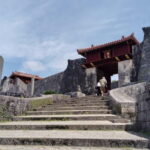
Shuri Castle is one of those places where the setting explains the story. You get a 30-minute stop, and admission tickets are not included, so make room in your budget if you want full access beyond the surrounding grounds.
Here’s the big reality check: the main buildings were destroyed by fire on October 31, 2019, and the city has talked about rebuilding efforts since then. What you will experience today is a mix of history, ruins/structure, and an Okinawa that is actively rebuilding its identity.
Why it is worth it even with the reconstruction: this area helps you understand the Ryukyu Kingdom’s role before modern Japan. With a guide explaining the background in English, the walk feels purposeful instead of just scenic. You are not only looking at stone and gates; you are learning how Okinawa was positioned between bigger powers and how that shaped local culture.
A practical tip: because it can be steep in places, wear shoes that handle uneven ground. The stop is short, so comfortable footwear buys you more sightseeing time.
Kokusai-dori: The Easy Walk Through Naha’s Postwar Main Street

After Shuri, moving into central Naha is like switching from history mode to everyday Okinawa. Kokusai-dori (the international street) is a classic 30-minute stop with no admission ticket cost. It is known for being reconstructed quickly after WWII, and you will see the result in the street’s steady flow of shops and restaurants.
This stop is useful because it gives you a “you are here” feeling fast. If you have limited time, Kokusai-dori is a simple win: you can orient yourself, browse casually, and decide what you want later for snacks or souvenirs.
The only caution: Kokusai-dori is busy. If you are the type who hates crowds, tell your guide. You can still walk it, but you may want a shorter browse and more focus on nearby food choices.
Himeyuri Peace Museum and Peace Memorial Park: Learning Without Turning This Into a Lecture

Okinawa’s WWII story is not abstract here. This tour includes time at Himeyuri Peace Museum (ticket not included) and Peace Memorial Park (free admission).
These stops matter because they show how civilian life was affected, not only military strategy. A licensed guide can also connect the dots: how memories are preserved, what different memorial spaces are meant to communicate, and how Okinawans remember survival, loss, and rebuilding.
If you want to do these stops well, plan to slow down for a few minutes. Museums and memorial grounds are not places where you want to rush through everything to “check the box.” Even though each stop is timed, ask questions. The guide can help you read what you are seeing.
Possible drawback: if you are not emotionally ready for heavy topics on a cruise stop day, this itinerary may feel intense. It is still handled thoughtfully with a guide, but you should know what kind of day you are choosing.
You can also read our reviews of more private tours in Naha




Sefa Utaki: A Sacred Hillside and the Okinawan Religion Connection

One of the more memorable culture stops is Sefa Utaki, a sacred site tied to Okinawa’s indigenous religion. It sits on a forested hillside, and the religious focus is on nature—similar in spirit to how Shinto emphasizes the natural world.
Admission is not included, and you get about 30 minutes. This is not the kind of place where you need a long stay, but it does benefit from quiet attention. A good guide helps you understand why a hillside can carry deep spiritual meaning, and how Okinawan beliefs connect landscapes and daily life.
Practical consideration: expect some walking on uneven ground. Bring shoes you trust, especially if it is humid or wet.
Shikinaen Garden and Nakamura Residence: Where Ryukyu Looks Like Real Life

Two stops help you understand Okinawa’s cultural refinement in different ways: Shikinaen Garden and Nakamura Residence.
At Shikinaen Garden, you are looking at the second residence of the Ryukyu kings. It was constructed at the end of the 18th century, and the setting includes wooden palace-style buildings and the visual rhythm of Ryukyu architecture. Admission is not included.
Nakamura Residence is different in tone. It is a traditional Okinawan house dating from the 18th century and served as a residence for the Nakamura family. It is recognized as a major cultural asset. Admission is not included.
Why I think these two belong in the same day: Shikinaen shows how power and nature were shaped together, while Nakamura Residence shows how ordinary life (as it existed for a household) was framed by architecture and local building style.
Drawback to note: because both stops have ticket costs, you may want to confirm your priorities before you arrive so you do not end up stressed about entry prices halfway through.
Tamaudun and Fukushu-en: Mausoleum Meaning and Okinawa–China Links

Tamaudun is another 30-minute stop, with admission not included. It includes a small museum area alongside the mausoleum, and it is worth it for the cultural meaning you get from a guide’s explanations.
One important note during this era: the area has been undergoing renovations, and you may see construction or maintenance work in the broader Shuri-jo / Enkakuji zone. That does not ruin the experience, but it does change what you see in the background.
Then comes Fukushu-en Garden, a more light-catching stop with free entrance. This garden was built in 1992 to celebrate links between Okinawa and China. Even if you do not know much about the historical connections going in, the guided context helps make the garden feel like a living cultural relationship, not only a pretty photo spot.
If you want an efficient itinerary rhythm, Fukushu-en is a great “breather” after heavier WWII context and before returning to lively central Naha.
Tsuboya Pottery District and Makishi Public Market: Souvenirs With a Pulse
This tour makes space for Okinawa’s daily rhythms through two central stops.
First is the Tsuboya Pottery Museum in the Tsuboya Pottery District. It is near Kokusai-dori, but the pottery area feels like a step away from the main buzz. The stop is short, with free admission.
Then you hit Makishi Public Market, a busy, popular market described as the kitchen of the people of Naha. It was established in 1972, and the admission is free. This is where the day can turn practical: you can snack, browse local foods, and figure out what you want for lunch.
Important timing note: your market stop is only 30 minutes. If you plan to shop for food or souvenirs seriously, decide early what you want to do—buy snacks now, or save heavier buying for later. Also, since lunch is not included, you may use the market time to pick something quick and easy.
Former Japanese Navy Underground Headquarters: The Stair-Step Reality Check
One of the most striking options is the Former Japanese Navy Underground Headquarters. It is located south-west of Naha City in the Tomigusuku uplands and gives you views toward the East China Sea and the southern metropolitan area, reaching as far as Shuri Castle in the right conditions.
Admission is not included, and the stop is about 30 minutes. This site is valuable because it turns the WWII story into physical space—how people lived with the threat around them, and how wartime infrastructure was built to function under pressure.
Practical warning: expect some walking and stairs. This is not described as impossible, but you should be realistic about leg fatigue if you have just done Shuri plus gardens plus museums earlier in the day.
How the Private Guide Keeps the Day Comfortable (Even When Weather Hits)
This tour’s biggest strength is the human factor. With a private guide, the schedule is adjustable around your interests. You are also not dealing with the friction of group arrival times.
In the best experiences, your guide is organized and uses tools like photos or slides to connect sites to the bigger story. That matters because Okinawan culture and WWII history can feel overwhelming if you do not get clear structure. When your guide explains what you are looking at, you leave with meaning, not just images.
You will also get real help on the ground—like finding the right vehicle after port procedures and coordinating your movement between sites. One of the most praised elements in the experience is how smoothly the team handles pickup at the port area and gets you started quickly.
If it rains (Okinawa loves surprise weather), a private guide can help you rearrange priorities so you still see the key spots without losing the day to weather.
Price and Value: What $505.58 per Group Actually Buys
$505.58 per group (up to 2) is a premium for a reason. You are paying for:
- A licensed local English-speaking guide with strong cultural and historical context
- A private vehicle so you avoid shared-ride delays and backtracking
- A customizable route using 3–4 chosen stops (so your time matches your interests)
What you are not paying for:
- Entrance fees for most stops
- Lunch
- Personal expenses
So how do you judge value? If you were to DIY this with trains and taxis, you would save money but lose interpretation and lose time solving routes. For a cruise day with limited hours, interpretation plus door-to-door logistics can be worth the price. If you are traveling with someone who shares your interests and you care about context, the group price becomes easier to justify.
Who This Tour Fits Best
This tour is a strong match if:
- You are on a cruise stop and want a real day with minimal wasted time
- You prefer private, guided pacing over touring with a crowd
- You want a blend of Ryukyu culture, WWII memory, and everyday Naha atmosphere
- You like the idea of picking your own top stops rather than following a fixed checklist
It is a weaker fit if:
- You want fully guided coverage of everything in the area beyond a few timed stops
- You have a tight budget and do not want to pay separate ticket costs at multiple sites
- You are happy wandering without interpretation and do not care much about historical context
Should You Book This Naha Private Tour?
I would book it if your priority is a high-impact Naha day with a guide who can explain what you are seeing while you keep the schedule controlled. The cruise-friendly pickup and the 3–4 stop customization are the big wins, and they help you avoid the common cruise-shore-excursion problem: running out of time before you reach the places you actually care about.
Before you book, do two quick things: decide your must-see mix (culture, WWII, and one market or street stop), and budget for entrance tickets and lunch since those are not included. If you do that, this tour gives you a smart, human way to experience Okinawa’s capital without feeling like you sprinted all day.
FAQ
How long is the Naha private tour?
The tour is approximately 6 hours.
Where can you be picked up for this tour?
Pickup is available at Naha Port or hotels near the port.
How many people is this tour priced for?
The price is per group for up to 2 people.
Can I customize which sites we visit?
Yes. You select 3–4 must-see spots from the list in the tour information to build your customized itinerary.
What is included in the tour price?
Included are a licensed local English-speaking guide, a customizable tour based on your selected sites, and a private vehicle.
What is not included?
Entrance fees, lunch, and other personal expenses are not included.
Do I receive a mobile ticket?
Yes, the tour includes a mobile ticket.
Is the tour private, or shared with other groups?
This is a private tour/activity, so only your group participates.
Are car seats available for children?
There are limited car seats and booster seats available, rear-facing car seats are not available, and you need to contact the provider directly if you need them.
Is free cancellation available?
Yes. You can cancel for a full refund if you cancel up to 24 hours in advance of the experience start time.