REVIEW · GIFU PREFECTURE
Knife Making Experience in Samurai Sword Town
Book on Viator →Operated by MOST JAPAN · Bookable on Viator
Metalwork in Seki feels personal and practical. This knife-making experience in Gifu gives you hands-on time with a master bladesmith, plus a chance to see how the area became Japan’s cutlery and sword center. You’ll also get to test what you made on fresh vegetables, not just admire it.
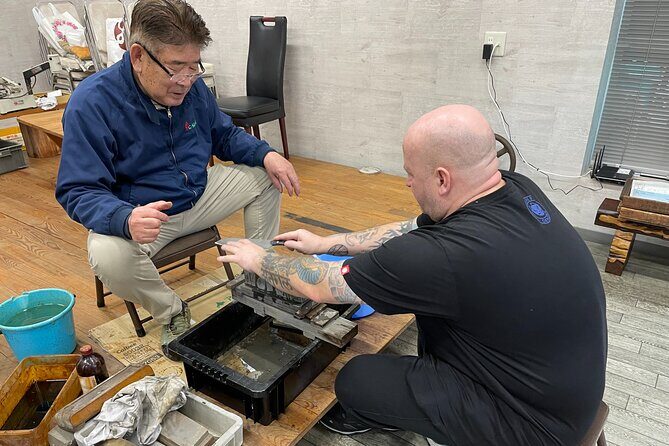
I love how hands-on the process is: you’ll sharpen, polish, engrave, and assemble your own blade with close guidance from instructors including Sumio, Yoshi, and Hiro. I also like that the day mixes craft with context, with museum stops on Samurai swords and the local cutlery industry. Plus, there’s a Japanese lunch and a signed completion certificate to take home.
One consideration: this is a 5-hour activity at a set start time (10:30 am) and it’s priced like a premium workshop at $316.27 per person, so you’ll want to be sure you’ll enjoy the full making-to-testing flow rather than just sightseeing.
In This Review
- Key highlights you’ll feel right away
- Seki, Gifu: the knife-town day trip that fits Kyoto plans
- What you make: a Damascus kitchen knife with a hands-on goal
- Your hosts in the workshop: why small-group attention helps
- Stop 1: Knife Museum in Seki (about 2 hours of rare blades)
- Stop 2: Seki Swordsmith Museum for Samurai context (about 1 hour)
- Stop 3: Gifu Cutlery Hall (only 30 minutes, but it’s efficient)
- Stop 4: Seki Zenko-ji Temple for a calm reset (about 1.5 hours)
- Lunch and the take-home package: what you carry with you
- Logistics that matter: pickup, mobile tickets, timing, and private flow
- Price and value: is $316.27 per person fair?
- Who this experience is perfect for (and who should think twice)
- Should you book this Seki knife-making experience?
- FAQ
- How long does the knife making experience last?
- Where does the tour start, and what time?
- Is pickup available?
- Is this a private tour?
- What’s included in the price?
- Do I get to take the knife home?
- Is there a sharpness test?
- Are there any free admission stops?
- Can most travelers participate, even without experience?
- What is the cancellation policy?
- How far is this from Kyoto by train?
Key highlights you’ll feel right away
- A private group experience in Seki, with focused instruction for your group only
- Hands-on Damascus-style knife making, including sharpening, polishing, engraving, and assembly
- Sharpness testing on fresh vegetables, so you learn what matters about edge work
- Instructors with decades of experience, including Sumio, Yoshi, and Hiro
- Culture stops built around swords and cutlery, ending with a temple visit for a calmer finish
- Take-home extras: a mini knife souvenir (limited), a signed certificate, and your finished knife
Seki, Gifu: the knife-town day trip that fits Kyoto plans
Seki in Gifu Prefecture is one of Japan’s known places for knife craft and sword making. If you’re staying near Kyoto, you can build this into a smooth day: it’s roughly 1.5 to 2 hours by train from Kyoto. Starting at Sekitomioka Station around 10:30 am also makes it feel organized and easy to plan.
I like that the schedule is compact, yet not rushed. You get a full workshop block plus three museum/craft stops and a temple, all without needing to coordinate multiple admissions and transport on your own. That means you can spend your energy on the making—and not on route math.
The other practical win: the tour is near public transportation and ends back at the meeting point. It’s designed to be low-stress for a day out, even if you’re not staying in Seki overnight.
You can also read our reviews of more tours and experiences in Gifu Prefecture.



What you make: a Damascus kitchen knife with a hands-on goal
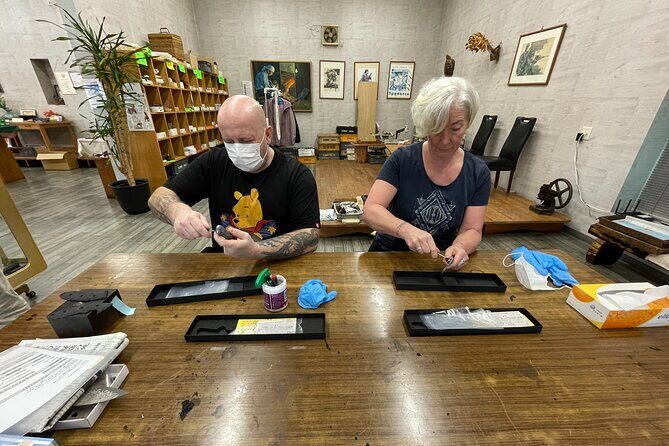
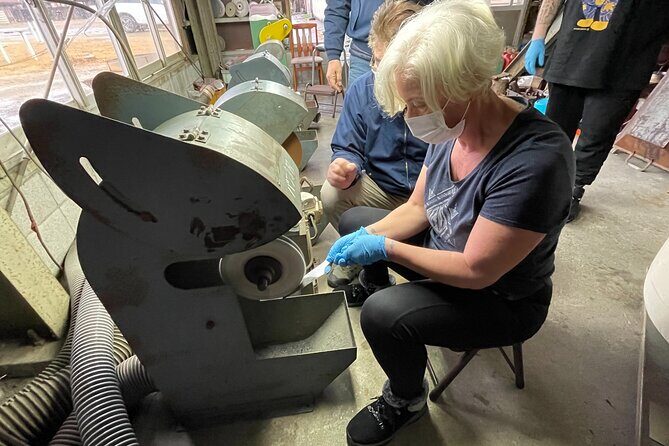
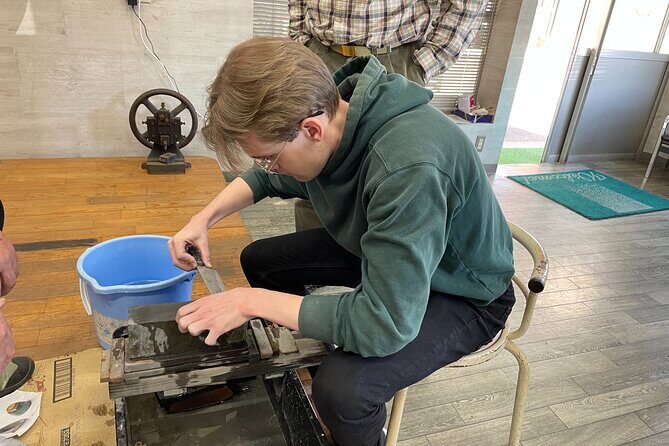
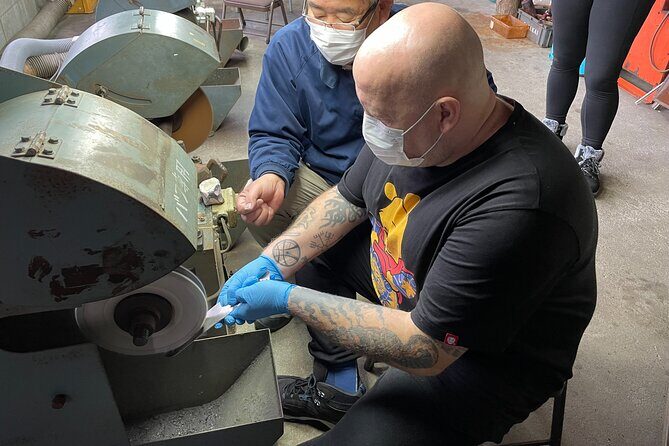
The main event is crafting your own professional-style Damascus kitchen knife. You’re not just watching from the sidelines. You’ll sharpen, polish, engrave, and assemble your blade—then test the sharpness on fresh vegetables.
That testing step matters more than it sounds. A knife can look great on a stand but behave differently once you cut real food. By running your edge against vegetables, you learn what sharpness feels like in practice, and you take home something that’s tied to a specific result.
You should also expect the work to be detail-focused. Engraving and polishing take patience, and the final blade is the point of the day. If you’re the kind of person who likes process—metal, tools, and careful finishing—this experience will click fast.
Your hosts in the workshop: why small-group attention helps
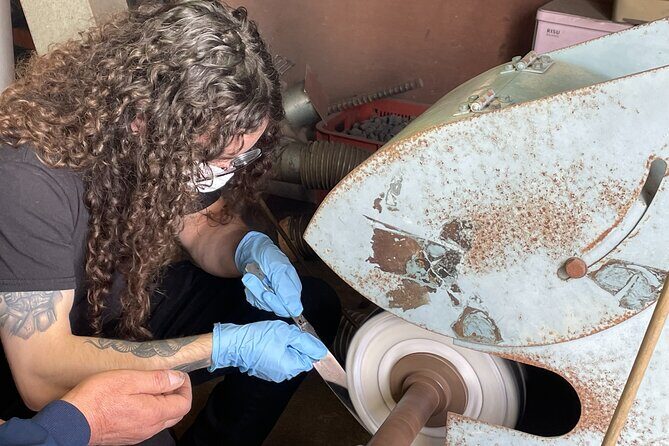
This is a private tour/activity, so only your group participates. That structure is a big deal in a craft class because you get closer attention when you’re learning hand movements and finishing steps.
From the way the instructors are described, Sumio, Yoshi, and Hiro bring a clear teaching style and a lot of care for the process. One reviewer noted that the instructors are passionate and that even with a full group, you still got guidance through the steps. That lines up with what you want in a workshop: instruction that stays practical and doesn’t leave you guessing.
There’s also an angle for people who love history without wanting a lecture-only day. Even as you work on the blade, you’ll be guided to connect what you’re doing to the broader sword and cutlery craft culture of the region.
Stop 1: Knife Museum in Seki (about 2 hours of rare blades)
Your day begins at the Knife Museum in Seki city. This stop sets the tone by letting you see several types of rare and unique knives, including international pieces. It’s a smart warm-up because it helps you understand what “knife culture” looks like beyond a single local style.
The practical part: you’ll have time to look around before your hands get busy. That gives you a chance to notice design differences—blade shapes, finishes, and the idea that knives aren’t all built for the same purpose.
A possible drawback is also simple: museum time can feel slower if you’re mainly there to make your own knife. If you’re eager to start sharpening and polishing, treat this as a quick inspiration stop and focus on the few blade features that interest you most. That way, you get value without getting stuck in overthinking.
Stop 2: Seki Swordsmith Museum for Samurai context (about 1 hour)
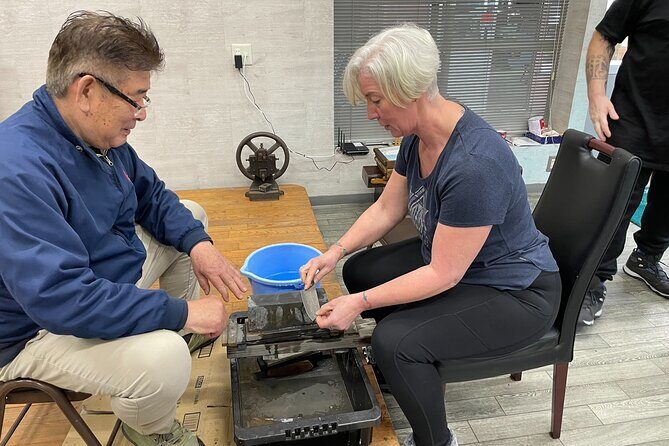
Next is the Seki Swordsmith Museum, where you learn about Samurai and Japanese sword history. Seki City developed as a major sword-making center starting as early as the 13th century, and this stop helps you understand why the place matters.
I like this museum step because it answers the unspoken question: why are you making a knife in a sword town? Even if you came for the workshop, a bit of historical context makes the experience feel more rooted than “just a class.”
This part of the schedule is about balance. It’s long enough to give meaning, but short enough that you’re not exhausted before your workshop work and your next stops. If you’re a fan of swords, you’ll likely enjoy it more than a general history stop.

Stop 3: Gifu Cutlery Hall (only 30 minutes, but it’s efficient)
Gifu Cutlery Hall is short—about 30 minutes—and the entry is free. It’s tied to Seki’s identity as a major cutlery-producing region in the world, with the highest cutlery production volume in Japan.
You shouldn’t treat this as a full deep museum stop. Instead, think of it like a production-world snapshot: a fast way to connect the craft you’re doing with how large-scale cutlery tradition fits into the region. It’s also a good break from the heavier sword focus of the previous museum.
A small consideration: since the time is limited, you’ll want to skim and pick what you care about. If you love machinery and manufacturing, you may want to ask your guide questions during the workshop portion later.
Stop 4: Seki Zenko-ji Temple for a calm reset (about 1.5 hours)
After the metal stops, you’ll visit Seki Zenko-ji Temple. The foundation dates back to the mid-eighteenth century, and the visit includes the Great Bell and something called the Tour of the Kaidan, which is described as famous as Japanese history and tradition. There’s also a chance to try ringing the bell.
I like this temple stop because it slows the day down. After focusing on sharp tools and fine finishing work, a quieter environment helps you reset your brain. It also rounds out the Seki experience, reminding you that craft towns are cultural towns too.
If you dislike downtime on structured tours, you might skim your way through this portion. But if you want a well-paced day, this temple visit helps keep the workshop from feeling like the whole story.
Lunch and the take-home package: what you carry with you
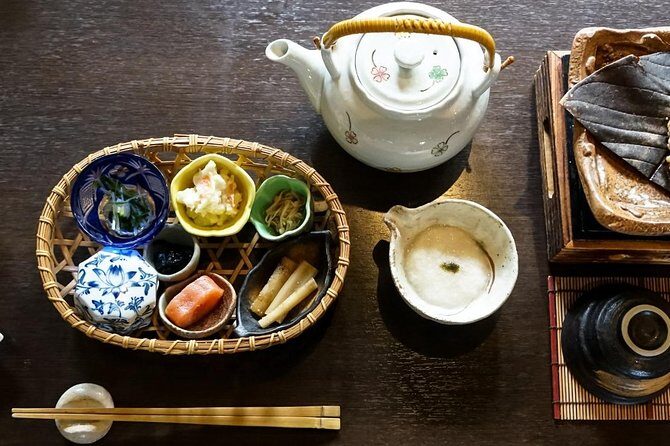
Your day includes a delicious Japanese lunch. When a workshop includes food, it tends to make the experience feel complete rather than squeezed in. It also keeps you from burning time hunting for meals between stops.
Then there are the take-home items. You receive a handcrafted mini knife souvenir (limited availability) and a signed certificate of completion. Your finished knife is, of course, the main prize.
Here’s the value angle: the price isn’t only paying for materials. You’re paying for skilled instruction, time spent on finishing steps, and the “final proof” moment when you test the blade on fresh vegetables. For many people, that hands-on edge-learning is what makes the day worth it.
If the mini knife souvenir is a must-have for you, plan to act fast with your expectations. Since it’s described as limited availability, it’s better to see it as a bonus rather than something guaranteed.
Logistics that matter: pickup, mobile tickets, timing, and private flow
The activity starts at 10:30 am at Sekitomioka Station. Pickup is offered, and you’ll use a mobile ticket, which keeps things smooth when you’re coordinating your day on your phone.
The tour runs about 5 hours total, and it ends back at the meeting point. That closed-loop design matters in Japan day trips because it lowers uncertainty. Also, since it’s private and your group only participates, you don’t need to worry about other schedules forcing you to rush.
Most travelers can participate, and there’s no special prior knife experience required based on the information provided. If you’re worried about whether you can handle a hands-on craft day, this is one of the more approachable setups because instruction is built into the format.
Price and value: is $316.27 per person fair?
At $316.27 per person, you should treat this as a premium workshop rather than a casual activity. The good news is the day includes a lot of “paid time”: guided finishing work, testing, museum admissions at multiple stops, and lunch.
Also, the value changes depending on your goal. If you want a one-time collectible and a quick photo, you might feel this is pricier than a general sightseeing tour. If you want to learn edge-making basics by doing, and you want a functional take-home knife with a completion certificate, the pricing makes more sense.
Private instruction and a small-group format also help justify cost. You’re not competing with a line of strangers for guidance, and you’re not waiting for shared equipment time to cycle through.
Who this experience is perfect for (and who should think twice)
This is ideal if you’re one of these:
- A knife lover who wants hands-on edge work and finishing
- A Samurai or Japanese craft history fan who likes seeing how metal tradition connects to daily objects
- Someone who wants a day trip that’s structured but still personal, with a private group feel
It might be less ideal if you only want light sightseeing, or if you’re not interested in the making-and-testing flow. The experience is built around producing a real blade, so the workshop part is central. If you’re mainly there for museums or temple time, you may prefer a simpler cultural itinerary.
Should you book this Seki knife-making experience?
I think it’s an easy yes if you want a memorable, hands-on craft day in a place that actually grew around swords and cutlery. The workshop goal is clear: you sharpen, polish, engrave, assemble, and then test what you made. Add a private-group format, a museum and temple mix, lunch, and a signed certificate, and you get a full day with real output.
I’d book it with a simple mindset: show up ready to work carefully, ask questions, and treat the museum stops as inspiration for what you’re doing with your hands. If you like that kind of learning-by-making, this is the sort of day you’ll remember when you reach for your kitchen knife at home.
FAQ
How long does the knife making experience last?
It runs for about 5 hours (approx.).
Where does the tour start, and what time?
The meeting point is Sekitomioka Station in Seki, Gifu, and the start time is 10:30 am.
Is pickup available?
Pickup is offered.
Is this a private tour?
Yes. Only your group participates.
What’s included in the price?
The experience includes admission tickets for the Knife Museum and Seki Swordsmith Museum, a Japanese lunch, a signed certificate, and your Damascus kitchen knife-making experience. A mini knife souvenir is included as a limited-time bonus, subject to availability.
Do I get to take the knife home?
Yes. You craft your own Damascus kitchen knife and take your finished knife home.
Is there a sharpness test?
Yes. After finishing your knife, you test its sharpness on fresh vegetables.
Are there any free admission stops?
Yes. Gifu Cutlery Hall and Seki Zenko-ji Temple are listed as free admission.
Can most travelers participate, even without experience?
Most travelers can participate based on the provided information.
What is the cancellation policy?
Free cancellation is available up to 24 hours in advance for a full refund. Changes within 24 hours of the start time aren’t accepted, and cancellations less than 24 hours before start aren’t refunded.
How far is this from Kyoto by train?
It’s roughly 1.5 to 2 hours by train from Kyoto.