REVIEW · GIFU PREFECTURE
Shirakawa-go Half day tour (UNESCO World Heritage near Takayama)
Book on Viator →Operated by Happy Tour · Bookable on Viator
Shirakawa-go feels like old Japan. This half-day tour from Takayama is built around UNESCO gassho-zukuri houses and a small-group English guide who helps you understand what you’re seeing. You’ll walk a village that looks simple, but the details (and the reasons behind them) are where the magic lives.
I especially like how the tour gives you both the big photo and the close-up stuff. You start with the historic villages and then step into key places like Nagase House, where the guide’s explanations make the traditional life feel practical, not just decorative. You’ll also get a look at a shrine and rice-paddy scenery, so it’s not only roofs and photos.
One consideration: it’s a short tour (about 2–4 hours), and not every stop has the same ticket situation. Stop 1’s admission isn’t included, while other parts are free, so you’ll want to plan for that day’s small ticket timing.
In This Review
- Key things to know before you go
- Why a Shirakawa-go half day tour from Takayama is the smart move
- Pickup, timing, and how you’ll spend your hours
- Stop 1: The historic gassho-zukuri houses (where the story starts)
- Stop 2: Shirakawa-mura viewpoint (quick orientation that helps your photos)
- Stop 3: Nagase House (where good guiding turns sightseeing into meaning)
- Stop 4: Shirakawa Hachiman Shrine (a short stop with older layers)
- Stop 5: Rice paddies and village life (the final piece of the puzzle)
- What the price covers, and how it stacks up
- Who this tour suits best (and who might prefer DIY)
- The little details that make the day smoother
- Should you book this Shirakawa-go half day tour?
- FAQ
- How long is the Shirakawa-go half day tour?
- What time does the tour start and where do we meet?
- Is pickup included?
- What does the tour price include?
- What isn’t included?
- How large is the group?
- What is the cancellation policy?
Key things to know before you go
- Small group size (max 9 travelers) for easier questions and a less chaotic walk
- Pickup and drop-off from Takayama City, so you’re not figuring out logistics on the fly
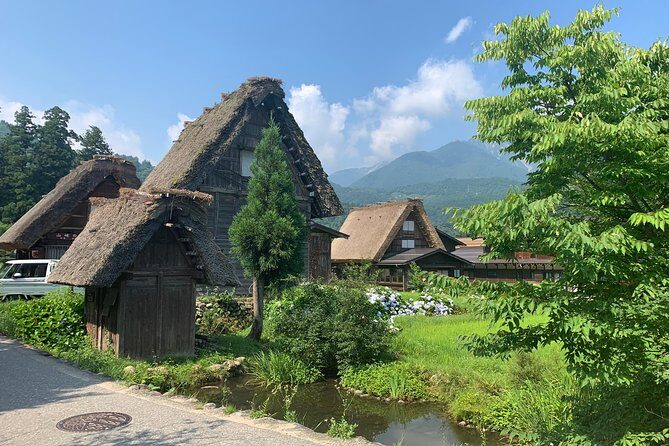
- Gassho-zukuri A-frame houses are the main event, with guided context
- Nagase House time is short but structured, with explanations focused on traditional culture
- Multiple quick stops (viewpoint, shrine, rice paddies) that help you build the full village picture
- Mobile ticket and an English-speaking guide make the day run smoother
Why a Shirakawa-go half day tour from Takayama is the smart move
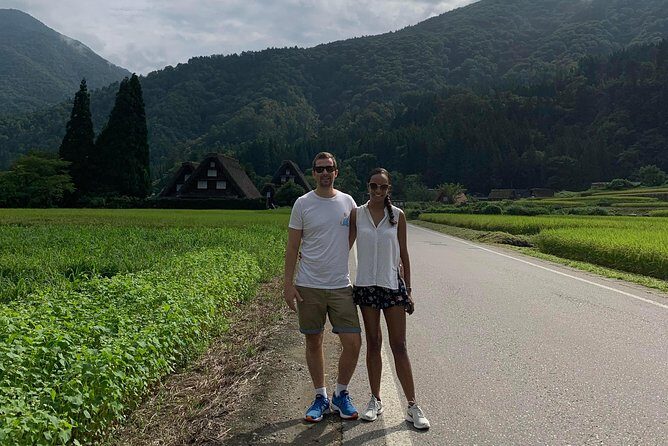
If you’re using Takayama as your base, a half-day Shirakawa-go tour is one of the easiest ways to get the famous UNESCO village without turning your day into a travel marathon. The driving distance doesn’t feel like the headline here. The headline is time: about 2–4 hours on-site, with a route designed to hit the must-sees efficiently.
What I like about this kind of tour setup is that you avoid the all-day trap. Shirakawa-go can take over your schedule if you go freestyle, because once you’re there, it’s hard to stop walking. A half-day plan helps you see the core sights, understand them, and still have energy left for Takayama after.
Also, group size matters. This one caps at 9 travelers, which usually means the guide can actually answer questions while you’re walking. That changes the feel of a place like this. It’s still a village you explore with your eyes, but you also get the “why” behind the architecture and daily life.
You can also read our reviews of more tours and experiences in Gifu Prefecture.


Pickup, timing, and how you’ll spend your hours
This tour starts at 8:30 am with the meeting point at Takayama Station (昭和町1丁目222). The big convenience is that pickup and drop-off from Takayama City are included, so you’re not hunting for local transport while your brain is still in morning mode.
Expect to walk for about 2–4 hours total. The pace is light-to-moderate rather than a marathon climb. That said, you’ll still want comfortable shoes. Shirakawa-go’s charm is partly in how it’s arranged—paths, viewpoints, and short distances between key spots. Stopping frequently helps, but you’ll be on your feet.
Another practical detail: it’s a mix of longer and shorter stops. You’ll spend time at the historic houses first, then do quick checkpoints for orientation (like a village viewpoint) and cultural stops (like the shrine and a traditional home). This pattern works well when you want both photo time and guided interpretation.
Stop 1: The historic gassho-zukuri houses (where the story starts)
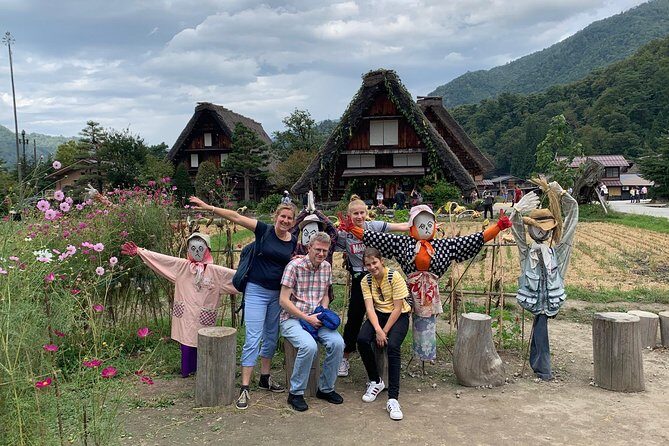
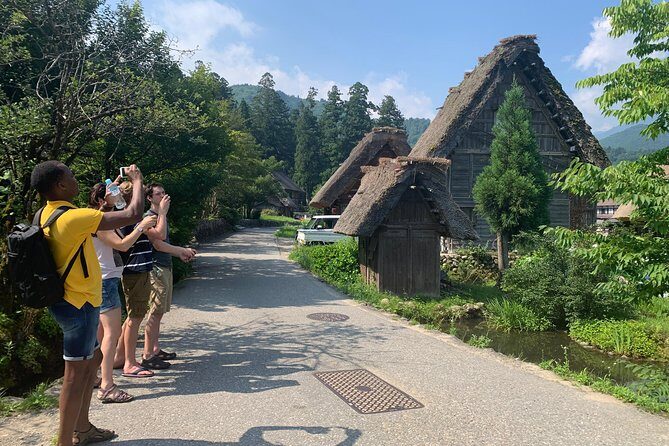
The day begins with the Historic Villages of Shirakawa-go Gassho Style Houses, where you can learn how the gassho-style A-frame houses are made and how villagers used to live. This is the core experience for most people, because it’s where Shirakawa-go stops being a name on a sign and starts becoming a place.
You’ll get about 2 hours here. That length matters. Roof structure and village layout aren’t something you “catch” in 10 minutes. You need time to look closely, walk at a comfortable pace, and take in the practical design elements.
One key note: admission ticket for this stop is not included. In plain terms, plan for a ticket purchase so you don’t lose time at the start. If you like to move efficiently, arrive ready to pay and step in.
Why this stop is so valuable: the gassho-zukuri houses aren’t just pretty. They represent a way of building for the local conditions and a lifestyle that was closely tied to the seasons. A good guide helps you connect what you see (the structure and layout) to why it exists.
Stop 2: Shirakawa-mura viewpoint (quick orientation that helps your photos)
After the main historic zone, you’ll get a short 10-minute viewpoint stop at Shirakawa-mura. This is the kind of pause that’s easy to overlook if you’re rushing. Don’t skip it. Even a brief viewpoint can help your brain map the village—so later, when you’re back down walking, everything feels more connected.
This stop lists free admission, so it’s a good “low-friction” break. You can use the time to regroup, drink water if you need it, and reset for the next cultural stop.
The best part about short viewpoint moments is that they make the rest of your walk more enjoyable. Instead of randomly wandering from one photo spot to another, you start to understand where you are in relation to the village layout.
Stop 3: Nagase House (where good guiding turns sightseeing into meaning)
Next is Nagase House, scheduled for about 15 minutes with admission included. The description is simple: you can see a traditional house and your guide explains a lot. The standout detail here is the guide’s clarity—this is where explanations actually land.
This is your reality check stop. Exterior roof shapes are interesting, but interiors and household functions are what bring daily life into focus. In a home like Nagase, even a short visit can change your understanding of the whole village.
Why 15 minutes can still be enough: the guide can steer your attention to what matters. You’re not left to guess what you’re looking at. And because it’s on the schedule, you’re less likely to lose time poking around until you’re tired.
Practical note: because admission is included for this stop, it’s one less ticket decision to manage mid-tour. That’s a small but real convenience when you’re on a tight half-day plan.


Stop 4: Shirakawa Hachiman Shrine (a short stop with older layers)
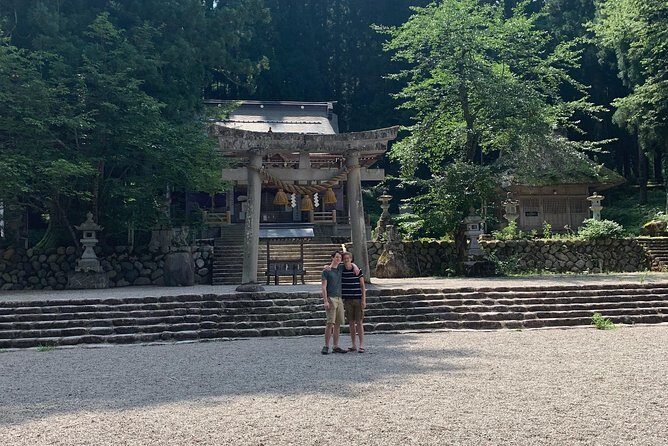
Then you’ll visit Shirakawa Hachiman Shrine for about 5 minutes. Admission is free here. This stop is brief by design, but it adds a different angle to Shirakawa-go.
Roofs and village streets give you one kind of understanding. A shrine adds another layer: the cultural and spiritual rhythms that run alongside daily work. Even if you only spend a few minutes, it helps balance the tour so it isn’t only about architecture.
If you like quiet details, use this moment to slow down for a second. Let the shrine set the tone for what this village has been for generations.
Stop 5: Rice paddies and village life (the final piece of the puzzle)
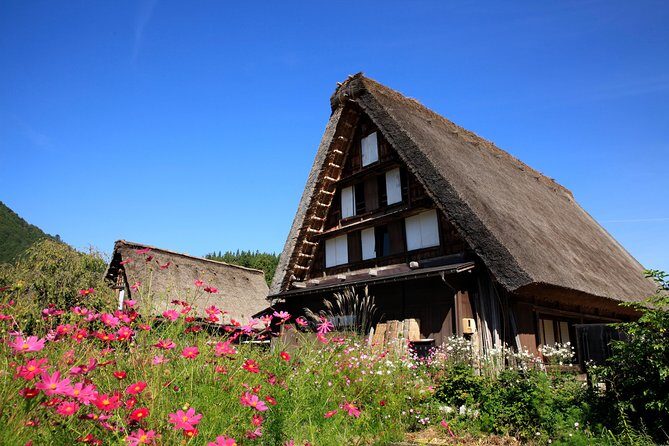
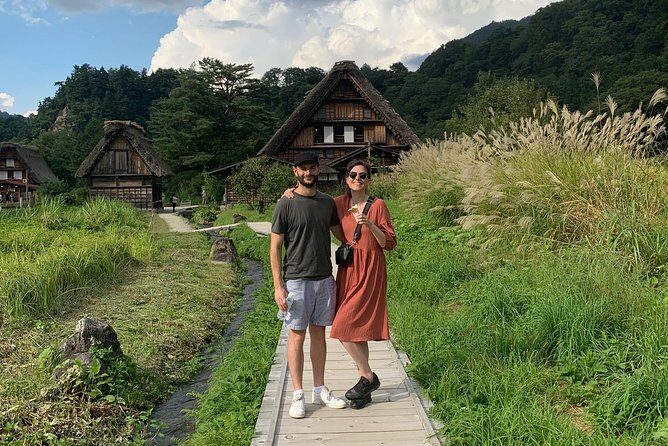
To wrap up, you’ll return to Shirakawa-mura for about 15 minutes to see traditional rice paddy fields and get a sense of village life in a small setting. This stop is also free admission.
This is where the tour earns its “not just houses” label. Rice paddies and farmland scenery remind you that people didn’t build these communities for sightseeing. They built them for work, weather, and long-term survival.
Even though this final stop is shorter, it’s a strong closing beat. You finish with a clearer idea of how the village functioned: homes, community spaces, and the surrounding fields all belong to the same story.
What the price covers, and how it stacks up
The price is $97.73 per person. For a half-day tour, that might sound like a lot until you break down what you’re actually buying.
You’re paying for:
- an English-speaking guide
- pickup and drop-off from Takayama City
- a guided walk across multiple stops with a small group (max 9 travelers)
- a mobile ticket
- group-discount arrangements (when applicable)
You’re not paying for:
- lunch
- and admission isn’t included for every stop (Stop 1 isn’t included, while some other areas are free, and Nagase House admission is included)
When a tour includes English guiding and transportation, the cost is usually justified—especially if you’d otherwise need taxis, timed entry plans, or extra effort to coordinate transit. Here, the structure is tight and the logistics are handled for you.
The best value angle: a small group and a guide who actually explains things. If you care about understanding what you’re seeing instead of only collecting photos, this price makes more sense.
Who this tour suits best (and who might prefer DIY)
This Shirakawa-go half-day tour is a great fit if you:
- want UNESCO gassho-zukuri houses with context
- prefer a small-group walking experience over a big bus crowd
- like having a plan for time—especially if your Takayama days are packed
- value English support and having someone answer questions as you go
You might consider DIY only if you’re traveling ultra-flexibly, you already feel confident arranging transport on your own, and you’re perfectly happy spending extra time figuring out timing and entry. But even then, the “guided meaning” is hard to replicate, especially in a short window.
Also, the tour notes that most travelers can participate. That’s a good sign for general comfort, but you should still bring practical footwear since you’ll be walking and stopping often.
The little details that make the day smoother
A few practical touches help this experience feel easier:
- Meeting at Takayama Station at 8:30 am keeps the day predictable
- Pickup and drop-off from Takayama City removes transit stress
- Mobile ticket reduces last-minute searching
- The schedule mixes longer and shorter stops, so you’re not constantly “on” for hours
And here’s a smart strategy: if you want the village to feel calm, prioritize your ability to arrive early and move efficiently. Timing affects crowd energy, and this half-day format naturally pushes you into earlier hours.
Should you book this Shirakawa-go half day tour?
I’d book it if you want an efficient, guided introduction to Shirakawa-go’s most important sights. The combination of small group size, English guidance, and a route that includes houses, a shrine, and rice paddies gives you a balanced picture in half a day.
Skip it only if you’re determined to spend unlimited time wandering, you’re fine managing transit and ticketing yourself, and you don’t care much about explanations. If that’s not you, this is a sensible way to see Shirakawa-go with fewer headaches and better understanding.
FAQ
How long is the Shirakawa-go half day tour?
The duration is listed as 2 to 4 hours (approx.).
What time does the tour start and where do we meet?
The start time is 8:30 am, and the meeting point is Takayama Station (Japan, 506-0053, Gifu Prefecture).
Is pickup included?
Yes. Pick-up and drop-off from Takayama City are included.
What does the tour price include?
The tour includes an English speaking guide and pick-up and drop-off from Takayama City.
What isn’t included?
Lunch isn’t included. Also, admission ticket for the historic gassho-style houses stop is not included, while Nagase House admission is included and other listed stops are free.
How large is the group?
This tour has a maximum of 9 travelers.
What is the cancellation policy?
You can cancel for free up to 24 hours in advance for a full refund. If canceled less than 24 hours before the start time, the amount paid isn’t refunded.