REVIEW · GIFU PREFECTURE
Gifu Samurai Sword Town;Japanese Damascus Knife Making Experience
Book on Viator →Operated by MOST JAPAN · Bookable on Viator
Steel, fire, and your own edge. In Seki, Gifu, this hands-on Damascus knife-making workshop pairs a visit to the Knife Museum and G.SAKAI factory with the fun part: you build and sharpen your own blade, then cut fresh vegetables to see how sharp it really is. I love the small-group feel and the clearly hands-on guidance from hosts like Hiro, Sumi, and Yoshi. My other favorite bit is learning how to keep a razor edge at home, not just taking home a souvenir. One possible drawback: the meeting area at Sekitomioka Station in Seki is a bit off the main tourist route, so plan your train timing or use the pickup if you can.
You’ll start with context—why this region became a serious cutlery center—and then move into the workshop steps like assembling, polishing, sharpening, and signing the knife. You get to choose what you’re making (three styles), so this isn’t one-size-fits-all. It’s also great that the experience lasts about 2 hours 30 minutes, which is long enough to feel meaningful but not so long that your day falls apart.
If you like practical crafts, sharp tools, and watching how things are made, you’ll probably enjoy this more than a typical shopping stop. And because it’s capped at up to 5 travelers, you can ask questions without shouting over a crowd.
In This Review
- Key highlights worth circling
- Seki’s steel roots: why Gifu takes knives seriously
- What you actually do: from workshop to a signed Damascus knife
- Knife Museum and the G.SAKAI factory: seeing tools before you make one
- The sharpness test on fresh vegetables (and why it matters)
- Learning knife sharpening you can maintain for years
- Choosing your knife: kitchen, hunting, or Chinese-style
- Getting there from Kyoto and planning your day in Seki
- Who this fits best (and who might want to skip)
- Should you book it? My practical verdict
- FAQ
- Where does the experience start?
- What time does it start?
- How long is the workshop?
- How much does it cost?
- Is pickup available?
- Will I get to test the knife after making it?
- What kinds of knives can I make?
- Do prices change based on the knife I choose?
- How many people are in the group?
- Can I do this as a day trip from Kyoto?
Key highlights worth circling
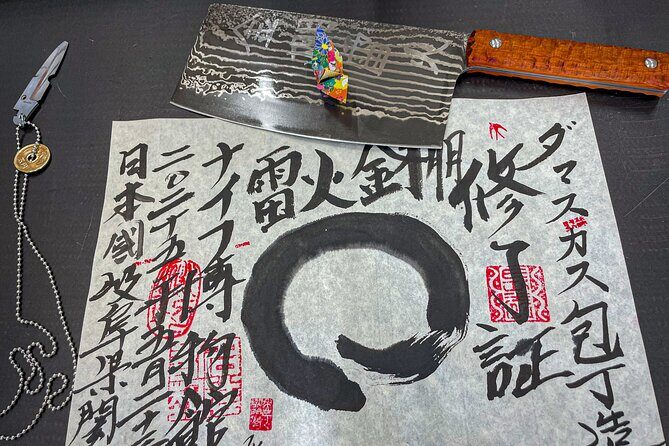
- Damascus knife-making with real steps: assembling, polishing, sharpening, and signing your blade
- Vegetable sharpness test: cut fresh produce to feel the edge quality immediately
- Knife Museum in a Canadian-style log house: see rare cutlery and worldwide exhibits
- Factory visit next to G.SAKAI: watch how knives are made in modern times
- Sharpening instruction you can use later: you’re not just leaving with a knife
- Three knife styles to choose from: kitchen, folding hunting, or Chinese kitchen type
Seki’s steel roots: why Gifu takes knives seriously
Seki City in Gifu Prefecture has been linked to knife and sword making since around the 13th century. One reason is local material: the region benefited from iron sand deposits in the Nagaragawa River. Later, during the Edo period, Seki supported several hundred blacksmiths who produced Samurai swords and knives at scale.
Today, Seki is often grouped with other famous manufacturing cities like Sheffield (UK) and Solingen (Germany) as one of the world’s top cutlery centers. Even if you’re not a gear nerd, that reputation matters, because it shapes what you’ll see on the ground: the museum, the factory focus, and the workshop standards you’ll feel when it’s time to sharpen and test your knife.
And because this is a working cutlery region—not a set built purely for tourists—you’ll get a better sense of how these tools fit into daily life and professional use, from cooking to hunting and outdoor activities.
You can also read our reviews of more tours and experiences in Gifu Prefecture.



What you actually do: from workshop to a signed Damascus knife
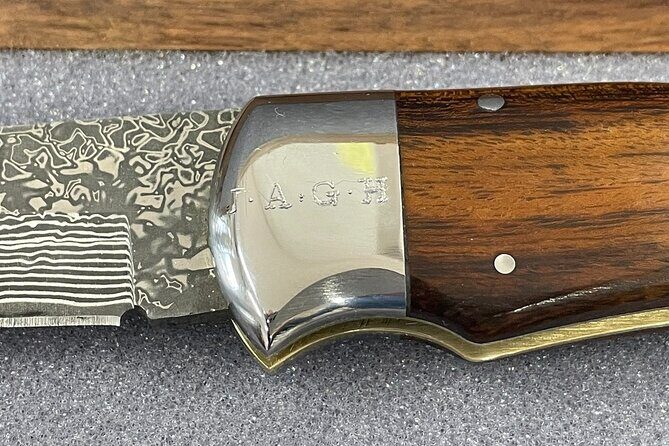
The heart of the experience is making your own Damascus-style knife, under the guidance of skilled craftsmen. The goal isn’t just to watch; it’s to create something you’ll use.
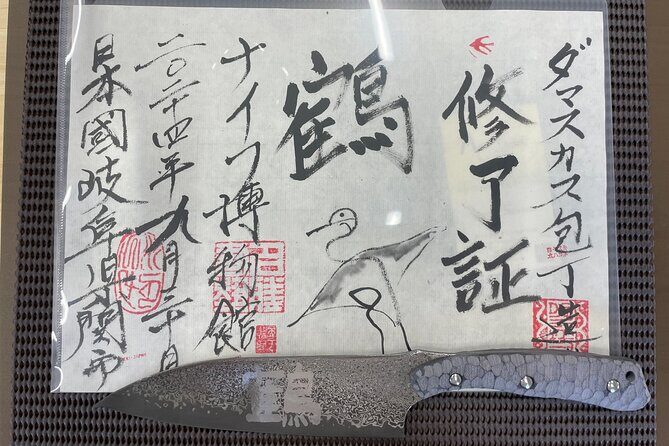
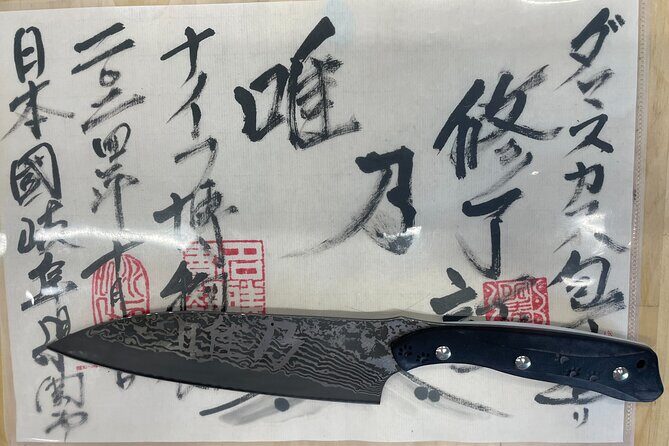
While the exact hands-on sequence can vary by knife type, the core actions are clearly spelled out: you’ll assemble, polish, and sharpen your knife in the atelier. You’ll also write your name on it with the craftsman—one of those small details that makes the finished tool feel personal rather than generic.
What I like about this structure is that it mirrors real-life knife ownership. A knife isn’t just a pretty blade; it’s something that needs finishing and ongoing care. Even before you test it, you’re already learning the mindset: edges are made, refined, and maintained.
You also get a built-in “did I do it right?” moment. After your knife is completed, you’ll test sharpness by cutting fresh vegetables. That’s not a gimmick. It’s a practical check that connects your work in the polishing/sharpening steps to what matters at the cutting board.
Knife Museum and the G.SAKAI factory: seeing tools before you make one
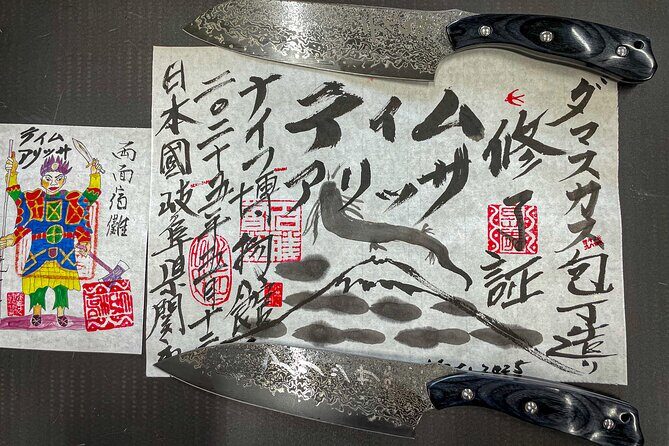
Before you touch your own knife, you’ll visit the Knife Museum. It’s set in a Canadian-style log house right next to the G.SAKAI factory. That setting does two things well. First, it makes the stop feel like an actual destination, not a quick hallway glance. Second, it puts you close to the production world you’ll tour next.
In the museum, you’ll see rare items and cutlery exhibits from around the world. I like that this helps you place Damascus knives in a broader picture of cutlery culture—where different styles and materials show up, and how knife traditions evolve across countries.
After the museum, you go into the factory to see how Japanese knives are made nowadays. This part is valuable even if you’re mainly there for your own knife. Seeing a real production environment helps you understand what “quality” means beyond marketing words. It also gives you context for why the workshop emphasizes polishing and sharpening—those finishing steps are often where performance becomes obvious.
The sharpness test on fresh vegetables (and why it matters)
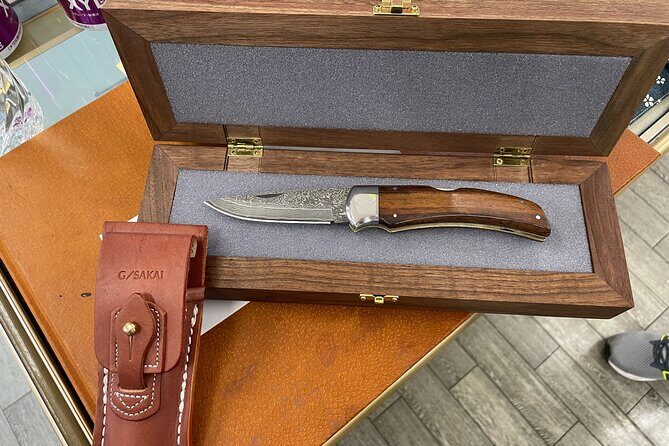
This experience doesn’t stop at fabrication. You get to test your blade by cutting fresh vegetables. That’s a huge plus for your confidence as a maker.
Why? Because Damascus-style knives and sharp edges can sound impressive on paper, but performance shows up in the first real cut. If the edge is well finished and sharpened, you’ll feel it right away: cleaner slices, less effort, and a noticeably smoother cutting action.
It’s also a useful learning moment for you. If something doesn’t feel perfect, this is where you notice what edge quality means in practice. It turns sharpening from an abstract skill into a concrete result you can evaluate.
And yes—people do often get a bit surprised by just how sharp the final knife can be. If you’ve ever owned a knife that didn’t feel consistent, you’ll appreciate what a good edge can do.
Learning knife sharpening you can maintain for years
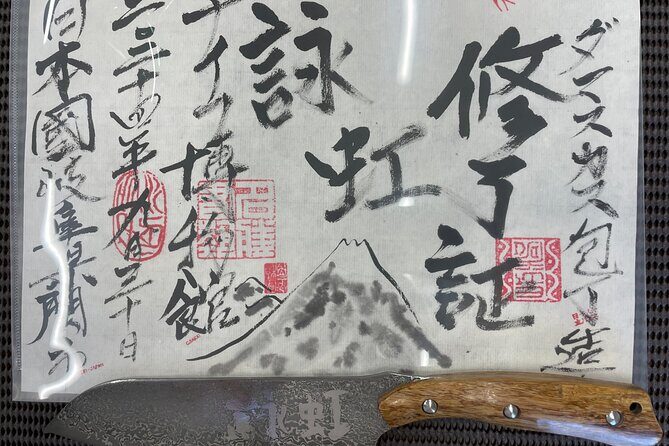
One of the best parts of this workshop is that it doesn’t treat sharpening as a one-time fix. You’ll learn the essential skill of knife sharpening during the process, with the idea that you’ll be able to keep your edge in prime condition for years to come.
That matters because sharpening is where most “I bought this nice knife” stories either succeed or fall apart. If you don’t learn the basics, your knife gradually performs worse, and you end up blaming the tool instead of the maintenance.
The workshop approach ties learning to doing: you’re making the knife, sharpening it, and then using a real cutting test to connect technique to result. For you, that’s the difference between owning a souvenir and owning a kitchen tool you’ll actually keep sharp.


Choosing your knife: kitchen, hunting, or Chinese-style
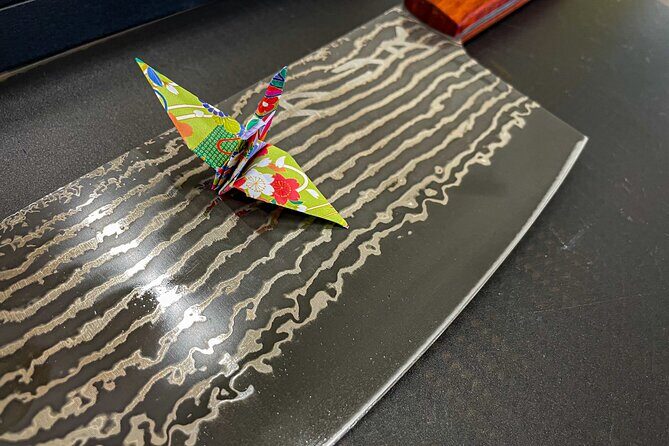
You’ll select from three distinct types of knives to craft. Prices vary based on which one you choose, so it’s worth thinking about how you’ll use it after the class.
Here’s how each option is positioned:
- Japanese Damascus Kitchen Knife: geared toward everyday cooking
- Folding Damascus Hunting Knife: a portable option for outdoor use
- Chinese Damascus Kitchen Knife: aimed at traditional Chinese cooking techniques
If you cook mostly at home, the Japanese Damascus kitchen knife is the simplest “I’ll use this daily” choice. If you’re the outdoors type, the folding hunting knife makes sense because it matches the portability style people want when they’re not carrying a full chef’s knife. And if you cook Chinese-style and already have a flavor for that technique, the Chinese Damascus kitchen knife is the most theme-matched pick.
No matter which you choose, the workshop includes polishing/sharpening and the name-signing step, so you’ll still get the same personal craft payoff.
Getting there from Kyoto and planning your day in Seki
This is a practical day-trip option. From Kyoto, it’s roughly 1.5 to 2 hours by train. The meeting point is at Sekitomioka Station in Hidase, Seki, Gifu, and the tour ends back there.
Start time is 10:30 am, and the activity runs about 2 hours 30 minutes. That timing works nicely if you want a focused class without stealing your whole day.
Two logistics notes that help:
- Pickup is offered, which can save stress if you’re staying near a route that makes pickup easy.
- The experience is near public transportation, so even if you don’t use pickup, you’re not planning a hike into the countryside.
Also, the group cap is up to 5 travelers, which can make the schedule smoother and feel more personal. It’s the kind of size where you can ask follow-up questions about sharpening technique without feeling rushed.
Price-wise, it’s $250.38 per person. You’re not just paying for a finished knife—you’re paying for guided making, sharpening instruction, and the museum/factory context that turns the craft into something you understand. If you like hands-on workshops and plan to actually maintain the tool you make, it starts to feel like good value. If you’re only interested in a cheap souvenir, it’s not that kind of experience.
One more thing: you’ll receive confirmation at booking, and you’ll use a mobile ticket. That’s convenient when you’re juggling transit and other plans.
Who this fits best (and who might want to skip)
This workshop is a great fit if you:
- want a hands-on craft with a usable end product
- care about sharpening or want to learn maintenance basics
- like seeing production context, not just making something in a vacuum
- enjoy small groups and direct Q&A with the hosts
It may be less ideal if you:
- hate getting hands-on with tools (even light workshop work)
- want a pure sightseeing day with lots of time for wandering
- expect an easy “urban tourist” location with constant signage and distractions nearby
One note from the experience vibe: the location is a bit off the beaten path, and people do mention it’s worth the effort to find. If you’re going DIY on transit, give yourself a little buffer so you’re not rushing at the start time.
Should you book it? My practical verdict
I’d book this if you want a knife-making experience that teaches something you’ll keep using. The combination is what sells it: museum + factory context, then the atelier work (assemble/polish/sharpen/sign), then a hands-on sharpness test on fresh vegetables, plus sharpening skills you can maintain later.
If your main goal is collecting a high-quality tool and you’ll actually practice sharpening basics, the $250.38 price starts to make sense. If you’re unsure you’ll use it, check which knife style you’d realistically use—kitchen for daily cooking, folding for outdoor use.
Either way, plan for the Seki commute and take advantage of pickup if it fits your schedule. With a group limit of 5, it feels like a focused, personal workshop—not a big production line for tourists.
FAQ
Where does the experience start?
It starts at Sekitomioka Station (Hidase, Seki, Gifu 501-3911, Japan). The activity ends back at the meeting point.
What time does it start?
The start time is 10:30 am.
How long is the workshop?
The duration is about 2 hours 30 minutes (approx.).
How much does it cost?
The price is $250.38 per person.
Is pickup available?
Yes, pickup is offered.
Will I get to test the knife after making it?
Yes. After your knife is completed, you’ll test its sharpness by cutting fresh vegetables.
What kinds of knives can I make?
You can choose from three types: Japanese Damascus Kitchen Knife, Folding Damascus Hunting Knife, or Chinese Damascus Kitchen Knife.
Do prices change based on the knife I choose?
Yes. Prices vary based on the type of knife chosen.
How many people are in the group?
The experience has a maximum of 5 travelers.
Can I do this as a day trip from Kyoto?
Yes. It’s roughly 1.5 to 2 hours by train from Kyoto, making it doable for a day trip.