REVIEW · TOKYO
Guided Tsukiji’s Local Food Tour
Book on Viator →Operated by Hisayoshi Kioka · Bookable on Viator
Tsukiji breakfast is chaos with a plan. This small-group tour helps you navigate the Tsukiji outer market like a local, with an 8:00 am start that makes the morning feel more manageable. You’ll taste street foods and get help with the bits that are hard for non-Japanese menus, all while learning how Tsukiji became Tokyo’s go-to food destination.
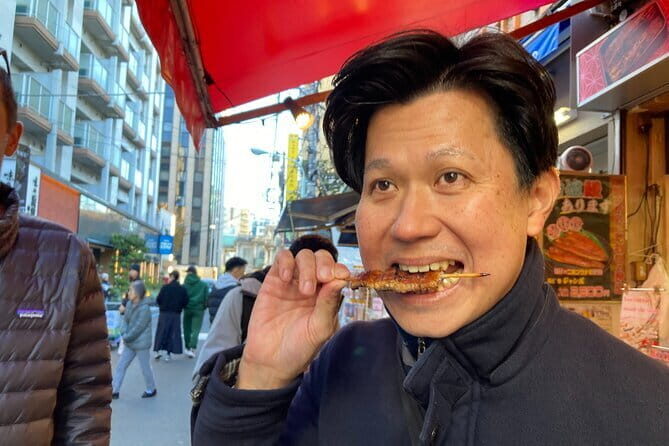
I love the way the guide, Hisayoshi Kioka (Yoshi), turns wandering into a tasting route. The stop-style food sampling can include grilled seafood, tamagoyaki, tuna and oysters, and even sake, then it cools down with matcha and green tea ice cream.
One possible drawback: you’ll want to budget extra cash in yen for the food you buy on the street. Plan on JPY 2,000–5,000, and keep in mind the tour runs about 1 hour 30 minutes, so you may still crave more after.
In This Review
- Key highlights worth planning around
- Why Tsukiji still matters for Tokyo food
- Meet Yoshi at 8:00 am and get oriented fast
- The tasting route: grilled seafood to matcha dessert
- Learning Tsukiji’s story while you eat
- Getting shop and restaurant recommendations you can actually use
- Money and time: what $32.52 really buys
- Where the tour ends: Namiyoke Shrine next to the market
- Small group size and the comfort factor
- Who should book this Tsukiji local food tour
- When it may not be your best match
- Should you book this tour or not?
- FAQ
- How long is the Tsukiji local food tour?
- What time does the tour start?
- How many people are in the group?
- What kinds of food will I try?
- Is street food included in the price?
- Where does the tour begin and end?
- What happens if the weather is bad?
Key highlights worth planning around
- Up to 4 people keeps this feeling personal, not like cattle herded through the market
- English-friendly guiding with real recommendations helps you order and choose without guessing
- Morning timing makes Tsukiji easier to read and helps you avoid the worst crowds
- Food variety across the spectrum: grilled seafood, tamagoyaki, sake, and matcha/green tea desserts
- History plus practical shop tips so you can keep eating after the tour ends
Why Tsukiji still matters for Tokyo food
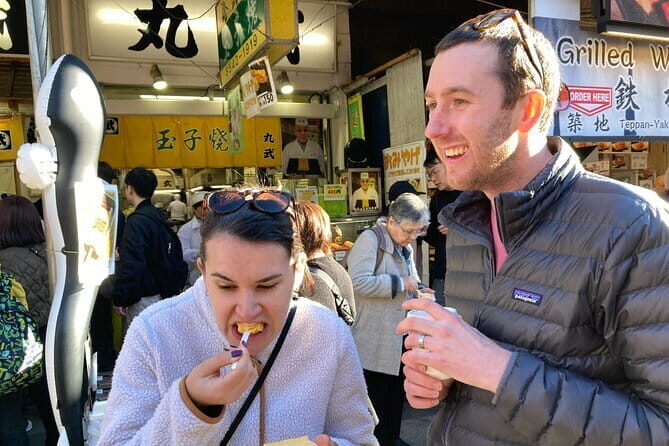
Tsukiji is one of those places that looks like pure motion. Stalls, chatter, smoke from grills, and little lines that form and vanish. Even though the wholesale fish market moved to Toyosu, the Tsukiji outer market is still where Tokyo’s food culture shows up in snack size.
What makes this tour a good idea is that it saves you from the hardest part: picking what to try. You get a guided path through the area so you’re not stuck staring at menus, translating on the fly, or skipping your favorites because you don’t know what they are.
And because it’s morning-focused, you get a better sense of the daily rhythm. One review specifically praised the early start for helping avoid the densest crowd crush, which is exactly what you want when your goal is to eat, not just squeeze.
You can also read our reviews of more food & drink experiences in Tokyo

Meet Yoshi at 8:00 am and get oriented fast
The tour starts at 4-chōme-8-1 Tsukiji, Chuo City, Tokyo 104-0045, and it kicks off at 8:00 am. The meeting point matters because Tsukiji is compact, but you still need a clean start. From there, the guide takes over the job of steering you through the maze.
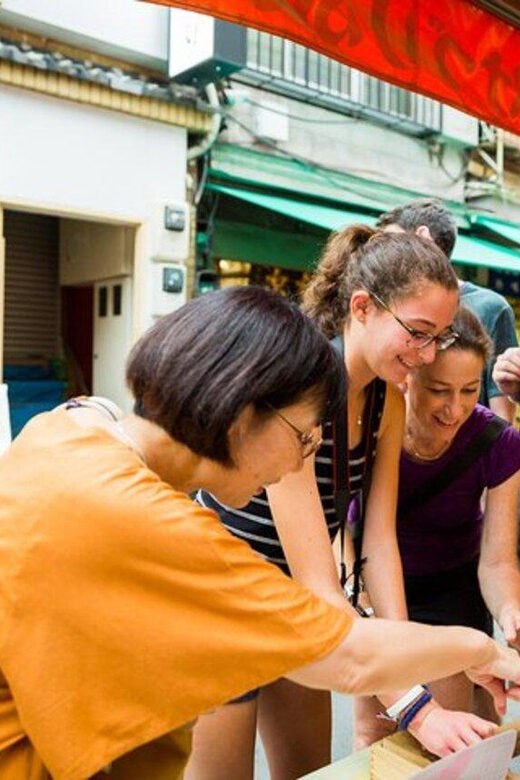
Yoshi’s strength shows in how smoothly the group stays together. Multiple reviews highlighted his friendly approach and his strong communication in English. That’s not a small detail in Japan’s markets, where even basic ordering can feel like a puzzle when you’re hungry and the line is moving.
You’re also walking with a plan. The tour isn’t just, Let’s walk and see what’s around. You get an explanation of what you’re looking at, why certain stalls are worth a stop, and what to expect from each type of food.
The tasting route: grilled seafood to matcha dessert
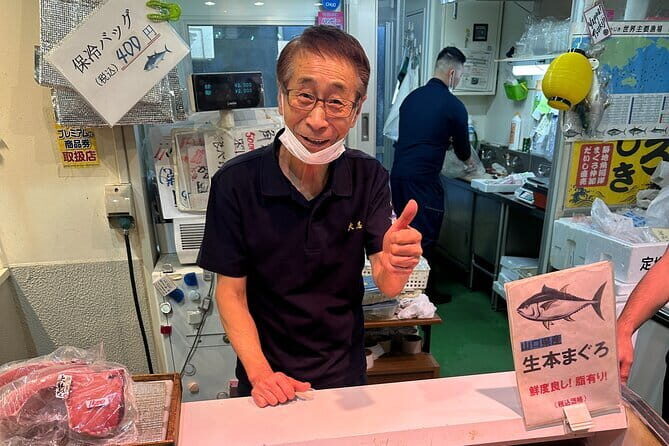
The heart of the experience is the guided food walk through Tsukiji’s outer market. You’ll sample a mix of classic street foods and seafood-focused snacks, then end up with cooler, sweet breaks like matcha and green tea ice cream.
Here’s the kind of food range you can expect based on what’s shared in the experience details and guest comments:
- Grilled seafood and other savory bites from market stalls
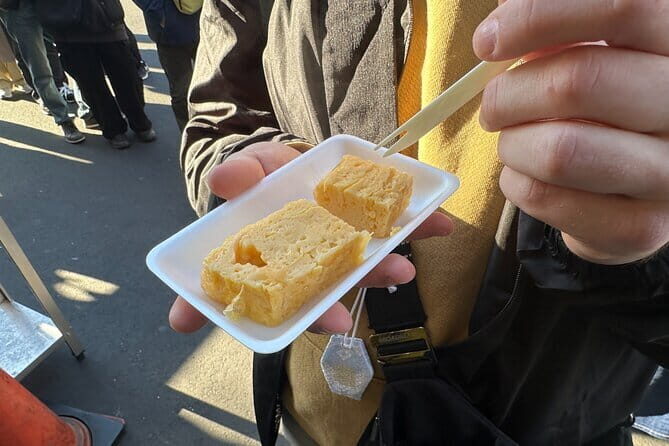
- Tamagoyaki, a sweet-leaning Japanese omelet you’ll see all over the area
- Seafood favorites including tuna and oysters
- Sake as part of the tasting experience
- Matcha-style treats, including green tea ice cream
- Mentions of wagyu and matcha flavors show up in the variety of what the group can try
The practical win is this: you don’t just taste things at random. Yoshi helps connect the dots between the food and the place. That makes you more likely to remember what you liked and to order it again later.
Also, Tsukiji can be visually intense. You’ll see tempting displays everywhere. Without guidance, it’s easy to miss the simpler stalls you walk past quickly. Several guests specifically praised how Yoshi showed them spots they would have walked by without noticing.
Learning Tsukiji’s story while you eat
Food tours can sometimes skip the meaning and stay stuck in, Eat this, next, then more. This one keeps a useful thread: Tsukiji’s history and how the market functions.
You’ll hear about Tsukiji Market’s past and its role as a major wholesale seafood center in Tokyo. You also get the key update: the wholesale market moved to Toyosu, while Tsukiji’s outer market remains active with vendors selling snacks, seafood, and local specialties.
Why that matters to you as a visitor: it changes how you see what’s in front of you. Instead of treating Tsukiji like a theme park, you understand why certain foods are here and why the atmosphere feels like working food culture.
And the history is tied to what you’re doing right now. It gives you context for choices, like what kinds of vendors and snacks match the morning market vibe.
Getting shop and restaurant recommendations you can actually use
One of the best parts is what happens between bites: Yoshi gives recommendations for local shops and restaurants while you’re still in the area.
That’s valuable because Tsukiji can be confusing even when you can read Japanese. You might find a place that looks good, only to learn it’s best for locals at specific times or that another nearby shop matches your tastes better.
The tour also helps with the language barrier piece. The description notes the guide helps manage Japanese-only menus, and the reviews back up that Yoshi communicates clearly. That combination makes you feel more confident in the market, which is a big quality-of-life improvement when you’re trying to eat on time.
If you’re the type who likes to keep exploring after a tour, this is the right kind of extra. You leave with names and direction, not just memories of what you ate that morning.
A few more Tokyo tours and experiences worth a look



Money and time: what $32.52 really buys
Price is $32.52 per person for about 1 hour 30 minutes on a guided small-group walk. That may sound low or high depending on your travel style, so here’s the honest way to think about value:
You’re paying mainly for:
- A professional local guide who knows the area
- A walking route through Tsukiji with shop introductions
- Cultural and historical context so the food has meaning
You’re not paying for everything you’ll eat. Street food purchases are on you. The tour asks you to bring JPY 2,000–5,000 for street food. That budget range is smart: it covers typical tastes without forcing you to over-order.
Also note: the experience description says admission ticket is not included. In practice, most visitors’ extra spending is for food anyway, but it’s worth keeping the note in mind as you plan your day.
As for timing, the group moves at a walking-tour pace. It’s long enough to feel like a real experience and short enough to still give you time to keep exploring Tsukiji afterward.
Where the tour ends: Namiyoke Shrine next to the market
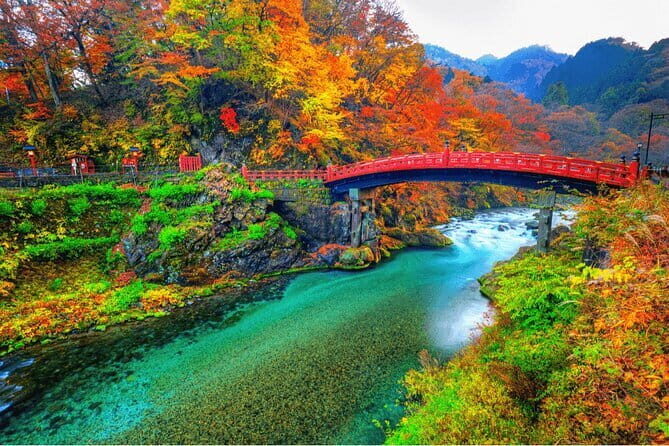
The tour finishes at Namiyoke Shrine, located right by Tsukiji Fish Market at Tsukiji, 6-chōme20-37 波除稲荷神社. That ending is more than a cute detail.
Ending near the market means you can continue eating and shopping without backtracking. If something catches your eye after the tour, you’re already positioned to act on it.
It also helps you mentally. Instead of finishing far away and having to plan a new route immediately, you stay in the same food neighborhood for your next stop.
Small group size and the comfort factor
This is capped at maximum 4 travelers. For a market tour, that’s a big deal. Smaller groups move more smoothly through tight areas, and you’re more likely to get personal guidance on what to order and how to handle menus.
You also get a more relaxed vibe. Reviews praised how friendly and communicative Yoshi was, which fits a small-group setup. You’re not shouting across a crowd; you can ask questions, react, and keep your pace without feeling lost.
And because the tour is described as a comfortable walking tour, it’s built for regular visitors rather than people who only want long, intense hikes.
Who should book this Tsukiji local food tour
You’ll get the most value if you:
- Want a guided food tasting in a place that can feel overwhelming on your own
- Care about learning why the market looks the way it does, not just eating whatever is closest
- Prefer a small-group experience over a large tour bus situation
- Want a guide who can handle language barriers and ordering
It’s also a great fit if you’ve been to Tokyo before but want something more authentic than a checklist. Tsukiji’s energy can be hard to interpret solo, and this tour gives you the meaning fast.
When it may not be your best match
This isn’t for you if:
- You hate spending extra money during tours (you’ll need JPY for food)
- You want a longer, sit-down meal format (this is a short walking tour)
- You only travel when weather is guaranteed. The experience requires good weather, and if it’s canceled due to poor weather you’ll get a different date or a full refund.
Also, if you’re the type who loves figuring everything out independently with your own research, you might still enjoy Tsukiji without a guide. But you’ll spend more time decoding and less time eating.
Should you book this tour or not?
Book it if you want the easiest path to a real Tsukiji morning: guided choices, tasty variety, and practical recommendations you can follow up on later. The guide, Hisayoshi Kioka (Yoshi), comes through clearly in both the English communication and the way guests describe him finding foods they would have missed.
Skip it if you’re on a tight food budget beyond JPY 2,000–5,000, or if your ideal Tokyo morning is slow and unscheduled. Tsukiji is still Tsukiji either way—but this tour helps you make better bets faster.
If you’re deciding now, I’d treat this as a high-value orientation to Tsukiji food culture. You’re not just buying snacks. You’re buying confidence.
FAQ
How long is the Tsukiji local food tour?
It runs about 1 hour 30 minutes.
What time does the tour start?
The start time is 8:00 am.
How many people are in the group?
The tour has a maximum of 4 travelers.
What kinds of food will I try?
You can expect local favorites such as grilled seafood, tamagoyaki, and green tea ice cream. The experience also includes options like tuna, oysters, and sake, plus matcha flavors.
Is street food included in the price?
Street food is not included. You should bring about JPY 2,000–5,000 in cash for purchases.
Where does the tour begin and end?
It begins at 4-chōme-8-1 Tsukiji, Chuo City, Tokyo 104-0045. It ends at Namiyoke Shrine next to Tsukiji Fish Market at Tsukiji, 6-chōme20-37 波除稲荷神社.
What happens if the weather is bad?
The tour requires good weather. If it’s canceled due to poor weather, you’ll be offered a different date or a full refund.