REVIEW · KOBE
Kobe: 3-Hour Private Sake Tour in Japan’s Top Sake Area
Book on Viator →Operated by DeepExperience · Bookable on Viator
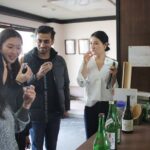
Three breweries, one satisfying sake lesson. In Kobe’s Nada Gogo area, you’ll follow a guide from brewery to brewery and get a hands-on look at how Japanese sake styles are shaped. You also taste along the way, so the theory sticks faster than reading a pamphlet.
I especially liked two things. First, the tour is tightly paced for a first-time sake outing—about 3 hours with stops that feel complete, not rushed. Second, I love that you’re comparing different producers back-to-back with tastings included, which makes flavor differences easier to notice.
One possible drawback: the experience is organized for learning, not for perfect English help. English signage may be limited, and your guide might not have answers for every deep follow-up question, so go in curious but keep expectations flexible if you ask lots of highly specific stuff.
In This Review
- Key highlights you’ll actually notice
- Kobe’s Nada Gogo: where sake style gets made
- Price and what you’re paying for (and what you’re not)
- Starting at Uozaki Station: how the 3-hour flow works
- Stop 1: Hamafukutsuru Ginjo Brewery and the ginjo focus
- Stop 2: Kiku-Masamune Sake Museum for heritage you can walk through
- Stop 3: Hakutsuru Sake Brewery Museum and the original-tool feel
- How the tastings teach you what to notice
- The real value: a guide that turns facts into flavor
- Quick tips for getting answers when English is limited
- Who should book this Kobe sake tour
- Should you book this 3-hour private sake tour in Kobe?
- FAQ
- How long is the Kobe 3-hour private sake tour?
- How many breweries are visited?
- What does the tour cost per person?
- Is this tour private?
- What’s included in the price?
- What is not included?
- Where do I meet and where does the tour end?
- Is there an age requirement for the tasting?
- Can I cancel for free?
Key highlights you’ll actually notice
- Nada Gogo’s sake focus: you’re in Kobe’s top sake area, not just a random warehouse visit
- 3 brewery stops in ~3 hours: a clean, efficient route with admission included
- Tastings at each stop: alcohol up to 1,000 yen per brewery for sampling
- A mix of premium and museum formats: ginjo-focused brewing plus history made walkable
- End point at Hakutsuru: you finish at a well-known brewery museum
- Private tour for your group: only your party participates, so questions land better
Kobe’s Nada Gogo: where sake style gets made
Kobe’s Nada Gogo region matters because the sake world has built its reputation here over generations. The tour frames it around three big factors you can actually connect to what’s in your glass: the area’s pure water, its climate, and the craftsmanship of the brewers.
You’ll also see that “sake” isn’t one flavor. The tour walks you through the process basics—rice selection and polishing, fermentation, and maturation—then ties those steps back to why different breweries can produce noticeably different styles. If you’ve ever wondered why two sakes that both say Japanese sake feel totally different, this is the kind of structure that answers it.
You can also read our reviews of more food & drink experiences in Kobe
Price and what you’re paying for (and what you’re not)
At $116.30 per person, this isn’t a cheap snack-sized activity. But it can feel fair because the price covers all fees and taxes, the guide fee, and tasting alcohol up to 1,000 yen per brewery.
Think of it this way: you’re paying for three guided stops in a very specific production zone, with admission included at each location. Also, the tastings aren’t just a single sip either—there’s a set tasting allowance at each brewery, so you can compare without feeling like you have to ration your curiosity.
Not included is also worth understanding. Transportation from the station and brunch are on you. In practice, that just means you should plan your morning or midday so you’re not trying to squeeze this in between trains and lunch hunts.
Starting at Uozaki Station: how the 3-hour flow works
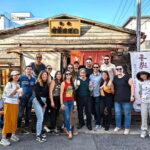
You meet at Uozaki Station (4 Chome-7 Uozaki Nakamachi, Higashinada Ward). The tour is private, so you don’t share the experience with strangers. That matters because you’ll likely move through each stop with a bit more flexibility for questions and pacing.
The total time is about 3 hours, and it’s built as a chain: roughly 55 minutes at the ginjo brewery, 55 minutes at the Kiku-Masamune museum, and about 1 hour at Hakutsuru’s museum. You also end at Hakutsuru Sake Brewery Museum (4-chōme-5-5 Sumiyoshi Minamimachi, Higashinada Ward). So plan your return to the rest of Kobe from there.
It’s near public transportation, which is helpful because you’re ending at a specific museum site rather than back at the first station. Simple tip: check your route before you go, so you’re not improvising when you’re done and ready for food.
Stop 1: Hamafukutsuru Ginjo Brewery and the ginjo focus
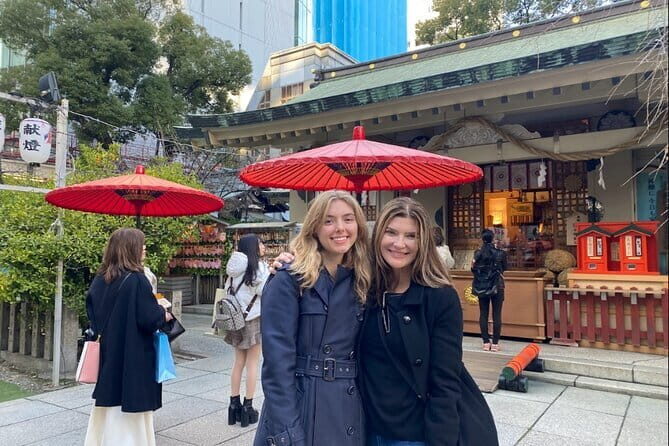
Your first stop is Hamafukutsuru Ginjo Brewery. This brewery specializes in ginjo sake, which is described as delicate and refined. That specialization is a good way to start because it gives you a clear baseline: you’re not trying to learn everything at once—you’re learning one style lens early, then expanding from there.
You’ll get an admission-included visit (about 55 minutes) that centers on premium sake brewing. The tour framework also connects what you see to the production path—how choices in rice preparation and the timeline of fermentation and maturation contribute to the final character.
This stop is ideal if you want the “why” behind flavor. If you like tasting with context, you’ll probably enjoy how this first brewery sets your taste expectations before you hit the museum-heavy second and third stops.
Small consideration: since the tour is about “three distinguished breweries,” you might find the overall message overlaps a bit from stop to stop. That’s not a bad thing, but it’s useful to know if you’re hoping every location has totally different explanations.
Stop 2: Kiku-Masamune Sake Museum for heritage you can walk through
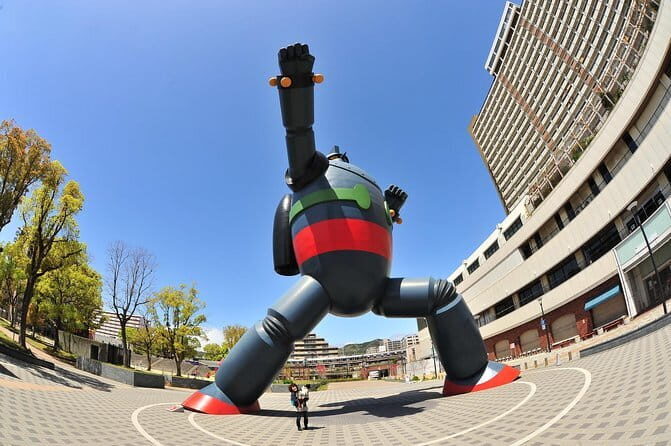
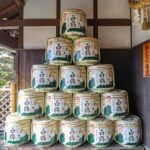
Next up is the Kiku-Masamune Sake Museum (Kiku-Masamune Shuzo Kinenkan). This stop leans hard into storied tradition and long-standing craftsmanship from one of Japan’s historic sake brewers.
The format here is museum-like, so you’re not only watching production ideas—you’re learning with a curated presentation. Expect a guided walk through their story and how craftsmanship is carried forward. The tour’s broader theme still ties back to rice work, fermentation, and maturation, but here it’s more about understanding legacy and continuity.
If you’re a fan of meaningful stories, this is the stop that tends to satisfy that itch. One review highlighted a guide named Julien as friendly and teaching in a way that made the experience easier to follow. That kind of guide energy can matter most at museum-style stops, where you need the narration to connect exhibits to what you’re tasting later.
Potential drawback: museum environments can sometimes have limited English support in signage. If you’re the type who loves asking lots of detailed questions, you may find you get a helpful overview more than a deep technical Q&A every single time.
You can also read our reviews of more private tours in Kobe

Stop 3: Hakutsuru Sake Brewery Museum and the original-tool feel
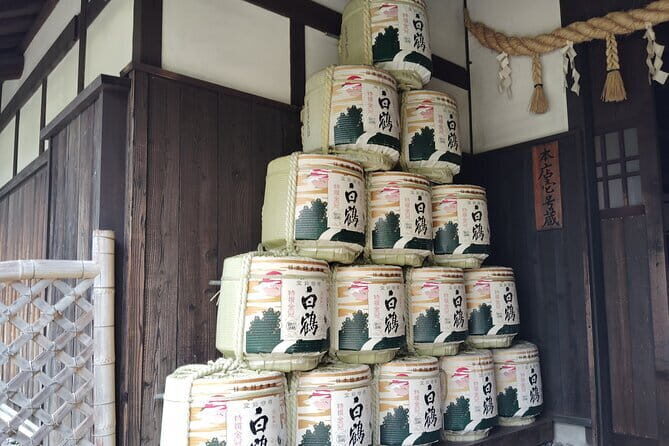
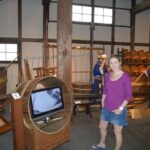
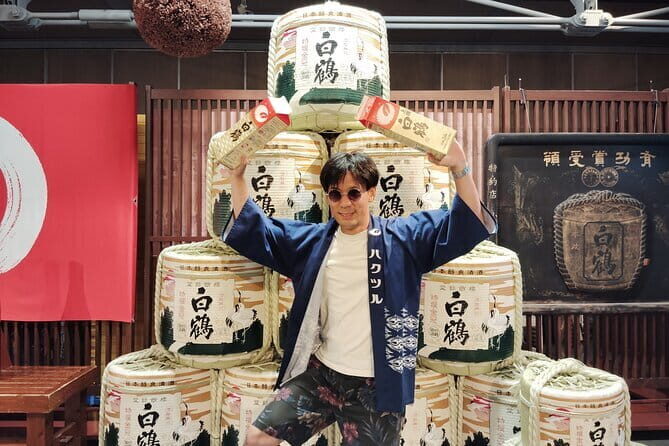
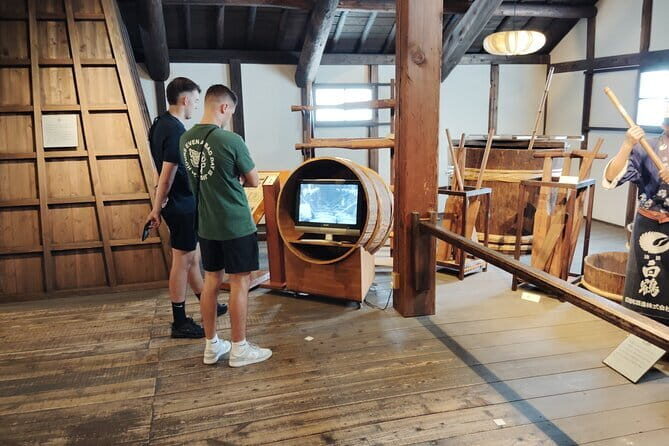
Your final stop is Hakutsuru Sake Brewery Museum. This one is distinct: the brewery has been repurposed into a museum, and it recreates historical brewing processes using original tools.
That “walk through the past” approach is why this stop works as a finale. You’re not only hearing about production steps—you can connect the steps to something tangible: tools, layouts, and the feel of how brewing used to be done. It’s the kind of ending that turns the tour from a tasting into a small education you can recall later.
Plan for about an hour here. Also, since the tour ends at this museum, you can stay a little longer after your guided time if you want extra looking. Finishing at a big museum site is a nice perk because it gives you an easy place to pivot into browsing, photos, or a nearby meal afterward.
How the tastings teach you what to notice
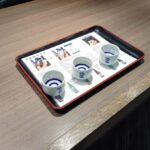
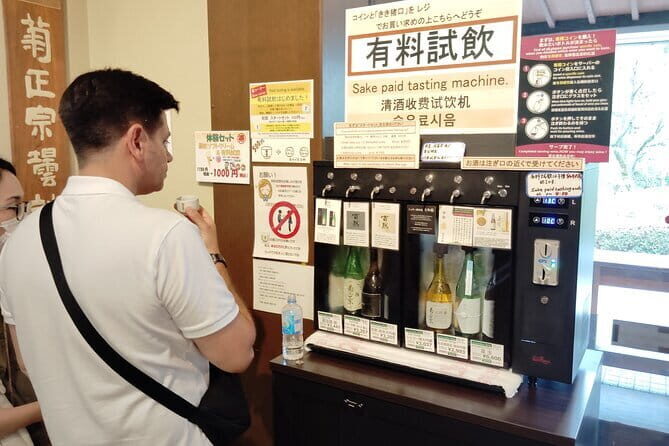
The tour includes alcoholic tastings up to 1,000 yen per brewery. The total amount depends on what you select and how tasting pours are handled, but the allowance is built in. Also, alcohol service is for travelers 18 and above, so keep that in mind for mixed-age groups.
Here’s what I’d focus on while tasting. Since the tour covers rice selection and polishing, fermentation, and maturation, you’ll get more out of your sips if you connect each flavor moment to those steps. For example, when you notice a delicate, refined feel at a ginjo-specialist stop, you can remind yourself that the production choices matter—not just the brand label.
You’re also tasting across different breweries, which is where side-by-side comparisons help most. Even if you don’t become a sake expert overnight, you start learning the simple skill of noticing texture and style differences. And because you’re in the same region, you can better appreciate how much variation comes from craft choices rather than only geography.
The real value: a guide that turns facts into flavor
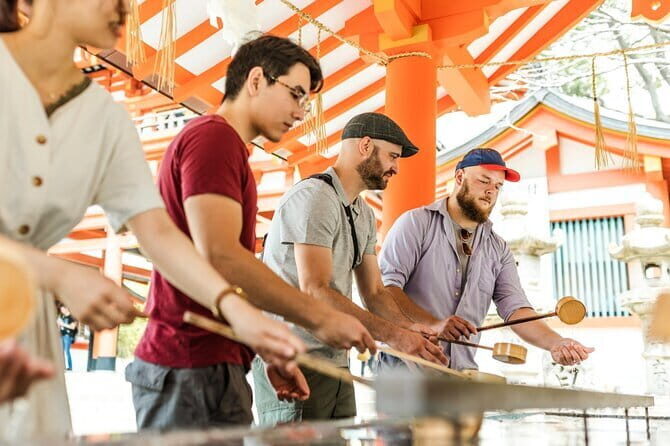
This tour’s biggest strength isn’t just that it’s three breweries. It’s the way the guide connects the steps to what you’re actually tasting and seeing. In the best moments, you walk away thinking: I get why this tastes the way it does, not just that it’s good.
The tour emphasizes how traditional facilities blend with modern innovation, and that combination is very believable in a place where production has both heritage and ongoing technique. It’s also why Nada Gogo is described as a leading hub: not because one brewery is perfect, but because multiple producers keep building on a shared foundation—water, climate, and know-how—then express it through their own approaches.
If your guide is strong (and at least one guide has been praised for friendliness and clear English, like Julien), you’ll probably leave with the kind of understanding you can use immediately—at a restaurant later, or when you spot ginjo and other styles on a menu.
Quick tips for getting answers when English is limited
A practical note: you may run into fewer English signs than you’d like. That’s normal in many Japanese museums, even ones tied to tourism. So I suggest you arrive with questions that are specific but not overly technical.
Instead of asking for complicated brewing theory, ask for simple comparisons:
- What flavor traits should I notice here?
- How does this brewery’s focus show up in the tasting?
- What’s the one production step you think most affects the result?
Also, if your questions don’t get a detailed answer, don’t treat it as a failure. In many cases, the guide will still give you the useful overview that helps you understand the stop’s point. You can also take your cue from what you’re seeing and then ask follow-ups based on the equipment or exhibit you’re looking at.
Who should book this Kobe sake tour
This is a great fit if you want a structured first experience in Kobe sake with real tastings and museum-style learning. It also works well if you’re traveling with a small group and you like the idea of a private format—only your people in the conversation.
You’ll probably enjoy it most if you:
- Like food and drink experiences that explain the process
- Want to taste multiple styles in a short window
- Prefer guided time over self-guided wandering through breweries
It may be less ideal if you need every exhibit labeled in English or you’re expecting nonstop deep technical Q&A. The tour can still be rewarding, but you should go in prepared for a lighter information style than a full brewing lecture.
Should you book this 3-hour private sake tour in Kobe?
If you’re planning a Kobe itinerary and you want one high-value, education-plus-tasting activity, I’d say this is worth booking—especially because the tour is organized around three distinct breweries and includes guided tastings at each stop. The price can make sense when you remember admissions, guide time, and tasting allowances are built in.
Book it if you want a satisfying introduction to sake-making and you’ll enjoy comparing different producers in the same region. Skip it if you already know exactly what you want and you prefer purely self-guided museum time with minimal structure, because the tour is clearly designed as guided learning with a set route.
If you do book: plan to be curious, ask good comparison questions, and give yourself time after the final stop so you can keep the momentum going with a meal.
FAQ
How long is the Kobe 3-hour private sake tour?
It runs for approximately 3 hours.
How many breweries are visited?
You’ll visit three breweries during the tour.
What does the tour cost per person?
The listed price is $116.30 per person.
Is this tour private?
Yes. It’s a private tour/activity, and only your group will participate.
What’s included in the price?
Included are all fees and taxes, the guide fee, and alcoholic beverages for tastings up to 1,000 yen per brewery. Admission tickets at the stops are also included.
What is not included?
Brunch and transportation from the station are not included.
Where do I meet and where does the tour end?
You start at Uozaki Station, and you end at the Hakutsuru Sake Brewery Museum.
Is there an age requirement for the tasting?
Yes. Alcoholic drinks are served only to travelers 18 years old and above.
Can I cancel for free?
Yes, you can cancel for a full refund if you cancel up to 24 hours in advance of the experience start time.