REVIEW · KOBE
Exploring Nada Sake Breweries Kobe Private Tour with Government-Licensed Guide
Book on Viator →Operated by Japan Guide Agency · Bookable on Viator
Sake in Kobe hits different when someone local walks you through it. This private, licensed guide tour takes you through the Nada district’s major breweries and visitor museums, with stories that connect beer-bottle facts to real Japanese craft. I especially liked the way you learn the process inside old factory buildings, and I also liked that many of the stops are admission-ticket-free for the tour sites.
One thing to consider: this is a walking tour with pickup on foot in a designated meet-up area, and transport and lunch are not included. Plan for comfort and timing, because you’ll choose about 3–4 sights out of the list and then spend the rest of the day moving between them.
In This Review
- Key Points You’ll Actually Use
- Nada Sake District in Kobe: Why This Works as a Walking Experience
- The Value of a Government-Licensed English Guide (and Why It Matters)
- How the 6-Hour Day Flows: Picking 3–4 Stops from the List
- Your Brewery Lineup: What Each Stop Is Like
- Sawanotsuru Museum: Old-Factory Craft You Can See
- Kobe Shushinkan Brewery (Fukuju): A Major Name with Daily Visitor Access
- Hakutsuru Sake Brewery Museum: Another Old Factory, Another Lens
- Kiku-Masamune Shuzo Kinenkan: A Third Major Brewery Perspective
- Sakuramasamune Kinenkan Sakuraen: Museum, Café, Restaurant, Shop
- Hamafukutsuru Ginjo Brewery: A More Modern Factory Example
- Hakutakarokusuien: Preserving Brewing Traditions
- Sakagura Dori Rengakan (Nihonsakari Head Office): Brick Modern Meets Sampling Corners
- Timing, Comfort, and the Real-Life Walking Plan
- What You’ll Learn About Sake (Beyond the Labels)
- Price and Value: Why $154.37 Can Make Sense Here
- Lunch Options: How to Plan Food Without Slowing the Day
- Who This Tour Suits Best in Kobe
- A Few Things That Could Be Annoying
- Should You Book This Private Nada Sake Tour?
- FAQ
- How long is the Nada Sake Breweries Kobe private tour?
- How much does it cost per person?
- Is this tour private or shared with other groups?
- What does the tour include?
- Does the tour include pickup?
- Can I customize which breweries I visit?
- Are entrance fees included?
- Is lunch included?
- What is the legal drinking age in Japan?
- Is there a day-of-week closure to know about?
Key Points You’ll Actually Use
- Government-licensed English guide so the explanations go beyond labels and packaging.
- Customizable route lets you pick your must-see breweries from a set list (usually 3–4 stops).
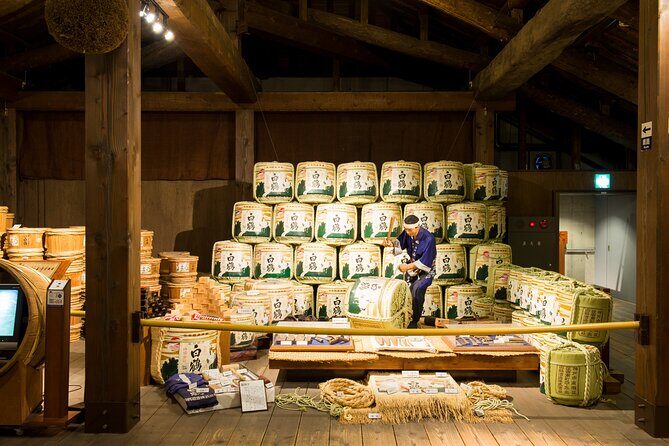
- Old-factory museum settings give context: you see facilities built for brewing, not just modern displays.
- Free admission at included stops keeps the cost predictable for brewery visitors.
- Monday closure on one major stop (Hamafukutsuru) can affect which route feels best.
- Hosts like Andy, Norio Oki, Tanaka-san, and Yama-san are known for clear communication and flexibility.
Nada Sake District in Kobe: Why This Works as a Walking Experience
Nada is Japan’s biggest sake-producing area, and the best part is that the breweries aren’t scattered randomly. They cluster in a way that makes it practical to hit multiple stops in a single afternoon, without turning your day into a transit marathon.
When you visit a brewery museum in this area, you’re not just watching a slideshow. You’re often stepping into older factory buildings where the brewing world used to operate, which makes the explanations feel grounded and real. That’s the angle I like most: the setting does half the storytelling for you.
You can also read our reviews of more food & drink experiences in Kobe
The Value of a Government-Licensed English Guide (and Why It Matters)
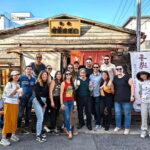
This is not a self-guided “walk and read signs” day. You get a licensed local English-speaking guide, and the tour is set up for a real conversation about culture, history, and how sake is made.
I also like that you meet the guide within a defined area in Kobe or Osaka and then walk from there. In plain terms, that structure helps you avoid the usual first-20-minutes chaos of figuring out where to go. Clear meeting points are a big deal for tours like this, and guides such as Norio Oki are known for giving precise directions for people coming from downtown Osaka.
Finally, the guide lets you customize your route. You pick your “must-see” sites from a list, and your walking plan adapts. If your group is more into traditional brewing heritage, you can weight the schedule toward the older museum-style facilities. If you want a more modern factory example, you can build around places like Hamafukutsuru.
How the 6-Hour Day Flows: Picking 3–4 Stops from the List
The tour runs about 6 hours, with around 30 minutes at each stop. That time budget is tight enough to keep energy up, but long enough for the guide to explain what you’re looking at and for you to explore the displays and shops.
A useful detail: guide entry coverage applies only to sights listed in the What to expect set. So if you want to add extra places beyond your selected breweries, you’ll likely pay those separately. The good news is that the main stops on the tour list show free admission in the itinerary details, which keeps the day from turning into a surprise-fee exercise.
Your Brewery Lineup: What Each Stop Is Like
Below is what you can expect from the main sites on the route list. Your exact selection depends on what you choose for your personalized itinerary, but these are the common anchors of the tour.
Sawanotsuru Museum: Old-Factory Craft You Can See
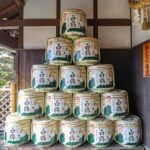
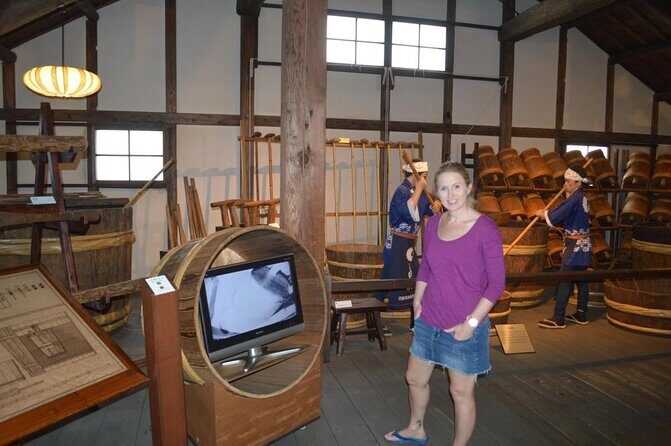
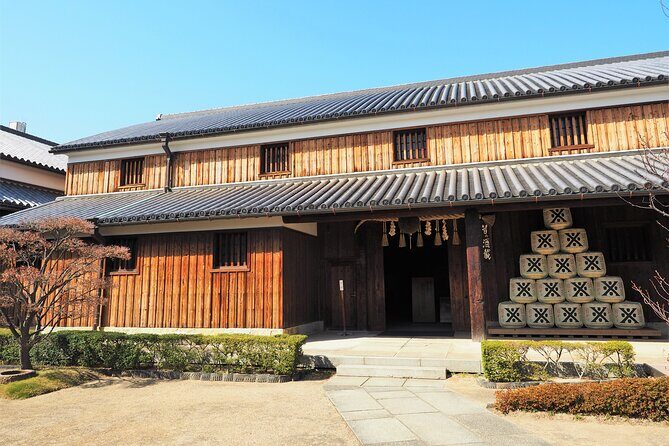
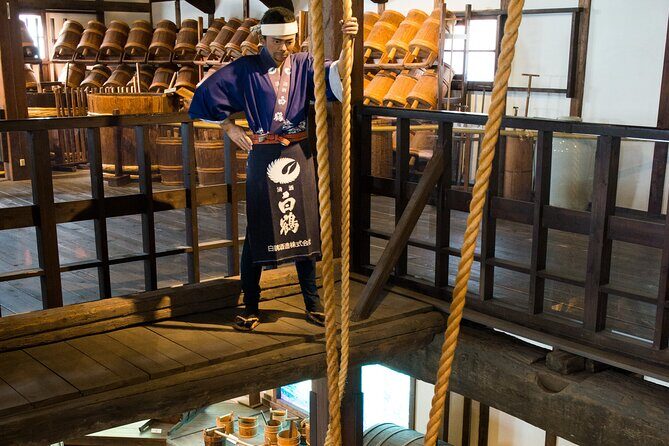
Your day can start at the Sawa no Tsuru Museum, one of the major Nada breweries. The museum sits in the building of the old factory, and it’s designed to show both the sake-making process and the older production facilities.
Why this stop works: old buildings make the process feel human-scale. Instead of only hearing about fermentation steps, you can visualize what the workplace looked like when brewing was done with the tools of its era. It’s also an easy win because the admission ticket is free for this tour stop.
You can also read our reviews of more guided tours in Kobe


Kobe Shushinkan Brewery (Fukuju): A Major Name with Daily Visitor Access
Next, you may visit Kobe Shushinkan Brewery, known for making the sake brand Fukuju. Here, you can join a guided factory tour, and the restaurant and shop are open every day.
What you’ll appreciate: this stop is less about only “history behind glass” and more about seeing production flow with modern visitor access. It’s a nice contrast if you’ve already seen older facilities in the first museum. The logistics are also friendly because it’s open every day, so it’s less likely to break your plan than sites with closures.
Hakutsuru Sake Brewery Museum: Another Old Factory, Another Lens
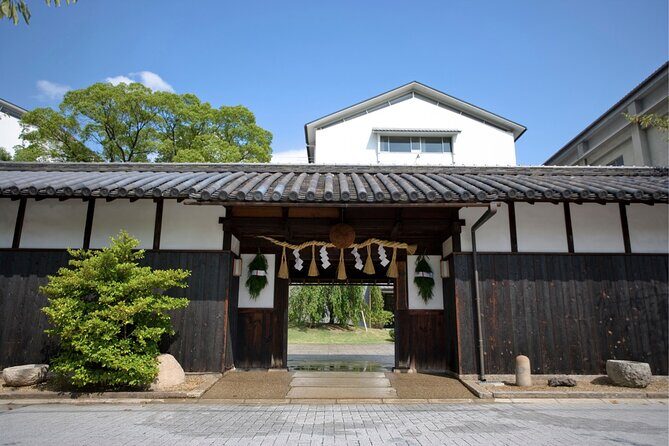
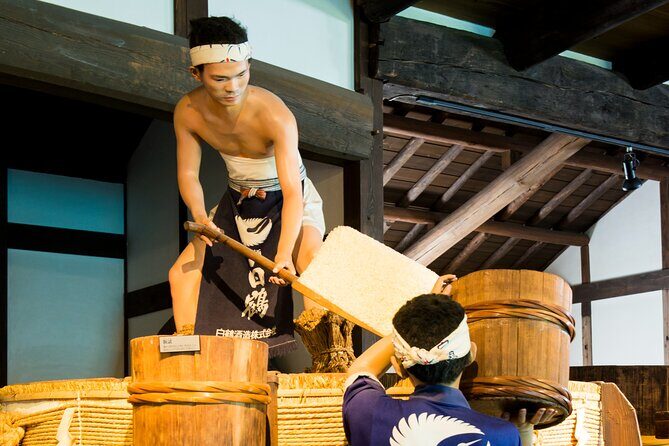
Hakutsuru is also one of Nada’s major breweries, and its museum is set in another old factory building. Like the others, it focuses on the process of making sake and the older facilities.
Why I think you’ll like it: switching between two major breweries like Sawanotsuru and Hakutsuru gives you a better sense of how shared tradition can still show up differently in different companies’ approaches and facilities. If you’re a sake person, this kind of comparison is where your interest gets rewarded.
Kiku-Masamune Shuzo Kinenkan: A Third Major Brewery Perspective
Kikumasamune is another major brewery stop you may include. The Kiku-Masamune Shuzo Kinenkan museum is also in an old factory building and explains the process and historic facilities.
This is a strong choice if you want depth across multiple brands without adding extra travel time. You get repeated exposure to the same basic concepts—then you start noticing what each brewery emphasizes more, which helps the day feel educational instead of repetitive.
Sakuramasamune Kinenkan Sakuraen: Museum, Café, Restaurant, Shop
Sakuramasamune’s visitor facility, Sakuraen, is more of a whole hangout zone. It includes a museum, restaurant, cafe, and shop, and again the tour stop is listed as free admission.
This can be a great mid- to late-afternoon pivot point because it gives you options. If your group wants a break from the museum rooms, you can redirect your time toward the cafe or browse the shop offerings. You can also use this stop to regroup as a group before the final legs of the walk.
Hamafukutsuru Ginjo Brewery: A More Modern Factory Example
Hamafukutsuru is a newer brewery founded in 1996, and the Ginjo Brewery focuses on a more up-to-date factory. You can visit the factory every day except Monday, and it’s listed as a free tour stop.
One reason this matters: a modern factory example helps you connect the lessons from old buildings to today’s production reality. If your trip includes a Monday, you’ll want your guide to adjust the route so you don’t waste time reaching a closed site.
Hakutakarokusuien: Preserving Brewing Traditions
Hakutaka Rokusuien is a stop centered on preserving sake brewing traditions and culture. The site is associated with efforts from the company’s inception to protect that heritage as one of the Nada district’s sake breweries.
This is the kind of stop that works best if you like cultural explanation, not just factory logistics. You’ll likely walk away with a clearer sense of why traditional methods and local pride are still part of modern branding.
Sakagura Dori Rengakan (Nihonsakari Head Office): Brick Modern Meets Sampling Corners
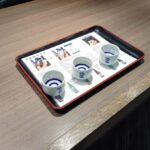
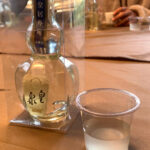
Another stop on the list is Sakagura Dori Rengakan, tied to the Nihonsakari head office. It opened in 2000 in a brick modern building. Inside, you’ll find glass studios, a sampling corner, and a sake sales area, plus a Japanese restaurant with the name Flower Height.
This one adds variety because it mixes modern architecture with visitor-friendly sampling and dining space. It’s also a good option if you want one stop that feels more like a public-facing brand experience rather than strictly a museum.
Timing, Comfort, and the Real-Life Walking Plan
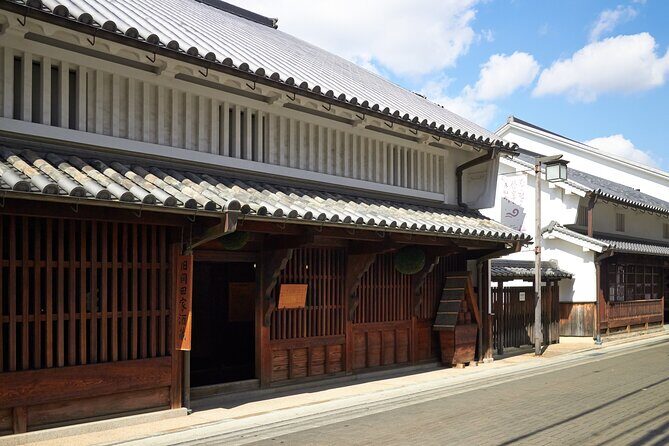
Because each stop is about 30 minutes, your day depends on what happens between them: crossings, finding entrances, and settling in. The tour’s structure is meant to keep you moving, but you should still dress like you’re out sightseeing, not like you’re only doing a short museum hop.
You’ll want comfortable shoes, and it helps to carry a small bottle of water. Since lunch is not included, I suggest you decide ahead of time whether you want to eat at one of the brewery facilities (some have restaurants and shops) or plan to grab something after your tour finishes.
Also note: pickup is offered, but this is still a walking tour where you meet the guide on foot within a designated Kobe/Osaka area. That’s convenient, but it means you should be ready to start moving right away.
What You’ll Learn About Sake (Beyond the Labels)
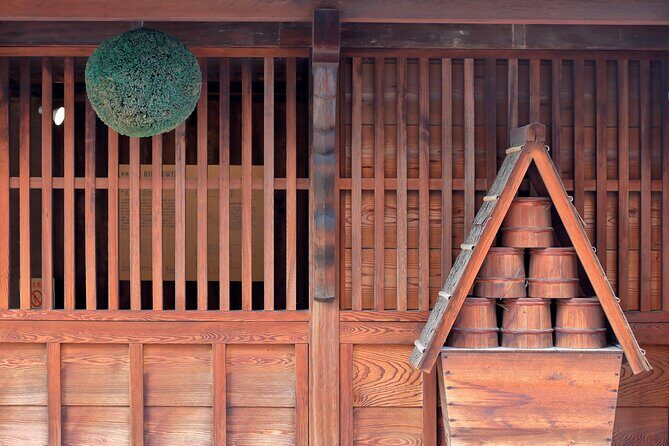
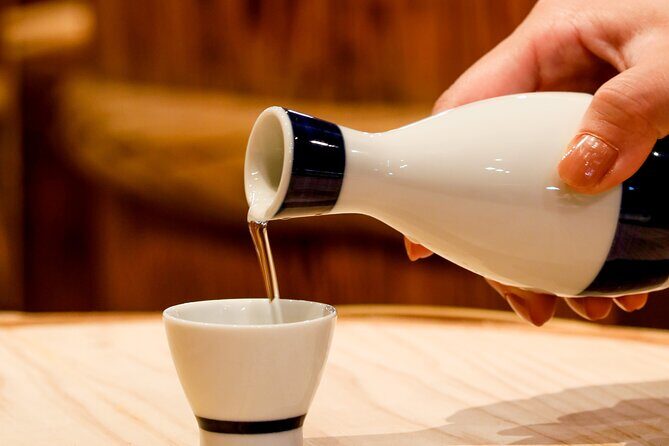
This tour is built for sake lovers, but it’s also smart for curious beginners. The guide focuses on how sake is made and what the old factory facilities were like, with stories tied to Japan’s sake culture and local history in Nada.
Here’s what I think this kind of learning does for you: once you understand the steps and the setting, buying a bottle later becomes more meaningful. You’re no longer shopping by a pretty label. You’re looking at what the brewery is trying to express.
And one practical point: the legal drinking age in Japan is 20. Even if you’re the designated sampler in your group, plan responsibly around that rule.
Price and Value: Why $154.37 Can Make Sense Here
At $154.37 per person for about 6 hours, this isn’t a cheap add-on. But it can be good value if you compare it to what an English-speaking, government-licensed guide plus multiple brewery visits would cost on your own.
The biggest value lever is that several stops include admission-ticket-free entries in the tour itinerary. That means your money mostly goes toward the guide and the time structure, not piling up entry fees at every turn.
What’s not included matters too:
- Transportation fees are not included (so you handle getting to the meet-up area).
- Entrance fees and lunch are not included in general terms, though the listed tour stops show free admission tickets.
- Lunch is not included, so budget for food.
- Private transportation is not included, which is part of why the tour stays focused on walking.
If your goal is one or two brewery visits on your own, this might feel pricey. But if you want multiple major Nada breweries with real explanations in English, the guide-led format is where the value lands.
Lunch Options: How to Plan Food Without Slowing the Day
Lunch isn’t part of the standard price, but the structure is friendly to eating during the day if your selected brewery facility has a restaurant or cafe.
One real example from the experience world is Mikage Kan, a lunch stop associated with one of the brewery settings. The bigger takeaway for you: when a brewery facility includes dining, your guide can help you find something that fits the schedule without forcing your group to hunt far away.
If your group has dietary needs, plan to tell your guide at the start. That kind of early clarity makes a big difference when time is tight and you’re between locations.
Who This Tour Suits Best in Kobe
This is a great match if:
- You genuinely like sake and want context for what you’re tasting or buying later.
- You want a guided walk that mixes museum and factory access.
- You prefer a smaller, more personal format. This tour is private, meaning only your group participates.
It’s also noted that most travelers can participate, and service animals are allowed. If you’re traveling with friends and want a single guide for your group, this avoids the split-and-merge feeling that can happen on larger group tours.
A Few Things That Could Be Annoying
No plan is perfect, so here are the potential friction points:
- This is customizable, but it also means you might not see all eight major options in one day. Your picks matter.
- It’s a walking tour with time spent between stops, so you should be comfortable moving around.
- Hamafukutsuru Ginjo Brewery is closed on Monday, so your route choice needs to reflect your day of the week.
- Guide entry coverage is limited to the sights listed for your selected itinerary, so extra add-ons may cost more.
None of these are deal-breakers, but knowing them helps you pick the right route and day.
Should You Book This Private Nada Sake Tour?
I’d book it if you want your Kobe day to feel focused and meaningful: multiple major breweries, explanation in English, and the chance to learn why Nada is such a big name for sake. The free admission at many of the included stops is a strong value boost, and the private guide format keeps the day flexible.
I’d think twice if you hate walking, you only want a single brewery visit, or you’re not interested in learning the process behind the bottle. In those cases, you might prefer a smaller DIY plan.
If you do book, pick your 3–4 stops with your interests in mind. Pair at least one old-factory museum-style site with one newer or more visitor-oriented stop. That mix usually makes the day feel balanced, not repetitive.
FAQ
How long is the Nada Sake Breweries Kobe private tour?
It runs for about 6 hours.
How much does it cost per person?
The price is $154.37 per person.
Is this tour private or shared with other groups?
It is private, so only your group participates.
What does the tour include?
You get a licensed local English-speaking guide, a customizable walking tour where you choose 3–4 sites from the listed options, and a meet-up on foot within a designated Kobe/Osaka area.
Does the tour include pickup?
Pickup is offered, but this is still a walking tour, with the meet-up happening on foot in the designated area.
Can I customize which breweries I visit?
Yes. You can select your must-see spots from the list in the tour information to create your customized itinerary.
Are entrance fees included?
Entrance fees are listed as not included in general. However, the itinerary’s featured museum/brewery stops show admission ticket free, and guide entry fees are covered only for sights listed under What to expect.
Is lunch included?
No, lunch is not included.
What is the legal drinking age in Japan?
The legal drinking age in Japan is 20.
Is there a day-of-week closure to know about?
Hamafukutsuru Ginjo Brewery can be visited every day except Monday.