REVIEW · KOBE
Kobe: Private Guided Tour of Takenaka Carpentry Tools Museum
Book on GetYourGuide →Operated by DeepExperience, Inc. · Bookable on GetYourGuide
You can’t see Japanese craftsmanship in big city crowds. This private Kobe tour takes you into the Takenaka Carpentry Tools Museum, where woodworking tools and techniques explain how buildings get made. I love that the visit is short and focused, with about an hour of guided time on the mechanics of carpentry rather than a long, vague museum wander.
The best part for me is the balance: you get hands-on style learning through interactive displays, plus historic tools and architecture-focused exhibitions that connect the dots. One drawback to plan around is that it is not a full-day museum marathon. If you want to spend hours reading everything at your own pace, this schedule may feel a bit tight.
In This Review
- Key things to know before you go
- Arriving at JR Shin-Kobe and meeting your guide
- Inside the Takenaka Carpentry Tools Museum: what you’ll actually see
- Why the tool exhibits matter for non-carpenters
- Interactive displays and photos: how to enjoy it without breaking the rules
- Walking pace and timing: making sense of the 90 minutes
- What’s included in the price (and what you handle yourself)
- Who this private carpentry tools tour suits best
- A small comfort checklist before you go
- Should you book the Kobe Takenaka Carpentry Tools Museum tour?
- FAQ
- Where do I meet the guide?
- How long is the tour?
- Is this a private tour?
- What languages are available?
- Can I take photos inside the museum?
- What should I bring?
- Is transportation and food included?
Key things to know before you go
- Start at JR Shin-Kobe Station and end there too, so your Kobe plans stay simple
- Live guide in English or Japanese in a private group setting
- About 60 minutes in the museum for a concentrated view of tools, techniques, and architecture
- Interactive displays plus historic carpentry tools, so you get both learning and context
- Flash photography is off, but regular photos are allowed inside
- Comfortable shoes matter, since you’ll do a fair amount of walking
Arriving at JR Shin-Kobe and meeting your guide
This tour begins right at JR Shin-Kobe Station, at the ticket gate. You’ll meet your guide in front of the gate holding a yellow sign with the DeepExperience logo. It’s a good setup if you’re already using JR lines, because you don’t have to coordinate a remote pickup point or guess which bus stop is correct.
The start time is prompt: 10:00 AM. That matters more than it sounds, because the whole experience is designed to be tight and efficient. Show up a little early, take a quick moment to confirm you’re at the right gate, then you’re ready to go.
The tour is listed as private, meaning you won’t be stuck in a crowded group where questions get lost. For me, private format is ideal for niche topics like traditional carpentry tools, where even small clarifications can make the difference between seeing objects and actually understanding them.
You can also read our reviews of more guided tours in Kobe



Inside the Takenaka Carpentry Tools Museum: what you’ll actually see
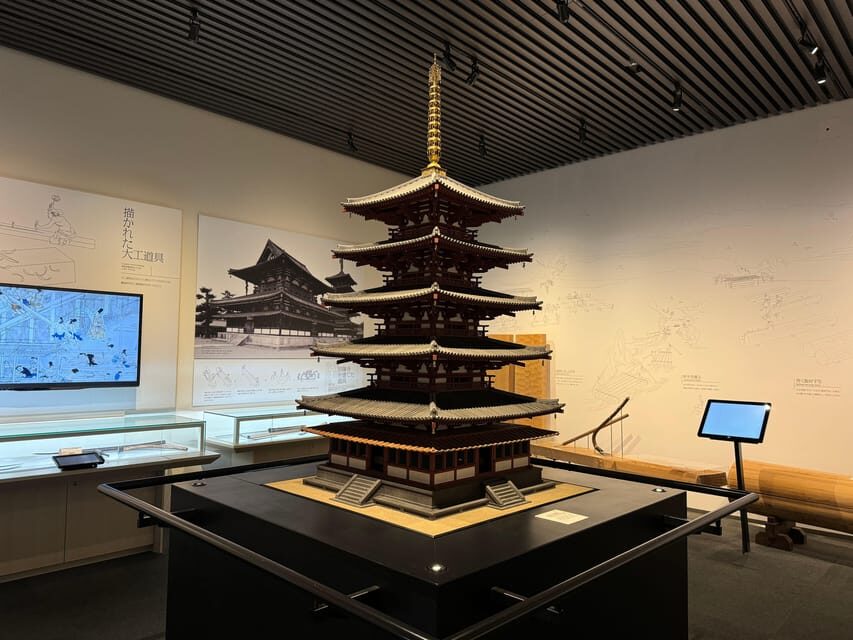
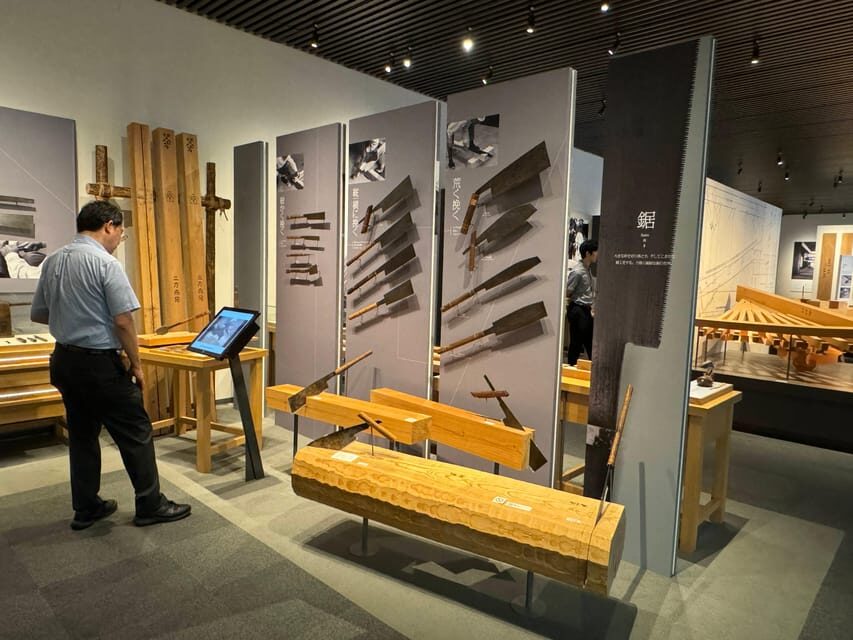
The heart of the experience is the Takenaka Carpentry Tools Museum, centered on traditional Japanese woodworking. Over about 60 minutes, your guide leads you through the museum’s exhibitions on tools, techniques, and the thinking behind Japanese carpentry.
I like this museum focus because it’s not just “look at tools.” The displays are built to help you read the logic of the craft. You’ll see how carpenters select and use tools in ways that fit Japanese building traditions, not just how tools look in a glass case.
You can expect three main layers during your guided walk:
1) Carpentry tools and how they were used
Historic tools give you immediate context for what woodworkers actually handled day to day. It’s the kind of viewing that makes you appreciate why certain shapes and designs exist. Tools aren’t random inventions; they match job needs.
2) Traditional techniques passed down through generations
Instead of treating carpentry like a one-off skill, the tour frames it as knowledge that’s been refined over time. Even if you don’t read Japanese fluently, a good guide can connect the technical points to plain, practical explanations.
3) Architecture-related exhibitions that connect tools to buildings
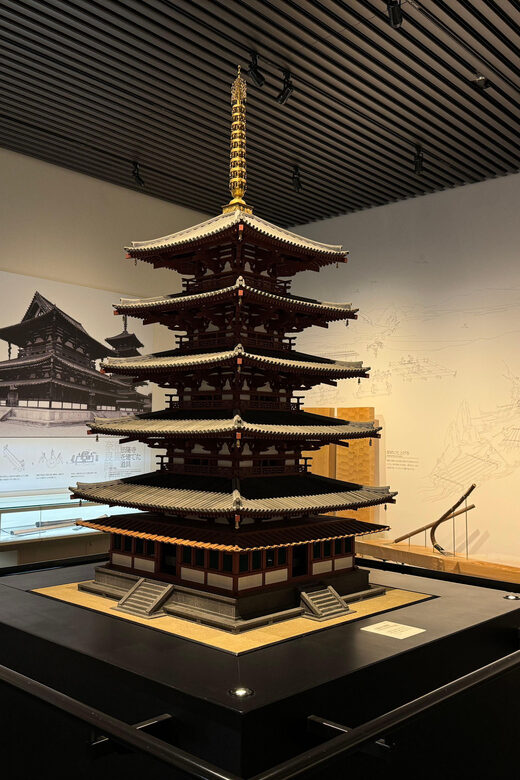
The museum ties woodworking into the bigger story of Japanese architecture. That connection is why this works for people who aren’t only into woodworking as a hobby. If you’ve ever looked at Japanese structures and wondered how the parts fit together, this is the kind of place that helps your eyes understand what you’re seeing.
Why the tool exhibits matter for non-carpenters

You don’t need to be a woodworker to get something out of this. The tools are a shortcut into how Japanese architecture works. When you learn what a tool is designed to do, you start noticing the “why” behind the final structure.
Here’s how it clicks during a visit like this:
- Tools tell you the priorities of the craft. If a tool emphasizes precision, the architecture likely benefits from tight joins and clean lines.
- Techniques explain the workflow. Japanese carpentry is deeply shaped by methods that balance strength, durability, and fit.
- Architecture context turns objects into meaning. You start linking the museum’s displays to the real-world logic of how structures come together.
This is where the guided pace helps. You’ll spend enough time to learn the basics without getting lost in details. And because the tour is private, you can ask direct questions when something feels confusing.
Interactive displays and photos: how to enjoy it without breaking the rules

The museum includes interactive displays and detailed exhibitions, so you’re not limited to reading labels and staring quietly. Interactive elements can be especially helpful if you learn best by doing rather than memorizing.
Photography is allowed, which is great for remembering what you saw later. But there’s one important rule: no flash photography inside. Flash can damage exhibits or distract other visitors, so keep your camera set accordingly.
Practical tip: if you plan to take pictures of tools, try to pause for a second before snapping. Many museum displays are arranged so you can get a clear shot from a specific angle. The guide can point out where better viewing happens, and that saves you from taking blurry photos you’ll never use.
Walking pace and timing: making sense of the 90 minutes
The tour is listed as 90 minutes total, with about 60 minutes of guided time in the museum. That doesn’t mean you only spend an hour seeing everything. It means the experience is built to be efficient: meet at Shin-Kobe, get to the museum, cover the key exhibitions with a guide, then return to the station.
This is ideal if you have a busy day in Kobe and don’t want to commit half a day to one indoor stop. It’s also useful if you’re traveling with mixed interests. Architecture people get the structure story. Craft fans get the tools. And everyone benefits from the connection between them.
The main consideration is energy level. The tour notes that you’ll be doing a fair amount of walking, and you should wear comfortable shoes. Nothing extreme, but if you’re coming from a long day of sightseeing, your feet might notice.
You can also read our reviews of more private tours in Kobe





What’s included in the price (and what you handle yourself)
At $35 per person, this is priced like a focused, guided cultural visit rather than a long multi-stop day tour. That matters for value.
What you’re getting for the money:
- Guided tour of the museum
- Museum admission
What’s not included:
- Transportation to and from Shin-Kobe Station
- Meals and drinks
So the value equation looks good if you already plan to be in the Shin-Kobe area. You’re paying for a guide-led education plus admission, which is usually the biggest cost you can’t control on your own.
If you’re budgeting a day, plan to handle your own meals. Also, double-check how you’re getting to Shin-Kobe. The tour meeting point is clear, but the listing doesn’t include hotel-to-station transport.
On the scheduling side, you’ll also see flexible booking options like free cancellation up to 24 hours in advance and reserve now, pay later. Those policies are handy when your Japan plans are still moving around.
Who this private carpentry tools tour suits best
This experience is best for people who want real cultural learning in a compact time window.
You’ll likely enjoy it most if:
- You’re into architecture and want to understand how buildings relate to woodworking methods
- You like museums that teach through objects and practical context, not just big general histories
- You appreciate guided explanations that connect craft details to a larger idea of Japan
- You want a private group experience with a live guide in English or Japanese
It’s less ideal if:
- You want a full day of museum time
- You’re hoping for a casual walk without guidance
- You expect transportation and meals to be included in the tour price
A small comfort checklist before you go

Before you head out, keep it simple.
- Wear comfortable shoes because there’s walking
- Plan your camera settings so you can photograph without flash
- Bring nothing complicated, since the focus is the guide-led museum route
- Note the museum rule: no smoking
If you like to take notes or sketch what you see, this is a great place to do it. Even a few quick bullet notes right after each room can help the information stick.
Should you book the Kobe Takenaka Carpentry Tools Museum tour?
Yes, I think you should book it if you want a smart, short, high-quality introduction to Japanese woodworking and the architecture behind it. The value is in the combination of guided instruction + admission, and the pacing makes it easy to fit into a busy Kobe itinerary.
If you’re the type who enjoys understanding how things are made—how tools shape technique—this tour will feel like time well spent. And if you’d rather avoid long museum fatigue, the private format and tight schedule are exactly what you’re looking for.
Book it with confidence if Shin-Kobe is convenient for your day. You’ll get a clear picture of Japanese carpentry tools and why they matter, without turning your schedule into a marathon.
FAQ
Where do I meet the guide?
Meet your guide in front of the ticket gate at JR Shin-Kobe Station. Your guide will be holding a yellow sign with the DeepExperience logo.
How long is the tour?
The tour is listed as 90 minutes total. The guided museum portion is about 60 minutes.
Is this a private tour?
Yes. It’s a private group experience with a live tour guide.
What languages are available?
The live tour guide is available in English and Japanese.
Can I take photos inside the museum?
Yes, photography is allowed inside the museum. Flash photography is not permitted.
What should I bring?
Bring comfortable shoes. The tour notes that there will be a lot of walking.
Is transportation and food included?
No. Transportation to and from Shin-Kobe Station and meals and drinks are not included.