REVIEW · OSAKA
Learn The Katana ‘Sword’ Technique of Samurai and Ninja
Book on Viator →Operated by Beauty of Japan · Bookable on Viator
A sword class in Osaka that feels like a show. You’ll train on katana basics and the tate technique while dressing the part in ninja and samurai gear.
I especially like how the lesson blends real movements (how to hold the sword, basic katas, posture) with lots of hands-on time and a video moment.
One thing to consider: this is stage-actor led and performance-heavy, so it’s more for fun and guided learning than for serious, technical martial arts sparring.
Key things I’d highlight before you go
- Tate technique focus on posture, balance, and mental focus, not just waving a sword
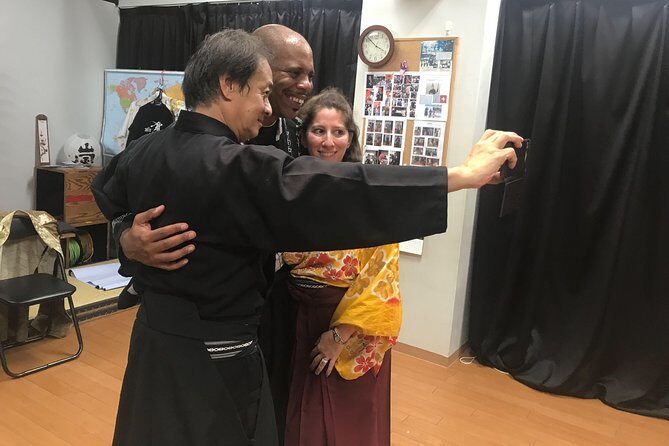
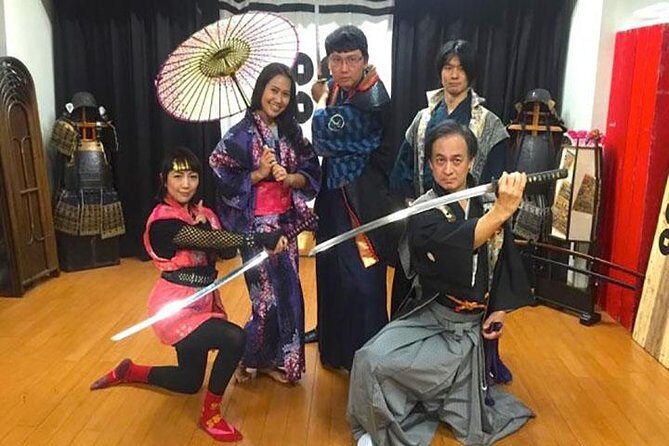
- Costume rental included (kimono, ninja outfit, or samurai armor) with photo time
- Katana basics + 8 katas plus instruction on how to hold the sword
- Live fighting performance with three Samurai and one Ninja to set the tone
- Rubber shuriken throwing and a group “scene” where you act the part
- Small group size, with up to 10 people for more personal attention
In This Review
- Where You Start: Japan Tatedo Association and Your Warrior Wardrobe
- The Pre-Training Performance: Three Samurai, One Ninja, and Learning by Watching
- Katana Basics in Motion: How to Hold the Sword and Learn 8 Katas
- Training the “Tate” Sword Technique: Posture, Balance, and Focus You Can Feel
- The Ninja Side: Your Scene Performance and Rubber Shuriken Throwing
- Price and Value in Osaka: What $162.59 Buys You (and What It Doesn’t)
- Who This Samurai and Ninja Katana Class Is For (and Who Might Want Something Else)
- Tips for a Smoother Experience (So You Get More Out of the Hour)
- Should You Book It?
- FAQ
- What is the main focus of this Samurai and Ninja class in Osaka?
- How long does the experience last?
- What should I expect to wear during the class?
- Is katana instruction included?
- Will there be a performance during the lesson?
- Is shuriken throwing part of the experience?
- What’s included in the price?
- Where do I meet and is it easy to get there?
Where You Start: Japan Tatedo Association and Your Warrior Wardrobe
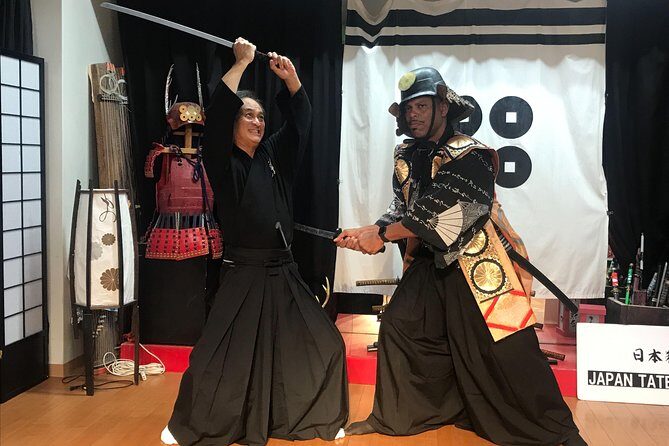
Your experience begins at the Imai Building near Kitahorie in Osaka, at 1-chōme-1-27 Kitahorie, Nishi Ward. If you like clear meeting points, this one is straightforward, and it’s described as near public transportation—so you won’t be stuck budgeting time for a long taxi ride.
The first big value here is the setup. You’re not just learning sword moves in regular street clothes. You’ll be guided through suiting up with a costume included: kimono, kimono hakama, ninja costume, or samurai armor, depending on what you pick. That sounds like dressing up (it is), but it also changes how you move. Hakama-style garments and armored-looking clothing encourage the upright posture and controlled stance that the lesson keeps returning to.
Because the group max is 10 people, the instructor can spend time correcting grip and stance. That matters a lot when you’re learning something new, like how your hands should sit on the katana and how your body should line up before you start practicing cuts.
Practical tip: wear comfortable shoes under whatever you’ll use for the class, and be ready for a bit of wardrobe time before you begin the sword portion.
The Pre-Training Performance: Three Samurai, One Ninja, and Learning by Watching
Before you start moving, you’ll get inspired by a fighting performance featuring three Samurai and a Ninja. This is one of the more effective pieces of the whole experience, even if you’re skeptical going in.
Why it works: you’re not only seeing poses. You’re seeing timing—how a strike begins with posture, how balance holds steady through the motion, and how the “combat look” is built from clean body angles. It’s also a quick cultural cue. In Japanese performance traditions, the movements are clear and readable from a distance, so you get a strong visual model.
Also, it sets expectations. This isn’t a silent, sweat-only dojo. It’s structured like an experience where the show helps you learn, then the class lets you try the same ideas for yourself.
You can also read our reviews of more tours and experiences in Osaka.



Katana Basics in Motion: How to Hold the Sword and Learn 8 Katas

After the performance, the training shifts into hands-on instruction. You’ll learn how to wear kimono hakama, then move into katana basics—especially how to hold the sword.
Holding the katana correctly is more important than most people expect. Even if your technique is decent, a wrong grip changes everything: where the blade travels, how stable your wrists feel, and whether your stance can support the cut. This class specifically includes instruction for sword handling, then guides you through 8 katas, and you’ll take a video as part of the process.
That video part is underrated. When you’re practicing new positions, your brain often feels like you’re doing it perfectly. A quick recording helps you compare what you felt with what you actually did. If you want something you can show later (and actually learn from), this is a nice extra.
Practical tip: go slow at first. Grip and stance are the foundation. If you rush to get to bigger swings, you’ll probably lose the alignment the katas are trying to teach.
Training the “Tate” Sword Technique: Posture, Balance, and Focus You Can Feel
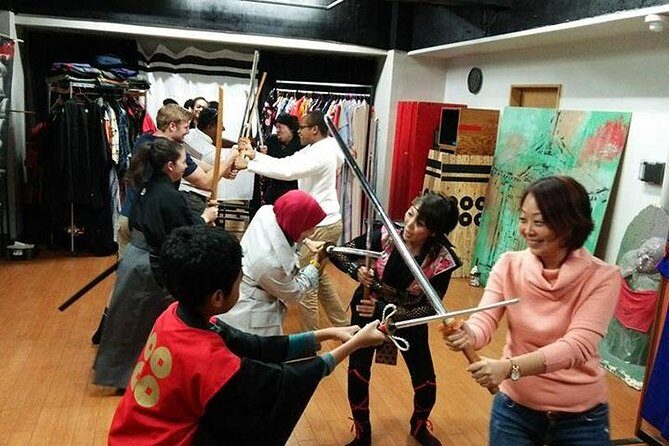
The main technique spotlight is the tate sword technique. The class frames it as a combination of posture, balance, and mental focus, and that theme shows up in how you’re coached.
You’ll get a “tate battle experience” style practice, which generally means you’re not only hitting a single pose. You’re moving through a sequence where your stance has to hold steady, your body stays balanced, and your mind stays on the next movement. For a beginner, the big win is that tate gives you a clear checklist:
- Stand with intention (not slouching or leaning)
- Keep balance during the cut
- Treat the movement like a controlled action, not a wild swing
And yes, you’ll practice the cutting concept—described as learning the sword cutting technique of tate and completing training by performing a scene later in the program.
Why this matters for value: a lot of “sword experiences” focus only on spectacle. Here, the lesson ties the spectacle back to structure, which helps you leave feeling like you learned something you can repeat.
The Ninja Side: Your Scene Performance and Rubber Shuriken Throwing
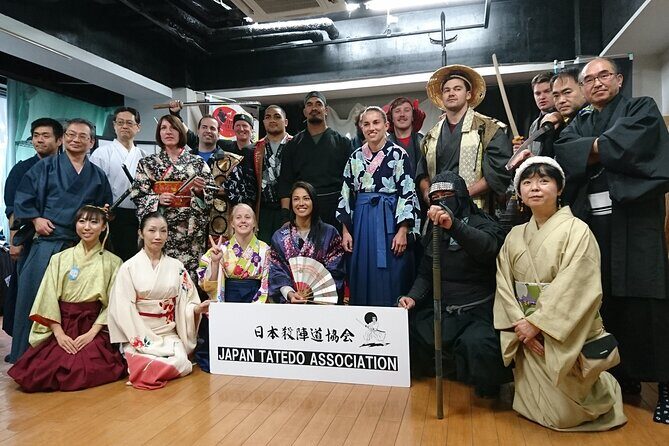
Then the class shifts from samurai sword focus to ninja energy. You’ll finish with two standout parts:
- A ninja scene where everyone becomes part of the show together
- Shuriken throwing experience using a rubber ninja star
The ninja scene is a big part of the fun. You’re not just watching a script—you’re stepping into the performance side of it. The experience is described as having you act as a leading actor in a shared scene. That makes it memorable in a way a typical class might not.
Then comes shuriken throwing. Using rubber shuriken keeps the experience approachable and safer than metal weapon training. You still learn something valuable: judging distance, controlling your throw, and understanding how your stance affects accuracy. Even if you miss a few at first, the feedback loop is quick.
Practical tip: keep your throw consistent. Small changes in stance usually cause bigger changes in where the rubber star goes.
Price and Value in Osaka: What $162.59 Buys You (and What It Doesn’t)
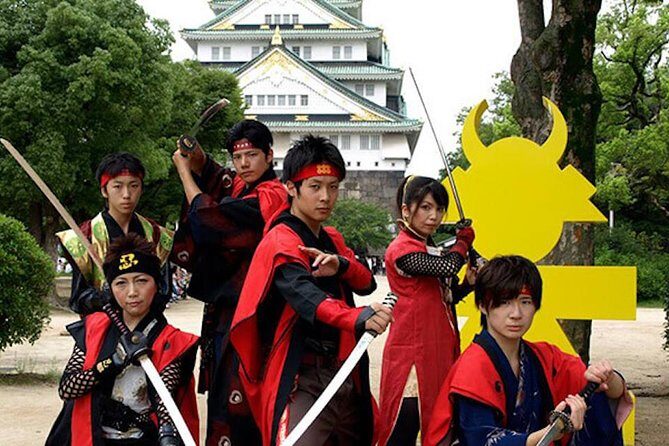
At $162.59 per person, this isn’t a bargain-basement activity. It’s priced like an experience with multiple layers: instruction, performance, costumes, and practice props.
Here’s what you’re actually paying for:
- A local instructor
- Rental costume included
- Hands-on time with katana basics plus 8 katas
- The tate technique practice
- Rubber shuriken throwing
- Performance inspiration plus a group scene element
- Photo time and a video moment
- A small group size (up to 10)
What you’re not paying for: transportation to and from the activity and no hotel pickup/drop-off is included. So factor in how you’ll get there from wherever you’re staying.
Also note the pacing. The description says about 1 hour overall, but also describes a lesson that covers a longer program feel. In practice, you’re cycling between performance, costume, instruction, practice, pictures, and the scene. That mix is exactly why the experience feels packed for the time slot.
If you like to plan ahead, booking in advance is smart too. The class is commonly reserved well ahead (on average, 112 days), which suggests demand for this kind of hands-on, wardrobe-friendly Osaka activity.






Who This Samurai and Ninja Katana Class Is For (and Who Might Want Something Else)
This is for you if you want:
- A fun, structured way to try katana and tate movements without prior experience
- A strong “photo moment” experience with costume options and group action
- A guided class that includes acting and showmanship, not only technical drills
It may not be the best fit if your goal is serious, technical martial arts training. One caution that comes up is that the class is run by stage actors with a background in kendo, and the overall vibe is performance-led rather than a strict dojo curriculum focused on sparring or deep technique corrections.
In short: if you want a beginner-friendly warrior experience that teaches fundamentals and delivers a memorable show-and-learn structure, you’ll likely have a great time. If you want a pure martial arts gym session, keep looking.
Tips for a Smoother Experience (So You Get More Out of the Hour)
A few things will make your time easier:
- Arrive a little early so you can handle any costume prep without rushing.
- Don’t fight the costume. If you choose armor-style gear, your movement will feel different—use it as a cue to keep posture steady.
- For the sword portion, focus on stance and grip first. Your cuts will improve once your base is right.
- For shuriken throwing, commit to a consistent throw motion instead of overcorrecting mid-try.
If you’re coming with a group, this is also a nice “bonding” style activity. You’ll practice together, then end up in the shared scene.
Should You Book It?
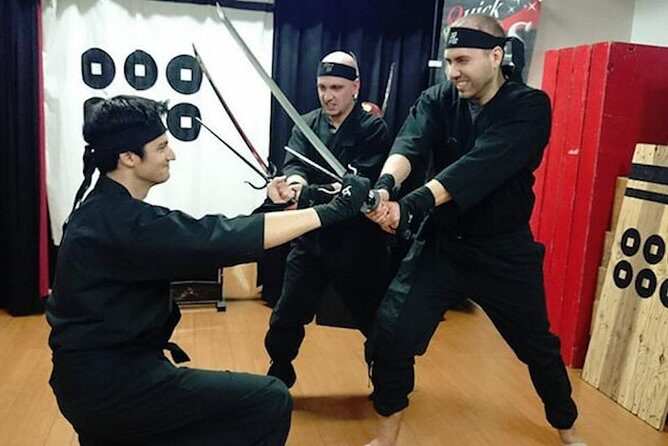
I’d book this if you want an Osaka activity that mixes real guided sword basics, a focused tate technique lesson, and a performance-style finish where you get to act and throw rubber shuriken. The inclusion of costume rental, small group size, and the video/picture moments makes the price feel more reasonable than a “watch-and-photos” experience.
I’d skip it if you’re specifically chasing serious martial arts training depth. This class is built to entertain while teaching the foundations, and that’s the deal.
FAQ
What is the main focus of this Samurai and Ninja class in Osaka?
You’ll learn katana sword fundamentals, practice tate sword technique for posture and balance, and finish with a ninja scene and rubber shuriken throwing.
How long does the experience last?
The experience is listed at about 1 hour.
What should I expect to wear during the class?
You’ll dress up in one of the included costume options, such as kimono hakama, ninja costume, or samurai armor.
Is katana instruction included?
Yes. You’ll be taught how to hold the katana and practice 8 katas, with video included.
Will there be a performance during the lesson?
Yes. You’ll watch a fighting performance featuring three Samurai and a Ninja before you train.
Is shuriken throwing part of the experience?
Yes. You’ll try rubber shuriken throwing.
What’s included in the price?
Included are rental costume and a local instructor.
Where do I meet and is it easy to get there?
You meet at the Imai Building, 1-chōme-1-27 Kitahorie, Nishi Ward, Osaka. The experience is described as near public transportation, and it ends back at the meeting point.