REVIEW · OSAKA
Learning Shodo with a kimono and Trying Samurai Calligraphy
Book on GetYourGuide →Operated by 株式会社武士の誉れ · Bookable on GetYourGuide
One outfit, one brush, one name—done in a very Japanese way. I love how this turns shodo into something hands-on (not museum talk), and you even get a calligraphy master translating your name into kanji for you to practice. Another big plus is the family-friendly feel: it’s built so you can do it with your child and make real memories. The only real drawback to plan for is that the space can feel tight and noisy, with trains passing nearby, so you’ll want to manage your expectations about the venue.
If you’re in Honshu and want an experience that looks great in photos but still teaches actual technique, this is a strong pick. It’s short, structured, and designed for small groups—so you’re not waiting around for your turn with the brush.
In This Review
- Quick reasons to book
- Samurai Honor, Osaka: finding the right spot fast
- Kimono and costume setup: what you’ll actually do when you arrive
- 60 minutes of shodo: from brush grip to your kanji strokes
- Step 1: mindset and tools
- Step 2: brush technique
- Step 3: your kanji stroke order
- The master’s demo includes meaning
- The shodo surprise: your name in kanji and why it sticks
- Finishing your first work: drafts, your memento, and options
- Trying Samurai Calligraphy: one character about what you leave behind
- The main idea: compose with intention
- A signed final character
- Oversized brush on a 150cm x 150cm sheet: the wow factor
- Photo shoot and the Yamato Nadeshiko vs samurai vibe
- The souvenir bag: a small detail that feels personal
- Price and value: $42 for a full culture-plus-craft session
- Language, small-group size, and how to get more out of it
- Timing and logistics that actually matter in Osaka
- Who this suits best (and who should skip it)
- Quick FAQ
- FAQ
- How long is the experience?
- What is the meeting point?
- What should I bring?
- Is transportation included?
- Does it include kimono and costumes?
- Are non-English languages available?
- Is it wheelchair accessible?
- Should you book this shodo + samurai calligraphy session?
Quick reasons to book
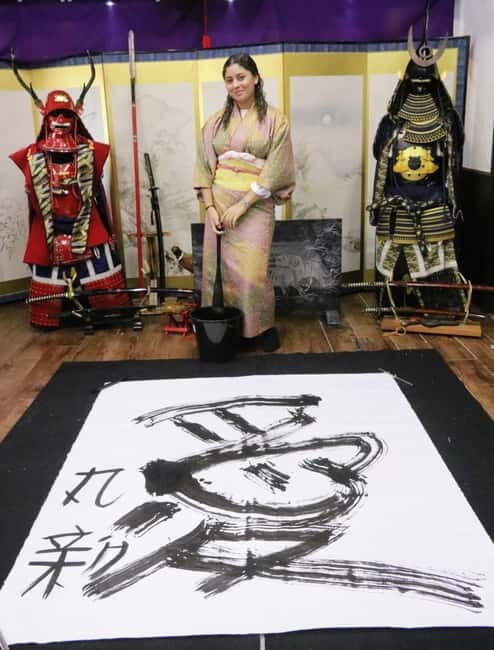
- Your name in kanji: a master writes your chosen characters and helps you follow the correct stroke order
- Kimono + a proper photo moment: you’ll be styled in traditional clothing and photographed with your calligraphy
- Two styles in one visit: standard shodo practice plus a samurai-style “one character” challenge
- Oversized brush drama: the samurai segment uses a huge brush on a 150cm x 150cm sheet
- A custom souvenir bag: the teacher writes the character you attempted, and it’s not sold anywhere else
- Small group, hands-on pace: limited to 10 participants, with instructor guidance throughout
Samurai Honor, Osaka: finding the right spot fast
This experience takes place at Bushi no Homare (Samurai Honor) in Osaka (Honshu), run by 株式会社武士の誉れ. You’ll meet at a very specific landmark: a wooden sign that reads Honor of the Samurai. It’s placed in front of the store as a rack with activity pamphlets, and you may also spot kimonos and hakama hanging to dry—use that as your visual anchor.
One important detail: the address on Apple Maps is incorrect. Use the linked Google Maps route instead. If you arrive late, you’ll lose time because you’re expected to change and get instructions before the lesson starts.
Also note the general rule: arrive 30 minutes early. That buffer matters because kimono changing takes longer than people think, and the instructor needs everyone set up before you start brushing ink.
You can also read our reviews of more tours and experiences in Osaka.



Kimono and costume setup: what you’ll actually do when you arrive
You’re provided with kimono & samurai costumes, plus a certified professional instructor on hand. The basic idea is simple: you get dressed first, then you learn the tools and technique, then you create your pieces, and finally you get a photo.
Here’s the practical thing to know: the experience includes kimono/costume, but some styling may cost extra. For example:
- A Japanese-style hair set + hairpin is listed as a paid option.
- Some women’s attire details (like obi sash, tabi socks, zori sandals, basket bag, and an outdoor photo shoot) are listed as not included unless you choose the right optional packages.
So if you want a full, polished look for photos, check what you’re selecting before you go. If you’re fine with the core kimono/costume look, you’ll likely be happy without paying for extra styling.
What to bring is almost comically easy: a T-shirt. That’s your “just in case” layer for comfort during the change and seating process.
60 minutes of shodo: from brush grip to your kanji strokes
The shodo portion is the heart of the class. It’s built in clear steps, and each one helps you avoid the most common beginner mistake: copying the shape without understanding the motion.
Step 1: mindset and tools
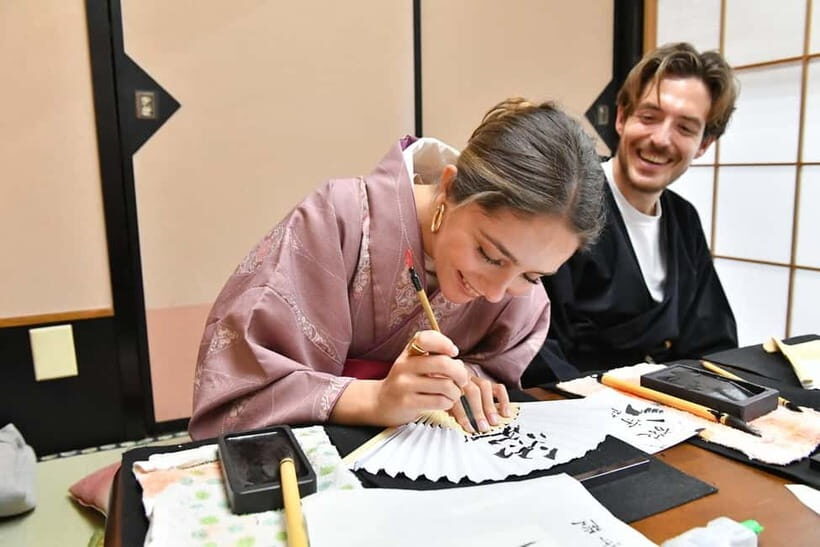
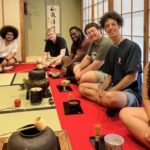
Before you pick up the brush, you change into traditional clothing such as a kimono. Then you move into the “how to hold the brush” phase. You’ll also learn how to use the tools properly—because brush calligraphy isn’t pen-and-paper writing. It’s pressure, angle, and movement.
Step 2: brush technique
This is where the instructor teaches how the brush travels through the air and onto the paper. You’ll practice the motion, not just the end result. If you try to force nice shapes without controlling the movement, your strokes can look stiff or inconsistent.




Step 3: your kanji stroke order
Next comes the most important learning point: stroke order. You practiced which kanji you selected earlier, and the master demonstrates how to write those kanji using a brush. Then you practice again while following the stroke order and technique.
Stroke order matters because it affects:
- how the ink flow behaves
- how each stroke connects
- whether the character looks balanced
The master’s demo includes meaning
A neat detail: the teacher writes the foreign names of participants in kanji characters chosen for each person. Each kanji character has meaning, so you learn about what the characters represent—not just how to copy them.
If you like culture-without-the-cringe, this part is one of the best uses of time. You’re not only making art; you’re connecting the art to language and identity.
The shodo surprise: your name in kanji and why it sticks
The “surprise” moment is exactly what makes this experience memorable. You don’t just pick a random character and hope it looks good. A master calligrapher writes your name in kanji characters for your chosen name, and you learn the meaning behind those characters.
Why that’s valuable: it turns your practice into something personal. Instead of “here’s a character,” it becomes “this is how my name can be represented in Japanese writing.” That helps beginners stay engaged—especially kids.
And the tone of instruction matters. From the way the team is described as patient and helpful, you can feel confident going in even if you’re nervous about getting it wrong. With calligraphy, everyone starts messy. The class structure is designed to get you to a usable first draft, then a final piece.
Finishing your first work: drafts, your memento, and options
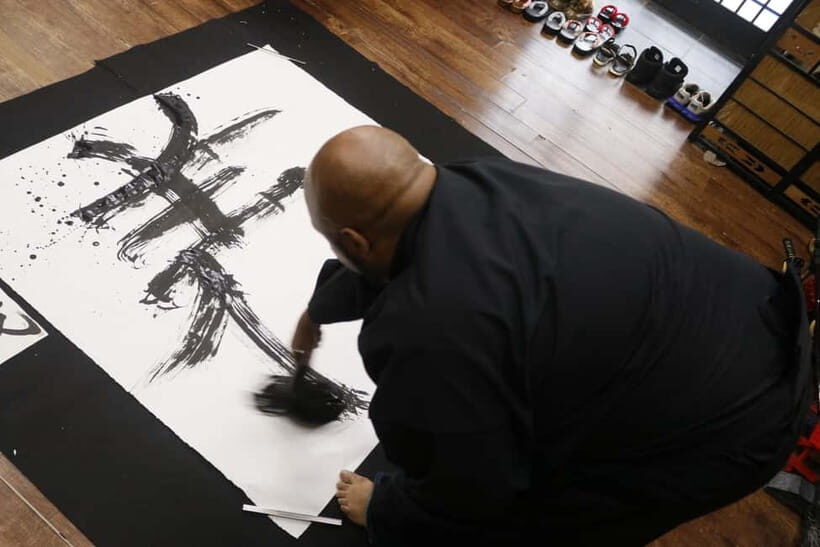
After practicing strokes and technique, you move into the final draft stage. You’ll write a final draft keeping what you learned in mind.
At that point, you can take your work home as a memento. Calligraphy paper is part of the setup, and there are optional elements mentioned such as a fan or hanging scroll (kakejiku is listed as a paid option). You also have an add-on path where kakejiku or Wasou bijin packages can include those options.
If you’re thinking about what to do with your final piece:
- Taking it home is easy and intentional here.
- If you want it framed or displayed, ask at the start about what options your time slot includes.
If you care about photos, this is also the stage where your calligraphy begins to look “real” quickly, since you’re making something you can actually point to.
Trying Samurai Calligraphy: one character about what you leave behind
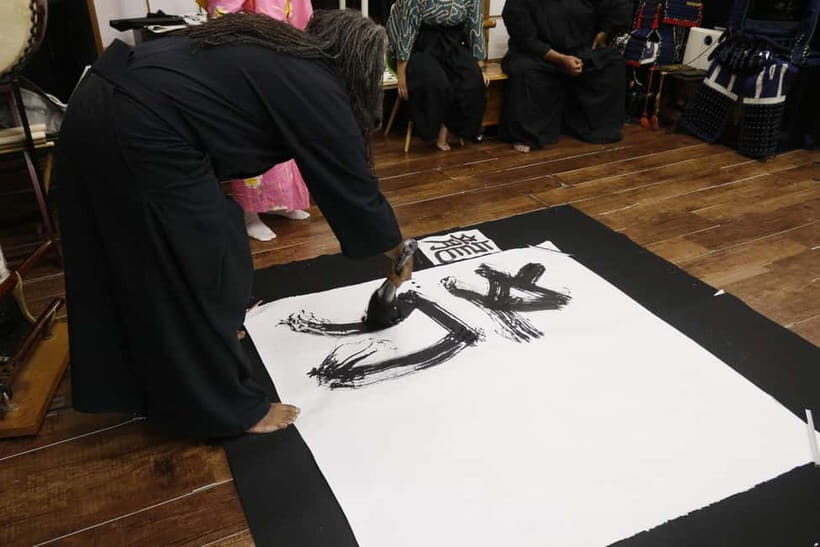
Then comes the second activity: Trying Samurai Calligraphy, laid out as a 30-minute segment.
The concept is dramatic on purpose. You reflect on your life so far and imagine the story of what you’d like to leave behind—who you were, what feelings you want to carry forward, and how you want your “last character” to express identity.
The main idea: compose with intention
You’re asked to think about the character composition (design) of your last character in this world. That means you’re not just copying a stroke pattern like a worksheet. You’re choosing how the final piece will communicate meaning.
The class also includes a teaching idea about beauty and emptiness:
- The Japanese sense of beauty called blank spaces
- The idea of beauty in the margins, where space around the character is part of the artwork
This is one of those “you’ll get it when you’re doing it” concepts. When you’re actively spacing your brushwork, the margins become part of the design, not wasted paper.
A signed final character
The oversized-brush artist signs the work, clearly indicating who wrote the last character. They also identify the owner. That gives the piece a stronger personal link—like a “this was made for you” marker, not a random class demonstration.
Oversized brush on a 150cm x 150cm sheet: the wow factor

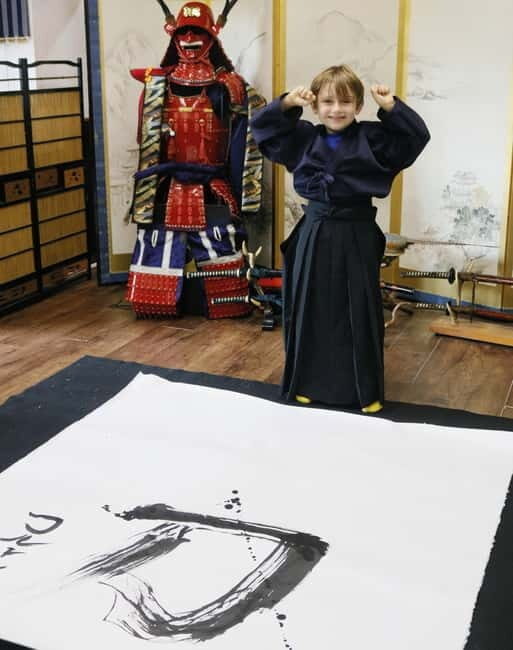
The samurai segment includes a big visual and physical shift: the brush is more than five times larger than a usual brush. You work with a huge 150cm x 150cm sheet of paper.
The artist uses the whole body to control the brush. The goal is to create a character that feels:
- powerful
- fragile
- beautiful all at once
This is where the experience earns its energy. Even if you’re not an art person, it’s hard not to react when someone sweeps an enormous brush and still makes controlled strokes.
If you’re traveling with kids, this part can be a standout because it looks cinematic—but it’s still grounded in technique and design rules like spacing and intention.
Photo shoot and the Yamato Nadeshiko vs samurai vibe
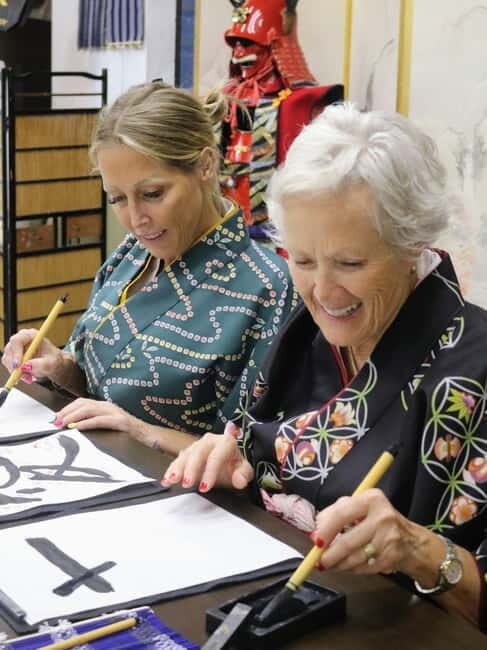
After your pieces are created, you’ll do a photo shoot capturing your kimono outfit and your artwork. You’ll be photographed dressed as a Yamato Nadeshiko (traditional ideal of a poised woman) or as a brave samurai.
This matters because the photos aren’t just “stand there and smile.” Your finished calligraphy becomes part of the visual story. You’ll also receive the photography data by email to your designated address.
If you’re the type who worries about whether the photos will look staged, this setup is at least trying to connect the kimono styling to what you actually made.
The souvenir bag: a small detail that feels personal
At the end, you receive a Samurai Honor original bag as a gift. The calligraphy master carefully writes the kanji character you attempted today on the bag’s surface.
It’s also noted that this bag isn’t available for sale anywhere else, which makes it feel more like a real keepsake than a generic shop item. And you’ll take your artwork home in this bag, which keeps everything together.
Price and value: $42 for a full culture-plus-craft session
At $42 per person for a roughly 1-hour experience, the value comes from the combination of:
- kimono/costume included
- instructor-led practice (not just watching)
- calligraphy instruction tied to your name’s kanji
- a second samurai-style activity with a dramatic brush method
- photos delivered digitally
- a souvenir bag with your character
One thing to watch: the time details in the flow are listed as 60 minutes of shodo plus 30 minutes of samurai calligraphy. At the same time, the overall duration is listed as 1 hour. So before you lock your schedule, confirm which exact sequence fits your booking time. This isn’t a deal-breaker, but it’s the one area where you should sanity-check your timing expectations.
Even with that timing note, if you’re comparing this to doing kimono rental only or doing a short calligraphy demo only, you’re paying for hands-on teaching and take-home results.
Language, small-group size, and how to get more out of it
The interpreter’s default language is English, and other languages are listed: Japanese, Italian, French, Chinese, Thai, and Spanish. Staff availability for non-default languages can be limited, so if you need a specific language, ask before booking.
The class is capped at 10 participants, which is a practical advantage. You’re more likely to get real feedback on brush grip, pressure, and stroke execution. Calligraphy is one of those activities where tiny corrections help a lot.
Also, a simple strategy for better results: choose a name/kanji that you’re genuinely curious about. The meaning discussion is part of the lesson, and your motivation will show in your brush control.
Timing and logistics that actually matter in Osaka
Plan to arrive 30 minutes early for changing and instructions. The experience moves in phases, so arriving late means you either rush the early steps or miss parts of the explanation.
What about transportation? Transfers are not included, and there’s no guarantee your hotel is close. The location is in Osaka’s Joto-ku area, so build in buffer time. One caution from the experience environment: the venue can be noisy because trains pass nearby. If you’re sensitive to sound or want a calm atmosphere, consider that when you plan.
Who this suits best (and who should skip it)
This is a strong fit if you want:
- a culture activity with a clear craft skill outcome
- something that works for both adults and kids
- photos that reflect what you actually did
Kids can participate—calligraphy is described as something many start around ages 6 to 8, and the class includes the chance to share the experience with your child. But it’s also not suitable for children under 5.
Other not-suitable notes to respect:
- People with altitude sickness
- Babies under 1 year
- People over 95 years
Good to know: it’s wheelchair accessible, and pets, baby strollers, and baby carriages are not allowed.
Quick FAQ
FAQ
How long is the experience?
The experience is listed as 1 hour. The activities are described as 60 minutes of Shodo plus 30 minutes of Samurai Calligraphy, so it’s smart to confirm the exact sequence and timing for your specific booking.
What is the meeting point?
Meet at a wooden sign that reads Honor of the Samurai. It’s a rack with Samurai Honor activity pamphlets in front of the store, and kimonos/hakama may be hanging nearby.
What should I bring?
Bring a T-shirt.
Is transportation included?
No. Station and hotel transfers, transportation, and other personal expenses are not included.
Does it include kimono and costumes?
Yes. Kimono & Samurai costumes are included.
Are non-English languages available?
English is the default. Other languages (Japanese, Italian, French, Chinese, Thai, Spanish) may be available, but you should inquire in advance because staff availability for non-default languages can be limited.
Is it wheelchair accessible?
Yes, it is listed as wheelchair accessible.
Should you book this shodo + samurai calligraphy session?
Yes, if you want a short, structured, hands-on craft experience that still feels like a real cultural moment. The standouts are the name-in-kanji lesson, the kimono + photo pairing, and the fact that you leave with a physical memento (your work plus the character-written souvenir bag).
I’d be cautious if you’re expecting a quiet, polished studio feel. The venue situation can be less than ideal in terms of comfort and nearby noise, and the timing details suggest you should confirm the exact flow for your slot.
If you’re traveling with kids or you want something more meaningful than a one-off demo, this is one of the better ways to get both instruction and keepsakes in a compact time window.