REVIEW · YOKOHAMA
midnight Wangan attack & JDM car meet
Book on GetYourGuide →Operated by Rocket Crew · Bookable on GetYourGuide
Daikoku at midnight is not just cars, it’s a full night scene. This experience strings together the best-known Tokyo-area tuning stops, so you can go straight to the action without playing navigation roulette. I like that the plan is paced for people who want to watch, photograph, and learn, not just sit in traffic. You also get real JDM culture context from a live guide in English or French. One catch: the vehicle uses bucket-style seating, so the tour isn’t recommended if you’re over 100 kg or over 180 cm.
What I like most is the mix of famous parking-area viewing plus short, self-guided windows where you can move at your own speed. I also love that the group stays tiny, capped at 3 people, which makes questions easier and the vibe calmer. The possible drawback is that the itinerary is set, so if you’re hoping to change stops on the fly, you won’t have much flexibility once the night starts.
A quick reality check: it’s a car-spotting tour with a little Tokyo sightseeing stitched in, not a long, all-night hangout. If you want max time just roaming one parking area, adjust your expectations—this is built for one focused night circuit.
In This Review
- Key highlights you’ll feel right away
- The Daikoku PA draw: why this car-meet site matters
- The route that keeps you moving: from Tokyo Tower to Tatsumi 1st PA
- Umihotaru: the mid-night stop that sets the tone
- Daikoku Car Meet: what to focus on once you’re there
- The guide experience: professional driving and clear tuning explanations
- Small group comfort: up close with only 3 people
- Price and value: what $193 per person buys you
- Practical tips that make the night smoother
- Who should book this midnight JDM meet circuit
- Should you book: my honest take
- FAQ
- How long is the midnight Wangan attack & JDM car meet experience?
- What does the $193 per person include?
- How big is the group?
- Is there a chance to take photos during the tour?
- What language is the live guide available in?
- Are meals or drinks included in the price?
- Can I smoke during the tour?
- Is the route flexible if I want to change stops?
- Is it suitable for kids or teenagers?
Key highlights you’ll feel right away
- Daikoku PA, the main magnet: you’ll spend real time at Japan’s most famous car-meet viewing spot.
- A shortcut to the nightlife: you’re taken in a vehicle to the meets, since public transport access can be tricky.
- Multiple iconic stops: Tokyo Tower photo stop, then Tatsumi 1st PA, Umihotaru, and finally Daikoku.
- Short self-guided bursts: you can photograph and walk around without the guide steering every step.
- Small group energy: limited to 3 participants, so it feels personal, not crowded.
- A guide with tuning context: you get explanations of Japan’s tuning scene and what you’re looking at.
The Daikoku PA draw: why this car-meet site matters
Daikoku Parking Area is the reason a lot of people plan Tokyo around one thing: seeing heavily modified cars in real life. Not in a museum. Not in a video clip. Up close, under bright lights, with owners who are proud of the details.
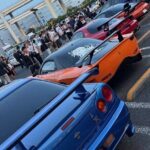
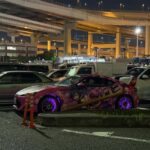
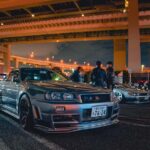
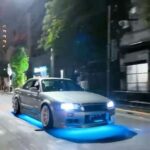
This tour leans hard into that “night car culture” feel. You’re likely to see a wide spread: classic JDM legends like Nissan Skyline GT-Rs and Toyota Supras, rotary-powered Mazda builds, and custom Honda projects, plus the occasional European supercar if the lineup is strong that night. The point isn’t to catch one specific model. It’s to witness how Japanese tuning culture ranges from street-style styling to serious performance-focused builds.
You’ll also get the practical benefit of going at the right time frame. Car meets are visual events, and lighting matters. Daikoku’s neon-style lighting makes wraps, body kits, and paint finishes look sharper. Even if you’re not a hardcore gearhead, that visual punch is what makes the whole night click fast.
You can also read our reviews of more tours and experiences in Yokohama.
The route that keeps you moving: from Tokyo Tower to Tatsumi 1st PA
The night starts from Arrow Parking Udagawachō (take the elevator up to the 8th floor). Then you get a quick Tokyo Tower photo stop. It’s short, but it’s a smart opener: it gives you a Tokyo landmark moment before the car-world chaos starts.
From there, the tour heads to Tatsumi 1st PA for a self-guided walkthrough. This is one of those stops where you can get your bearings without feeling rushed. Think of it as your warm-up phase: look for how people park, how cars are displayed, and what kinds of builds are common in that part of the circuit. It also helps you learn what to look for when you see the bigger names later.
One underrated value here is pacing. The night circuit would feel overwhelming if you were thrown into only one meet location for 90+ minutes. Instead, you get multiple “windows” to scan the scene, regroup, and decide what you want photos of before moving on.
Umihotaru: the mid-night stop that sets the tone
After Tatsumi 1st PA, you’ll spend time at Umihotaru. You get another self-guided segment here (about 35 minutes). This stop matters because it builds atmosphere.
Umihotaru is where you can start noticing patterns: how owners present their cars, how groups cluster, and what styles show up most consistently that night. If you’re the type who enjoys photography, this is a great moment to experiment—wide shots, side profiles, close-ups on badges, and reflections on polished bodywork.
It also helps to arrive with a small plan. Instead of trying to photograph everything, pick 2-3 themes for the night:
- “JDM classics”
- “Aggressive aero and body kits”
- “Exotics and contrast cars”
That way, every stop feels productive, and you don’t end the night with a camera full of nearly identical shots.
Daikoku Car Meet: what to focus on once you’re there
Daikoku is the big stage, and you’ll have enough time to slow down. You’re in the right place to see rare builds and the wide crossover between tuning culture and high-end exotic cars.
Here’s what I’d focus on when you arrive:
- The front-to-back stance: look at wheel fitment, camber look, and how wide the car sits.
- Cooling and power cues: front grills, intercooler setups, exhaust details.
- Bodywork quality: mismatched panels and cheap wraps are obvious here. Good work is obvious too.
- Livery and interior details: the best cars often show personality beyond just the engine bay.
Photography is a major part of the appeal, and Daikoku is naturally suited for it. You’ll have neon-style lighting and bright reflections that make even familiar models look dramatic. If you’re not sure what angles to shoot, start with side profiles facing the light, then switch to close-ups of the parts that look engineered, not just styled.
Also, there’s a social rhythm to these meets. Part of the fun is seeing owners interact, talking with them when the moment works, and observing the respect car culture people show each other. The tour’s guide time helps you understand what’s going on so you don’t stand there feeling lost.
A real-world detail that matches the vibe: one verified booking described the night as fun even on a Tuesday, with plenty of cars to look at. That’s important. You’re not relying only on weekends to get a good lineup.
The guide experience: professional driving and clear tuning explanations
The tour includes a live guide (English and French). Their job isn’t just to point at cars. It’s to help you read the scene.
That means you get explanations of Japan’s tuning history and what you’re seeing—why certain cars show up, what builds are meant to signal, and how the culture values craftsmanship. This is especially helpful if you don’t know every model code. You’ll still be able to understand the differences between a street-focused build and something more performance-obsessed.
And yes, the driving style matters. One verified review noted the guide’s driving was professional, plus good music taste during the ride. That combo sounds small, but it affects the whole mood. On a short, timed tour like this, you want the ride to feel smooth so you can save your energy for the meet itself.

Small group comfort: up close with only 3 people
This is capped at 3 participants, which changes the experience in a practical way. Questions don’t get rushed. You can hear the guide. You can move as a small unit rather than as a swarm.
It also helps with your pace. You won’t be constantly waiting on a large group to get photos, and you won’t feel like your time at Daikoku is squeezed by strangers sprinting to the next stop.
There is one important comfort consideration. The tour notes it’s not recommended for people over 100 kg, specifically because you may not fit in the bucket seat. Also, if you’re over 180 cm, the seats may be uncomfortable. If you’re close to those limits, take it seriously. This is one of those cases where body fit affects enjoyment.
Price and value: what $193 per person buys you
At $193 per person, this isn’t the cheapest car-themed activity in Tokyo. But it’s also not a “just a ticket” situation. You’re paying for:
- a live guide with tuning context,
- guided access to iconic car-culture spots,
- transportation as part of the package so you don’t have to solve car-meet logistics,
- time built around multiple stops rather than a single location.
What makes it feel like decent value is the transport piece. Daikoku PA isn’t an easy destination to figure out quickly using only public transit, especially at night. If you’ve ever tried to plan last-minute access to a specific parking-area meet, you know the effort can eat hours. Here, you spend your energy on the cars instead.
You’re also buying concentrated time. With only about 150 minutes total, you get a tight night circuit. That’s great if you’re on a short Tokyo schedule and don’t want to lose half a day to logistics and wandering.
Is it worth it if you’re not into cars? Probably no. But if you like JDM, tuning, or you want to see a side of Tokyo that feels very different from temples and shopping streets, it’s a smart use of money.
Practical tips that make the night smoother
Bring a camera plan. Daikoku lighting is good for photos, but you’ll still want to manage battery and storage. Keep your phone on low-energy mode if needed, and don’t be surprised if you want extra shots once you see the car lineup in person.
Wear something comfortable for standing and walking. You’ll have self-guided periods, and that means you’ll move. Ten minutes can feel like a lot when you’re scanning cars up close.
Keep expectations realistic about time. The tour is about 150 minutes total, with short stop windows. You’ll see a lot, but you won’t have unlimited time to follow every car.
Respect the car-meet etiquette. No smoking in the vehicle is stated for this tour. Beyond that, it’s a car culture setting, so keep your behavior considerate and avoid blocking drive lanes or walkways.
Know your size limits before you book. Over 100 kg or over 180 cm may not fit comfortably in the bucket seats. This is one of those “read it, then follow it” situations.
Who should book this midnight JDM meet circuit
This experience is a great fit if you:
- love JDM cars, tuning builds, or exhaust-and-neon night vibes,
- want guided context so you’re not just watching things you don’t understand,
- prefer small-group tours rather than big buses,
- want an efficient night plan for a short Tokyo stay.
It’s also a good choice if you’re curious but not obsessive. You don’t need to know every model. The guide’s tuning explanations help you connect the dots.
If you hate cramped seating or your body fit is close to the stated limits, skip this one and look for an alternative format with more standard seating. Comfort is part of the value here.
Should you book: my honest take
Yes, I’d book it if your goal is a fast, focused night tour to one of the best-known car-meet hotspots in Tokyo. The combination of Daikoku time, a small group, and transport help makes it feel like a “go now” experience rather than a “maybe later” plan.
I’d think twice if you need lots of flexibility to change stops mid-night, or if seating comfort is a big factor for you due to the weight and height notes. If those aren’t concerns, you’ll likely enjoy the scene for what it is: a nighttime window into Japanese tuning culture that’s hard to recreate on your own.
FAQ
How long is the midnight Wangan attack & JDM car meet experience?
The total duration is 150 minutes.
What does the $193 per person include?
It includes a guided tour of iconic Japanese car culture spots, guidance on the tuning scene, and transportation as part of the experience along the set route.
How big is the group?
The group is limited to 3 participants.
Is there a chance to take photos during the tour?
Yes. There is a Tokyo Tower photo stop, and you’ll also have self-guided time at the car-meet locations where photography is a big part of the experience.
What language is the live guide available in?
The live tour guide is available in English and French.
Are meals or drinks included in the price?
No. Food and drinks are not included.
Can I smoke during the tour?
Smoking is not allowed in the vehicle.
Is the route flexible if I want to change stops?
The itinerary is fixed, and changes to the route or stops cannot be accommodated during the tour.
Is it suitable for kids or teenagers?
Participants under 18 must be accompanied by a responsible adult. Unaccompanied minors are not allowed.