REVIEW · YOKOHAMA
Half-day Cooking Class in Yokohama Local Shopping District
Book on Viator →Operated by Osusowake-Kitchen · Bookable on Viator
You shop first, then you cook. In Yokohama, this half-day experience pairs a local shopping district crawl with a hands-on Japanese cooking class, so you understand the food before you touch it. What I like most is the market-style ingredient hunt (fishmonger, veggie store, and a butcher shop), and then getting to make what you bought—especially sushi rolls and Japanese fried chicken.
One thing to consider: the instructor’s English isn’t perfect, though he will guide you in English and do his best to accommodate requests. In my experience, Ichiho also kept the tone patient and practical, with plenty of room to ask questions as you cook.
In This Review
- Key highlights you’ll actually care about
- Why a Yokohama market run before you cook matters
- Covered street shopping: fish, vegetables, and cuts you won’t see in supermarkets
- What can feel tricky here
- From shopping bags to a bright kitchen studio
- Hands-on menu: sushi rolls, karaage, and teriyaki-style comfort
- Sushi rolls: your filling starts with what you bought
- Karaage: crisp, familiar, and very Japan
- Teriyaki chicken: a gentle bonus
- Vegetarian menu available
- Small-group cooking: how Ichiho keeps it understandable
- What I recommend you do during class
- Price and timing: does $162.58 per person make sense?
- Logistics that affect your day (in a good way)
- Who this Yokohama cooking class is best for
- Should you book this Yokohama cooking class?
- FAQ
- What is the duration of the Half-day Cooking Class in Yokohama?
- Where does the class start and end?
- What kinds of dishes will I learn to cook?
- Is the cooking class suitable for beginners?
- Is this a private tour?
- Will there be help if I don’t speak Japanese?
- Can I get a vegetarian menu?
- Can I cancel for a full refund?
- Is there a minimum number of travelers?
Key highlights you’ll actually care about
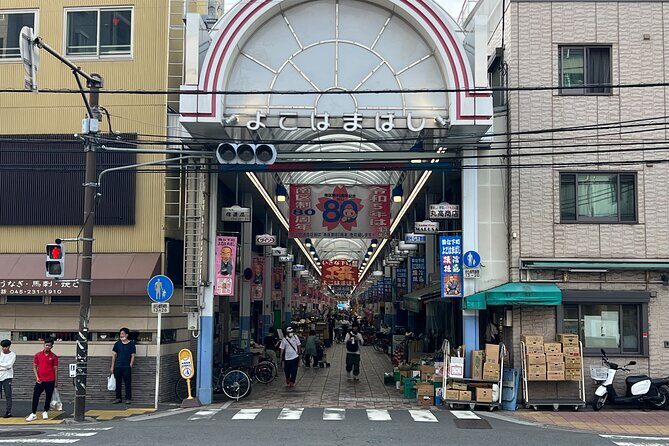
- You start in a real Yokohama shopping district with a long covered street and many specialty shops
- Ingredient shopping is part of the lesson, not just a quick stop for photos
- You’ll cook what you bought, using fresh items from fish/veg/meat sellers
- Hands-on menu includes sushi rolls and karaage, plus options like teriyaki chicken depending on the session
- Small group attention makes it easier to ask questions at the stove
- Vegetarian menu available, so you’re not forced into a compromise meal
Why a Yokohama market run before you cook matters
A lot of cooking classes teach recipes. This one teaches the reason behind the recipe.
You begin in Yokohama’s local shopping area, where everyday Japanese food choices make sense because you see the ingredients first. That’s a big deal if you want to recreate dishes at home. When you pick out the fish, vegetables, and meat sources (not just substitute whatever’s easiest), your final results usually improve.
This is also a more natural way to experience Japan than walking through sterile tourist strips. You’ll hear shop talk, see how goods are displayed, and learn how people actually buy food.
You can also read our reviews of more tours and experiences in Yokohama.



Covered street shopping: fish, vegetables, and cuts you won’t see in supermarkets
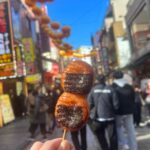
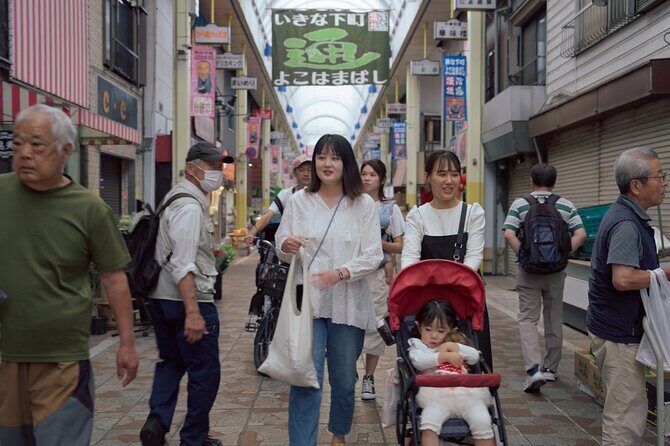
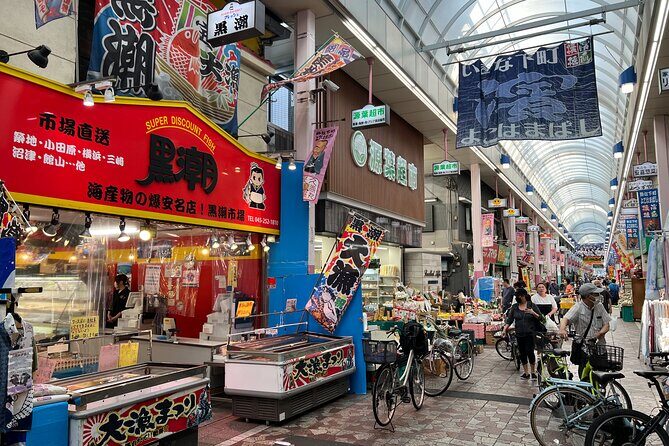
The shopping portion centers on a covered street area in Yokohama’s Naka Ward with about 130 specialty stores along more than 300 meters. Even if you’ve been to markets before, this setup has a more local daily-life feel—shops that look like they’ve been serving the neighborhood forever.
You’ll visit different types of stores with different specialties. A fishmonger sells fresh fish from across Japan, which is exactly the kind of sourcing detail that helps you understand why Japanese cooking tastes the way it does. A grocery store focuses on sweet vegetables, giving you a sense for how vegetables play a starring role—not just side support.
Then there’s a butcher shop with cuts that you typically won’t find at supermarkets. If you’re the type who enjoys cooking but also likes to geek out on ingredients, you’ll probably enjoy this stop the most.
What can feel tricky here
Not every shopper loves “looking and comparing” in a guided format. You should enjoy browsing and asking questions, because the shopping is part of the value, not just a prelude.
Also, since this is a private activity and class sizes are kept small, you’ll get more attention than a mass group tour—but that can mean the pace is more about learning than rushing.
From shopping bags to a bright kitchen studio
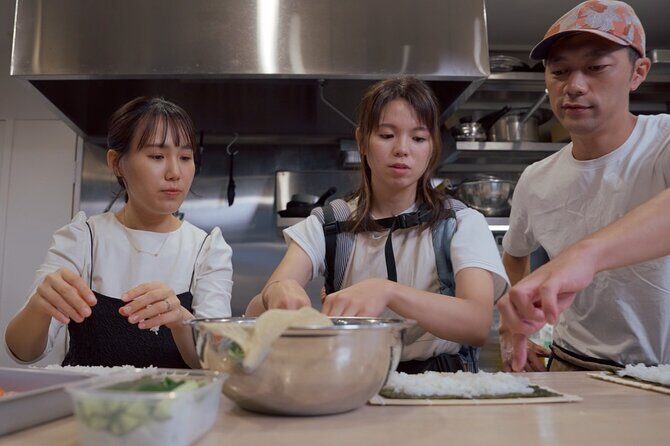
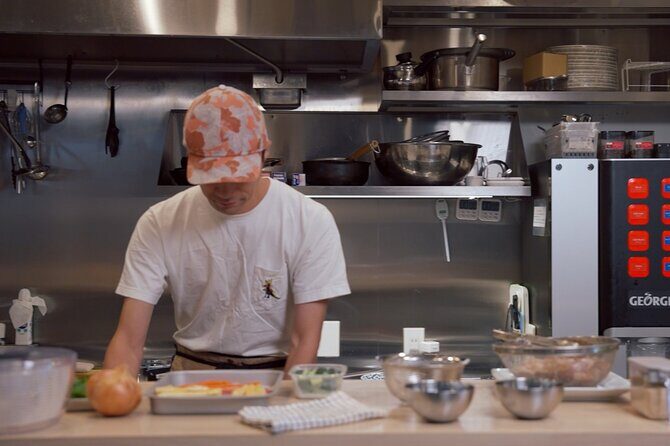
After you shop, you move to the cooking location: a clean, bright kitchen setup with authentic equipment. The goal is simple—you cook in a real working space, not a staged demo room.
In the session I experienced, the class felt like it flowed into a more private setting after the market part. That matters because cooking is easier when you aren’t crowded, and you can hear instructions and questions without shouting over the group.
You’ll also have a practical bridge between the two halves of the experience. Instead of “Here are ingredients we preselected,” it’s more like “Here’s why these ingredients are what we need for the dish.”
Hands-on menu: sushi rolls, karaage, and teriyaki-style comfort
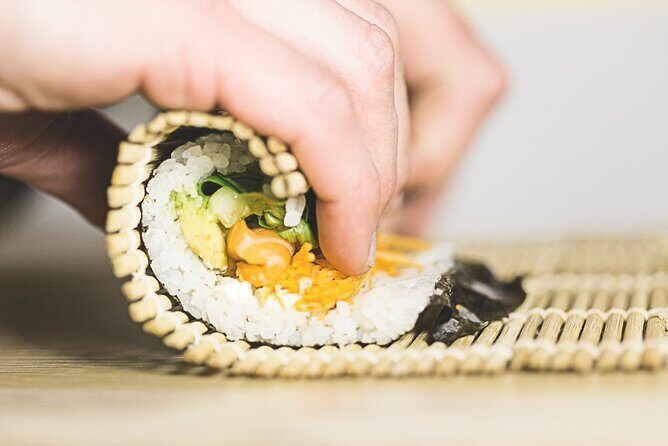
The cooking class focuses on popular Japanese dishes you can realistically recreate later.
You can also read our reviews of more cooking classes in Yokohama



Sushi rolls: your filling starts with what you bought
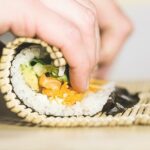
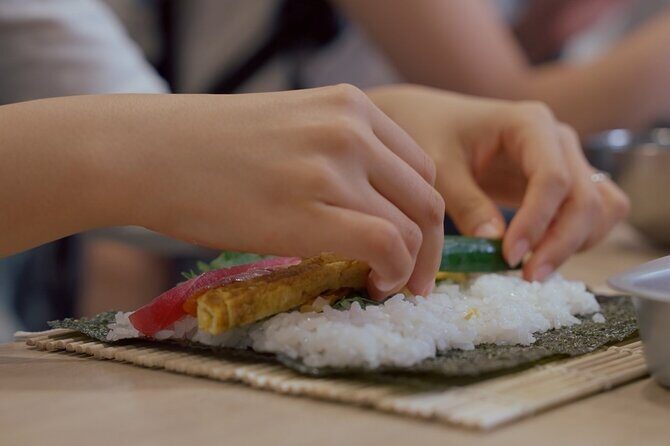
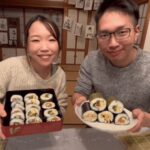
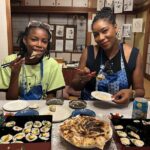
You’ll make sushi rolls filled with seafood, egg rolls, and vegetables, rolled with nori seaweed and rice. Even if you’re already familiar with sushi, rolling technique is the part that often changes at home. This kind of class helps you practice the hands-on steps—where the filling goes, how tightly you roll, and how you handle rice and nori as you work.
One of the best parts is that you can talk through ingredients and make choices that feel closer to your own shopping habits. It’s not just copying; it’s learning what each component contributes to texture and flavor.
Karaage: crisp, familiar, and very Japan
Karaage (Japanese fried chicken) is the other anchor of the class. It’s a favorite overseas for a reason: it’s crispy, savory, and comforting. In the hands-on portion, you’ll work through the steps that lead to that crunch.
In my session, the instructor focused a lot on practical frying technique, including getting the right handling and control during cooking. That’s exactly the kind of detail that usually makes the difference between “good” and “wow” at home.
Teriyaki chicken: a gentle bonus
Depending on the session, teriyaki chicken may also be part of the hands-on cooking. In the class I followed, it was included alongside sushi and karaage. If you like a more sweet-savory profile to balance fried chicken, this adds variety without adding complexity.
Vegetarian menu available
If you eat vegetarian, you won’t be forced into a one-note adaptation. There is a vegetarian menu available, which means the class can stay structured rather than turning into a last-minute scramble.
Small-group cooking: how Ichiho keeps it understandable
This class is private, meaning only your group participates. That instantly changes the experience: you can ask questions without feeling like you’re slowing down a big crowd.
Ichiho’s style (at least in the sessions I experienced through this format) blends friendly guidance with patience. His English isn’t perfect, but he does guide you in English as much as possible and is open to requests. That combination can be very workable if you come with a relaxed attitude and a willingness to point, taste, and ask follow-up questions.
What I recommend you do during class
- Ask what ingredient is doing the heavy lifting for flavor, not just how to assemble
- Pay attention to frying steps and timing, since those are hardest to replicate from memory
- Request vegetarian substitutions ahead of time if that applies to you
If you do those things, the language barrier becomes less of a problem. Cooking is, after all, a universal language—smell, texture, and technique tell you a lot even when words are imperfect.
Price and timing: does $162.58 per person make sense?
At $162.58 per person for about 3 hours 30 minutes, you’re paying for two things at once: guided local shopping and a hands-on cooking class with ingredients included.
Here’s how I evaluate the value:
- You’re not just cooking. The market walk is a lesson on ingredients, sourcing, and what locals buy for everyday meals.
- You get small-group attention, which is usually what you pay extra for in Japan when a class is truly hands-on.
- You’re making multiple dishes rather than one short demo. Sushi rolls plus karaage (and often teriyaki-style chicken) is a solid output for the time.
The experience is booked about 33 days in advance on average, which suggests it’s in demand. If you’re traveling in peak seasons or on weekends, I’d plan ahead so you can pick a time that fits your day.
Logistics that affect your day (in a good way)
The meeting point is clearly set: 3-chōme-35 Yayoichō, Naka Ward, Yokohama, Kanagawa 231-0058, Japan. The activity ends back at the meeting point, which makes it easier to plan dinner afterward without needing extra transportation juggling.
It’s also near public transportation, and you receive a mobile ticket. That’s helpful if you’re trying to keep your travel day simple and your phone as your main tool.
Service animals are allowed, which is good to know if that’s relevant for your group.
Who this Yokohama cooking class is best for
I think this is a great fit if you want more than a single recipe. You’ll probably enjoy it most if you like one or more of these:
- You enjoy food and want to learn what locals buy and how they choose ingredients
- You want to cook Japanese dishes at home with fewer guesswork ingredients
- You like market walking with structure—enough guidance to feel confident, not so much it’s boring
- You’re comfortable asking questions, even if your Japanese is basic
It may be less ideal if you want a purely sightseeing-focused neighborhood experience with no cooking involvement. Also, if you’re very sensitive to language differences, you’ll want to go in knowing the instructor will do his best in English but it may not be perfect.
Should you book this Yokohama cooking class?
Yes—if your goal is to bring home skills, not just photos. This format gives you the “why” of Japanese cooking by starting with fresh sourcing, then tying it directly to sushi rolls and karaage you actually make.
Book it especially if you want a guided experience in Yokohama’s local shopping scene that feels rooted in daily life. If you’re on the fence, make the decision based on one question: do you enjoy shopping for ingredients as part of the activity? If the answer is yes, you’ll likely find the time worth it.
FAQ
What is the duration of the Half-day Cooking Class in Yokohama?
It’s approximately 3 hours 30 minutes.
Where does the class start and end?
It starts at 3-chōme-35 Yayoichō, Naka Ward, Yokohama and ends back at the meeting point.
What kinds of dishes will I learn to cook?
The experience includes making popular Japanese dishes such as roll sushi and deep-fried chicken (karaage). A vegetarian menu is also available, and a session may include additional dishes like teriyaki chicken.
Is the cooking class suitable for beginners?
Yes. It’s suitable for all skill levels, and the instructor provides guidance through each step.
Is this a private tour?
Yes. Only your group participates.
Will there be help if I don’t speak Japanese?
The instructor will guide you in English as much as possible. His English is not perfect, but he will try to accommodate requests.
Can I get a vegetarian menu?
Yes, a vegetarian menu is available.
Can I cancel for a full refund?
Yes. You can cancel up to 24 hours in advance for a full refund.
Is there a minimum number of travelers?
Yes. The experience requires a minimum number of travelers. If it’s canceled due to not meeting that minimum, you’ll be offered a different date/experience or a full refund.