REVIEW · NAGANO
Nagano Zenkoji Temple and Samurai Experience
Book on Viator →Operated by Welcome Matsumoto · Bookable on Viator
Samurai practice meets an ancient temple in Nagano. I love the Zenkōji approach with old-school streets and shops, and I also love the katana posture coaching that feels fun, not scary. One thing to plan for: the sword part uses theatrical gear and focuses on kata, not cutting objects.
This is a tidy 3-hour combo that starts with a guided temple walk and ends with an instructor-led samurai session in a traditional setting. If you want Japanese culture you can actually participate in, this format works: you’re not just watching, you’re practicing stances, poses, and discipline. The group stays small (up to 15), so the instructor can keep the class moving at a human pace.
You’ll meet at the Nagano Winter Olympic Torch Tower & Memorial Park, near public transit, and you can use a mobile ticket. Guides provide English or French, and the samurai side notes a short but steep, narrow stairway to the venue.
In This Review
- Key things to know before you go
- Entering Zenkōji: an approach you’ll want to slow down for
- The Niomon Gate area: switching from pilgrim lanes to samurai lessons
- Katana stances you can actually do: posture, attack/defense, and kata basics
- What you’re paying for: value in guidance, gear, and time
- The walking-to-practice flow: how the schedule works in real life
- Guides and teaching style: where the experience gets its clarity
- Practical planning: what to wear and how to show up
- Who should book this Nagano Zenkoji + Samurai combo
- Should you book this tour
- FAQ
- How long is the Nagano Zenkoji Temple and Samurai Experience?
- What does the price include?
- Is Zenkōji Temple admission included?
- Where do I meet for the tour?
- Does the tour offer pickup?
- What kind of sword will I use during the samurai experience?
- Is this experience suitable for kids and what about stairs?
Key things to know before you go
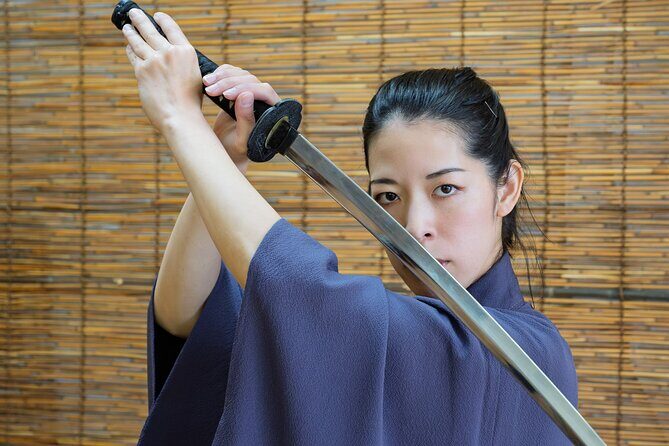
- Zenkōji Temple for 2 hours with a guided walk that includes the approach through classic Nagano streets and shops
- A 1-hour samurai apprentice session focused on katana handling, posture, and attack/defense stances
- The sword setup fits legal reality: theatrical swords are used; no slicing or cutting objects
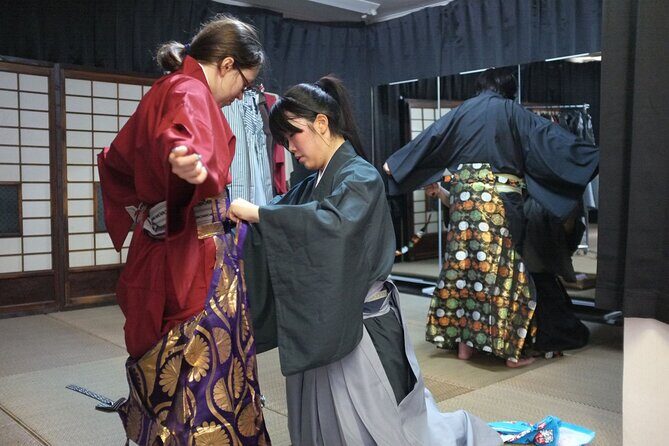
- You get dressed for the role in a yukata and hakama style outfit, plus sword rental for the session
- Small group limit (15 people) makes it easier to follow along even if you have zero experience
- Family-friendly rules: children under 6 can join for free with kid outfits and foam swords
Entering Zenkōji: an approach you’ll want to slow down for
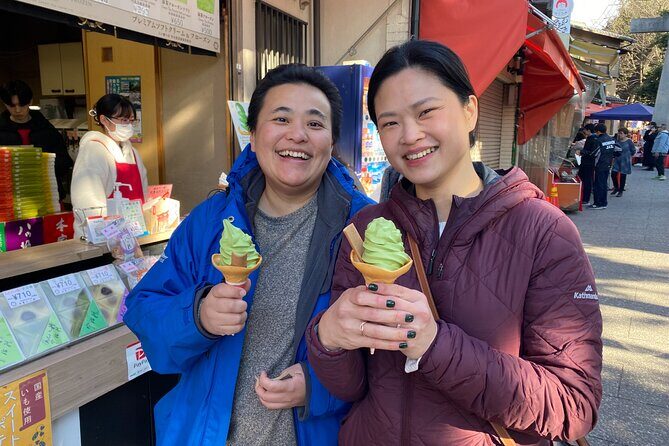
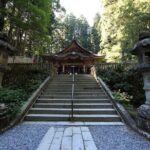
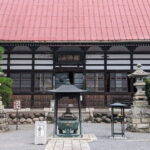
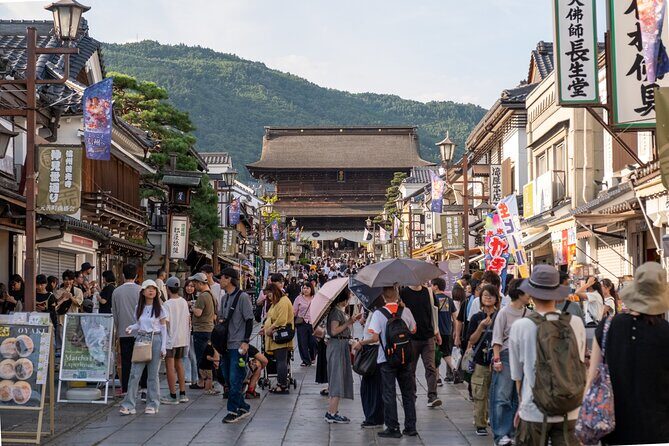
Zenkōji Temple is one of Japan’s oldest and most respected Buddhist sites, with a legacy that stretches back about 1,400 years. What makes this stop more than a quick temple checkbox is the walk in: you don’t just jump into a courtyard. You move along the stone approach paths lined with traditional inns, small shops, and cozy cafés, the kind of street scene that helps you feel how this place has pulled people in for centuries.
The temple’s reputation isn’t only about its age. Zenkōji also houses one of the oldest Buddhist statues in Japan, believed to have arrived from India centuries ago. That detail matters because it explains why the site draws people from far beyond Nagano City. When you’re standing where pilgrims have stood for generations, the temple feels less like a photo spot and more like a living place of reflection.
You’ll have about two hours for this portion, and the admission ticket is free for the temple visit. That’s a nice value angle: most of what you’re paying for isn’t temple entry—it’s the guided context and the pacing that helps you make sense of what you’re seeing while staying respectful.
Practical tip: temples work best when you keep your voice low and follow signage and local behavior. If you’re unsure where to look or how to position yourself, you’ll get the cue quickly by watching what people do at the main prayer areas.
You can also read our reviews of more tours and experiences in Nagano.


The Niomon Gate area: switching from pilgrim lanes to samurai lessons
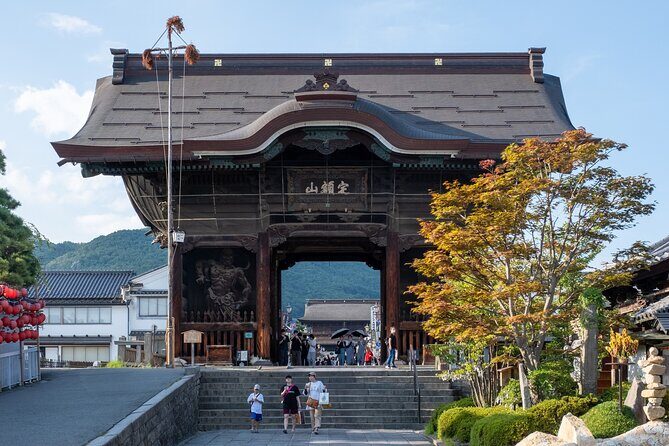
After your temple time, you head to the samurai venue near the Niomon Gate. It’s about a 5-minute walk from there, so you’re not traveling across town—you’re just transitioning to a different kind of practice space.
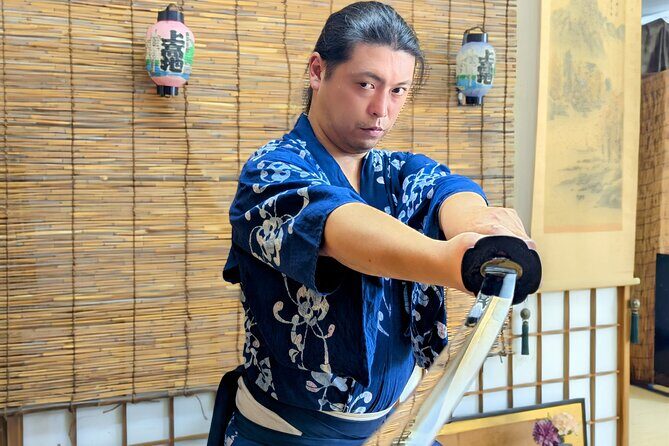
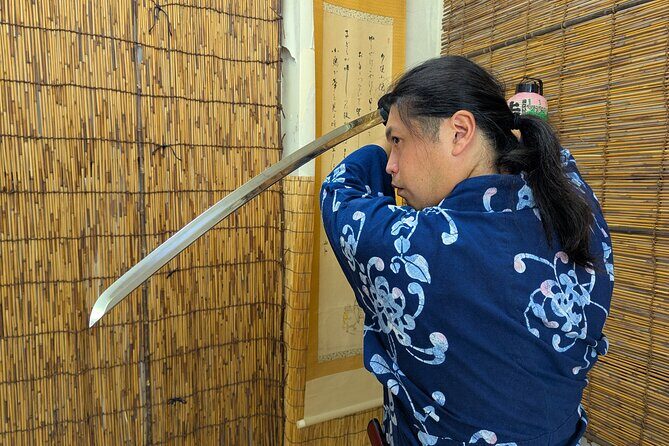
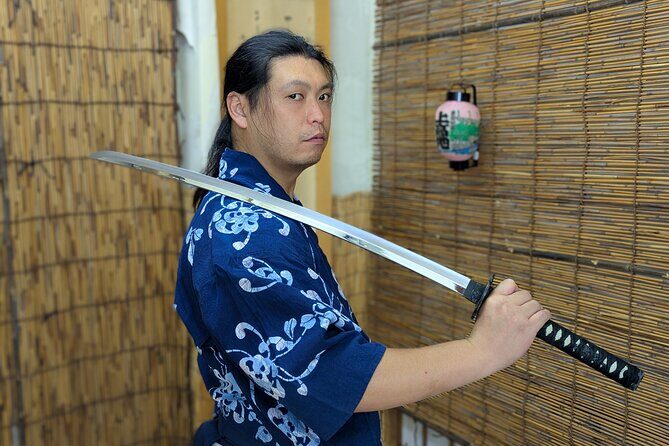
The session begins in a traditional-style room where you step into the past in a more hands-on way. This is where the tour stops being mostly about viewing and turns into participation: a Master Samurai instructor teaches you the foundations of katana handling and posture. The tone here is important. Instead of making it feel like a test, it’s built around grace, discipline, and fun—so even if your body has never done a proper stance before, you’ll still know what to do.
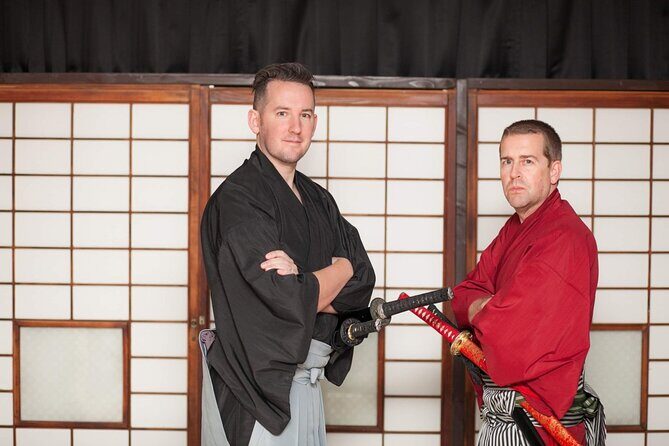
You’ll be dressed for the part with a yukata (light kimono) and hakama style pants, plus a sword setup provided for the activity. This is one of those details that sounds simple but makes a real difference. When you’re in costume, your movements slow down and look better in photos, and you’re more likely to take the practice seriously.
One consideration: the route to the samurai venue includes stairs that are short but steep and narrow. If stairs are tough for you, tell the operator in advance so they can help you plan. This is also worth keeping in mind for anyone traveling with strollers or mobility aids.
Katana stances you can actually do: posture, attack/defense, and kata basics
This is the core of the experience, and it’s also the part that people usually remember most. The instructor focuses on katana techniques and how to hold your posture with control. You’ll learn stances and do guided practice that covers both attack and defense positions, plus the basic movement patterns that make katana kata feel like more than random posing.
The session is designed for all levels. That’s not just marketing language—it shows up in how the lesson is structured. Even without a martial arts background, you can follow along because the training emphasizes fundamentals: where your feet go, how your shoulders align, how your hands position, and how to control your body while holding a stance.
There’s also a clear boundary on what this tour will and won’t do. Even though you’ll practice with a sword, it does not involve any slicing or cutting of objects. That’s tied to both safety and legality. In Japan, authentic katanas are classified as illegal weapons under strict licensing rules, so tourists usually won’t handle real weapons. For the experience, theatrical swords are used, which lets you learn the form without turning the session into something dangerous.
You’ll also have time to take photos and videos while you’re dressed and practicing poses. It’s a great way to capture the dramatic side of the samurai look, but I’d treat it like part of the training too: pause, reset your posture, and then strike the pose cleanly rather than rushing for the camera.
A small mindset tip: treat this like a choreography lesson. If you focus on posture and rhythm, the “warrior film” feeling will come naturally, and you’ll end with better-looking stances without feeling rushed.
What you’re paying for: value in guidance, gear, and time
The price is $83.89 per person, for about 3 hours total. At first glance, that can sound like a lot for one temple and one sword lesson. But when you break it down, the value becomes clearer.
Here’s where your money actually goes:
- A guided walk of Zenkōji Temple (including context to understand what you’re seeing)
- A full samurai experience admission
- Samurai outfits (yukata and hakama) plus sword rental for the activity
- An English or French speaking guide during the structured portions
You’re not paying temple admission because the Zenkōji entry on this itinerary is free. The real cost is instruction time, the prepared practice setting, and the included gear that helps you participate instead of just watch.
Group size matters too. With a maximum of 15 people, you’re less likely to feel like a number. You can follow instructions better, and the instructor has a better chance of correcting posture if needed.
Also note the timing: this is generally booked about 37 days in advance on average. That’s a hint that it’s a popular combo, so if your dates are firm, it’s smart to plan ahead rather than waiting for the last week.
The walking-to-practice flow: how the schedule works in real life
The itinerary is simple: temple first, then practice. The flow is roughly:
- Stop 1: Zenkōji Temple (about 2 hours), guided, admission included as free entry
- Stop 2: Niomon Gate area samurai session (about 1 hour), instructor-led, admission included
That sequencing works well because the temple visit settles you into the setting. You get the spiritual framing and the historic mood, then you shift into discipline and movement. If you started with the samurai part, you might still enjoy it, but the contrast would be less powerful.
One more thing: because this is a short, focused experience, you’ll want to keep your expectations realistic. This is not a multi-day martial arts training camp. It’s a well-paced introduction built around kata basics, posture, and fun posing—so you leave with a clear sense of what samurai form looks like and what it’s trying to communicate.



Guides and teaching style: where the experience gets its clarity
The reviews highlight a careful teaching approach, and that matches what you want for this kind of activity. One guide name you may hear on the temple side is Tom, described as informative and full of local knowledge. Another name that shows up on the samurai instruction side is Kei, with praise for clear step-by-step explanations.
That matters because katana posture can look confusing from the outside. If you get the right cues—where to place your feet, how to angle your body, how to move with control—the session clicks fast.
So if you’re someone who learns best with concrete direction, this tour’s style should suit you.
Practical planning: what to wear and how to show up
You’ll be in a yukata/hakama outfit during the samurai lesson, but you still control your comfort from the start. Wear comfortable clothes and footwear for the temple walk and the short walk between stops. If you’re sensitive to stairs, remember the samurai venue route includes short but steep narrow stairs.
Because the experience includes photos and videos while you pose, you might also consider practical camera habits. Keep your phone ready, but don’t rush to film during instruction. Let the instructor finish explaining, then record during the posing moments.
Finally, arrive prepared to move between two different atmospheres: temple reflection and martial arts practice. That contrast is part of the point, and it’s also why this combo feels like more than two separate activities.
Who should book this Nagano Zenkoji + Samurai combo
This is a strong fit if you want:
- A guided temple visit where you understand what you’re seeing at Zenkōji
- A hands-on cultural activity that lets you practice and pose, not just look around
- A structured class where even beginners can follow along
- A family-friendly outing (children under 6 can join for free with kid outfits and foam swords)
It may be less ideal if:
- You’re expecting weapon cutting, sparring, or any action involving slicing objects
- Stairs are a big issue for you and you can’t manage short steep steps
- You only want a full temple tour with lots of extra wandering time (this is more of a focused hit of Zenkōji plus one training session)
Should you book this tour
If you like the idea of pairing Zenkoji’s historic temple atmosphere with a short, well-guided samurai practice session, I think this is worth booking. The value is in the included guidance and gear: you get a temple context walk plus a 1-hour instructor-led training block where you’ll be dressed like a samurai apprentice.
Book it especially if you’re traveling with kids or you want a memorable, participatory experience that doesn’t require prior martial arts knowledge. Skip it if your priority is deep temple exploration over a short visit, or if you need hands-on cutting practice (this one is clearly kata and posture, not cutting).
FAQ
How long is the Nagano Zenkoji Temple and Samurai Experience?
The tour is about 3 hours total, with roughly 2 hours at Zenkōji Temple and about 1 hour for the samurai experience portion.
What does the price include?
The price includes an English or French speaking guide, the Zenkōji Temple guided tour, and admission for the samurai experience activity. It also includes samurai outfits and sword rental during the activity.
Is Zenkōji Temple admission included?
Yes. The itinerary lists Zenkōji Temple admission as free and includes a guided visit.
Where do I meet for the tour?
You meet at the Nagano Winter Olympic Torch Tower & Memorial Park (address provided in the meeting point details).
Does the tour offer pickup?
Yes, pickup is offered.
What kind of sword will I use during the samurai experience?
Authentic katanas are not part of the experience due to strict licensing laws. The tour uses theatrical swords, and the activity focuses on proper sword techniques and kata without cutting or slicing objects.
Is this experience suitable for kids and what about stairs?
There is no minimum age requirement, and children under 6 can participate for free with kid outfits and foam swords. The stairs to the samurai venue are short but steep and narrow, so inform the provider in advance if you have accessibility needs.