REVIEW · NAGANO
Togakushi: A Serene Walk Through Sacred Forests & Soba Traditions
Book on Viator →Operated by o8Experience · Bookable on Viator
Cedar paths and soba reset your day. This small-group walking tour takes you from Nagano Station into Togakushi’s shrine country, with a guide helping you read the forest, the faith, and the old pilgrimage routes. I really like that you move at a human pace with a group capped at 12, so questions actually get answered instead of swallowed by the crowd.
My other favorite part is the lunch: Togakushi soba, served the way the locals do it, and it’s the highlight meal that turns a scenic hike into a full experience. The one drawback to plan around is seasonality and weather: several key spots aren’t accessible in winter due to snow, and the whole outing can run long if the group walks slower than you want.
In This Review
- Key things I’d watch for before you go
- Nagano to Togakushi by van: where the tour really starts
- Kagami-ike Pond: mirror water and what changes in winter
- Tenmei Inari Shrine: the red gate line you’ll remember
- The Okusha area and the Zuishinmon: your main cedar walk
- Kuzuryusha Shrine: water, rain, and the nine-headed dragon
- Chusha and Hokosha: the middle and lower shrines plus soba lunch
- Optional Togakure Ninpo Museum: when you want a side quest
- Zenkoji Temple option: a city finish after the mountain air
- Price and value: is $156.55 worth it?
- What to wear and bring for Togakushi’s cold, damp surprises
- The guide factor: why small-group time matters
- Who should book this Togakushi walk (and who should skip it)
- Should you book? My take
- FAQ
- How long does the Togakushi tour take?
- What is the group size?
- What’s included in the price?
- Is the tour accessible in winter?
- What fitness level do I need?
- Where do I meet the guide?
- Is the Ninja Museum included?
Key things I’d watch for before you go
- Small group (max 12) means your guide can actually slow down for questions and route clarity
- A real Togakushi soba lunch is built into the flow, not just a quick stop for something easy
- Kagami-ike Pond and shrine approaches can be snowed out in winter months
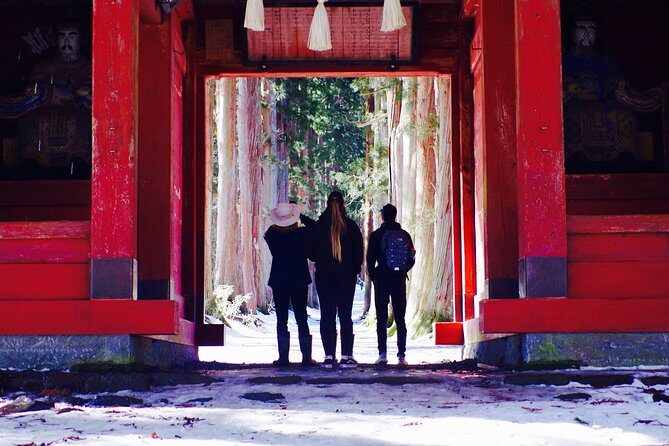
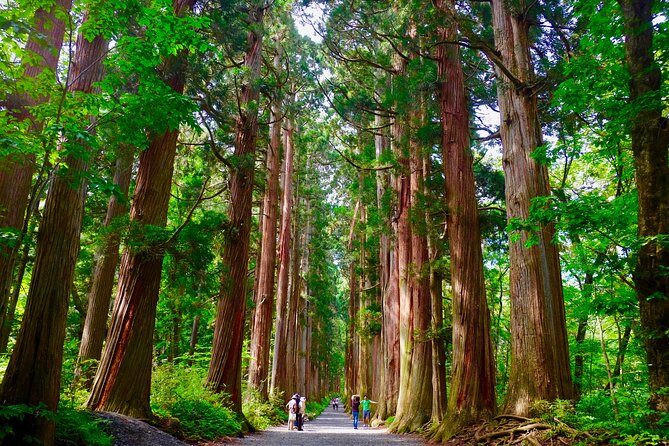
- Okusha area includes a long cedar walk (about 2 km) and the dramatic Zuishinmon gate
- Weather matters at Togakushi’s altitude, so layers help more than you think
- Optional Togakure Ninpo Museum is closed in winter, so check timing before relying on it
Nagano to Togakushi by van: where the tour really starts
This tour starts in Nagano at Beck’s Coffee Shop, right by Nagano Station. You meet just outside the Shinkansen ticket gates, then hop in a vehicle with your guide for the drive up to Togakushi. The ride is about 40 minutes, and it matters because it gets you out of the city mindset and into mountain air without burning half the day on logistics.
Once you’re in Togakushi, the day feels intentionally paced. You’re not trying to rush through “photos only.” Instead, you’re guided along routes that connect shrines, cedar groves, and forest paths. That’s where Togakushi shines: you’re walking through a place designed for slow observation, not fast sightseeing.
I also like that you get a mobile ticket, which keeps your morning simple. And because the group is small, the guide can keep an eye on timing between stops.
You can also read our reviews of more walking tours in Nagano
Kagami-ike Pond: mirror water and what changes in winter
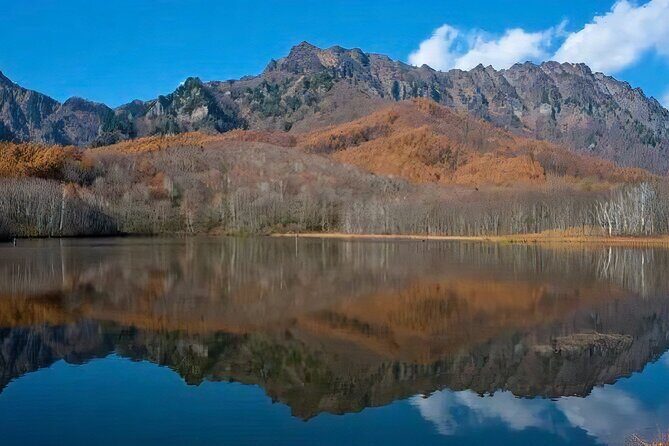
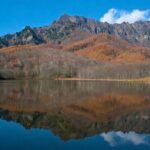
The first big nature hit is Kagami-ike Pond, a spot famous for reflections—mountains and greenery showing up on the water like a mirror (kagami means mirror). In clear conditions, it’s the kind of scene that makes you lower your voice without even thinking about it.
You’ll typically have around 20 minutes here—enough time to walk the area at a gentle pace and get photos without feeling rushed. The practical catch: this pond isn’t accessible during winter months due to snow. If you’re visiting in colder season, you’ll still get forest beauty elsewhere, but Kagami-ike isn’t part of that winter route.
Tip: if you’re going in shoulder seasons, bring a lens cloth. Pond humidity and mist can leave everything a little softer than you expect.
Tenmei Inari Shrine: the red gate line you’ll remember
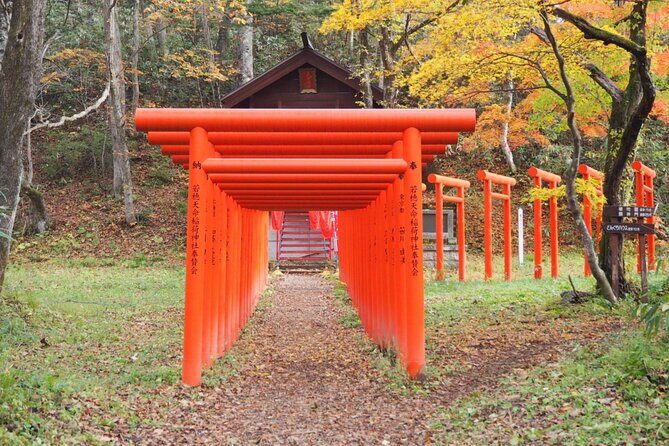
After Kagami-ike, you head toward Tenmeiinari Shrine, described as a hidden, quieter stop with a striking row of red gates. This is the kind of place where the visual impact comes from repetition: the gate line gives you depth and keeps your eye moving forward.
It’s a short visit (about 20 minutes), which is actually a plus. You’re not stuck standing still for ages. You get enough time to appreciate the gate line, then transition into the deeper Okusha forest area.
Winter reality check: this shrine area also isn’t accessible during winter months due to snow. If you’re traveling in winter, plan to treat these early stops as “may or may not be on the route,” and lean into the cedar paths that remain accessible.
The Okusha area and the Zuishinmon: your main cedar walk
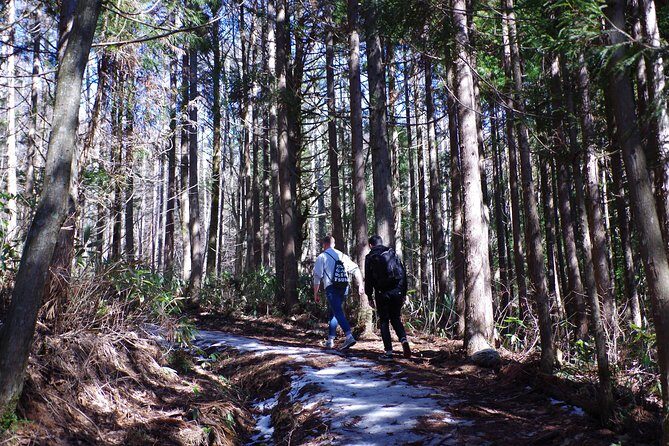
Okusha is the heart of the experience. This is where the tour becomes more than a stop list and turns into a proper walk into the forest.
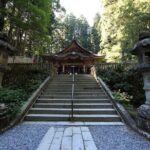
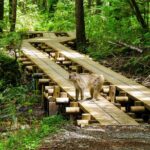
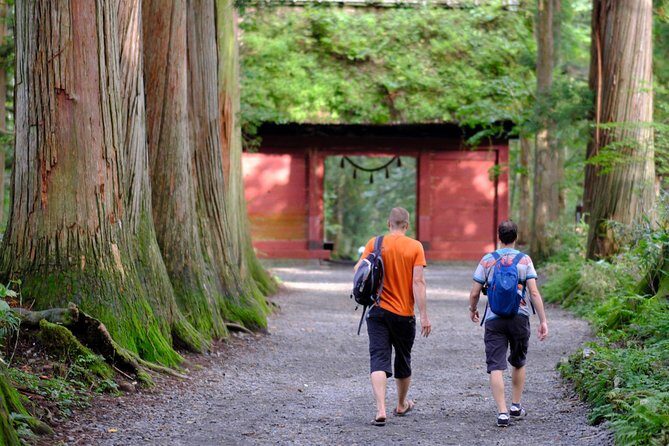
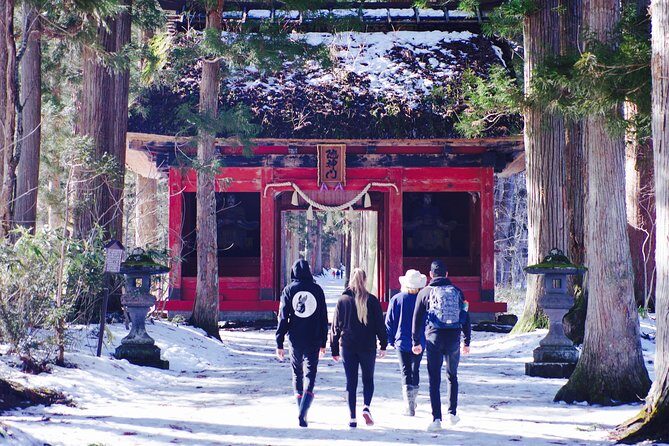
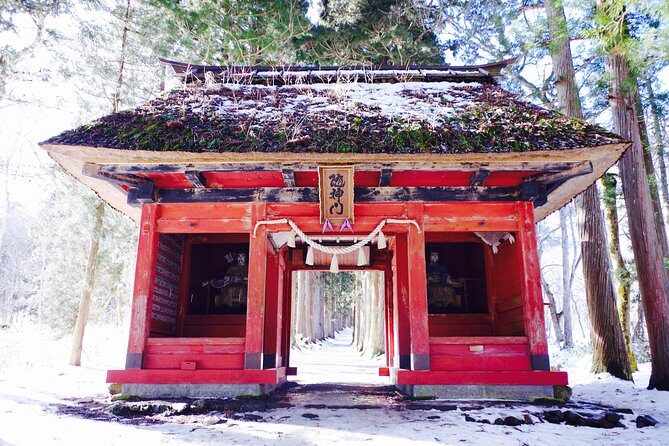
You’ll approach the Okusha area through a path lined with ancient cedar trees, leading toward the Zuishinmon gate. The journey into the central mountain area is about 2 km. The gate itself is a moment: it frames the path and signals you’re entering a more serious section of Togakushi’s sacred grounds.
You’ll spend time at two Okusha-linked moments:
- one focused on arriving at the Oku Sha area and seeing the main hall setting
- another at the Okusha Shrine itself, including time to understand what the innermost shrine represents
The Okusha Shrine enshrines the god of strength, tied to the story of rock moving so Amaterasu could return from hiding. You won’t need a deep mythology refresher to enjoy it, but the guide explanations help you feel the theme the place is built around: endurance, return, and power—quietly expressed through the forest setting.
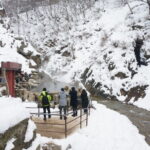
Important seasonal detail: the Okusha shrine itself isn’t accessible during winter due to snow. But the tour still lets you enjoy the cedar-lined path and the winter scenery along the way. So even if you can’t enter the main shrine building, the walk still does the heavy lifting.
Practical note: in rain, Togakushi can feel cold even in summer. You’re at around 1,100 m, and the forest holds onto damp air.
Kuzuryusha Shrine: water, rain, and the nine-headed dragon
Next comes Kuzuryusha Shrine, where the focus turns from strength and light themes to water. This shrine is associated with a nine-headed dragon that governs water, and farmers come here to pray for rain. It’s also connected with matchmaking.
That mix might sound surprising—water rituals and relationship prayers in one stop—but that’s part of why Togakushi feels lived-in and human. It’s not just about history. It’s about needs people still have.
You’ll have time at the shrine (about 25 minutes). Again, winter changes the route: Kuzuryusha isn’t accessible during winter months due to snow. In winter, you can still enjoy the cedar-lined path and scenery along the way, but the shrine itself won’t be part of what you reach.
If you like your travel grounded in everyday meaning, this is one of the most interesting stops.



Chusha and Hokosha: the middle and lower shrines plus soba lunch
After Kuzuryusha, the day shifts into a rhythm of shrine viewing plus a proper lunch break at Togakushi soba. The Chusha Shrine visit is about an hour total, and it’s your main meal slot, so don’t plan to skim it.
Chusha is the Middle Shrine, dedicated to Tajikarao-no-Mikoto—the god who brought light back to the world. You’ll appreciate the cedar-lined approach and the traditional architecture here. It’s also a natural pause point: your legs get rest, your mind resets, and then you eat.
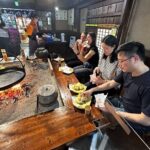
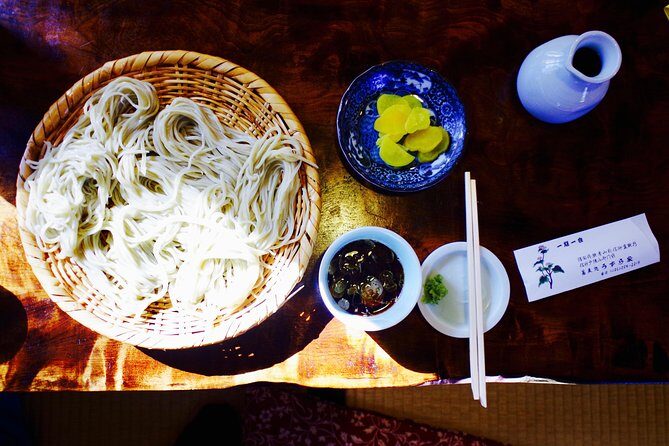
The soba lunch is served at a local restaurant, and this is the piece I’d call the “value anchor” of the tour. A walk is nice, but food is what you’ll remember on the ride back to Nagano. In particular, the guide helps you get an authentic soba experience rather than choosing whatever is closest to the road.
Hokosha is the Lower Shrine, dedicated to Ame-no-Uwaharu and tied to learning and agriculture. It’s a shorter stop (about 15 minutes). Seasonal note: Hokosha may not be accessible during winter due to snow, but you can still enjoy the cedar-lined path and winter scenery if you’re there in colder months.
Optional Togakure Ninpo Museum: when you want a side quest
There’s an optional stop for the Togakushi Folk Museum and Togakure Ninpo Museum, also known for the ninja tradition. You’ll have around 30 minutes here, and the Ninja Museum admission isn’t included.
Winter note: this ninja museum option is closed during the winter season. If you’re traveling in winter and you care about this museum, confirm timing before you lock your plans around it. If it’s open, I like this add-on because it adds contrast—your day starts in shrine seriousness, then you get a more pop-culture-friendly look at Togakushi lore.
If you’re short on energy, skip it. You’ve already gotten the big nature-and-shrine core.
Zenkoji Temple option: a city finish after the mountain air
One more planning choice: there’s an option to visit Zenkoji Temple, with pickup and a convenient return back to Nagano Station afterward. This is useful if you want to add a major cultural anchor without handling the transfers yourself.
The catch is timing. The tour’s total duration is about 4 to 6 hours (depending on walking pace), so if you’re trying to catch another reservation right after, give yourself breathing room. Togakushi weather can also slow groups down, especially on wet or slippery days.
Price and value: is $156.55 worth it?
At $156.55 per person, the tour isn’t “cheap,” but it also isn’t just paying for a scenic walk. You’re paying for a bundled day that includes:
- transportation to and from the Togakushi area and between stops
- a guided experience (small group, max 12)
- lunch: a Togakushi soba meal at a local restaurant
- multiple shrine visits with admissions where included
For value, the key is that the meal is part of the plan, and the guide helps you land in a good soba situation rather than relying on your own instincts up in the mountains. Also, you’re not paying separately for each transport hop.
Where the price feels less great is if you go in a season where several shrine components aren’t accessible (winter closures due to snow). If you’re traveling in winter, you may feel the “full loop” is shortened. The upside is that the cedar-lined walking still delivers.
One more detail that affects value: the tour uses a mobile ticket and keeps the structure tight. That cuts down on time spent figuring things out, which is a form of comfort you can’t always measure until you need it.
What to wear and bring for Togakushi’s cold, damp surprises
Togakushi sits around 1,100 m above sea level, and the forest changes how you feel the temperature. The guidance is to wear suitable clothes and shoes for walking. If it rains, it can feel cold even in summer.
I’d pack like this:
- shoes you trust on wet surfaces (the walk is real, not a stroll)
- a light rain layer or waterproof shell
- a warm layer you can add without turning the day into a gear shuffle
- bottled water for your comfort (small pets in carriers are allowed, if that applies to you)
Also remember the simple rule about vehicle comfort: don’t eat or drink coffee inside the vehicle. It sounds minor, but it’s the kind of expectation that helps the ride stay smooth for everyone.
No strollers are allowed, so if you’re traveling with a kid who needs stroller time, this is the kind of day that needs careful planning.
The guide factor: why small-group time matters
One review mentioned a guide named Masa, noting he was knowledgeable and helped pick the best restaurant for an authentic soba experience. That matches what you should expect from a tour like this: the guide isn’t just pointing at things. He’s helping you connect the walking to the meaning, and he’s helping you get the food piece right.
With groups this size, you’ll usually get:
- clearer directions between shrine areas and forest paths
- better timing so you don’t arrive at meals or key gates rushed
- room to ask why something matters (like the strength theme at Okusha or the water theme at Kuzuryusha)
If you’re the type who likes your travel to include context, this tour’s structure fits you well.
Who should book this Togakushi walk (and who should skip it)
I’d recommend it if you:
- want a guided hike that mixes shrines, cedar forests, and a standout soba lunch
- like Japan beyond the big headline cities
- enjoy small-group pacing and dislike bus-tour chaos
- can handle moderate walking fitness
You might skip or rethink if:
- you’re visiting in winter and you strongly want to reach the Okusha shrine buildings and certain other snowed-out spots
- you have tight timing for the rest of your day, because the experience depends on walking pace
Should you book? My take
If you want Togakushi to feel like a calm, guided day rather than a checklist, this is a strong booking. The big win is the combination: forest shrine walking plus an actual Togakushi soba lunch that feels chosen, not accidental. The small group keeps it personal, and the guide role is clearly part of the value.
Just be honest with your season and your schedule. In winter, some shrine access changes due to snow, and rain can make the mountain feel colder. If you can work with that, you’ll get a memorable mix of sacred paths and food.
FAQ
How long does the Togakushi tour take?
The tour runs about 4 to 6 hours, depending on the group’s walking pace.
What is the group size?
The tour is limited to a maximum of 12 travelers.
What’s included in the price?
Included are the Togakushi soba lunch, transportation to and from the listed destinations, the Zenkoji Temple option (if you choose it), and admission for some shrine stops. The Ninja Museum entrance fee is not included.
Is the tour accessible in winter?
Some key spots aren’t accessible during winter months due to snow, including Kagami-ike Pond and parts of the shrine areas like Okusha and others. The tour still offers scenic cedar-lined walking where possible.
What fitness level do I need?
The tour recommends travelers have a moderate physical fitness level.
Where do I meet the guide?
You meet at Beck’s Coffee Shop in Nagano Station area, just outside the Shinkansen ticket gates.
Is the Ninja Museum included?
The Togakure Ninpo Museum is optional, and its entrance fee is not included. It is closed during winter season.