REVIEW · NAGANO
Wasabi Farm Walking Tour & Lunch
Book on Viator →Operated by Welcome Matsumoto · Bookable on Viator
A wasabi farm walk is weirder than it sounds. In Nagano, you get a guided look at Daio Wasabi Farm and how this spicy plant ends up on Japanese plates. It’s part countryside stroll, part food lesson, and it moves at an easy pace.
What I like most is the English-speaking guide who explains the farm in plain terms and points out details you’d likely miss on your own. I also like that the lunch is built around wasabi, with Shinshu soba and Shinshu miso designed to show off the real flavor of the crop.
One thing to keep in mind: this is a real working farm, and during peak times you may run into restaurant wait time before your meal. Also, there’s a small mismatch in the information about wasabi ice cream being included, so it’s smart to double-check what your exact confirmation says.
In This Review
- Key points before you go
- Why Nagano’s wasabi farm tour is worth your time
- The 2-hour format, start time, and pacing that works
- Walking the Daio Wasabi Farm grounds: what you’re actually doing
- The lunch set at Shinshu: wasabi you can taste, not just smell
- Wasabi ice cream: included, optional, or something to confirm
- Guide impact: what a great farm explanation changes
- Price and value: what $70.94 buys you in real terms
- Practical tips so your visit goes smoothly
- Should you book the Wasabi Farm Walking Tour & Lunch?
- FAQ
- How long is the Wasabi Farm Walking Tour & Lunch?
- Where does the tour start and end?
- What time does the tour begin?
- What’s included in the tour price?
- Can the lunch be adapted for vegetarian or vegan guests?
- Is wasabi ice cream tasting included?
Key points before you go
- Small-group feel with a max of 12 people, plus a private-guide setup for your group
- Daio Wasabi Farm in Azumino, at the base of the Japanese Alps area
- Wasabi-forward lunch with Shinshu soba and Shinshu miso, and options for vegetarian/vegan guests
- English commentary that helps you understand production and regional context
- Peak-season timing may mean some waiting to enter the lunch restaurant
- Wasabi ice cream may be listed differently depending on your booking details, so confirm
Why Nagano’s wasabi farm tour is worth your time
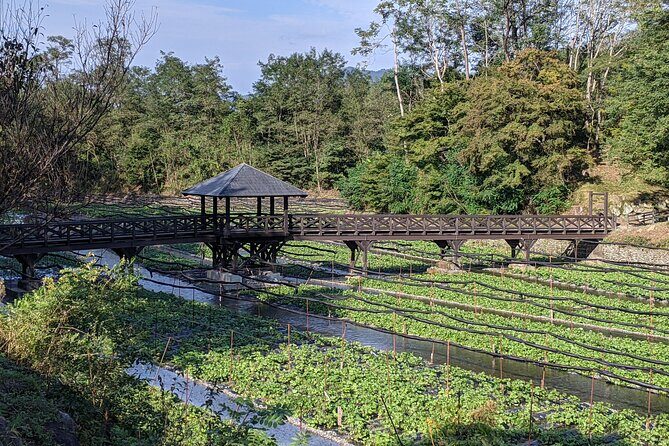
Nagano isn’t just mountains and ski gear. It’s also one of the places where wasabi has real cultural weight in Japanese food. This tour focuses on the plant’s home turf, so you’re not just tasting a condiment. You’re seeing the setting where it’s grown and learning how the whole process works from farm to flavor.
The experience feels especially practical if you like food that has a story behind it. You’re going to walk through the farm grounds at Daio Wasabi Farm, which was established back in 1915. That alone gives the visit a sense of continuity—this isn’t a gimmick attraction that appeared for Instagram.
And because you’re guided, you get context while you’re walking. That’s the difference between leaving with a few photos and leaving with a real understanding of what makes wasabi different from other plants you might grow at home.
You can also read our reviews of more walking tours in Nagano
The 2-hour format, start time, and pacing that works
This runs for about 2 hours and starts at 10:30 am. That timing is handy in Nagano because it keeps the rest of your day open. You can pair it with sightseeing in Azumino or Matsumoto without feeling like you’re stuck in one long tour block.
Your tour includes a mobile ticket, and it’s centered around one main location—you meet and end at Daio Wasabi Farm. That simplifies your day. No complicated hopping between train stations and multiple sites.
Also, the group size is capped at 12 travelers. Reviews tied to the experience emphasize guides who keep things organized, and that small size tends to make it easier to ask questions without feeling rushed.
Walking the Daio Wasabi Farm grounds: what you’re actually doing
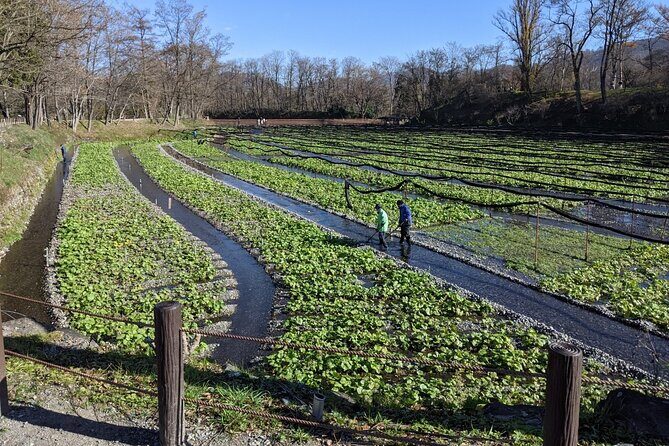
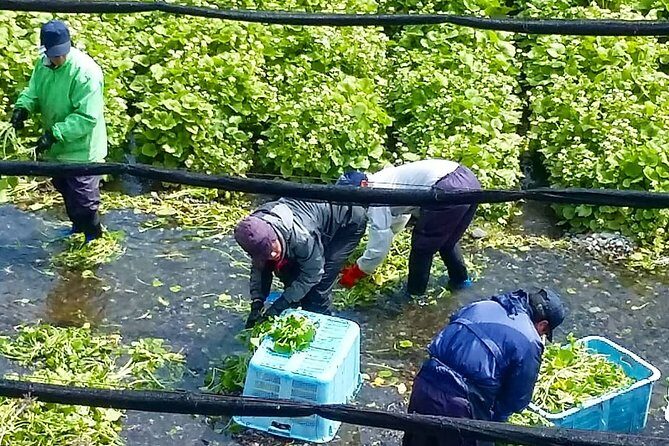
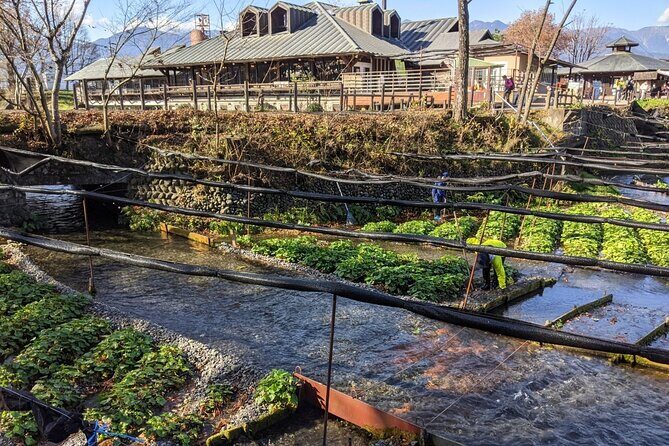
The main “work” of the tour happens on the farm grounds at Daio Wasabi Farm. This is where you’ll spend about an hour learning how wasabi is cultivated and discovering what makes the area suited for growing it.
Since the tour is guided, you’ll get more than basic orientation. The guide explains the secrets of wasabi production and provides commentary along the way, which matters because wasabi farming has details you won’t guess just by looking at green plants.
A couple of practical things I’d plan around:
- Wear shoes you don’t mind getting a bit dirty. Farms aren’t museum-floors.
- Bring a layer. You’re outdoors for most of the walking portion, and Nagano weather can shift.
- Expect a calm pace. Even when you’re learning, the rhythm is built around walking the farm, not standing in one spot.
One of the most praised parts of the experience is how guides tailor the walk. Some guides are described as taking guests to less-known spots and also translating farm museum information that’s mostly in Japanese. That’s a big deal: you get access to the background story instead of only the “see it and leave” version.
The lunch set at Shinshu: wasabi you can taste, not just smell
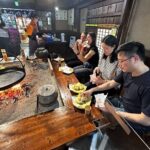
The second half of the tour is centered on lunch. This is where you find out whether the wasabi lesson sticks, because your meal is designed to highlight how fresh wasabi tastes.
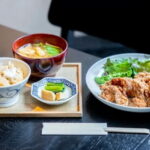
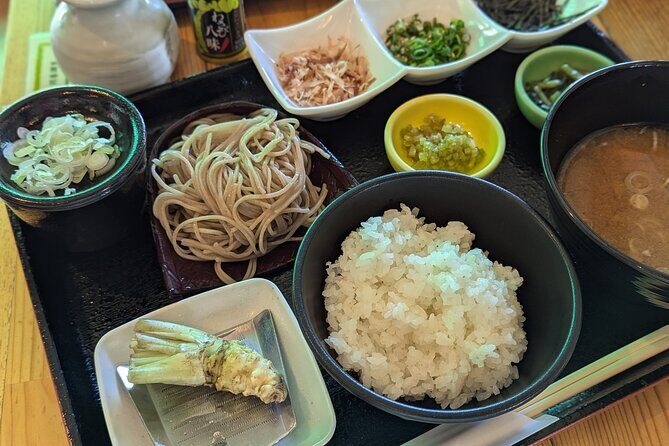
Lunch is described as a traditional set under the branding of Shinshu—the old name for Nagano Prefecture. You can expect things like Shinshu soba and Shinshu miso, along with other local items served as part of the wasabi-focused lunch.
Why this matters: a lot of wasabi you eat away from farms isn’t the same as real wasabi flavor. The meal format is built to make the wasabi-forward nature obvious, so you’re not just getting a condiment on the side. You’re eating wasabi as a featured ingredient.
Good for different diets too. The tour notes they can cater for vegetarian and vegan guests, and they also mention families with young children. That doesn’t mean every single dish will be perfect for every diet, but it signals the team takes dietary needs seriously enough to plan for them.
One timing consideration: in peak season, the farm may not be able to make restaurant reservations smoothly. If that happens, you might experience wait time to enter the restaurant. I’d plan your day with a little slack if you’re visiting during holidays or busy travel weeks.
Wasabi ice cream: included, optional, or something to confirm
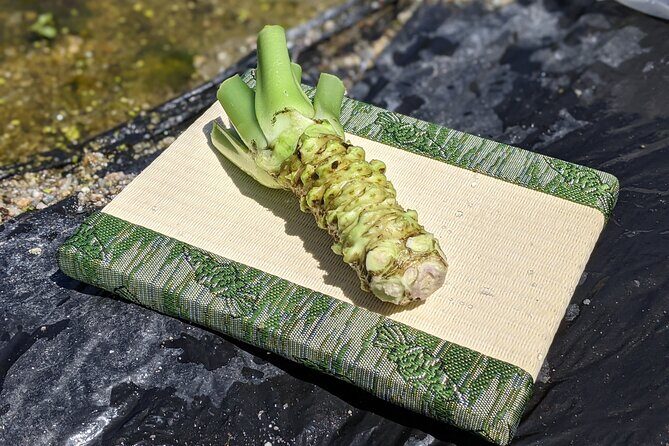
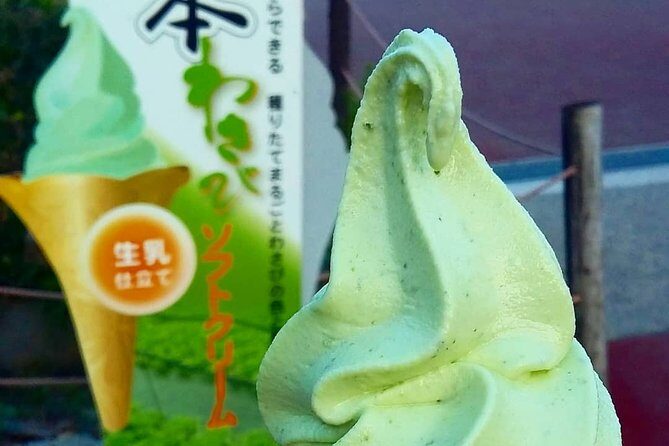
Here’s the one point where you should slow down and confirm your specific booking details. The tour description says the experience includes a wasabi ice cream tasting. But the exclusions list also notes that snacks or drinks including wasabi ice cream are not included.
So what should you do?
- Before you go, check your confirmation message or the day-of details to see whether the ice cream is actually included for your group.
- If it’s offered at the end, treat it as a bonus rather than a guaranteed final course until your confirmation says so.
Even with that caution, the ice cream is clearly a memorable part of the experience when it’s available. More than one guide-led story includes wasabi ice cream as a highlight, and that’s exactly the kind of playful food moment that makes a farm visit feel fun instead of purely educational.
A few more Nagano tours and experiences worth a look
Guide impact: what a great farm explanation changes
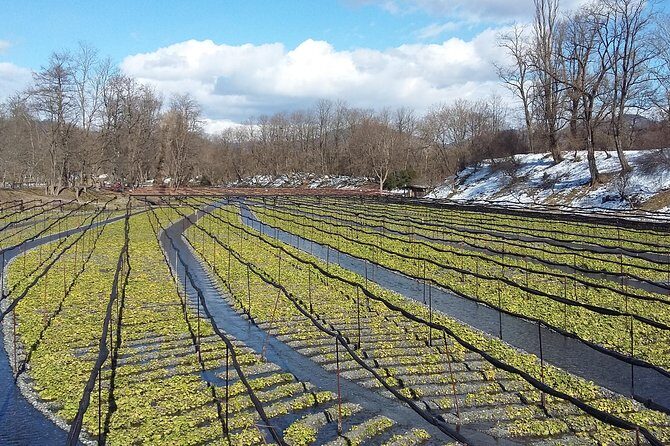
A farm tour stands or falls on the guide, because farms are not obvious. You might see rows, water, leaves, and tools, but you won’t automatically understand what the plant needs, how it’s handled, or why it’s grown a certain way.
This tour is built around a guide with English-speaking commentary. That means you’re not stuck translating signs or guessing what you’re looking at. The guides mentioned in feedback—Akiko, Naomi, Tom, Tim, and Carole—are praised for making the visit interesting, clear, and easy to follow.
What good guidance looks like here:
- Explaining the farm’s background and how wasabi production works
- Helping you connect the visuals on the ground to what ends up in Japanese meals
- Being willing to answer questions, including cultural context tied to the region
That last point matters more than it sounds. When a guide also shares practical tips for what to do next in Japan, you leave not only entertained but better able to plan the rest of your trip.
Price and value: what $70.94 buys you in real terms
At $70.94 per person, this isn’t a budget activity. But it also isn’t a ticket-only farm visit. You’re paying for three main pieces of value:
- Farm entry is free for the tour (so you’re not paying admission on top)
- You get an English-speaking guide for the experience
- You get a Japanese lunch set with wasabi, featuring Shinshu soba and Shinshu miso
When you look at it that way, the price starts to make sense—especially if you’d otherwise need to figure out transport, timing, and what to look for once you arrive.
The items that can affect true value: extra snacks or drinks (depending on your confirmation), optional purchases like souvenirs, and anything outside the lunch set. If you’re hoping for a full meal beyond the lunch plan, you may need to budget for extra food and drinks.
Practical tips so your visit goes smoothly
A wasabi farm tour is pretty straightforward, but a few details help a lot:
- Arrive a few minutes early for the 10:30 am start at Daio Wasabi Farm. The tour meets and ends at the farm.
- Check weather expectations. The experience requires good weather, so rain or storms could affect scheduling.
- Plan for small delays. Peak season can bring wait time to enter the restaurant for lunch.
- Dress for walking outdoors and bring a light layer if the temperature drops.
- Confirm the wasabi ice cream detail on your booking details, since the included/excluded notes don’t fully match.
If you like calm, food-centered activities, this is the kind of outing that makes Nagano feel more human and less touristy—because you’re spending your time where production happens.
Should you book the Wasabi Farm Walking Tour & Lunch?
I’d book this if you:
- Want a guided farm visit rather than a quick self-guided stop
- Like food experiences where the meal is part of the lesson, not an afterthought
- Appreciate learning how ingredients connect to local culture, especially in Nagano
- Prefer a small group (max 12) and a guide who can answer questions in English
I might pass or think twice if you:
- Are visiting during peak season and can’t handle potential restaurant wait time
- Need every listed extra item to be guaranteed (especially wasabi ice cream—confirm it)
- Only want a quick photo stop and don’t care about explanations
Overall, this is a solid value for what you actually get: a farm walk with commentary, plus a lunch that puts wasabi at the center of the plate.
FAQ
How long is the Wasabi Farm Walking Tour & Lunch?
It’s about 2 hours total.
Where does the tour start and end?
Both the start and end point are Daio Wasabi Farm, Hotaka, Azumino, Nagano 399-8303, Japan.
What time does the tour begin?
The start time is 10:30 am.
What’s included in the tour price?
The tour includes an English-speaking guide, entry to the farm, and a Japanese lunch set with wasabi.
Can the lunch be adapted for vegetarian or vegan guests?
Yes. The tour states they can cater to vegetarian and vegan guests and also mentions families with young children.
Is wasabi ice cream tasting included?
The tour description says wasabi ice cream tasting is included, but the exclusions list mentions wasabi ice cream under snacks or drinks not included. Check your confirmation details to be sure what’s included for your booking.