REVIEW · NAGANO
1 Day Historic Obuse and Hokusai Mad Man of Art Tour in Japan
Book on Viator →Operated by Snow Monkey Resorts Tours (Machinovate Japan Ltd.) · Bookable on Viator
Meet Hokusai where his hands worked.
This one-day tour from Nagano takes you straight into Obuse, where the famous artist lived, taught, and painted his final major work. I especially love the double hit of art you can actually trace to the man himself: Hokusai’s studio and, later, the large painted phoenix still in place at Gansho-in Temple.
Two other things I like a lot: the small-group feel (up to 25 people) and the built-in time to slow down and actually enjoy the town. The only real drawback is that it’s a full day of moving between sites, so if you want lots of extra wandering time on your own, you may feel a bit time-pressed.
In This Review
- The big idea: Hokusai in the exact town that shaped him
- Key highlights I’d plan my day around
- Getting to Obuse from Nagano without turning it into a hassle
- Stop 1: Kozan Takai Memorial Museum and Hokusai’s studio world
- Stop 2: Hokusai-kan Museum for original works (and changing exhibitions)
- Lunch in Obuse-machi at Kurabu (and what vegetarian means here)
- Free time in Obuse-machi: use it to get your bearings
- Stop 5: Gansho-in Temple and Hokusai’s painted phoenix ceiling
- What the price covers, and when it’s worth it
- Tour pacing: why the timing feels right (most days)
- Who should book this Obuse and Hokusai day tour
- Should you book? My quick decision guide
- FAQ
- How long is the Obuse and Hokusai art tour?
- Where does the tour start and when?
- What stops are included?
- Is lunch included, and are there vegetarian options?
- Are admission fees included?
- Do I need to arrange transportation myself?
- Can I cancel and get a refund?
The big idea: Hokusai in the exact town that shaped him
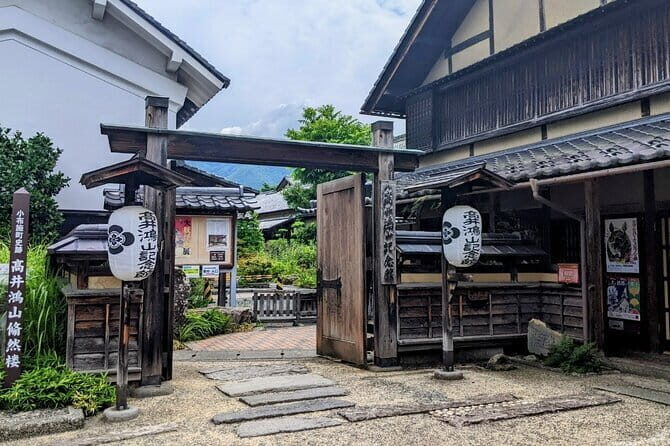
Obuse is the kind of place where art history feels less like museum facts and more like a walk through real geography. You start the day in the Nagano area and spend most of it in Obuse, guided so you know what you’re looking at before you get lost in the details.
The tour is structured around three artistic anchors. First you see Hokusai’s working and teaching space. Then you view original works at the Hokusai-focused museum. Finally, you stand under his painted phoenix at Gansho-in, one of his last and largest remaining in-situ artworks. That last stop is the one that turns a good art visit into a memorable experience.
At around 6 hours 50 minutes, it’s long enough to feel like a proper day trip, but not so long that you disappear into transit for half your time. You also get lunch included, with vegetarian options available, so you’re not hunting for food mid-schedule.
Key highlights I’d plan my day around
- Hokusai’s original studio and teaching setting at the Kozan Takai Memorial Museum
- Original works at Hokusai-kan, with exhibitions that shift across his career stages (including early ukiyo-e)
- Gansho-in’s painted phoenix ceiling, his last and largest remaining in-situ artwork
- Lunch included in Obuse-machi at Kurabu (or a similar restaurant if needed)
- Guides who turn art into story, with examples like Nadine, Devin, Dai, Kevin, Joyce Aiko, and Aiko
- Real breathing room: built-in free time to explore Obuse-machi with help on where to go
You can also read our reviews of more tours and experiences in Nagano.


Getting to Obuse from Nagano without turning it into a hassle
Your day starts at 9:30 am with pickup timing around Nagano Station, and the tour includes transportation from Nagano to Obuse and back. That matters because it lets you focus on the art stops instead of figuring out trains, buses, or transfers while your brain is already in museum mode.
This tour uses a mobile ticket, which is handy if you’d rather not fuss with paper tickets. And since it runs with a max group size of 25, it’s not a chaotic stampede. You can usually hear the guide and actually see what’s in front of you.
Price-wise, at $165.49 per person, you’re paying for the guide, transportation, museum and temple admission, and lunch. If you were to do this on your own, the hard part wouldn’t just be money. It’d be time: knowing what to see first, arranging transit, and keeping the day from dragging.
Stop 1: Kozan Takai Memorial Museum and Hokusai’s studio world
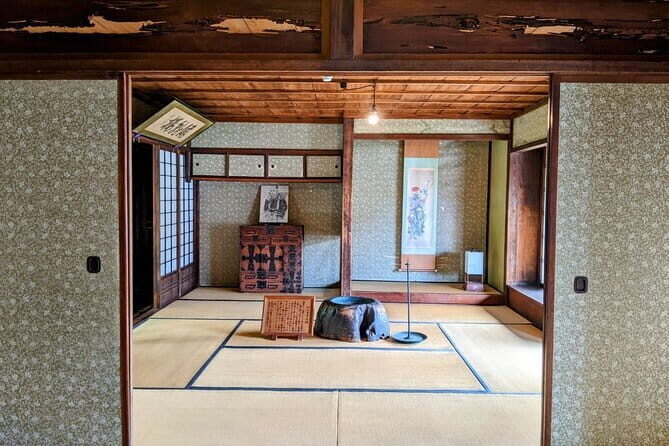
The first major stop is the Kozan Takai Memorial Museum, with an on-site visit of about 1 hour 15 minutes and admission included. This is where the tour earns its name: Hokusai’s studio is part of the experience, and you also get time to understand how he worked and taught while in Obuse.
Standing in a place tied to his daily routine changes how you view the art later. It’s one thing to read about Hokusai as a master of woodblock prints. It’s another to see the setting where teaching and production life overlapped.
Practical tip: this is a good stop to pay attention to the guide’s pacing. If you drift, you can miss the connections between the studio space and the kinds of works you’ll see afterward. Since you have time, slow down here and let the explanations stick.
Stop 2: Hokusai-kan Museum for original works (and changing exhibitions)

Next up is the Hokusai-kan Museum for about 1 hour 30 minutes, again with admission included. This small museum focuses on original works and uses changing exhibitions to spotlight different stages of Hokusai’s life and output.
You’ll hear about his early focus on ukiyo-e, which is a key word to keep in mind for this day. Ukiyo-e is the traditional Japanese woodblock print world Hokusai helped shape and expand. If you’ve ever felt overwhelmed by the sheer number of Hokusai prints out there, this museum is the antidote: it helps you see the progression rather than treating his work like one big blur.
The benefit of this stop being guided is simple: the guide can point out what to look for so you’re not just scanning images. If you enjoy woodblock printing, this is also the part of the day where the guide’s passion can really show.
Lunch in Obuse-machi at Kurabu (and what vegetarian means here)
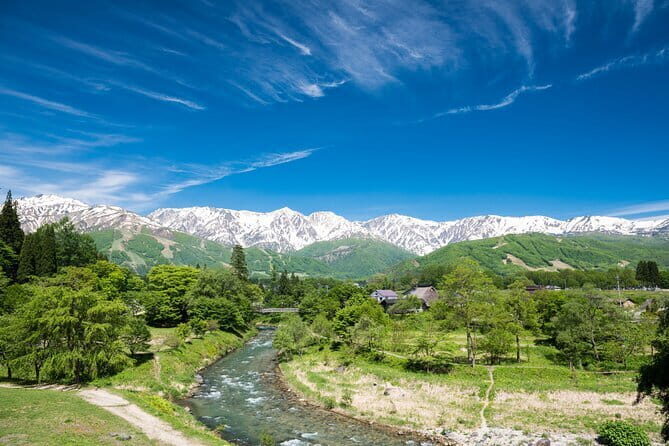
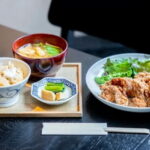
Lunch is built in at about 1 hour in Obuse-machi. The plan is lunch at Kurabu, and vegetarian options are available. If Kurabu isn’t available for any reason, the tour will arrange lunch at a similar restaurant.
This is one of those details that makes a difference. Many art day trips shove you into a random convenience store meal. Here, you’re given a sit-down break that keeps the schedule steady and keeps the day pleasant.
Practical tip: if you’re the type who hates waiting, treat this as your recovery period. Use the lunch time to reset your attention so the temple stop feels like a payoff instead of another sprint.
A few more Nagano tours and experiences worth a look

Free time in Obuse-machi: use it to get your bearings
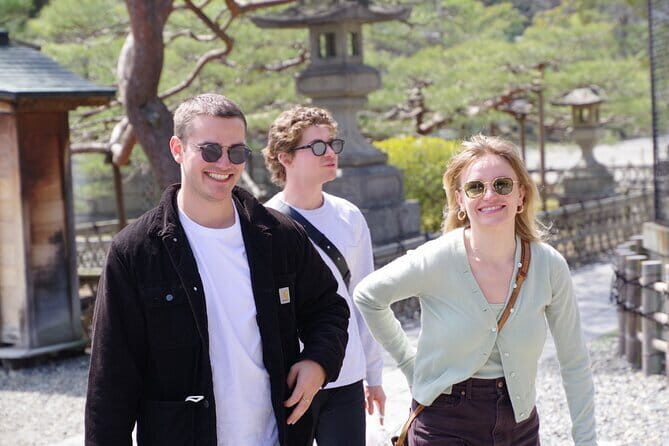
After lunch, you get free time in Obuse-machi for about 45 minutes. This isn’t just empty time. Your guide will explain what’s on offer and where to go, and then you can head out on your own at your pace.
This is the part where the town stops being a backdrop and becomes the experience. Obuse is small and historic enough that a short wander can feel rewarding. If the autumn season is in play, the light and colors can make the streets feel extra cinematic without trying too hard.
If you’re deciding what to do with this break, here’s my advice: follow the guide’s suggestions, then give yourself one personal mission. For example, pick one thing to photograph, one small street to walk, and one snack or tea stop if you want it. You’ll come away feeling like you actually lived in the town for a bit, not just passed through.
Stop 5: Gansho-in Temple and Hokusai’s painted phoenix ceiling
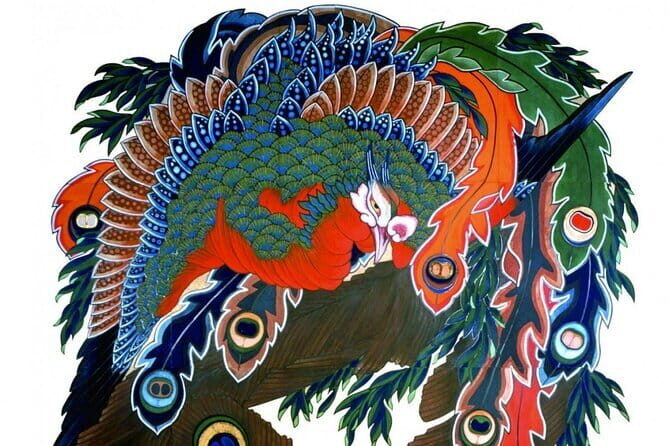
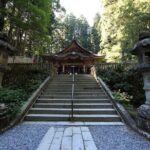
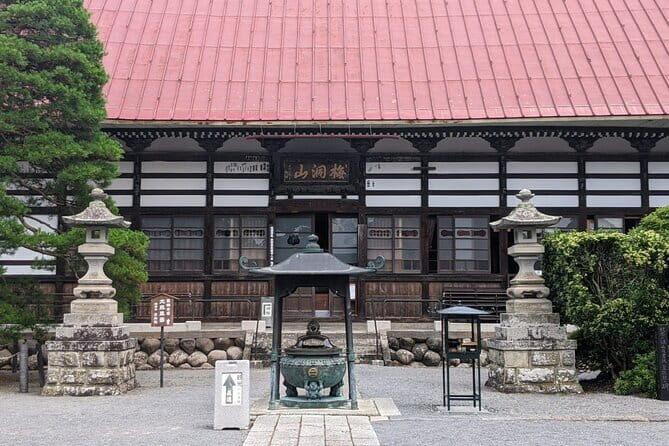
The final art anchor is Gansho-in Temple for about 45 minutes, with admission included. This is where you see Hokusai’s last and largest remaining in-situ artwork: the giant painted phoenix on the temple ceiling.
Ceiling art can be tricky because you can’t just stare from one angle and call it a day. You need to look upward, stay patient, and let your eyes adjust to the scale. This stop is worth doing slowly because the phoenix is meant to be experienced as part of the space, not like a flat picture.
Also, this is where the day’s structure clicks. After seeing Hokusai’s studio and original works, the temple ceiling becomes a kind of artistic finish line. The guide’s framing matters here; it helps you understand why the phoenix is such a big deal in terms of his late period and enduring legacy.
What the price covers, and when it’s worth it
At $165.49 per person, this isn’t a budget tour, but it also isn’t paying extra just for the word tour. You’re covering four big components:
- transportation from Nagano to Obuse and back
- entry fees for Kozan Takai Memorial Museum, Hokusai-kan, and Gansho-in Temple
- lunch (with vegetarian options)
- an English-speaking guide for the full scheduled block
When you do the math, it often compares well to DIY if you value time. The practical question isn’t only what things cost. It’s how much effort you want to spend coordinating transit and museum timing while also trying to enjoy Obuse.
One more value point: the schedule is about 6 hours 50 minutes door-to-door, starting 9:30 am. That’s a workable length for a single-day trip. If you’re trying to fit Hokusai into a larger Nagano itinerary, this structure reduces decision fatigue.
If you already have everything planned and you’re comfortable moving between stops on your own, you might save a little money. But if you want the art context and smooth logistics, this price makes sense.
Tour pacing: why the timing feels right (most days)
A lot of art tours fail because they either rush the museum parts or they kill the day with too much wandering. This one avoids that by mixing three types of time:
- museum/studio time where you have enough length to learn and look
- short structured breaks (like lunch) so you don’t spiral into hunger and crankiness
- a clear free-time window to explore Obuse with guidance
Guides in this program have a track record of storytelling and flexibility. For instance, Nadine gets credit for making the day feel vivid with storytelling and for recommending what to do that evening and the next day. Dai and Kevin are noted for pacing and for making the town and art feel connected. Joyce Aiko and Aiko are praised for bringing culture to life and adapting when visitors wanted more time.
Since guides can vary, the best way to protect your experience is simple: show up on time, listen for the stop order, and keep an open mind during the explanations. Then your free time will feel like bonus, not lost time.
Who should book this Obuse and Hokusai day tour
This is a strong fit if you:
- care about Japanese art and want a guided path through Hokusai’s world
- like woodblock print context (especially ukiyo-e) and want help seeing stages of his work
- want a single-day trip that feels focused but not imprisoning
- prefer a small group feel (up to 25) and a clear plan
It’s also a good match for people who want to add Obuse to a Nagano visit without turning the day into planning homework. And if you’re traveling with someone who is curious but not deeply technical about art, the guide-driven approach makes the whole experience easier to enjoy.
If you’re the type who wants total freedom and hates schedules, you might feel constrained. The day includes multiple ticketed stops and a set order, so you won’t be able to wander as long as you like at every point.
Should you book? My quick decision guide
Book this tour if you want Hokusai with context, not just images. The combination of Hokusai’s studio, original works at Hokusai-kan, and the Gansho-in phoenix in one day is a clean, satisfying arc.
Pass or consider alternatives if you’re chasing maximum free time in Obuse or you already know exactly which sites you want and you’re confident managing transport and timing yourself. Also, if you hate structured days, this one can feel like you’re always moving to the next “must-see.”
One last practical note: this tour is often booked around 12 days in advance, so if your dates are firm, I’d lock it in early rather than gambling.
FAQ
How long is the Obuse and Hokusai art tour?
The tour runs for about 6 hours 50 minutes.
Where does the tour start and when?
It starts at 9:30 am and begins around Nagano Station, with transportation included to Obuse and all listed destinations.
What stops are included?
You visit the Kozan Takai Memorial Museum, the Hokusai-kan Museum, Obuse-machi for lunch and free time, and Gansho-in Temple to see the painted phoenix.
Is lunch included, and are there vegetarian options?
Yes. Lunch is included, and vegetarian options are available. The plan is Kurabu, or a similar restaurant if Kurabu isn’t available.
Are admission fees included?
Yes. Entry fees for the Takai Kozan Museum, Hokusai-kan, and Gansho-in Temple are included.
Do I need to arrange transportation myself?
No. Transportation from Nagano to and from Obuse and the listed destinations is included. Shinkansen tickets to and from Nagano are not included.
Can I cancel and get a refund?
Yes. You can cancel up to 24 hours in advance for a full refund. If you cancel less than 24 hours before the experience starts, the amount paid is not refunded.