REVIEW · KYOTO
Kyoto: Hands-on Takoyaki and Okonomiyaki Cooking (1 Hour)
Book on GetYourGuide →Operated by Japan Association of Washoku Lifestylists · Bookable on GetYourGuide
One hour. Two Japanese comfort-food skills. I love that you cook takoyaki and okonomiyaki yourself with friendly step-by-step help, and that the class stays beginner-friendly without dragging on. The only watch-out is that the timetable is tight, so if you want slow, technical practice, you might feel a little rushed.
It is also easy to reach on foot, about a 10-minute walk from Shijo or Karasuma Stations, and the kitchen can adjust ingredients for gluten-free, vegan, and halal-friendly needs (with allergies handled too). As of December 2025, sessions are led or supervised by experienced instructors, which helps the whole flow feel more dependable.
In This Review
- Key things that make this class worth your hour
- Why a 1-hour Kyoto cooking class makes sense
- Price and value: what $56 really buys
- Getting there: meeting point and walk from Kyoto stations
- What happens during the class: your hour, step by step
- 1) Check-in and setup (fast and casual)
- 2) Takoyaki time: learning the feel of the batter and pan
- 3) Okonomiyaki time: build, cook, and manage thickness
- 4) Eat what you made
- Takoyaki and okonomiyaki: why this pairing works
- Instructor quality: what to look for (and why December 2025 matters)
- Dietary needs: gluten-free, vegan, halal-friendly, and allergies
- Small group size: up to 6, which changes the whole experience
- Timing and pacing: the main drawback to plan around
- What you can realistically learn (and what you can’t)
- Who should book this cooking class in Kyoto?
- The final decision: should you book this one?
- FAQ
- What dishes do you cook in this 1-hour class?
- How long is the cooking experience?
- Where is the meeting point?
- Is the class accessible from central Kyoto?
- Can the class accommodate gluten-free, vegan, halal-friendly, or allergy needs?
- What’s included in the price?
- Is there a cancellation window or pay-later option?
Key things that make this class worth your hour
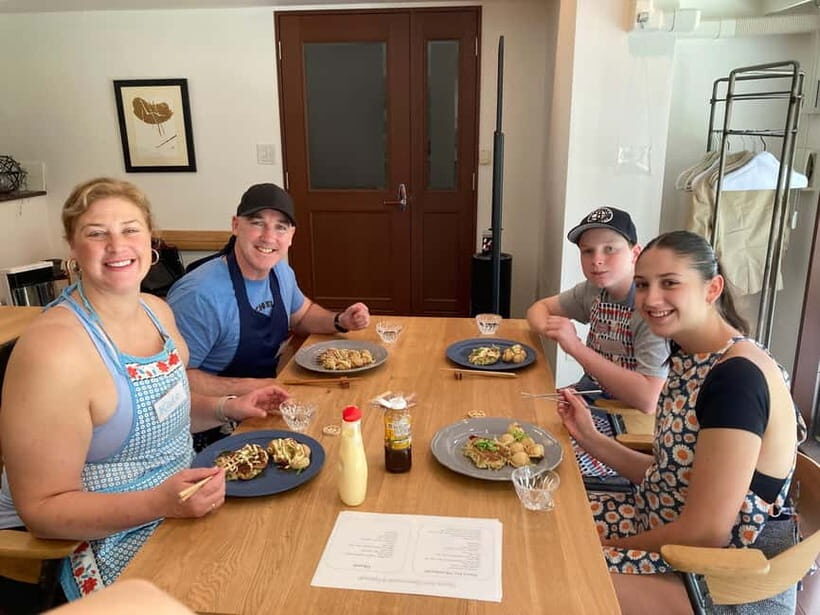
- Two dishes, one method match: takoyaki and okonomiyaki share ingredients and rhythm, so learning transfers fast.
- Small group, up to 6: you get real coaching instead of watching from the sidelines.
- Diet-friendly options: gluten-free, vegan, halal-friendly, and allergy-free requests can be accommodated with advance notice.
- Close to major transit: roughly a 10-minute walk from Shijo or Karasuma Station.
- December 2025 instructor oversight: more experienced-led guidance helps keep the timing tight.
Why a 1-hour Kyoto cooking class makes sense
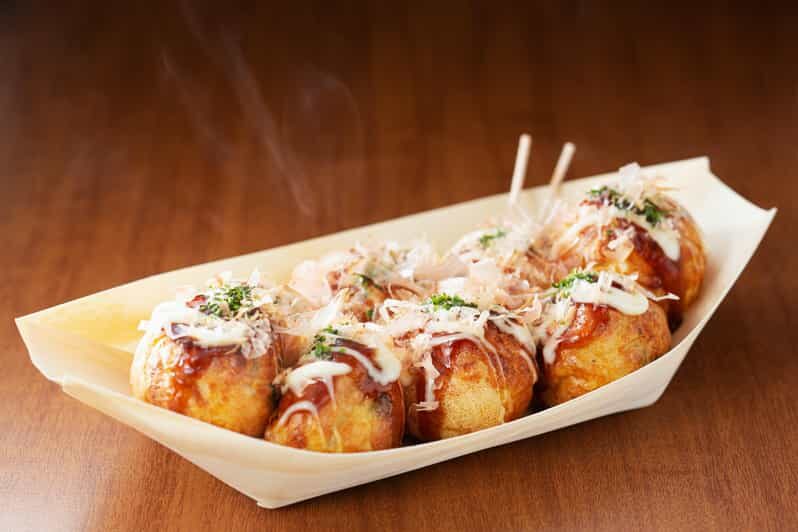
Kyoto can be packed: temples early, markets mid-day, then dinner plans that run late. This is the kind of experience that fits when you still want a hands-on food story without losing half your day.
What I like most is the format. You are not sitting through a long explanation of ingredients and history. You get working right away, learning by doing—mixing, shaping, cooking, and then eating what you made. Even the name of the dishes tells you the vibe: these are everyday comfort foods, not precious, fussy food.
And because you tackle two classics in one go, you leave with more than one win. Once you understand the batter logic and the cooking pacing, it becomes easier to repeat at home.
You can also read our reviews of more cooking classes in Kyoto
Price and value: what $56 really buys
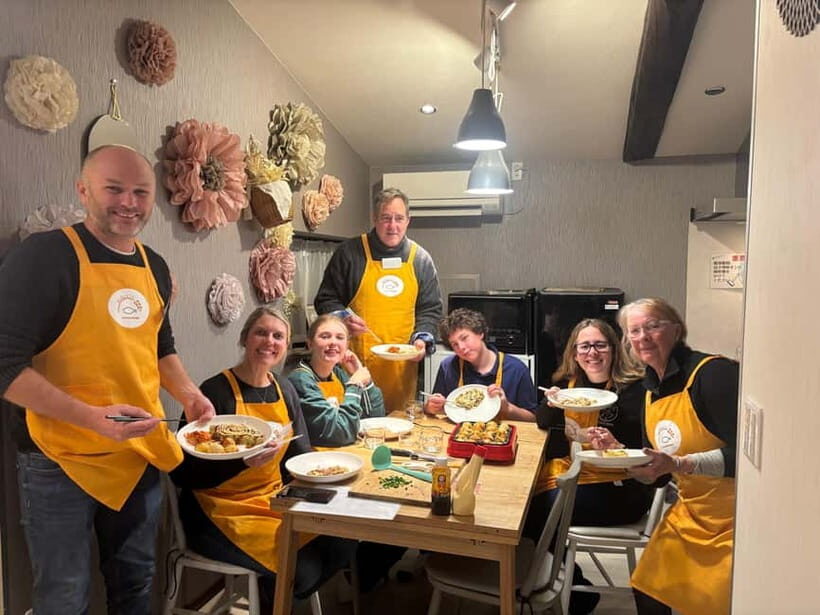
At $56 per person for one hour, you might wonder if this is more “experience” than “meal.” Here’s why it can still feel like good value:
- You are paying for instruction, not just ingredients.
- Ingredients (the lunch or dinner food) and cooking utensils are included, plus aprons.
- The group is limited to 6, so you are likely to get more hands-on attention than you would in a larger class.
The big thing to remember: this is not a multi-course dining event. You are making two dishes, cooking them, and then eating them. If you’re okay with a short, skill-focused payoff, the price matches the format.
Getting there: meeting point and walk from Kyoto stations

Location matters in Kyoto. The class is within about a 10-minute walk from either Shijo Station or Karasuma Station, which is perfect if you are already doing things in the downtown core.
When it’s time to check in, the meeting point is straightforward:
- Take the elevator to the third floor.
- Press the doorbell for 302.
If you’re coming from JR Kyoto Station, expect about 15 minutes by train or bus, then a short walk. You can also reach it in roughly 15 minutes on foot from Nishiki Market.
Practical tip: Kyoto signage and building entrances can be a little sneaky. Give yourself a few extra minutes the first time you navigate on foot.
What happens during the class: your hour, step by step
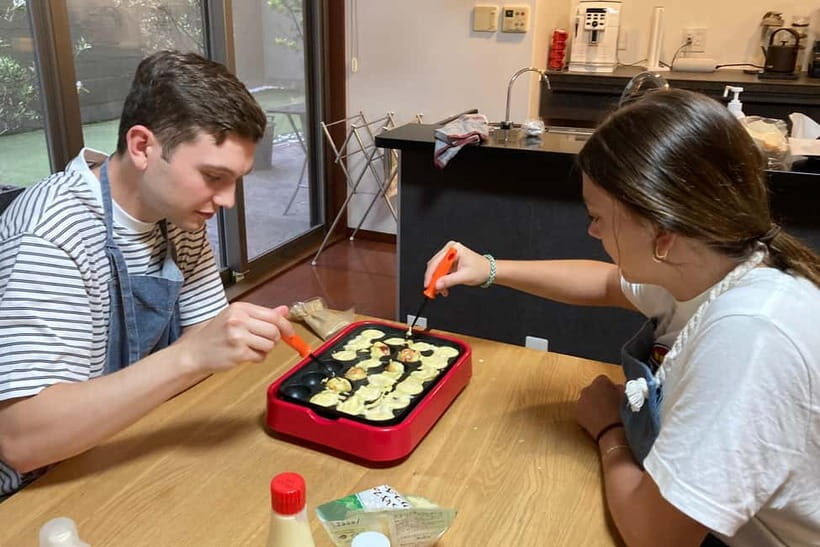
The experience is designed as a hands-on, beginner-friendly cooking session. It runs for 1 hour, and the structure is meant to keep the pace comfortable for learning—especially after the December 2025 update, when classes are led or supervised by experienced instructors.
Here is what the flow typically feels like:
1) Check-in and setup (fast and casual)
You’ll meet your instructor and get into cooking mode with aprons and utensils provided. Since it’s a small group (limited to 6), the room doesn’t feel chaotic. This is where you get the core guidance: what you’ll make and what the instructor wants you to pay attention to.
A few more Kyoto tours and experiences worth a look




2) Takoyaki time: learning the feel of the batter and pan
Takoyaki is all about timing and technique. In one class, you won’t become a master—but you can learn the key idea: cooking success depends on consistent batter and steady handling, not just memorizing a recipe.
The instruction is hands-on. You make the dish yourself while the instructor answers questions and gives helpful tips as needed. If you’re the type who likes to understand why something works, this is a good setting because you can see the results immediately as you cook.
3) Okonomiyaki time: build, cook, and manage thickness
Okonomiyaki can look intimidating because it feels like there’s a lot happening—batter, toppings, and flipping/cooking. In a one-hour format, the goal is simpler: you learn the basics of building the right thickness and cooking it through without losing control.
A nice part is that takoyaki and okonomiyaki aren’t totally separate worlds. Many of the same flavor fundamentals show up across both, so it feels like you’re expanding one skill set rather than starting from zero twice.
4) Eat what you made
After cooking, you sit down and enjoy the dishes in a relaxed, casual atmosphere. This is not a “stand and pose” moment. You actually get to taste your work while it’s still fresh.
Takoyaki and okonomiyaki: why this pairing works
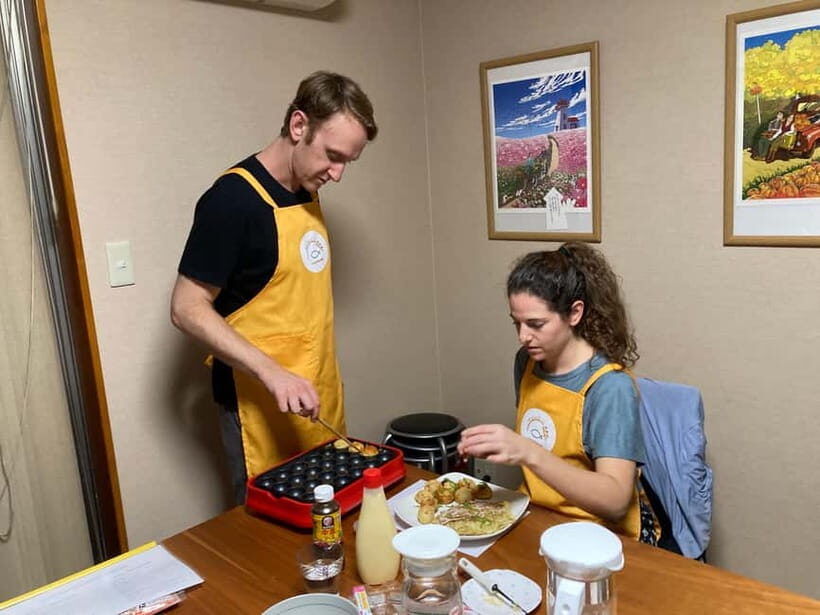
These two foods are popular comfort staples in Japan—especially in Kansai. In practical terms, the pairing works because the class targets overlapping skills:
- You get used to batter handling and cooking pacing.
- You learn to think in terms of texture: set, cooked through, and properly formed.
- You discover how toppings and flavoring choices change the final feel, even when the method is similar.
One small detail I like: this structure means you can ask better questions. When you understand what you just did for takoyaki, you can apply that thinking to okonomiyaki right away.
Instructor quality: what to look for (and why December 2025 matters)
Instructors are everything in a hands-on cooking class. The positive experiences strongly point to friendly, engaged teaching—one instructor named Marie was mentioned as especially kind and cheerful.
There was also at least one report of a session feeling improvised due to being late and not fully prepared when someone arrived. That kind of hiccup can happen anywhere, but it’s exactly why the December 2025 update is important: classes are now led or supervised by experienced instructors, with a refined class flow aimed at helping the hour stay smooth.
If you are the type who hates wasting time, that update is the reassurance you want before booking.
Dietary needs: gluten-free, vegan, halal-friendly, and allergies
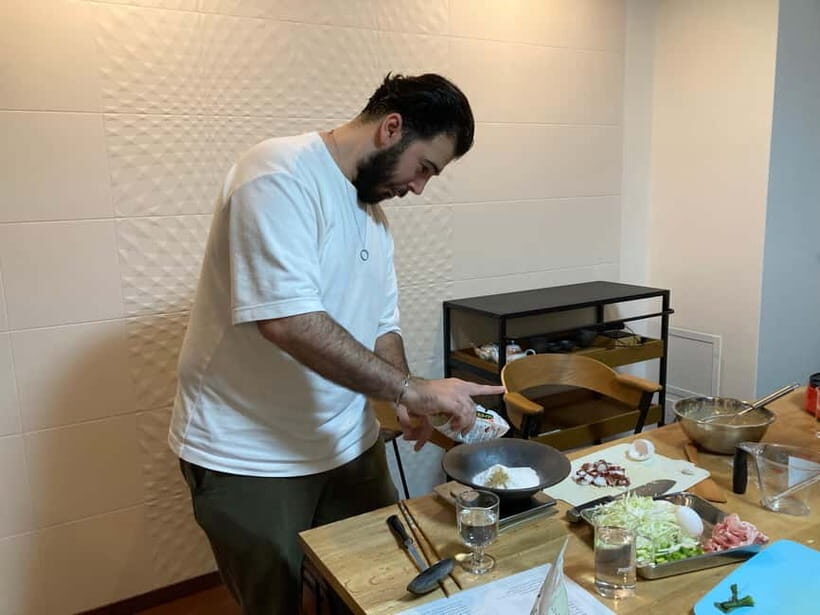
This class is set up with dietary flexibility. You can request:
- gluten-free options
- vegan options
- halal-friendly options
- allergy-free adjustments
The key rule is simple: you need to inform the staff at booking. The ingredients will be adjusted accordingly.
A practical way to think about this: you’re not just “adding substitutes.” You’re cooking a dish while the ingredient plan is tailored for your needs. That’s why advance notice matters—it gives the kitchen time to prepare the right components so you can still cook, not just watch.
If you have multiple restrictions (say, gluten-free plus vegan), book early and be specific. The more clearly you state the dietary needs, the smoother the class tends to go.
Small group size: up to 6, which changes the whole experience
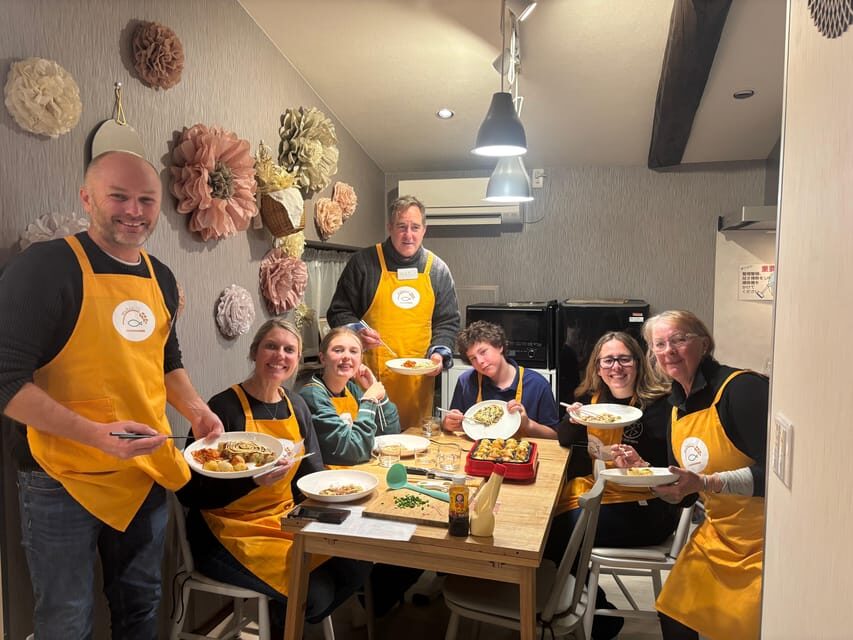
Limiting the group to 6 is a big deal for a short class. When the class is only 1 hour, there is no room for long waiting turns.
A small group also tends to create the kind of interaction people often hope for in Japan: you can ask questions and get real answers. In one case, a smaller private-style setup made it easier to talk with the hosts and learn about Japan’s food culture beyond the cooking itself.
If you like a more personal tone—questions welcomed, not brushed aside—this format fits.
Timing and pacing: the main drawback to plan around
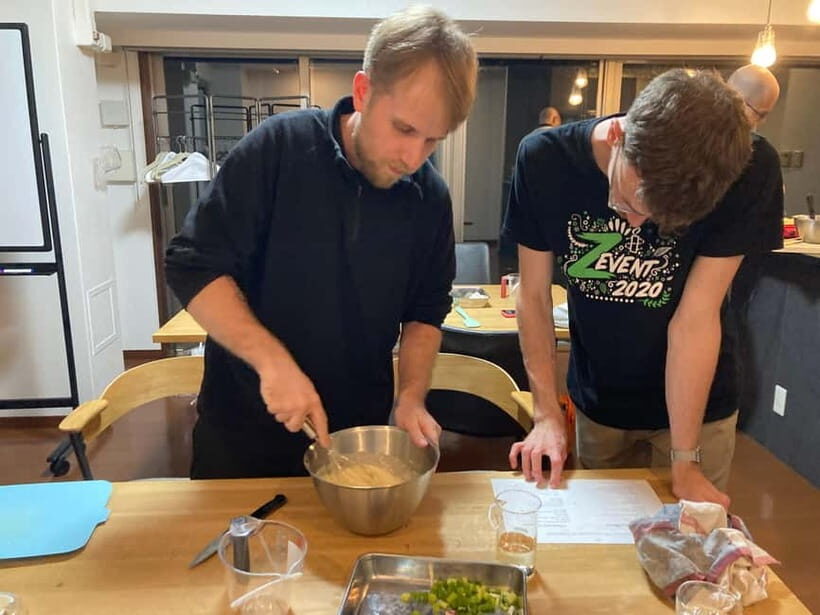
Here’s the honest part: it’s 1 hour. That means the instructor has to keep things moving so you finish both dishes. If you want a slow, step-by-step deep dive into every technique, you may wish the class were longer.
Also, if you arrive late, you’ll feel it. Takoyaki and okonomiyaki both depend on timing, and the class is built around completing both.
My advice: plan to arrive early enough to settle in without rushing.
What you can realistically learn (and what you can’t)
You are going to learn:
- how to cook takoyaki and okonomiyaki hands-on
- how ingredient choices and cooking pacing affect texture
- what a local comfort-food plate feels like right away, not after research and dinner regret
You are not going to learn:
- every variation of takoyaki or okonomiyaki across Kyoto or Japan
- a full meal service with sides and a restaurant-style experience
Think of it as a practical cooking “starter kit.” You’ll leave with usable technique and enough confidence to try again at home.
Who should book this cooking class in Kyoto?
I’d book it if you:
- want a hands-on food experience that fits a tight schedule
- like cooking and want to learn by doing
- have dietary needs and want a class that can adjust ingredients (with advance notice)
- prefer a small-group atmosphere with real coaching
I’d skip it if you:
- hate being on a schedule
- want a lecture, market walk, or full multi-course meal
- need very long practice time to feel comfortable with flipping and batter cooking
The final decision: should you book this one?
If you’re doing Kyoto the classic way—shrines, neighborhoods, and good food—you’ll probably appreciate this as the practical contrast. It’s short, it’s hands-on, and it gives you a story you can repeat at home. The dietary options are a big plus, and the December 2025 instructor oversight adds reassurance about class flow.
At the same time, be honest about the format: it’s an hour with two dishes. If you’re expecting a slow, detailed cooking retreat, pick a longer class instead.
FAQ
What dishes do you cook in this 1-hour class?
You make takoyaki and okonomiyaki in the same session.
How long is the cooking experience?
The experience runs for 1 hour.
Where is the meeting point?
Take the elevator to the third floor and press the doorbell for 302.
Is the class accessible from central Kyoto?
Yes. It’s about a 10-minute walk from Shijo Station or Karasuma Station, and around 15 minutes on foot from Nishiki Market (plus a short walk from JR Kyoto Station).
Can the class accommodate gluten-free, vegan, halal-friendly, or allergy needs?
Yes. You should inform the staff at booking, and ingredients will be adjusted accordingly.
What’s included in the price?
The experience cost, ingredients for the lunch or dinner food, and aprons and cooking utensils (rental) are included.
Is there a cancellation window or pay-later option?
There is free cancellation up to 24 hours in advance for a full refund, and you can reserve now & pay later.