REVIEW · OSAKA
Osaka Dotonbori: Hand Roll Sushi Experience
Book on GetYourGuide →Operated by 株式会社DONOJAPAN · Bookable on GetYourGuide
Osaka’s sushi isn’t just something you eat. In the Dotonbori area, you can actually roll it yourself, get a wasabi tasting that surprises many first-timers, and enjoy the Dotonbori River view from a tatami room. The format is simple and focused: learn the basics, taste the key flavors, then build your own hand rolls with seasonal seafood.
I really like the step-by-step flow (rice → wasabi → rolling) because it explains what matters instead of throwing you into a food fight. I also like that you get a river-view break in between lessons, which makes the class feel like Osaka, not just another kitchen demo.
One thing to consider: you may not have total control over every fish choice. At least one participant was disappointed by receiving a fish they didn’t want, which can lead to avoidable waste.
In This Review
- Key takeaways before you go
- Dotonbori hand-roll sushi: why this format is so satisfying
- Finding 海鮮物語道頓堀店 and getting settled on the 2nd floor
- The 2-hour rhythm: rice, wasabi, then your hand rolls
- Sushi basics, then sushi rice
- Wasabi tasting (the moment most people remember)
- Hands-on: make your own hand-rolled sushi
- Real wasabi: what you’re actually tasting and why it matters
- Seasonal seafood and the roll-building choices (and limits)
- Where the value comes from: 8,000 yen for rice, wasabi, and hands-on food
- Timing in your Osaka day: pick your slot and plan around it
- Who this class suits (and who should rethink it)
- Practical details that help your first attempt at hand rolls
- The overall vibe: friendly instruction and real skill-building
- Should you book Osaka Dotonbori hand-roll sushi?
- FAQ
- FAQ
- How long is the hand-roll sushi experience?
- What time does the experience run in Dotonbori?
- Where is the meeting point?
- Where does the activity take place inside the building?
- What’s included in the price?
- Is the wasabi tasting included?
- How much does it cost?
- What language is the experience taught in?
- What should I bring with me?
- What is the cancellation policy?
Key takeaways before you go
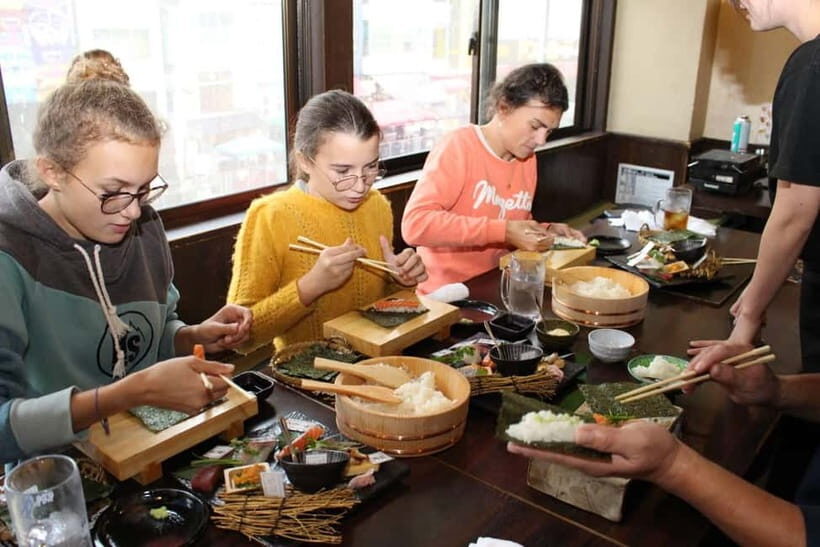
- Tatami room + Dotonbori River views during the class, so the setting is part of the experience
- Real wasabi tasting is a highlight, with the aroma and heat being the big shock for many people
- You make sushi rice and learn how vinegar changes the flavor
- Hand-rolled sushi, not just watching, so your hands actually do the work
- Seasonal seafood means the menu can feel different from day to day
- English support makes the instruction easy to follow
Dotonbori hand-roll sushi: why this format is so satisfying
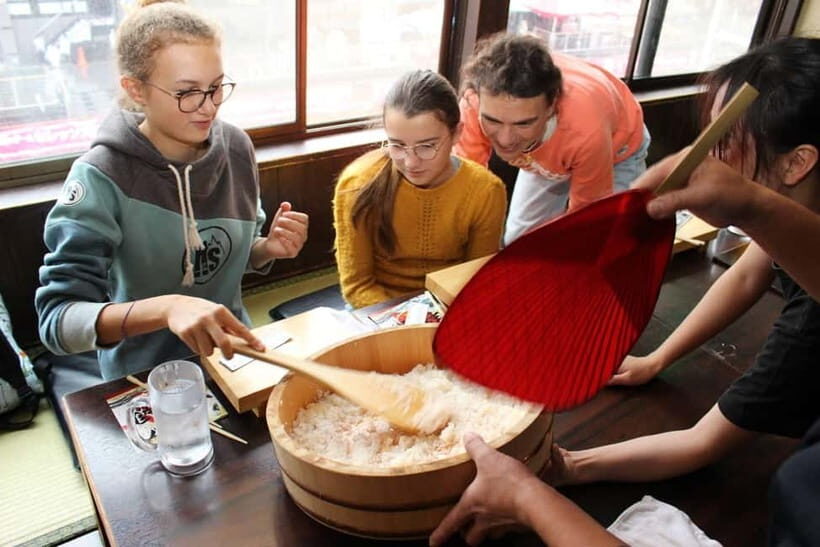
This isn’t a long lecture and it isn’t a buffet where you wonder what you’re eating. You get a compact teaching experience that starts with the fundamentals of sushi—especially rice—and then moves into the fun part: rolling your own hand rolls.
What makes it work for Osaka is the setting. Even though you’re in the thick of the Dotonbori area, the class happens on a tatami floor with Dotonbori River views, so you can slow down while you learn. That contrast is exactly what makes this feel like a real activity, not a quick stop.
You can also read our reviews of more tours and experiences in Osaka.


Finding 海鮮物語道頓堀店 and getting settled on the 2nd floor
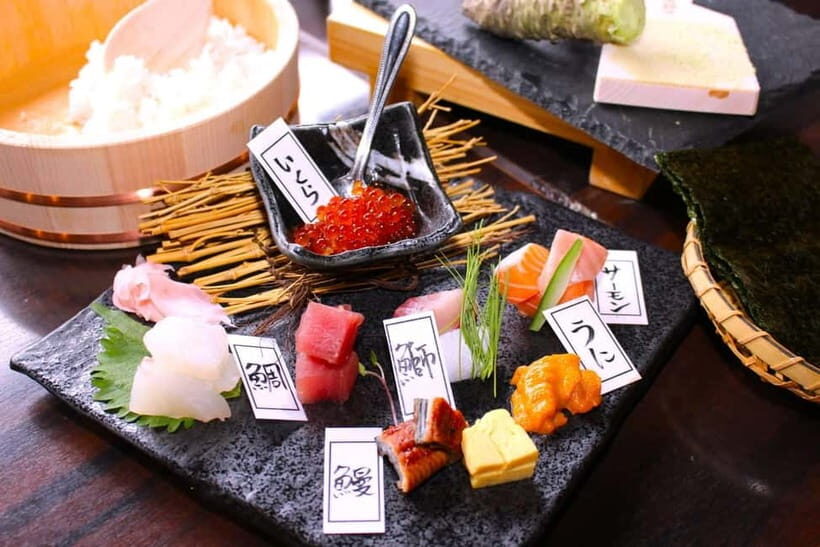
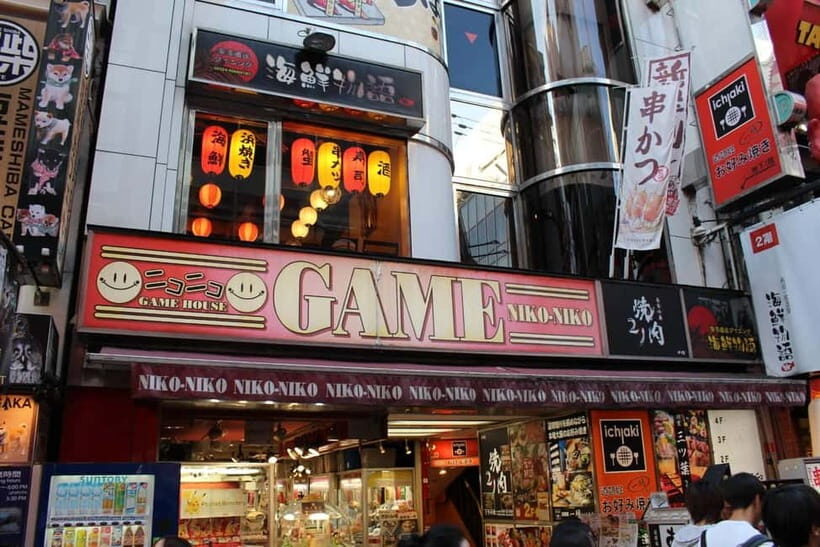
The meeting point is at 海鮮物語道頓堀店 (Kaisen Monogatari Dotonbori). You’ll enter from the main street, then head up to the activity space on the 2nd floor of the Nico Building (1-6-12 Dotonbori, Chuo-ku, Osaka).
A small but useful detail: there’s a game arcade on the first floor, so you can spot the building quickly. You’re not going to roll sushi next to claw machines, but it helps you orient yourself.
Once you’re inside, you’ll be in a tatami room with river views. The room setup matters more than you’d think. Sushi is a hands-on food, and being seated comfortably helps you focus instead of rushing.
The 2-hour rhythm: rice, wasabi, then your hand rolls
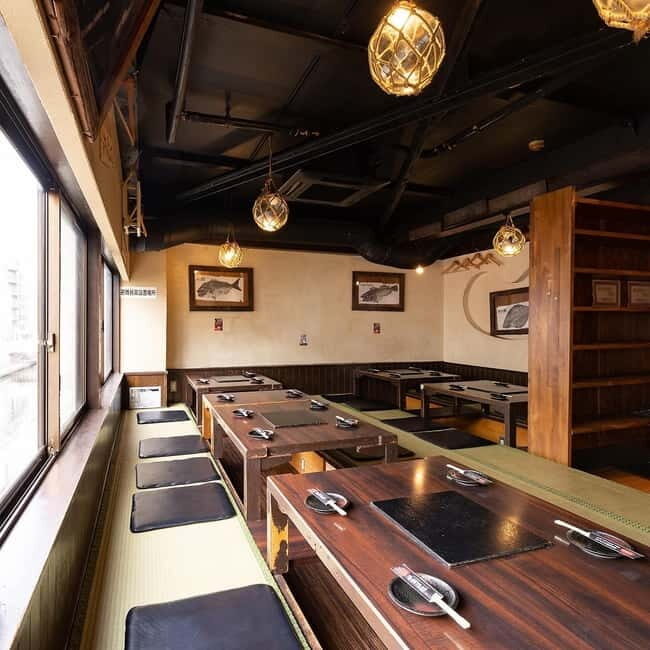
Each session runs for about two hours, with start times at 12:00 pm and 2:00 pm. The pacing stays tight: you learn the essentials, taste one key ingredient that’s often misunderstood, then get to roll.
Here’s how the class typically moves:
Sushi basics, then sushi rice
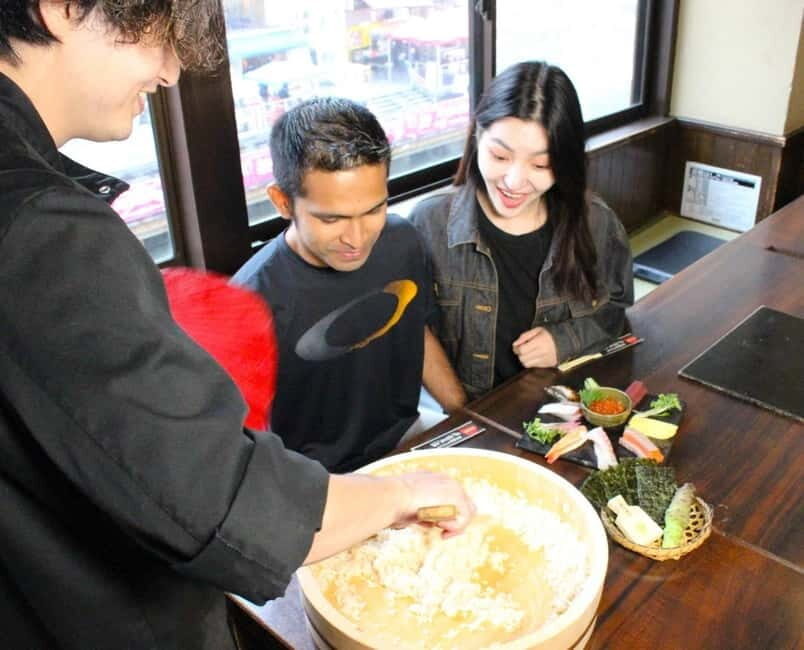
You begin with an introduction to sushi and why sushi rice is its own ingredient, not just a base. You’ll get a making sushi rice session, which includes learning about the flavor of Japanese rice and the craft of mixing vinegar into the rice.
This part is valuable because most people only think about fish. In Japan, the rice is a major driver of the final flavor, texture, and even how the roll holds together. If you’ve ever wondered why some sushi rice tastes clean and balanced while other rice tastes flat or overly sweet, this is where you start understanding why.
Wasabi tasting (the moment most people remember)
Next comes a wasabi tasting. Real wasabi has a different character from the common green paste many people know from outside Japan. You’ll learn what makes it smell and taste distinct—specifically the aroma and spiciness.
This is one of the most mentioned reasons people love the experience. Even if you think you already know wasabi, this tasting helps you experience it as a fresh, sharp ingredient rather than a green condiment.




Hands-on: make your own hand-rolled sushi
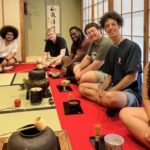
Finally, it turns into a workshop. You’ll get the tools and materials, and you’ll roll sushi yourself. The class includes making hand-rolled sushi, so you’re shaping, tasting, and adjusting as you go.
You’ll also learn what to pay attention to while rolling—things like how the rice behaves and how the filling sits inside the hand roll. The goal is not perfection. The goal is learning enough technique that you can order sushi later with better instincts.
Real wasabi: what you’re actually tasting and why it matters
Real wasabi is a big deal in this class, and not just as a novelty. The tasting is popular because it connects an ingredient to sensory detail: smell first, heat second.
In many places, wasabi is treated like pure fire. Here, you get the idea that wasabi has an aroma that hits differently than typical spice. The heat also feels more natural and sharper rather than just burning the tongue.
For you, this matters because wasabi changes how you eat. When you understand how it behaves, you’re less likely to use it randomly and more likely to use it in a way that supports the seafood rather than overpowering it.
If you love food experiments, this tasting alone can justify the class energy. If you dislike spicy flavors, you’ll still get the point—it’s more about character than letting you suffer.
Seasonal seafood and the roll-building choices (and limits)
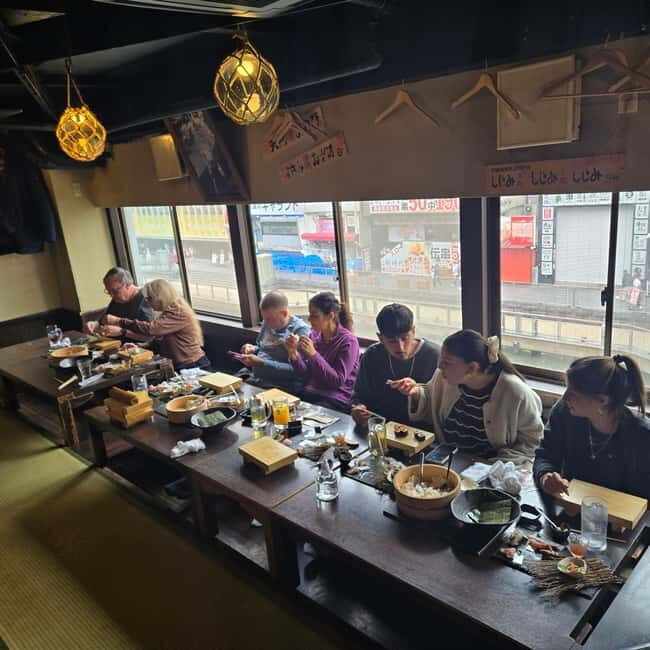
This experience focuses on seasonal seafood flavors, which means what you learn and what you taste can shift based on availability. That’s part of the appeal in Osaka: the city runs on freshness and short timing.
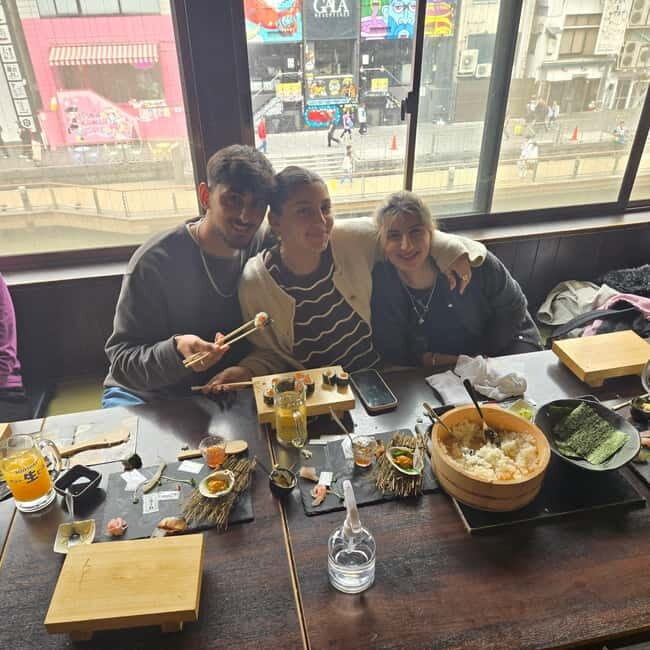
You may be given options for how to make your rolls and what ingredients to use. One review praised a wide variety of options for building your sushi rolls, plus a chef who shared a special homemade soy sauce to pair with the rolls.
At the same time, one person felt disappointed that they couldn’t choose a fish, leading to waste when the fish didn’t match their preference. So here’s the practical takeaway for you: go with a flexible mindset. If you have strong preferences, you might want to ask how ingredient selection works before you start—especially if you’re sensitive to certain fish types.
Soy sauce also gets some attention. Sharing a homemade soy sauce is a smart teaching move because it shows how sushi flavor works as a system: rice balance, seafood character, and pairing sauce.
Where the value comes from: 8,000 yen for rice, wasabi, and hands-on food
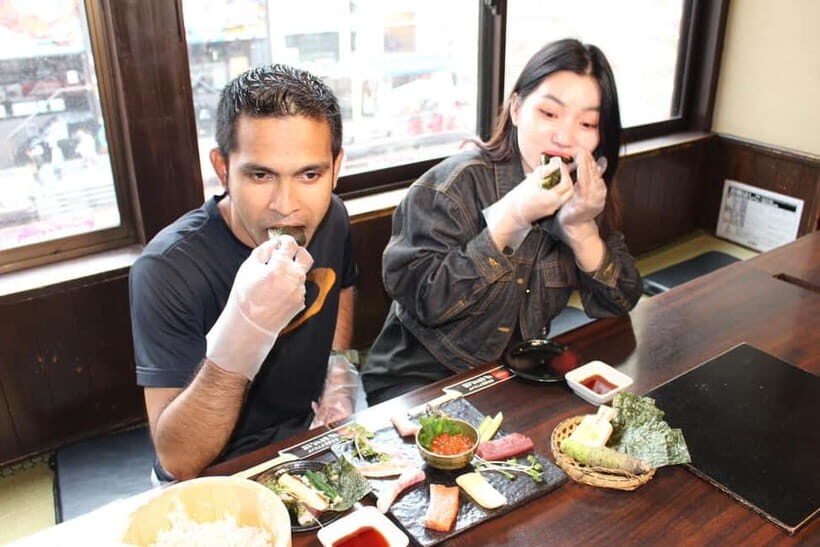
The price is listed as 8,000 yen per person (tax included), which is about $54. That’s not cheap, but it’s also not a random tourist gimmick.
Here’s why the value often feels fair:
- You learn how to make sushi rice, not just how to eat it
- You do a wasabi tasting that clarifies a signature ingredient
- You get hands-on rolling with tools and all materials provided
- The class includes one drink service (soft drink)
And importantly, this is a session you can’t really fake at home without a bunch of gear and practice. The instruction reduces trial-and-error. You’ll also get to taste the food you make. Several accounts mention you get a lot of food for the money, which fits the idea that you’re not paying just for instruction.
Could it be overpriced for someone who mainly wants sightseeing bites? Maybe. But if you want to learn a skill and take that knowledge into future sushi meals, the pricing makes more sense.
Timing in your Osaka day: pick your slot and plan around it
With two start times (12:00 pm and 2:00 pm), this fits nicely into a food-focused Osaka morning or early afternoon plan. If you’re walking Dotonbori anyway, you can treat the class like your central activity.
A practical tip: this is a two-hour sit-down workshop on the 2nd floor, not a quick street snack. Build in time for walking over, getting settled, and then moving on after your session ends back at the meeting point.
Also, bring comfortable clothes and basics like water and a hat. You’ll likely be standing and walking through Dotonbori before the class, and Osaka heat can catch you off guard.
Who this class suits (and who should rethink it)
This experience is a good match if:
- You like learning how food is made, not just tasting it
- You’re curious about Japanese ingredients, especially real wasabi
- You want a compact class that still feels hands-on
- You want a scenic break with river views in a tatami room
It may not be the best choice if:
- You need strict control over fish selection
- You’re only interested in sushi eating and nothing else
- You dislike spice or strong aromas, even though the tasting is presented as an ingredient lesson
The language support is English, which helps a lot if you don’t read Japanese. The experience is also set up to be understandable, since it’s built around instruction and not complex menu memorization.
Practical details that help your first attempt at hand rolls
A few logistics and comfort points make a difference:
- Location: 2nd floor of Nico Building, 1-6-12 Dotonbori, Chuo-ku, Osaka
- Meeting point: 海鮮物語道頓堀店にお越しください
- Session length: about 2 hours
- What’s included: sushi intro, rice making, wasabi tasting, hands-on rolling, all materials, and a soft drink
- What to bring: hat, camera, water, comfortable clothes
Also, if you’re photographing, the tatami room with river views gives you a better backdrop than a typical classroom corner. Bring your camera, but keep it light. You’ll be handling food, so you don’t want a bulky setup.
Finally, come with an appetite. This is a class where you make and taste. If you arrive starving and finish full, you’ll probably feel you got your money’s worth.
The overall vibe: friendly instruction and real skill-building
What consistently comes through is the human side of the teaching. The chef and assistant roles are clearly supportive, and many people highlight how friendly and helpful the staff are.
That matters because sushi rolling looks easy until you try it. Having someone guide you through rice texture, rolling pressure, and pairing choices keeps the experience from turning frustrating. Even if your rolls don’t look perfect, you’ll understand what to fix next time.
The experience also carries an authentic feel. The tatami room, the sushi focus, and the teaching style all help it feel grounded in Japan rather than a generic cooking show.
And yes, it’s still food. People leave talking about what they tasted—especially the wasabi experience and the fresh seafood flavor.
Should you book Osaka Dotonbori hand-roll sushi?
Book it if you want a hands-on Osaka food moment. The combination of sushi rice training, a memorable real wasabi tasting, and actually rolling your own hand sushi makes this one of the more skill-building activities in the Dotonbori area. Add the river-view tatami setting, and you’ve got a class that feels like a break from the street noise while still being in the middle of Osaka.
Consider skipping or choosing another option if you strongly need ingredient control (especially fish type). Based on how this class runs, you may not be able to pick everything.
If you do book, go hungry, stay flexible with ingredients, and treat the wasabi tasting like a mini science lesson for your mouth. That’s where the experience earns its top marks.
FAQ
FAQ
How long is the hand-roll sushi experience?
Each session lasts about two hours.
What time does the experience run in Dotonbori?
It runs twice a day, at 12:00 pm and 2:00 pm.
Where is the meeting point?
Meet at 海鮮物語道頓堀店. The activity ends back at the meeting point.
Where does the activity take place inside the building?
It takes place on the 2nd floor of Nico Building at 1-6-12 Dotonbori, Chuo-ku, Osaka.
What’s included in the price?
The experience includes sushi introduction, making sushi rice, a wasabi tasting, and hands-on hand-rolled sushi. All materials and tools are provided, plus one soft drink.
Is the wasabi tasting included?
Yes, a wasabi tasting is part of the experience and is described as especially popular.
How much does it cost?
The cost is 8,000 yen per person (tax included), which is listed as about $54 per person.
What language is the experience taught in?
The experience is offered in English.
What should I bring with me?
Bring a hat, camera, water, and comfortable clothes.
What is the cancellation policy?
You can cancel up to 24 hours in advance for a full refund.