REVIEW · FUKUOKA
Fukuoka Private Tour: Heart and Tradition of Hakata
Book on Viator →Operated by Trip Designer Inc. · Bookable on Viator
Hakata has a way of slowing you down. This private tour threads temples, shrine, and old-town streets into one easy day, with a guide who keeps the context clear and the route sensible. I especially love how the day pairs famous sights like Tochoji Temple and Kushida Shrine with quieter “how locals lived” stops, so you don’t just see places—you get the why behind them. And I also love that you’re not left to figure out transport on your own; public transportation and train tickets are built into the plan.
One thing to weigh: it’s about 7 hours and includes a decent amount of walking, so comfortable shoes matter. The tour notes a moderate fitness level, and it’s paced for sightseeing, not long rests. If you’re hoping for a mostly sit-down day, this may feel like a lot.
In This Review
- Key highlights worth the time
- Hakata’s “heart and tradition” in one guided circuit
- Price and logistics: what you’re really paying for
- How the day moves: pickup, travel, and pacing
- Stop 1: Tochoji Temple and Kūkai’s landmark pagoda
- Stop 2: Kushida Shrine, old faith in a neighborhood setting
- Stop 3: Hakatamachiya Furusatokan for old-house life and crafts
- Stop 4: Kawabatadori Shopping Street for lunch-town energy
- Canal City Hakata: modern city inside the city
- Ohori Park: the moat-turned-refuge
- Stop 6: Hakata Hyakunenkura and sake tasting with strawberry flavor notes
- Stop 7: ending at Hakata Station
- What I’d do differently (a realistic drawback)
- Who this Hakata private tour is best for
- Final verdict: book it or pass?
- FAQ
- How long is the Fukuoka Private Tour: Heart and Tradition of Hakata?
- Where does the tour start and end?
- Is pickup included?
- What kind of guide do you get?
- What’s included with the sake stop?
- Are entrance fees included?
- Is it easy to cancel?
Key highlights worth the time

- Private-group feel: just your group, led by an English-speaking guide
- Hakata essentials with context: Tochoji Temple, Kushida Shrine, and city landmarks in one loop
- Smart logistics: hotel pickup, public transit, and train tickets to reduce guesswork
- Old Hakata living history: Hakata Machiya Furusatokan with hands-on traditional craft introductions
- Sake tasting at Hakata Hyakunenkura: a long-running brewery visit with fruit-forward style notes
- Guide impact shows up in the details: punctual, friendly, and quick to tailor around your interests and pace
Hakata’s “heart and tradition” in one guided circuit
Fukuoka gets a lot of attention, but Hakata is where the old rhythms show. It’s the port-town layer of the city—temples, neighborhood streets, and seasonal faith that locals still treat like part of daily life. On this tour, you’re not bouncing around with a map and a prayer. Your guide keeps the thread: spiritual places, lived-in streets, then food and drink culture—finished with the big-city convenience of ending at Hakata Station.
What makes this work is the balance. You get major landmarks (like Tochoji Temple and Kushida Shrine), then you get a place where you can picture everyday life in earlier Hakata. Then there’s the modern counterpoint: shopping and entertainment near Canal City Hakata and a relaxed break at Ohori Park. The day ends with you positioned to keep exploring on your own.
You can also read our reviews of more private tours in Fukuoka


Price and logistics: what you’re really paying for
At $144.51 per person for about 7 hours, this isn’t a “cheap and cheerful” group bus. It’s paying for time, attention, and transportation support. Here’s the value breakdown that matters:
- Hotel pickup is included, which saves you from the awkward start-time shuffle.
- English-speaking guide means you’re not stuck reading wall plaques and guessing what you’re looking at.
- Public transportation and train tickets are included, so you can cover more ground without stopping every few minutes to plan.
- Sake tasting is included, plus the tour covers at least one key admission ticket (Hakata Machiya Furusatokan).
Also, it’s private for your group, so you can ask questions and move at a pace that fits you. In past tours, guides like Miyuki Yoshida have been praised for being friendly and attentive, and for explaining sites with respect for their backgrounds—exactly what you want when temples and shrines start to blur together.
How the day moves: pickup, travel, and pacing
You start at Hakata Station (中央街-1-1, 博多駅) and the tour is set up with pickup options (including Hakata Port pickup and drop-off). The ending location is different, which is helpful if you want to transition into more city travel right after.
Expect a rhythm of:
1) short walk + guided stop,
2) a transit hop (where the included public transport and train tickets reduce friction),
3) another stop, usually with time to look around and ask questions.
The tour lists moderate physical fitness as the baseline. That’s a polite way of saying: plan on being on your feet. If you have mobility limits, tell your guide early. Some guides on this route have been noted for being mindful of walking limitations and arranging extra time for special requests.
Practical tip: bring water and wear shoes you don’t regret by hour four. You’ll be glad you did.
Stop 1: Tochoji Temple and Kūkai’s landmark pagoda
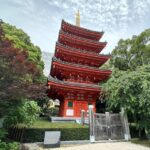
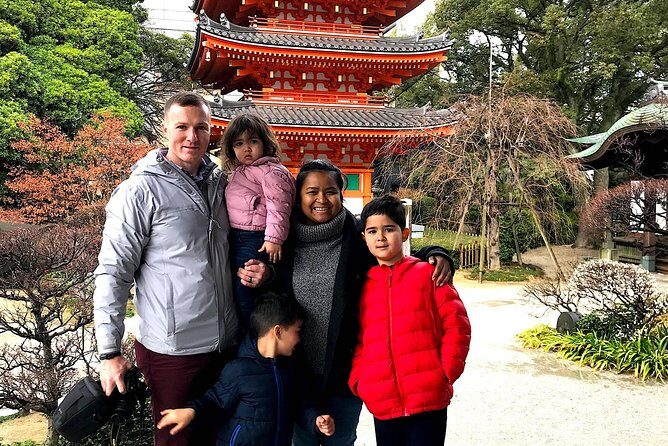
Tochoji Temple is a great opener because it plants you in the religious thread of the day. You’ll see the five-storied pagoda in red and learn that it was built in 806 by Kūkai, the founder of the Shingon sect. That one detail matters: it gives the site a clear historical anchor rather than leaving it as a pretty postcard.
You’ll also see the Great Buddha, noted as over 10 meters tall. That scale is what makes this stop memorable. It’s easy to stand in front of a huge statue and feel, briefly, like you’ve stepped into another time.
Time on site: about 40 minutes, and the admission is free.
If you’re the kind of person who likes to understand what you’re photographing, ask your guide to point out the big visual elements first. Then take your photos after you know what each one is.
Stop 2: Kushida Shrine, old faith in a neighborhood setting
Next is Kushida Shrine, described as one of the oldest shrines in Fukuoka. Here’s why it earns real attention: it’s tied to local beliefs around prosperous business and longevity, and it’s been loved by locals since ancient times.
This stop is also a good contrast with Tochoji. Temples and shrines both show Japanese devotion, but they feel different on the ground. Kushida is about ongoing community tradition—something locals continue to interact with.
Time on site: about 40 minutes, admission is free.
If you visit shrines, keep it simple: look, listen to what the guide explains, and don’t try to rush the atmosphere. Even with a private tour, you’ll feel better if you slow down for a few minutes.

Stop 3: Hakatamachiya Furusatokan for old-house life and crafts
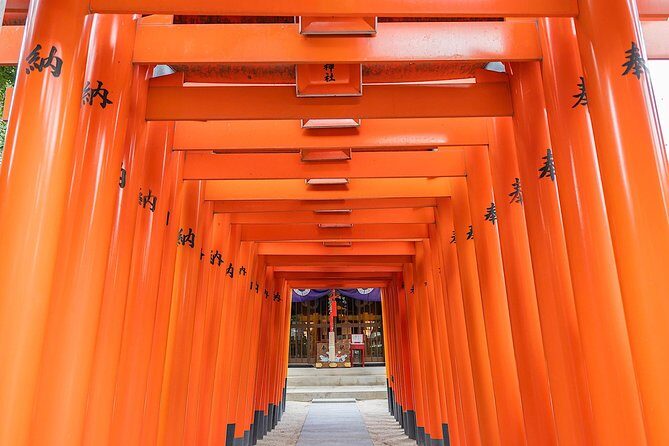
Now you pivot to “how people lived,” which is where this tour becomes more than a sightseeing checklist. Hakatamachiya Furusatokan is a window into the 19th and early 20th century life in Hakata. You step into a set of rooms and street-like spaces meant to show the past way of living.
The best part here is participation. The tour includes introductions to traditional crafts—things like Hakata Dolls and Hakata Bariko (and the listing also references Hakata Yoyoi and related items). Even if you don’t do a heavy workshop, you’ll still come away with a clearer sense of what these objects are and why they mattered.
Time on site: about 40 minutes, admission included.
Practical tip: if crafts are your thing, lean into the questions. Ask what’s locally distinctive about each craft and how they tie back to Hakata’s culture. Your guide is usually best when you give them a target.
Stop 4: Kawabatadori Shopping Street for lunch-town energy
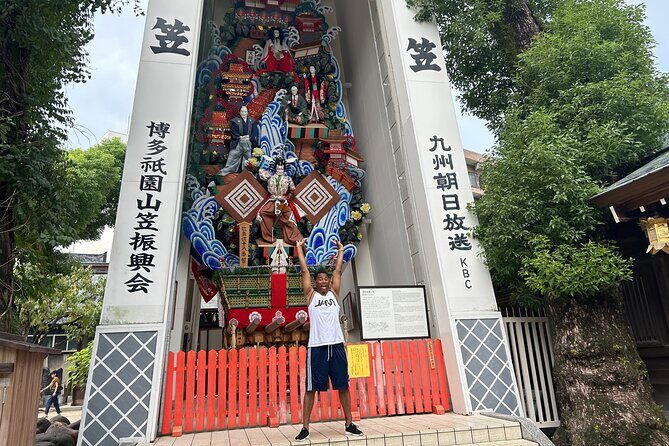
After temples and museum-style history, you need street life. Kawabatadori Shopping Street is built for exactly that. The plan calls for lunch time here, and the idea is to slow down in a neighborhood where people actually come and go.
A note for value: food and drinks aren’t included. So budget for lunch separately. The good news is that this is the kind of area where you can find casual meals without turning lunch into a research project.
Time on site: about 45 minutes, admission free.
If you’re picky about dietary needs, tell your guide early. Having a person who can steer you toward options saves time and stress.
Canal City Hakata: modern city inside the city
From Kawabatadori, you move toward Canal City Hakata, a large shopping and entertainment complex that describes itself as a city within the city. The tour notes around 250 shops, cafes and restaurants, plus a theater, game center, cinemas, and two hotels.
This stop isn’t about a temple-level moment. It’s more like a breather and a choice point. If you want a snack, a bathroom break, or a quick browse before the park and brewery, this is a convenient anchor.
You’ll likely spend a short time here—enough to reset and see how modern Hakata fits right next to the older parts.
Ohori Park: the moat-turned-refuge
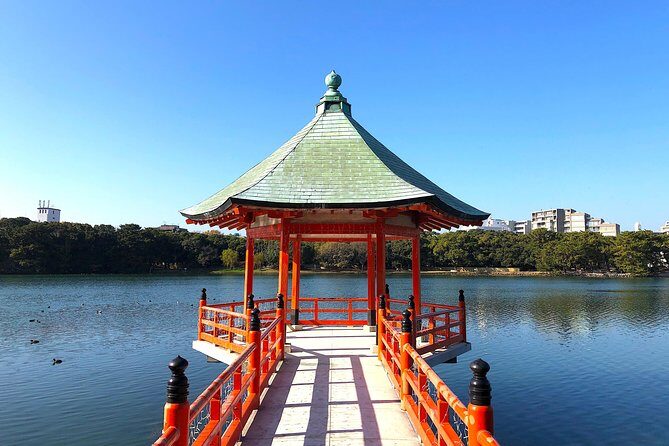
Then you get one of Fukuoka’s nicest green pauses: Ohori Park. The park has a backstory—you’ll learn that it originally functioned as a moat for Fukuoka Castle. Today it’s a calm center for locals, with water birds and turtles around the water.
This is the kind of stop that makes the whole day feel balanced. After the shrine and museum and shopping street, you finally get space to breathe.
Time on site: about 45 minutes, admission included.
Practical tip: bring a little patience. Parks are at their best when you don’t treat them like a checklist. Sit for a few minutes if the weather allows.
Stop 6: Hakata Hyakunenkura and sake tasting with strawberry flavor notes
The day closes with Hakata’s adult pleasure: sake. You’ll visit Hakata Hyakunenkura, described as Hakata’s only brewery with a history of over 140 years and registered as an important cultural property.
Here’s what you should expect from the tasting notes the tour highlights: sake characterized by fruity freshness, and in some cases using the local specialty of strawberries. Even if you’re not a sake expert, those descriptions make the tasting easier—you know what to pay attention to.
Time on site: about 30 minutes.
Value angle: sake tastings are rarely free on your own, and they’re also the kind of experience where a guide helps you understand what you’re tasting. This stop gives you a souvenir that isn’t just a photo.
Stop 7: ending at Hakata Station
The tour finishes back at Hakata Station (with a short transfer time noted). That’s a smart ending. Hakata Station is a major railway hub and a gateway to Kyushu, with strong connections via shinkansen. You’re set up to head onward without needing to replan transport at the end of an active day.
Time on site: about 10 minutes, admission free.
What I’d do differently (a realistic drawback)
Even with train tickets included, this is still a “see a lot” day. If you hate walking, you’ll feel it by the middle. Also, lunch is on your own. That means the day’s comfort depends on your ability to choose a meal without it taking over the schedule.
So if you want a relaxed pace, consider this: keep your must-sees flexible. Let your guide steer you toward the most meaningful moments first. A good guide will know how to pace time without making it feel rushed.
Who this Hakata private tour is best for
This tour fits best if you:
- want a first real look at Hakata culture without reading a guidebook cover to cover
- like history but also want it explained in plain language
- appreciate a guided plan that reduces transit stress
- enjoy food-and-drink experiences, especially sake tasting
- value a private-group feel where you can ask questions
It may not fit if you:
- want a low-walking day
- don’t want to spend time in shopping and entertainment areas
- need lunch fully organized for you (food isn’t included)
Final verdict: book it or pass?
I’d book this if it’s your first time in Hakata and you want a guided day that connects dots: temple roots, shrine tradition, old-house life, then modern city rhythm, and finally sake. The standout value isn’t just the sights—it’s the way the route is set up so you can focus on seeing and understanding.
If you’re sensitive to walking or want a slow, meandering day with no transit hops, you might look for something shorter. But if you want a well-structured 7-hour introduction to Hakata’s heart, this private tour is an easy yes.
FAQ
How long is the Fukuoka Private Tour: Heart and Tradition of Hakata?
It’s about 7 hours.
Where does the tour start and end?
The tour starts at Hakata Station (中央街-1-1 博多駅) and ends in a different location, with details provided at booking.
Is pickup included?
Yes. The tour includes hotel pickup, and it also lists Hakata Port pickup and drop-off.
What kind of guide do you get?
You’ll have an English-speaking guide, and this is a private tour for just your group.
What’s included with the sake stop?
Sake tasting is included at Hakata Hyakunenkura, the brewery stop, and the tasting is described with notes like fruity freshness and some use of local strawberry.
Are entrance fees included?
Some admissions are included in the tour price, including Hakata Machiya Furusatokan, and Ohori Park. The listed temple and shrine stops (Tochoji Temple and Kushida Shrine) are listed as free.
Is it easy to cancel?
Free cancellation is available up to 24 hours before the experience starts for a full refund. If the tour is canceled due to poor weather, you’ll be offered a different date or a full refund.