REVIEW · TOKYO
Ramen and Gyoza Cooking Class in Tokyo
Book on Viator →Operated by 九条tokyo · Bookable on Viator
Ramen class in Tokyo, minus the fuss. What makes this experience interesting is that you learn the logic behind ramen differences across Japan and you leave with hands-on miso ramen and gyoza skills you can repeat at home. The mini lecture ties the dishes to Japanese food culture, not just recipes, and that makes every ingredient feel intentional. One thing to consider: it’s only about 1 hour 30 minutes, so you’re focused on doing a few key builds (not experimenting with every ramen style under the sun).
I also like the tone of the class. It’s set up to feel relaxed in a Japanese-style house, with room for adult groups and families. If you don’t want to fumble through language, you’ll be supported by a translator, and the host—Sioji—is described as patient and friendly.
Location matters for a food class, and this one is in Yanaka, close to Ueno Station or Nippori. You start and end at the same meeting point, and you get a mobile ticket, which makes it easy to slot into a Tokyo day without extra admin.
In This Review
- Key Highlights You’ll Actually Care About
- Yanaka’s Quiet Edge Makes the Cooking Class Feel Like Tokyo
- What You’ll Cook: Miso Ramen and Three Gyoza Styles
- Miso ramen (with an original soup)
- Three gyoza styles
- Why the History Lesson Helps You Eat Smarter in Japan
- Broth Choices: Kelp + Chicken, Kelp + Scallops, or Vegan Kelp Broth
- Hands-On Cooking in a Relaxed Japanese-Style House
- Timing and Logistics: Getting Full Value from 90 Minutes
- What to Expect at the Meeting Point (and How to Go With the Flow)
- Food, Fun, and Confidence at Home
- Who This Ramen and Gyoza Class Is Best For
- Should You Book Ramen and Gyoza in Tokyo?
- FAQ
- How long is the ramen and gyoza cooking class?
- Where do I meet for the activity?
- Is this a private experience?
- Is there a vegan option?
- What dishes will I make?
- Is there translation help during the class?
Key Highlights You’ll Actually Care About
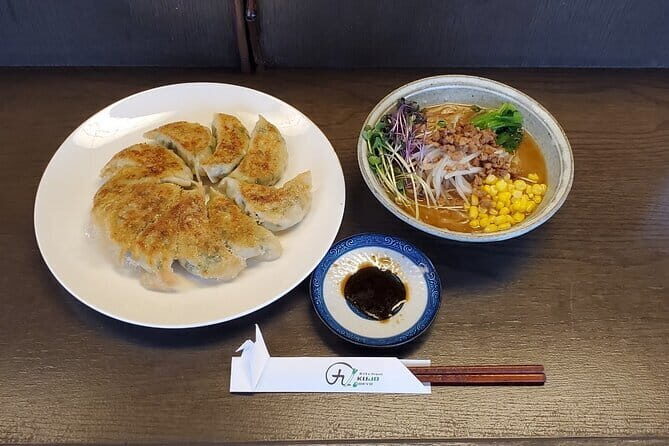
- Miso ramen, made with kelp broth plus chicken or scallops (and a vegan kelp-and-vegetables version)
- Three gyoza styles: regular fried dumplings, cheese dumplings, and kimchi dumplings
- A short history lecture that helps you understand ramen and gyoza in Japan
- Small, private group format (minimum 2 people), with translation support
- Simple recipes with practical confidence, so you can cook again after your trip
Yanaka’s Quiet Edge Makes the Cooking Class Feel Like Tokyo
Yanaka isn’t the loudest part of Tokyo. That’s a good thing for a cooking class. You get the sense that you’re stepping into an everyday neighborhood rather than a food-theme production line.
Starting near Ueno Station or Nippori helps, too. You can reach the meeting area without complicated transfers, then spend the rest of the time focused on cooking. And because the activity ends back at the meeting point, you don’t have to rebuild your day afterward.
The class is private—meaning your group is the only one in the session. That matters when you’re learning knife skills, timing, or dumpling handling. You can ask questions without trying to catch a rising tide of other participants.
You can also read our reviews of more cooking classes in Tokyo

What You’ll Cook: Miso Ramen and Three Gyoza Styles
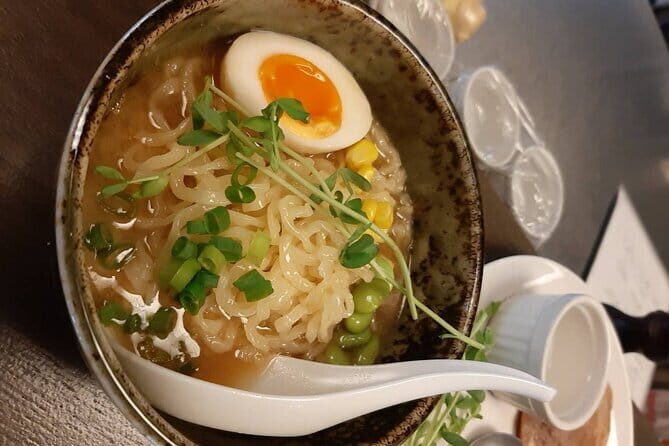
This isn’t a “watch and snack” lesson. You’re making both ramen and gyoza, and the menus are specific enough that you’ll learn technique, not just vibes.
Miso ramen (with an original soup)
You’ll make miso ramen using a broth based on kelp plus either chicken or scallops. Then you build and enjoy the ramen with toppings. The way it’s described emphasizes an original soup, so you’re not just copying a generic packet recipe. It’s a structured experience meant to produce a bowl that tastes finished and balanced, not a half-step.
Three gyoza styles
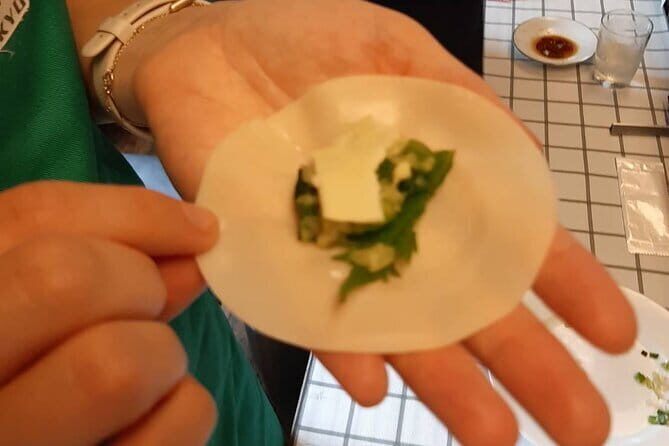
For dumplings, you’ll make three types:
- Regular fried dumplings
- Cheese dumplings
- Kimchi dumplings
This is a smart choice for home cooks. The method stays similar (fold, fill, pan-fry), but the fillings change the flavor direction. Cheese and kimchi also help you understand how gyoza can shift from mild and comforting to tangy and spicy without changing the core dumpling idea.
Why the History Lesson Helps You Eat Smarter in Japan
Food history can get abstract fast. Here, the “mini lecture” is designed to make the dishes easier to interpret when you’re sightseeing and eating.
The class frames ramen and gyoza as Japanese foods that developed and spread in their own ways after arriving in Japan. You get a brief look at how they evolved, and the goal is practical: you’ll be able to recognize differences when you order in restaurants later.
That’s especially useful for ramen. In Tokyo you can see shops touting different noodle textures, broth styles, and miso variations, and it’s easy to feel overwhelmed. This class gives you a mental checklist. Even without memorizing Japanese terms, you learn what elements matter—noodles, broth base, and flavor direction—so you can make choices that match your taste.
It’s also why learning the ramen logic is positioned as a travel tool. You’re not only learning to cook; you’re learning how to read ramen menus.
A few more Tokyo tours and experiences worth a look




Broth Choices: Kelp + Chicken, Kelp + Scallops, or Vegan Kelp Broth
Broth is where ramen turns from “food” into “system.” This class centers that fact.
You make miso ramen broth from:
- Kelp + chicken (basic, widely understood Japanese flavor foundation)
- Kelp + scallops (a different flavor depth direction)
- For vegans: kelp + vegetables
The vegan option is clearly part of the plan, not an afterthought. If you follow a vegetarian or vegan diet, that matters because ramen at restaurants can be tricky when you don’t want hidden stock ingredients.
Even if you eat everything, this teaches you something valuable: umami doesn’t only come from meat. Kelp is a key player, and the class uses it as the base across options. That makes it easier to translate what you learn into your own cooking later.
Hands-On Cooking in a Relaxed Japanese-Style House

You don’t just learn theory here—you’re taught while you’re cooking.
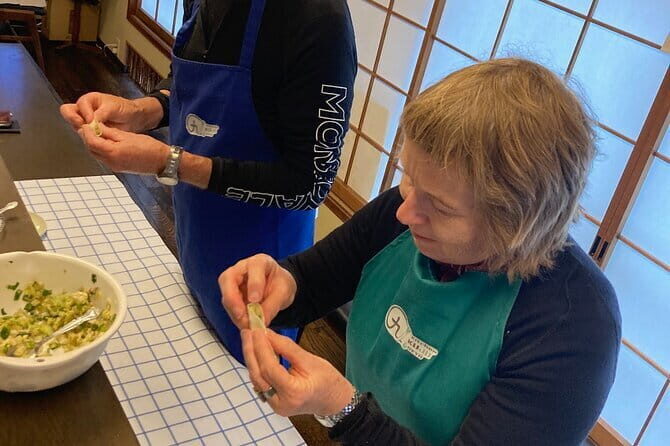
The setting is described as a Japanese-style house that keeps the atmosphere relaxed. That helps you slow down and focus on the hands-on steps, which is where most cooking classes live or die. When you can concentrate, your dumplings fry better and your ramen tastes more like ramen.
The experience is also described as highly beginner-friendly. People highlight that the recipe feels simple but still delicious, and that it becomes something you can confidently repeat at home. The host and translator support the pace and communication, which is a big deal for first-timers.
If you’re the type who learns best by doing—mixing, shaping, frying, and building—this will likely feel like the right match.
Timing and Logistics: Getting Full Value from 90 Minutes
The total duration is about 1 hour 30 minutes, so you’ll want to arrive with an open stomach and clear expectations: this class is about getting key results, not a long, slow multi-course dinner.
The class is scheduled to start at 11:00 am, and it runs back to the same meeting point. That timing can fit well if you’re spending the rest of the day exploring Ueno, Nippori, or surrounding neighborhoods.
Price is $91.76 per person. For Tokyo, that’s not “cheap,” but it’s also not priced like a fancy tasting menu. You’re paying for:
- a private group learning setup
- hands-on cooking
- ingredient preparation
- translation support
- a mini lecture that helps your travel eating get better
For value, ask yourself one question: do you want to bring home a repeatable skill? If yes, this price makes more sense. If you only want a casual meal, you’ll probably find cheaper options—but you won’t get the same cooking confidence.
Also, the class is commonly booked about 37 days in advance on average, which tells you it’s in steady demand. If you have a tight schedule, book earlier rather than hoping.
What to Expect at the Meeting Point (and How to Go With the Flow)

You’ll meet at Yanaka, Taito City at a specific location listed as 谷中スペース (Yanaka). It’s close to public transit, so plan for a short walk once you’re at the station area.
Because this is a private activity, you can expect a more guided pace than big group classes. The host and translator support communication, and the reviews point out that Sioji is patient and friendly.
When you arrive, keep expectations simple:
- you’ll learn ramen basics that connect to how to order later
- you’ll make three gyoza styles
- you’ll build a bowl of miso ramen with toppings
Then let the class do its job. If you treat it like a cooking workshop rather than a performance, you’ll get more out of the time.
Food, Fun, and Confidence at Home

This class is repeatedly praised for the same core strengths: friendly hosting, good communication, and recipes that don’t stay locked in the kitchen forever.
People call out that the recipe is simple enough to reproduce at home. That’s what you should look for in a good cooking class. If you only get a warm meal in Tokyo and no method you can repeat, the value fades after the leftovers.
The vibe also sounds genuinely upbeat. Reviews mention laughing and learning, and that the dumplings become seriously enjoyable to make and eat. If you like interactive experiences, you’ll probably feel right at ease here.
One more practical point: making both ramen and gyoza in the same session is efficient. If ramen alone is your goal, the gyoza adds a second skill set. If gyoza is your weakness (and many people have one), the ramen component gives you the broader Japanese food context.
Who This Ramen and Gyoza Class Is Best For
This one fits best when you want more than a meal.
It’s a strong choice for:
- Food-first travelers who want a skill, not just photos
- Beginner cooks who want guided steps and a patient host
- Vegans and vegetarians, since vegan miso ramen broth is specifically offered
- Small groups and families, because the atmosphere is relaxed and accommodating
- Anyone who wants ramen knowledge that helps when you order in real shops
If you’re an advanced cook looking for a deep, highly technical ramen fermentation study, you might find the structure too focused. The class is about core ramen logic and two classic Japanese comfort foods you can reproduce.
Should You Book Ramen and Gyoza in Tokyo?
Book it if you want a hands-on cooking lesson that also improves how you eat across Japan. The combination of miso ramen (with kelp-based broth options), three gyoza styles, and a short history context is exactly the kind of experience that pays off after you leave the kitchen.
Skip it only if your priority is a long dining experience or you’re set on learning a wider variety of ramen types beyond miso. With only about 90 minutes, the class gives you a focused skill set, not an all-you-can-learn ramen sampler.
If you’re heading to Ueno or Nippori anyway, the Yanaka location makes it easy to weave into your day. And with translation support and vegan accommodation built into the plan, it’s one of those Tokyo food activities that feels designed for real people with real needs.
FAQ
How long is the ramen and gyoza cooking class?
It runs for about 1 hour 30 minutes.
Where do I meet for the activity?
You meet at 谷中スペース in Yanaka, Taito City, Tokyo, and the activity ends back at the same meeting point.
Is this a private experience?
Yes. It’s private, so only your group participates.
Is there a vegan option?
Yes. The vegan version uses miso ramen with broth made from kelp and vegetables.
What dishes will I make?
You’ll make miso ramen and three types of gyoza: regular fried dumplings, cheese dumplings, and kimchi dumplings.
Is there translation help during the class?
Yes. A translator is used to help communication.