REVIEW · OSAKA
Osaka Sushimaking Experience
Book on Viator →Operated by Sushi Making Ato · Bookable on Viator
Sushi lessons in Osaka feel like fun. This hands-on sushimaking class in Shin-Imamiya lets you learn from a chef while wearing a happi coat, taking photos, and making your own sushi instead of just watching. I especially like the English-subtitled video intro and the calm, step-by-step guidance for doing things like preparing the rice and forming sushi. One thing to plan for: bottled water and soda aren’t included, so you may want to bring a bottle or grab drinks nearby.
I also appreciate that the shop is set up for small groups (up to 16), which means you’re not lost in the crowd. The vibe feels like a real little restaurant moment, including the required gear like masks and the chance to dress the part before you get started.
The class runs about 1 hour 30 minutes, so it’s not a full-day cooking workshop. If you’re hoping for a deep, multi-course meal experience, you might want to pair this with something else—otherwise, it’s a great, practical way to taste Japan through real technique.
In This Review
- Key Points I’d Actually Use Before Booking
- Entering Shin-Imamiya: Where Sushi Class Meets Real Osaka
- The 1.5-Hour Flow: Video First, Then You Make Sushi
- What You Really Learn: Rice Prep and Shaping Skills
- The Happi Coat Moment and Why It Matters
- Your Meal: Included, Personal, and Surprisingly Satisfying
- Photos, Souvenirs, and the Small Details That Round It Out
- Price and Value: Why $22.80 Can Be a Smart Stop
- Getting There Without Stress: Location, Transport, and Timing
- Who This Fits Best (And Who Might Want to Skip It)
- A Quick Reality Check on Participation
- Should You Book Osaka Sushimaking Experience?
- FAQ
- How long is the Osaka Sushimaking Experience?
- How much does it cost per person?
- Where does the class meet in Osaka?
- Is the ticket mobile-only?
- What’s included in the price?
- What drinks are not included?
- How big are the groups?
- Can I cancel for a full refund?
Key Points I’d Actually Use Before Booking
- Happi coats and masks: quick photo fun and a more authentic restaurant feel
- English-subtitled intro video: you get the plan before your hands start working
- Chef guidance for rice and shaping: you learn key steps, not just a vague demo
- Small group size (max 16): easier questions, less waiting around
- Souvenir corner: a simple add-on to take the experience home
- Meals included, water not included: plan drinks separately so you don’t get stuck
Entering Shin-Imamiya: Where Sushi Class Meets Real Osaka
Osaka is famous for food, but what I like about this experience is that it’s not only about eating. It’s about being in the room where the sushi work happens. You meet at 3-chōme-15-8 Ebisunishi, Naniwa Ward, Osaka, and the activity ends back at the same spot, which keeps things easy after your class.
The setting is compact and focused. The reviews describe it as clean and cute, which matters more than you’d think for a hands-on food activity. When you’re grabbing ingredients, washing hands, and using tools for rice and shaping, you want the space to feel comfortable—not chaotic.
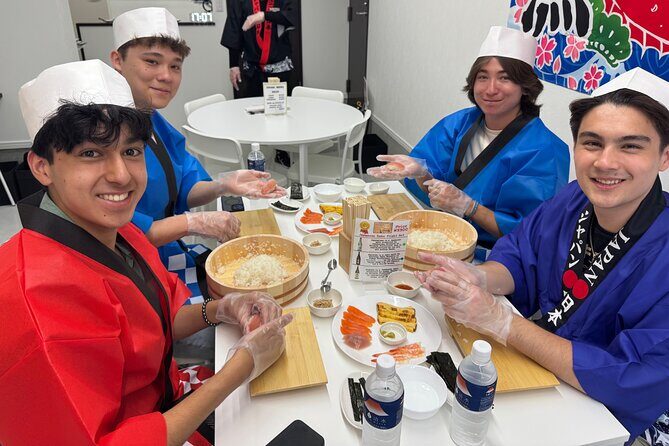
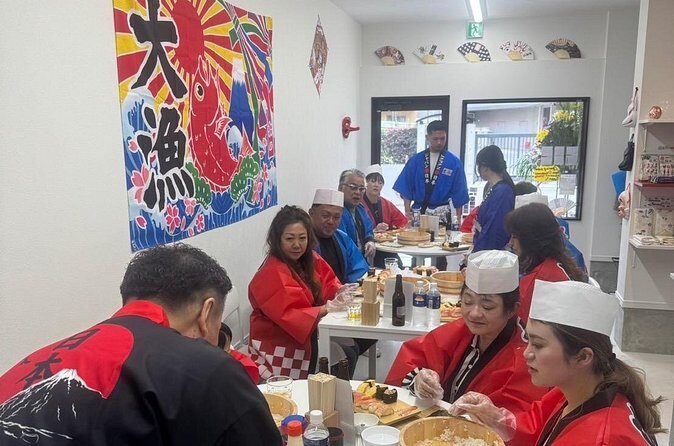
You’ll also get dressed for the part. Included gear covers happi coats and masks, so you get that fun, local look right away. And yes, you can take photos during the experience, which is a nice bonus in a city where you’ll probably take a lot of pictures anyway.
You can also read our reviews of more tours and experiences in Osaka.

The 1.5-Hour Flow: Video First, Then You Make Sushi
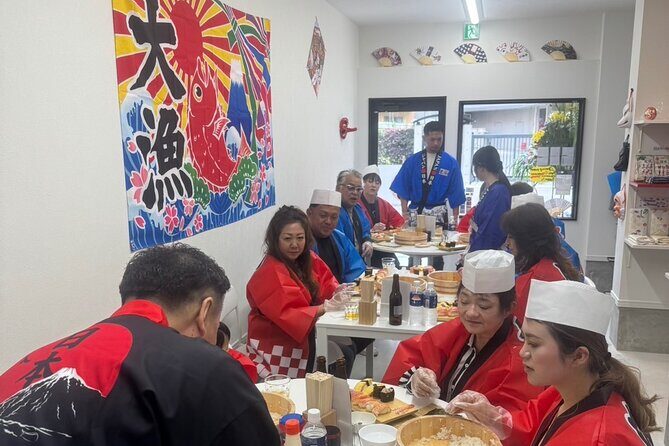
This is a 1 hour 30 minutes class, and the timing feels right for most people. You’re there long enough to actually learn, but not so long that it turns into a tiring cooking day.
The way it tends to work (and what I’d suggest you expect) is:
- A short introduction, including a video with English subtitles
- Then the chef steps in to show you the process
- You repeat the key motions yourself: prepping rice and shaping sushi
- You finish by eating the sushi you made
One review highlights how the setup begins with the video intro and then moves to the chef demonstrating from preparing the rice to forming the sushi. That matches the whole idea of a proper cooking lesson: first understanding, then doing.
If you’ve ever been to food experiences where you watch for 45 minutes and do 5 minutes of cooking, you’ll likely appreciate this more. The class structure is built around getting your hands involved, not just your eyes.
What You Really Learn: Rice Prep and Shaping Skills
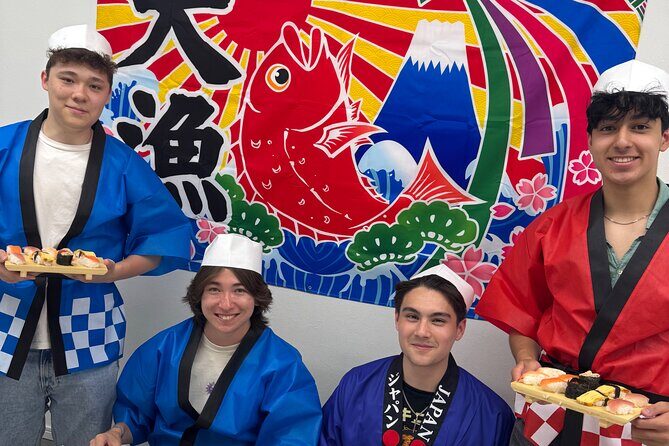
Sushi has a reputation for being fancy, but the class focus makes it practical. You’re not expected to be a chef overnight. You’re guided through specific tasks that make sushi sushi.
From the information you’re given in the intro and the live teaching, the two big technique themes are:
- Rice preparation
- Shaping the sushi
Those sound simple until you’re doing them. Reviews mention learning the difficulty (even for a Japanese participant), and that’s a useful reminder: this isn’t only about taste—it’s about craft. The class helps you understand what makes sushi feel precise, especially with rice and form.
Also, the teaching style seems patient. Multiple reviews describe instructors helping calmly and kindly, guiding people slowly enough that even kids can follow along. That’s a real plus if you’re worried you won’t “get it” fast.
The Happi Coat Moment and Why It Matters
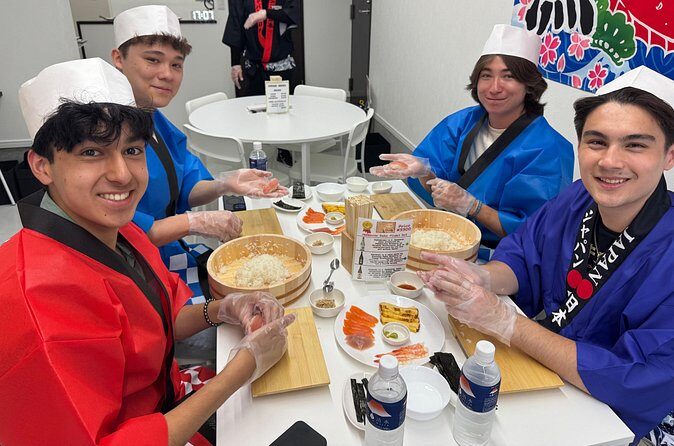
It’s easy to think the happi coat is just for pictures. In this case, it’s more than that. Wearing it helps the whole experience feel like you’re stepping into a real sushi restaurant routine, even though you’re learning.
Reviews specifically call out:
- The ability to take nice photos
- Feeling like a real sushi restaurant because you can make sushi while dressed up
- Staff making the experience fun and easy to understand
That “dress the part” detail can actually improve the lesson. When you’re not just watching from the outside, you’re more willing to focus on the motions, the tools, and the small decisions that affect the final sushi shape.
If you’re traveling with someone who loves photos, this is one of the better “do something, not just pose” experiences in Osaka.
Your Meal: Included, Personal, and Surprisingly Satisfying
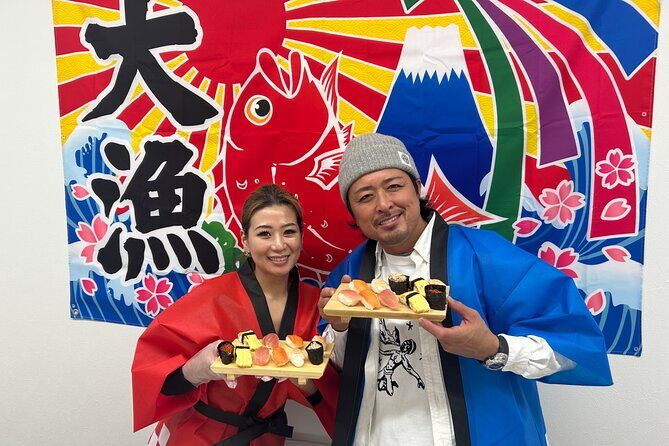
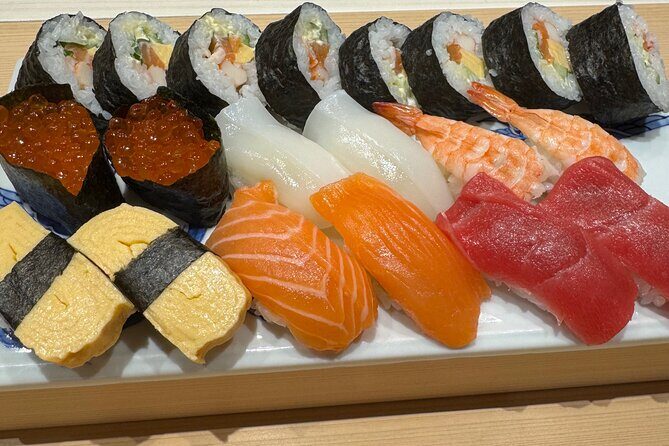
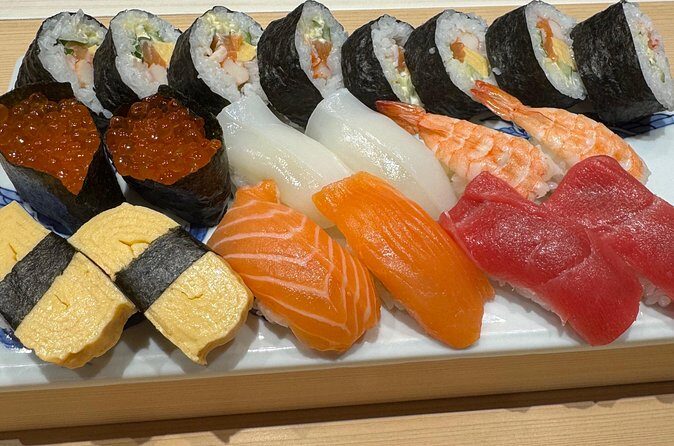
This activity includes meals, and that’s one of the reasons the price feels fair. You don’t just make sushi and leave it behind. You make it and eat what you’ve made.
A few reviews mention that the amount of sushi was more than expected, and that the sushi they made and ate was exceptional. Even if the number varies by session, the key point is consistent: you’re not paying just for a lesson. You’re also getting food out of it.
One practical note: bottled water, soda/pop, and alcohol aren’t included. That doesn’t make the class worse—it just means you should plan for drinks. If you want water with your meal, look for something available before or during the activity.



Photos, Souvenirs, and the Small Details That Round It Out
Beyond the cooking, you get a couple of experience extras that make it feel complete.
- You can take photos during the class
- There’s a souvenir corner included in the experience
Those are small details, but they matter because they turn the class into a memory you can keep. After you’ve learned rice prep and shaping, you’ll likely want something tangible to mark the moment—especially if you’re traveling as a family or with friends.
Price and Value: Why $22.80 Can Be a Smart Stop
The price is $22.80 per person, and it usually gets booked about 7 days in advance on average. For many visitors, the value here comes from three things you don’t always get together:
- A real chef-led lesson
- Meals included
- Included gear (happi coat and masks)
You’re also getting a small group size (up to 16), which typically improves the experience compared with larger classes where you wait for help.
If you’re the type who enjoys active learning—stirring, shaping, tasting your own results—this is a strong use of time. If your goal is only to eat a lot of sushi in a relaxed way, you might prefer a traditional sushi meal instead. But as a skills-and-food combo, this price makes more sense than it first looks.
Getting There Without Stress: Location, Transport, and Timing
The meeting point is very specific: 3-chōme-15-8 Ebisunishi, Naniwa Ward, Osaka, 556-0003. The good news is that it’s described as near public transportation, so you shouldn’t need a car or long walk to start.
The class ends back at the meeting point. That’s a practical detail. You don’t have to reorganize your evening around a different drop-off location.
Also, confirmation is received at time of booking, so you’re not left waiting for last-minute email replies. And because this uses a mobile ticket, you can keep it on your phone and go.
Who This Fits Best (And Who Might Want to Skip It)
This class is designed to be broadly doable. It says most travelers can participate, and service animals are allowed. You’ll also find it’s family-friendly in a very direct way: one review says a 4-year-old child participated along with an adult, with careful explanations so the child could understand.
So who should book it?
- Families looking for a structured activity with real output (you eat what you make)
- Solo travelers who want to meet people in a small-group setting
- Couples who want something hands-on and memorable, not just another meal
- Anyone who likes the idea of learning sushi technique instead of only trying sushi in restaurants
Who might not love it?
- If you want a long, leisurely food tour with lots of stops, this is only 1 hour 30 minutes and focuses on one skill
- If you don’t care about learning rice and shaping methods, the lesson portion may not feel worth your time
A Quick Reality Check on Participation
The experience is built so people can participate, but it’s still a cooking class. You’ll likely handle ingredients and use your hands for rice and shaping tasks. If you have a strong preference for sitting and watching, this might feel more active than you expected.
On the other hand, the teaching style described in the reviews sounds patient and supportive. People mention being guided gently and slowly, which makes a difference for confidence—especially for first-timers.
Should You Book Osaka Sushimaking Experience?
I think you should book it if you want a sushi experience that’s practical, hands-on, and time-efficient. You’re paying for the combination of chef guidance, included meal, and the chance to make something you can actually eat right away.
Book it soon if this is on your “must-do” list, because it’s commonly reserved about a week in advance. And because it ends right where it starts, it’s easy to fit into a day in Osaka without complicated routing.
If you’re on the fence, here’s the simplest decision rule:
If learning rice prep and shaping sushi sounds fun to you, this is a great use of $22.80 for a real skill plus a meal. If you only want to eat sushi, look for a restaurant meal instead and treat this as optional.
FAQ
How long is the Osaka Sushimaking Experience?
It lasts about 1 hour 30 minutes.
How much does it cost per person?
The price is $22.80 per person.
Where does the class meet in Osaka?
The meeting point is 3-chōme-15-8 Ebisunishi, Naniwa Ward, Osaka, 556-0003, Japan.
Is the ticket mobile-only?
Yes, it’s listed as a mobile ticket.
What’s included in the price?
Meals are included, along with happi coats and masks, plus the admission fee.
What drinks are not included?
Bottled water, soda/pop, and alcoholic beverages are not included.
How big are the groups?
The experience has a maximum of 16 travelers.
Can I cancel for a full refund?
Free cancellation is available up to 24 hours in advance for a full refund.