REVIEW · OSAKA
Samurai Calligraphy:Final brushstrokes of a lifetime before a War
Book on Viator →Operated by SAMURAI HONOR · Bookable on Viator
A brushstroke can feel like a farewell. This Osaka workshop turns Japanese calligraphy into a dramatic, grounded ritual: writing a resignation-style last character connected to samurai life before war. You get the hands-on shodo practice and the bigger, theatrical moment with an oversized brush on a huge sheet.
I especially love the way the lesson structure makes you slow down. You start with core brush strokes and stroke order, then you pick your own kanji and shape it like a personal story—step-by-step, with a real teacher keeping you honest. I also like the human touch: calligraphy teacher Kaori helps guide the meaning and even supports with calligraphic choices like symbols, plus you get that polished presentation with photo help.
One consideration: this experience is built around one character (a resignation message), so it’s not the kind of class where you churn out lots of finished pieces. If you’re hoping for a high-volume souvenir factory, you might feel slightly constrained.
In This Review
- Key Highlights You’ll Actually Notice
- Why Osaka’s Samurai Calligraphy Feels Like More Than Craft
- The 90-Minute Flow: From Basic Strokes to Your Resignation Character
- Choosing Your Last Kanji Like a Personal Message
- The Oversized Brush Moment on 150cm x 150cm Paper
- The Taiko Rhythm, the Circle Stroke, and Why Timing Matters
- What’s Included: Outfit, Tools, Assistant, and Photo Help
- Value for $64.38: What You’re Really Paying For
- Who Should Book This (and Who Might Skip It)
- Osaka Tips: How to Get the Best Results Fast
- Should You Book Samurai Calligraphy in Osaka?
- FAQ
- How long is Samurai Calligraphy in Osaka?
- What do I do during the Japanese shodo portion?
- What do I write during the Samurai Calligraphy portion?
- How large is the paper and brush for the main calligraphy?
- Is there an English or Chinese speaking assistant?
- Do I get help taking photos?
- What clothing is included?
- Are there optional add-ons for photos or styling?
- Where does the tour start?
- What is the cancellation policy?
Key Highlights You’ll Actually Notice
- A two-part 90-minute flow: 60 minutes of shodo basics, then 30 minutes for your samurai-style resignation character
- You choose the final kanji and learn the stroke order before you do the big work
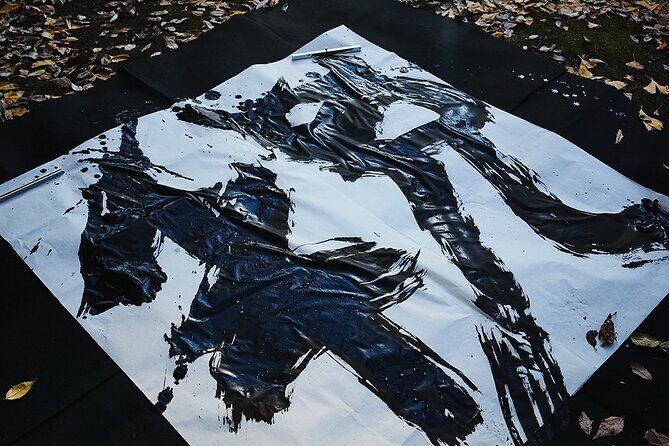
- Oversized brush challenge: more than five times larger than usual for whole-body control
- Huge paper canvas (150cm x 150cm) that forces bold, decisive motion
- Photo support included plus optional add-ons for extra keepsakes
- Small group size (max 8) for more attention from the instructor and assistant
Why Osaka’s Samurai Calligraphy Feels Like More Than Craft
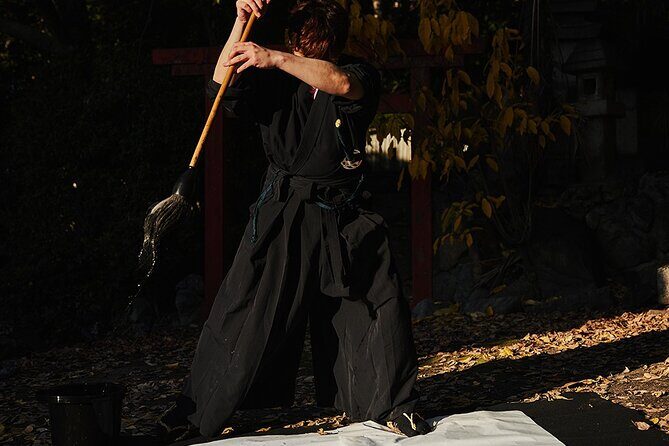
This is not just learning to write nicely. The theme is built around the idea of resignation—writing your last words before going to war, in the Warring States period mindset where life and death sat close together. That framing changes how you hold the brush: your strokes become deliberate, not decorative.
The class also plays with a classic Japanese beauty idea—space matters. You’ll hear the concept of blank spaces and the beauty of margins, where the empty areas are treated as part of the final composition. That makes your character look stronger, not because you added more, but because you learned when to stop.
Then there’s the rhythm element. The overview mentions the ◯ written boldly to the beat of taiko drums, which gives you a physical way to understand timing: don’t just think about the stroke, feel when it lands. Even if you’re not a performer, it’s a great reset for people who overthink.
You can also read our reviews of more tours and experiences in Osaka.
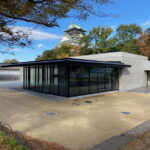

The 90-Minute Flow: From Basic Strokes to Your Resignation Character
The schedule is simple and efficient: about 60 minutes of Japanese shodo, then 30 minutes of samurai calligraphy. The pacing matters because calligraphy is one of those skills where your first mistakes teach you something—if you get time to practice again.
During the shodo portion, you work on basic brush strokes and the stroke order of the kanji you choose. That part is crucial. In calligraphy, stroke order isn’t trivia; it’s the structure that tells the brush when to press, lift, and move. If you nail that sequence, your final character will look intentional even when you’re nervous.
In the second half, you focus on one character for resignation. The lesson guides you through reflection: imagine what feelings you want to leave behind, think about whom those feelings connect to, and then design the character composition accordingly. It’s a creative-writing step disguised as ink work.
The ending happens right back at the meeting point, so you don’t need to plan extra time afterward. You’ll leave with that satisfied feeling of finishing something tangible, not just collecting tips.
Choosing Your Last Kanji Like a Personal Message
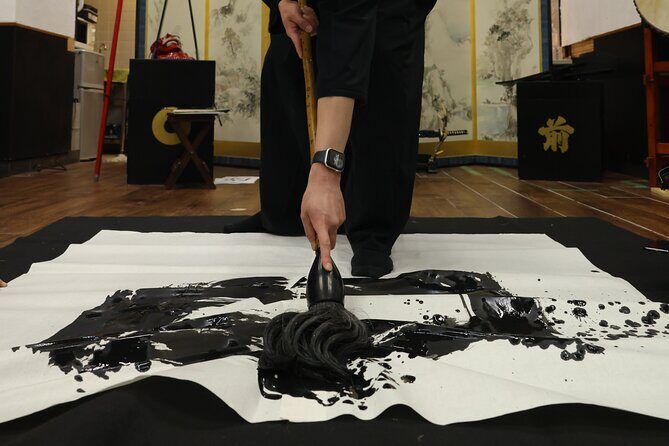
You decide on your last character, and here’s the detail that makes this class different: each kanji has its own meaning. That means your choice isn’t just aesthetic. You’re translating a thought into a visual language with rules.
You’ll also get prompted to reflect. You’re not asked for a full biography. You’re asked to pick one theme—what story you’d want to leave behind and the emotional tone that should live in the paper. Then you map that into the character’s design.
This is where I think people get the most value if they prepare lightly beforehand. Even before you arrive, you can think of one word or one feeling you’d want to stand for—like gratitude, strength, goodbye, resolve, or peace. Once you’re in class, your instructor can help connect that intention to the right calligraphic choices.
The Oversized Brush Moment on 150cm x 150cm Paper
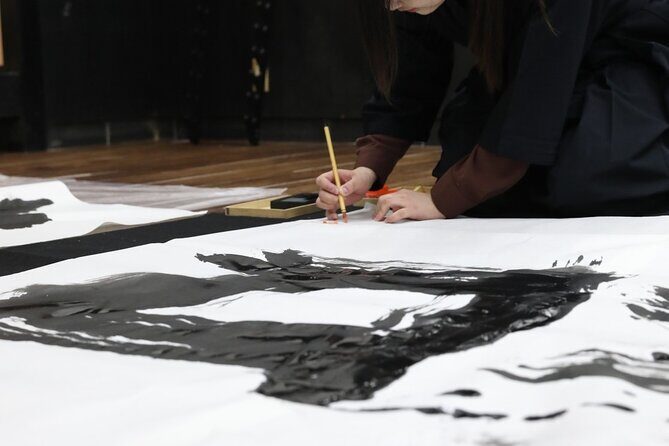
Now for the part that makes your photos look serious: the oversized brush. The class uses a brush more than five times larger than usual, and you write on a massive sheet around 150cm x 150cm.
That scale changes everything. Small brush calligraphy is about finesse. This version forces bigger motion and whole-body control. You’re not hovering your wrist. You’re moving your body so the brush can lay down ink with confidence.
Also, there’s an emotional contrast built in. You’re using a tool designed for power—yet you’re writing something fragile and personal. That’s why this moment tends to feel intense without needing any extra theatrics.
If you’re worried you’ll mess it up, good. That’s usually when calligraphy becomes real. The instructor’s job is to keep you from panicking and to steer you toward the right rhythm and pressure. Once you feel that brush land correctly, your brain stops arguing and starts learning.
The Taiko Rhythm, the Circle Stroke, and Why Timing Matters
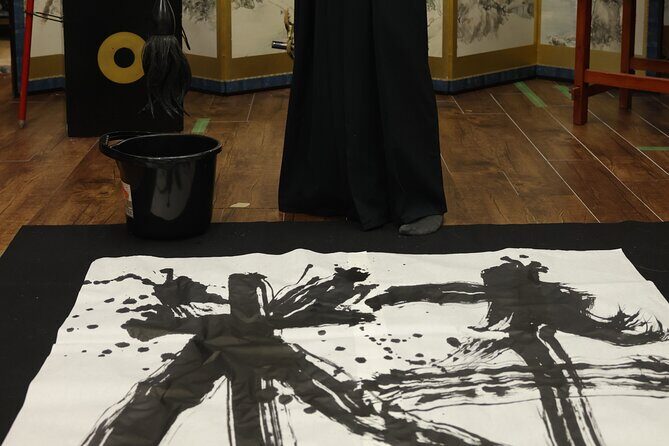
One of the most memorable elements in the concept is that ◯ stroke written boldly to the beat of taiko drums. Even if you’ve never done calligraphy before, rhythm helps you stop overworking the stroke.
Here’s what I like about this approach: timing becomes physical. Instead of trying to imagine the ideal line, you react to a beat. That helps with the hardest beginner problem—hesitation. Hesitation ruins flow, and flow is what makes calligraphy look alive.
So when you practice that basic circle-style energy, think less about perfect symmetry and more about controlled confidence. In calligraphy aesthetics, a character doesn’t need to be sterile to be beautiful.



What’s Included: Outfit, Tools, Assistant, and Photo Help
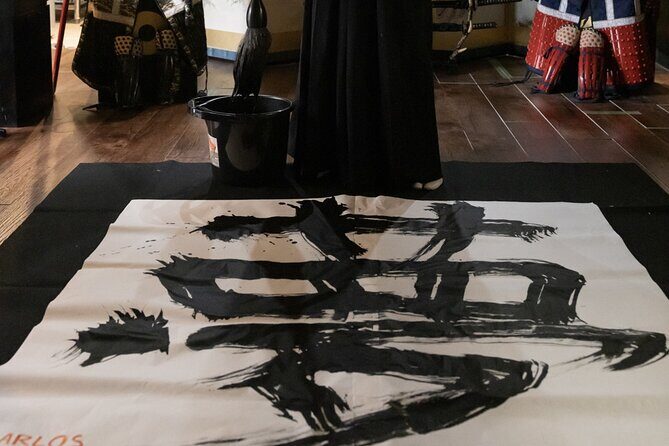
You get a complete setup to focus on the ink. Included are shodo tools, a samurai outfit, and a professional photographer. You’ll also get help from an English or Chinese speaking assistant, which makes a difference if you want your questions answered clearly while you’re learning stroke order.
Clothing is part of the experience too. You’ll wear hakama and kimono, noted as not a full set of kimono. The key practical point: treat this as a “wear and move” setup, not a formal museum costume. You’ll be writing with big motions, so comfort and range of movement matter.
A professional photographer is included, which is a big value add for a class like this. Calligraphy sessions can look awkward on phone cameras because you’re leaning, lifting, and moving. A photographer knows when the brush arrives and when the ink line looks best.
There are optional add-ons if you want extra visuals: movie shooting (¥11,000 per person) and wagami (collected hair plus kanzashi) (¥3,300 per person). If you want a dressed-up, story-style photo set, those options may be worth it. If your priority is learning and a clean souvenir, you can likely skip them.
Value for $64.38: What You’re Really Paying For
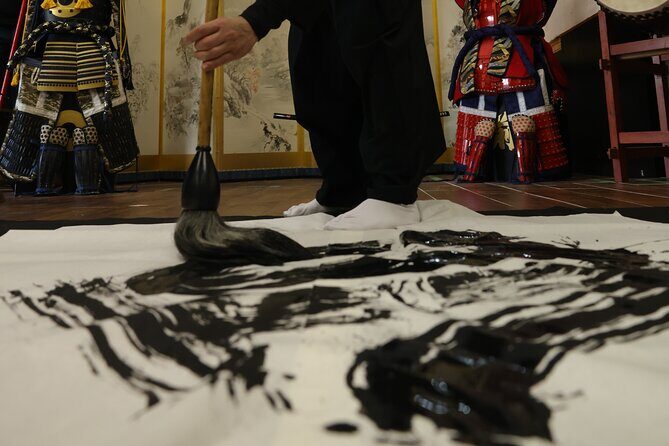
At $64.38 per person for about 90 minutes, this is priced like a hands-on cultural workshop, not a long sightseeing detour. The value isn’t just that you sit and watch. You practice the strokes, you choose your kanji, and you produce a large, dramatic piece using an oversized brush.
What you’re paying for, in plain terms:
- Instruction time across two phases (basic shodo + samurai-style resignation character)
- Real tools and setup, including the oversized brush and huge paper canvas
- Support staff, with an English or Chinese speaking assistant
- Photo coverage that helps you get proper keepsakes without guessing angles
The only thing to watch is expectations around take-home items. The details you provided emphasize creating your piece on a large sheet, but it doesn’t explicitly say how it’s stored or whether you receive it as a takeaway in a specific way. If keeping your finished work is important to you, ask about it during booking or on-site.
Also, you still handle your own transport to the meeting point. The location is near public transportation, which helps, but it’s still on you to get there.
Who Should Book This (and Who Might Skip It)
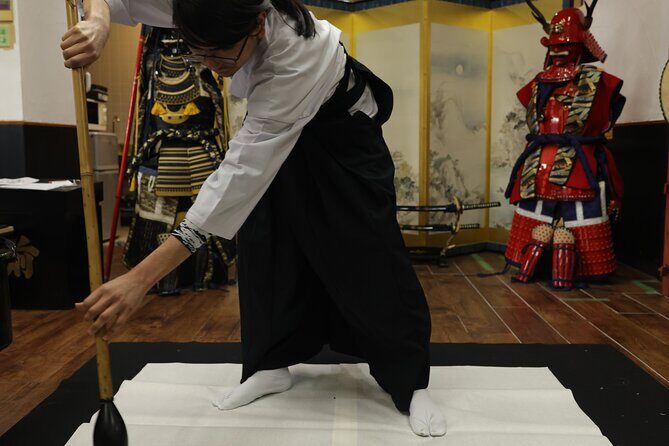
Book this if you want a structured, calm activity with a meaningful theme. The lesson’s tone—reflection, resignation, stroke order, big movement—works especially well if you like skills you can feel improving within one session.
It’s also a good choice if you enjoy crafts that take rules seriously. Calligraphy has clear technique. That makes it more satisfying than trial-and-error art where you never know what you did wrong.
Skip it if you want variety in outcomes. This class focuses on one resignation character and one major “performance brushstroke” style moment. You’ll learn a lot, but you’ll do it through a single central piece, not multiple small designs.
Also consider your comfort with bigger arm and body movement. The oversized brush is designed to be used dynamically, so you’ll want enough physical mobility to follow the instructor’s guidance without rushing.
Osaka Tips: How to Get the Best Results Fast
You don’t need special calligraphy experience. But you can make your session go smoother by arriving with at least one word or feeling in mind. When you choose your kanji, your reflection step will feel less like a blank page and more like a clear intention.
During the strokes, prioritize rhythm over perfection. If you try to control every micro-detail, you’ll tense up. The class concept uses timing—like the taiko-driven ◯ idea—so your best output comes when you let the brush do its job.
Wear comfortable layers under the outfit setup. You’ll be moving with the brush and working on a big surface, so nothing restrictive helps. And since a professional photographer is included, you’ll want to look present and relaxed while you write—being tense usually shows on camera too.
Finally, with only up to 8 people in the group, don’t be shy about asking your assistant for clarification on stroke order. Short questions get you unstuck fast.
Should You Book Samurai Calligraphy in Osaka?
Yes—if you want a hands-on cultural experience that mixes technique, personal reflection, and a genuinely dramatic writing moment. The small group size and the combination of shodo basics plus a single, meaningful resignation character make it efficient. You’ll leave with a clear skill (stroke order and brush control) and a memorable finished visual.
I’d say skip it only if your goal is lots of different artworks in one visit. This workshop is designed for focus, not quantity.
If you’re coming to Osaka and you want something that feels both Japanese and personal—not just another photo stop—this one fits well.
FAQ
How long is Samurai Calligraphy in Osaka?
The total time is about 1 hour 30 minutes (approximately 90 minutes), with Japanese shodo for 60 minutes and Samurai Calligraphy for 30 minutes.
What do I do during the Japanese shodo portion?
You practice basic brush strokes and the stroke order of the kanji character you choose.
What do I write during the Samurai Calligraphy portion?
You write one resignation character. The lesson asks you to reflect on your life and choose what feelings you want to leave behind, then create your character design.
How large is the paper and brush for the main calligraphy?
The oversized brush is more than five times larger than usual, and you work on a sheet of paper measuring 150cm x 150cm.
Is there an English or Chinese speaking assistant?
Yes. An assistant who speaks English or Chinese is included.
Do I get help taking photos?
A professional photographer is included.
What clothing is included?
You’ll wear a samurai outfit, including hakama and kimono (not a full set of kimono).
Are there optional add-ons for photos or styling?
Yes. Optional movie shooting is available for ¥11,000 per person, and optional wagami (collected hair plus kanzashi) is available for ¥3,300 per person.
Where does the tour start?
The meeting point is at 536-0014 Osaka, Joto Ward, Shiginonishi, 2-chōme319 エクセレンス高山.
What is the cancellation policy?
You can cancel for free up to 24 hours in advance for a full refund. If you cancel less than 24 hours before the start time, the amount paid is not refunded.