REVIEW · FUJIKAWAGUCHIKO
Tokyo: Mt. Fuji Highlights Tour with Lake Kawaguchi Cruise
Book on GetYourGuide →Operated by LION TRAVEL JAPAN Co. Ltd. · Bookable on GetYourGuide
Fuji days feel like a lottery. What makes this tour worth your time is how it stacks multiple Mt. Fuji viewpoints into one smooth day, so you’re not betting everything on a single photo moment. My favorite part is the first stop at Arakurayama Sengen Park, where you climb to a panoramic platform over Fuji-Yoshida.
I also love the way the day treats Lake Kawaguchi like a real vantage point, not just scenery, with a boat ride on the Appare that keeps Fuji in view from the water. The main drawback to keep in mind: if clouds roll in, you still visit great places, but the mountain might hide during some photo stops.
In This Review
- Key things that make this tour pop
- Why this Mt. Fuji day trip feels efficient
- Meeting in Tokyo: the start at TOKYU PLAZA GINZ
- Arakurayama Sengen Park and the 398 steps (your first best shots)
- Shimoyoshida Honcho Street: the Fuji-aligned photo street
- Oshino Hakkai: eight spring ponds and that storybook calm
- Lake Kawaguchi cruise on the Appare boat: the viewpoint you can feel
- Oishi Park: seasonal Fuji colors, plus the November plan change
- Walk comfort and weather reality (10 hours is real time)
- The guide experience: English support can vary, so use what you get
- Price and value: what $79 actually buys
- Who this tour suits best
- Should you book this Tokyo to Mt. Fuji highlights tour?
- FAQ
- How long is the Mt. Fuji Highlights Tour?
- Where do we meet?
- What’s included in the price?
- Is lunch included?
- What languages are available for the guide?
- What should I bring?
- Is Oishi Park always visited?
Key things that make this tour pop
- Arakurayama’s 398-step Konohana-sakuya-hime Stairs for a Fuji-over-city viewpoint
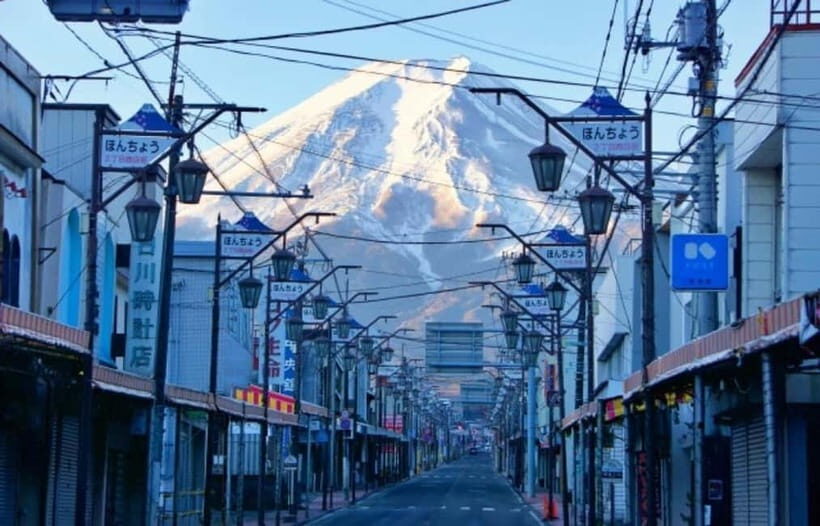
- Honcho Street in Fuji-Yoshida for retro town photos with Fuji aligned behind the street
- Oshino Hakkai’s eight spring ponds with thatched-roof atmosphere and mirror-like water when conditions cooperate
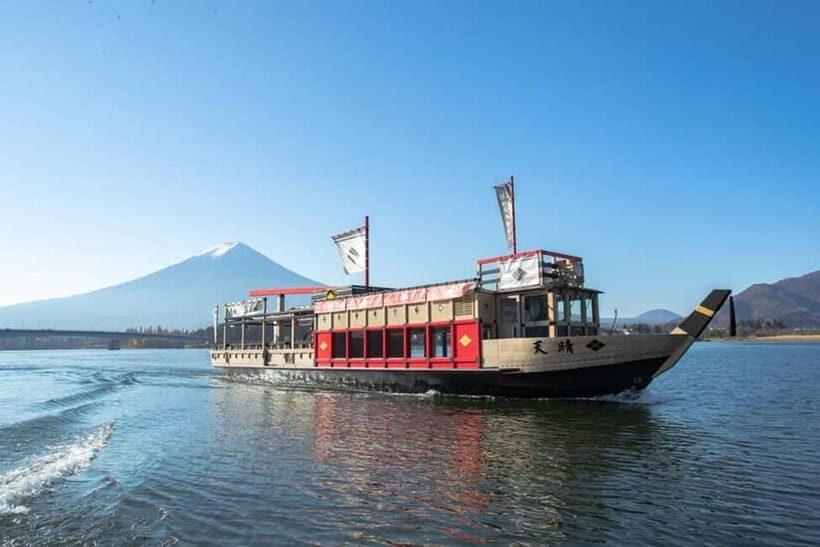
- Appare warship-style cruise on Lake Kawaguchi with open decks and a Japanese-style cabin
- Oishi Park’s seasonal color scenes (rapeseed and cherry, lavender, kochia, or snow reflections)
Why this Mt. Fuji day trip feels efficient
This is a long day at 10 hours, but it’s built for maximum returns on time. You start with big “see Fuji from above” angles, move into classic Fuji-area culture and water, then end with lakefront and park views.
If you’re the type who wants photos, this tour helps you get variety fast: stairs, street lines, pond reflections, then the wide perspective from the lake. You’ll also walk more than you might expect for a “highlights” plan, so comfortable shoes matter.
You can also read our reviews of more boat tours in Fujikawaguchiko
Meeting in Tokyo: the start at TOKYU PLAZA GINZ
You’ll meet at TOKYU PLAZA GINZ 1F, which is a straightforward way to begin if you’re already moving around central Tokyo. The ride out takes about 2.5 hours by coach, so plan to use that time to recharge your legs before you start walking.
When the group is small, the driver may also act as the guide. That can be a plus for responsiveness, but it also means the flow depends a bit on who you get for your day.
Arakurayama Sengen Park and the 398 steps (your first best shots)
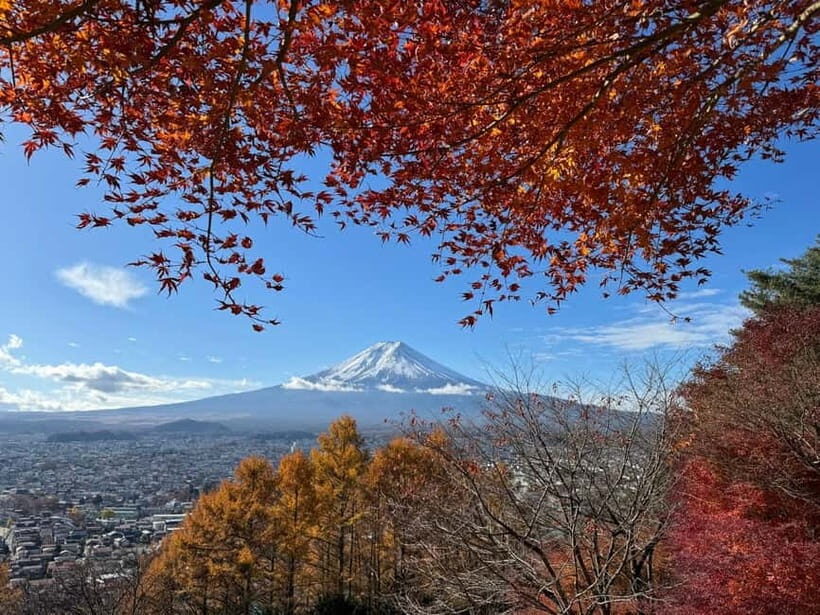
Your day kicks off at Arakurayama Sengen Park, one of those places photographers dream about because the composition is built for Fuji. The big move here is the climb of 398 steps up the Konohana-sakuya-hime Stairs.
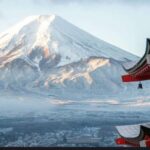
Once you reach the viewing area, you get a wide look over the Fuji-Yoshida cityscape with Mt. Fuji showing up behind it on clear days. In spring, the path can be packed with cherry trees (over 650 are noted), while in autumn the walk can turn into a warm path of reds and golds. Even if the mountain isn’t perfectly visible, the viewpoint still gives you the sense of why this region is famous.
Practical tip: bring your camera ready for bursts rather than one “perfect” shot. The angle and visibility can shift as you move through the platform area.
Shimoyoshida Honcho Street: the Fuji-aligned photo street
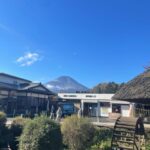
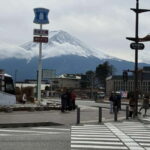
Next you head to Shimoyoshida Honcho Street, a retro-style shopping street designed for walking and snapping photos. The standout here is that famous Fuji-facing perspective, where the street lines can look like a staircase leading your eye up toward the mountain.
This stop is less about a single landmark and more about rhythm. You’ll stroll, pause for photos, and soak up that traditional town feel with Fuji in the background.
What to know: because it’s a street walk, your best results come from moving slowly and watching the angles. If you rush, you miss the “stair-to-Fuji” effect.
Oshino Hakkai: eight spring ponds and that storybook calm
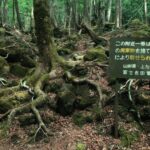
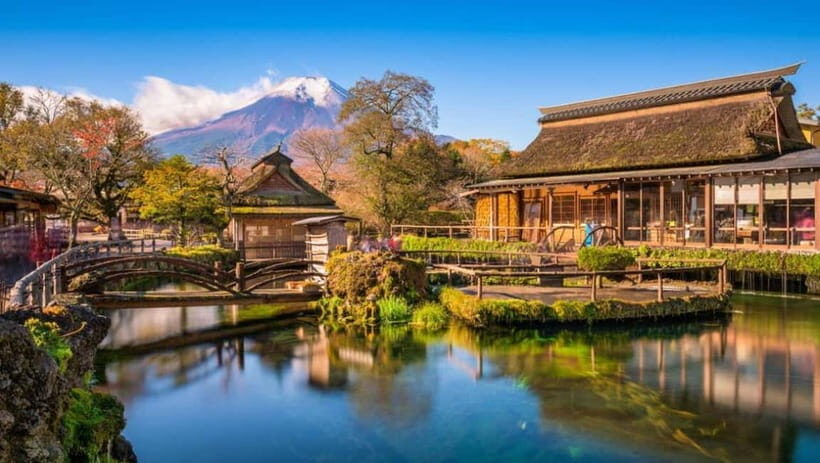
Then the tour shifts gears to Oshino Hakkai, a peaceful village known for eight crystal-clear spring ponds fed by Mt. Fuji’s snowmelt. This area is designated a Natural Monument of Japan, and you can feel why: it’s calm, scenic, and strongly tied to the local water system.
The ponds reflect sky, forests, and the shape of Fuji when visibility is good. The thatched-roof houses, wooden bridges, and flowing water make the whole place feel like a countryside scene you’d expect from a storybook, and the comparisons you hear (like it being treated as a Japan version of Jiuzhaigou) make sense in terms of the pond-and-mountain vibe.
Possible drawback for some people: this stop is visually strong, but it’s also a place where you’ll want to take your time to avoid crowding and to wait for the water to settle. If you’re extremely rushed, you might only catch a slice of the best reflections.



Lake Kawaguchi cruise on the Appare boat: the viewpoint you can feel
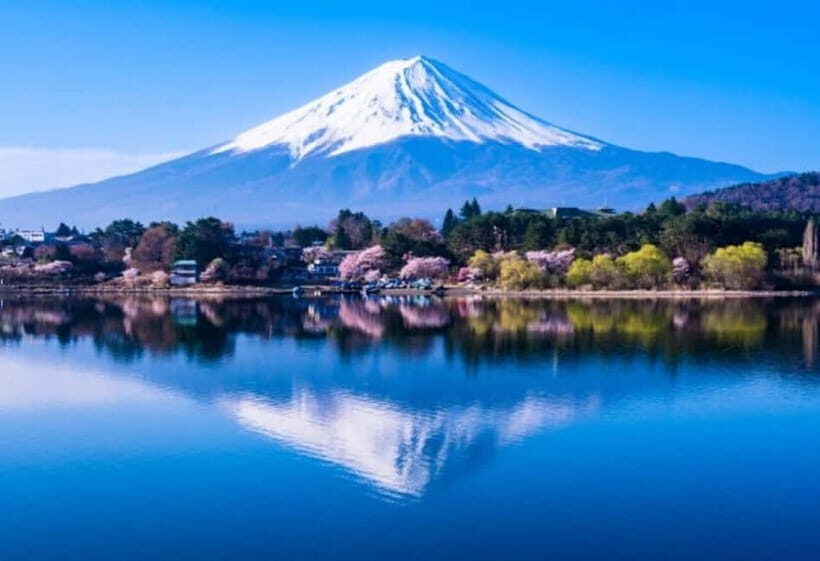
Lake Kawaguchi is where the tour becomes more than photos, because you’re actually moving on the water. You’ll ride the Appare boat, modeled after a Sengoku-era warship, and the key benefit is that you get relatively unobstructed views of Mt. Fuji from the lake.
What I like about this part is the setup: there are open decks for that front-facing look, plus a Japanese-style cabin if you want to warm up or avoid wind. On clear days, Fuji can appear mirrored on the water, and the reflection effect is exactly what you hope for when you choose a cruise instead of just looking at the shoreline.
If it’s cloudy, don’t think the boat ride becomes pointless. You’ll still get the wide-lake perspective that’s hard to replicate from land, and it’s a nice mental reset after the walking and stair climb.
Oishi Park: seasonal Fuji colors, plus the November plan change
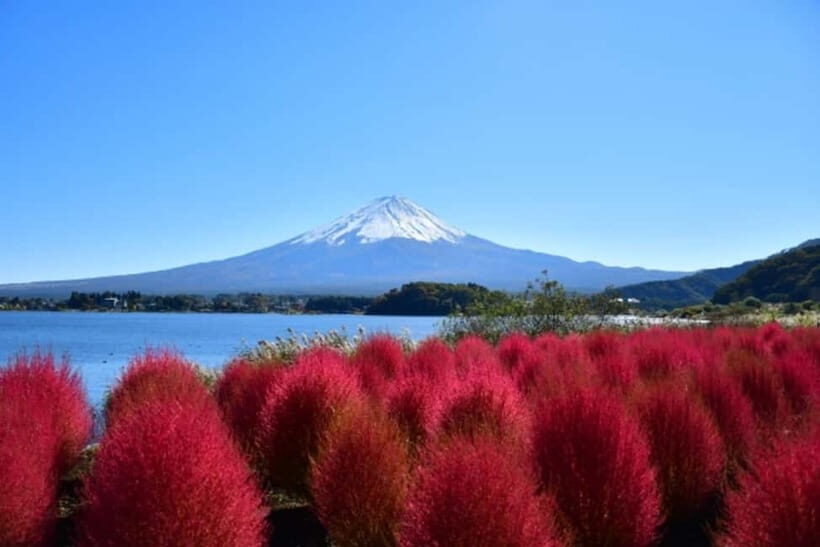
The last major stop is Oishi Park, a lakefront park made for sweeping Mt. Fuji views paired with seasonal blooms. This is where you get the “Fuji at postcard scale” feeling because you’re looking across the lake with the mountain as a background anchor.
The seasonal highlights are practical because they tell you what you’ll likely see:
- Spring: golden rapeseed blossoms and cherry trees
- Summer: lavender fields
- Autumn: fiery red kochia
- Winter: snow-covered scenes, often with inverted Fuji reflections on the water
There’s also an important schedule note. During the autumn foliage window from November 1 to November 23, visits to Oishi Park may be suspended and replaced with a visit to the Kawaguchi Lake Maple Corridor. If autumn is your target, check your travel dates closely so you know which scenery you’ll get.
Walk comfort and weather reality (10 hours is real time)
This tour runs about 10 hours, and that includes travel and multiple walking stops. You’re doing photo stops with short walks, plus the 398-step climb at Arakurayama Sengen Park, so you’ll want shoes with good grip.
Weather matters here in a very direct way. Layers help because you can move from warmer city air to cooler lake breezes, and Fuji visibility changes fast with cloud cover. If you’re hoping for the cleanest mountain photos, you’ll still benefit from the tour’s design because it gives you several different angles across the day.
For timing: the structure is built so you see Fuji-related highlights in a logical order. Still, it’s a long day, so bring water and a snack plan since lunch isn’t included.
The guide experience: English support can vary, so use what you get
You’ll have a live guide in Chinese, English, or Japanese. One thing I appreciate is that guides can explain the key spots in a way that helps you understand why the views look the way they do, not just what to photograph.
In at least one experience, the guide Carp Feng handled English explanations carefully, especially when English-speaking needs were part of the group dynamic. That’s a good sign for anyone who wants more than minimal commentary.
Still, one caution from the broader range of guide experiences: English levels can vary. If English is crucial to you, I’d plan to rely on your own eyes for the photos and use the guide mainly for context and directions.
Price and value: what $79 actually buys
At $79 per person, you’re paying for more than sightseeing. You’re getting:
- Transportation by car/coach
- A live guide
- A Lake Kawaguchiko cruise on the Appare boat
When you compare that to booking transport separately plus a cruise, the value makes sense, especially if you want a low-stress day from Tokyo. The parts not included are straightforward: lunch and personal expenses, so factor in a meal budget and snack money.
This also isn’t a “sit all day” tour. You’re paying for access and planning, then doing the physical work of getting from one view to the next. If you like walking and taking photos, it’s a good trade. If you want lots of free time and no steps, you might find the day a bit intense.
Who this tour suits best
This tour fits you well if you:
- Want multiple Mt. Fuji viewpoints in one day without handling transit planning
- Care about photography variety: stairs, street lines, pond reflections, then lake-wide angles
- Like seasonal scenery and want a plan that changes with the time of year
- Prefer a guided day trip with interpretation, not just a free-form day
It may not be ideal if you:
- Need a guaranteed clear view of Mt. Fuji (weather controls that)
- Want lunch and meals handled for you
- Have limited ability for step climbing, since Arakurayama includes 398 steps
Should you book this Tokyo to Mt. Fuji highlights tour?
I’d book it if your priority is a structured, efficient way to see the Fuji area’s top hits, especially because the included Appare cruise adds a perspective you can’t easily replace with a land-only itinerary. The tour also has enough variety that even on imperfect visibility days, you’re not stuck in one type of scenery.
I’d hold off if you’re expecting everything to be picture-perfect, with no walking and no extra planning. This is a day built for seeing and photographing, not for resting. If you go in ready to walk and bring a backup plan for weather, it’s a solid use of your time.
FAQ
How long is the Mt. Fuji Highlights Tour?
The tour duration is 10 hours.
Where do we meet?
The meeting point is TOKYU PLAZA GINZ 1F.
What’s included in the price?
It includes transportation, a guide, and the Lake Kawaguchiko cruise on the Appare boat.
Is lunch included?
No, lunch and meals are not included.
What languages are available for the guide?
The live guide offers Chinese, English, and Japanese.
What should I bring?
Bring comfortable shoes, a camera, and weather-appropriate clothing.
Is Oishi Park always visited?
During November 1 to November 23, Oishi Park may be suspended and replaced with a visit to the Kawaguchi Lake Maple Corridor.