REVIEW · KURASHIKI
3 Hours Temari Workshop in Kurashiki
Book on Viator →Operated by TAKAHASHIGAWA TRAVEL · Bookable on Viator
Thread and patience turn into a temari ball. In Kurashiki, this workshop turns a beloved folk craft into a souvenir you can actually keep, starting from a pre-made core filled with rice husks. You’ll choose a pattern, then wrap and embroider your way to a one-of-a-kind result.
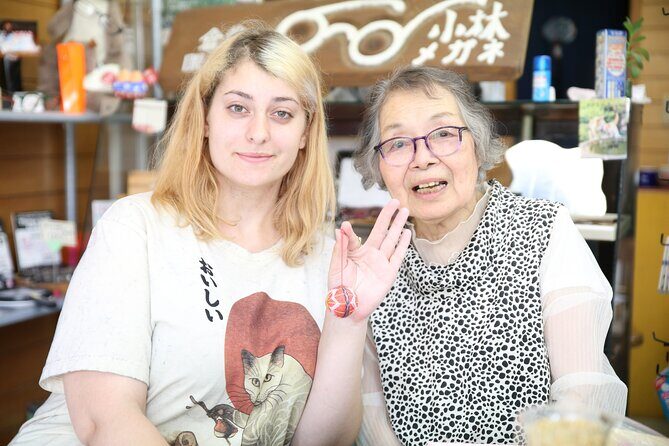
I love the step-by-step teaching from Grandma Yasue, with English help from interpreter Keiko so you’re not guessing what to do next. And with a maximum group size of 6, you get the kind of attention that matters when your fingers are learning new motions.
One possible drawback: this is a hands-on craft session, so it’s less about sightseeing and more about focusing on thread, embroidery, and finishing a small object you made yourself.
In This Review
- Key points to know before you go
- Temari in Kurashiki: why this 3-hour workshop is worth your time
- Where you meet: Kobayashi Eyeglasses in Kurashiki
- The real workshop flow: from embroidered core to your finished temari
- Choosing a pattern: making it feel one-of-a-kind
- Grandma Yasue and Keiko: why the teaching style matters
- Price and group size: what $85.85 buys you in real life
- What you can do with your temari after the workshop
- Who this Kurashiki temari workshop suits best
- Should you book the 3 Hours Temari Workshop in Kurashiki?
- FAQ
- Where does the workshop start?
- How long is the temari workshop?
- Is there an English-speaking guide?
- How many people are in the group?
- What will I make during the class?
- Can I choose my pattern?
- Is confirmation sent after booking?
- Do they use a mobile ticket?
- Can I cancel and get a full refund?
- Are service animals allowed?
Key points to know before you go
- Grandma Yasue starts you with an already-prepared core, so you can focus on the embroidery and wrapping steps.
- You choose your favorite pattern, then bring it to life as a finished temari.
- English support is built in, with an interpreter (Keiko) alongside the instructor (Grandma Yasue).
- Small group size (up to 6) means fewer people, more help when you hit a tricky step.
- You can use your temari however you like, from room décor to a key chain.
- Hosted at Kobayashi Eyeglasses in Kurashiki, an easy-to-find meeting point tied to a real local shop.
Temari in Kurashiki: why this 3-hour workshop is worth your time
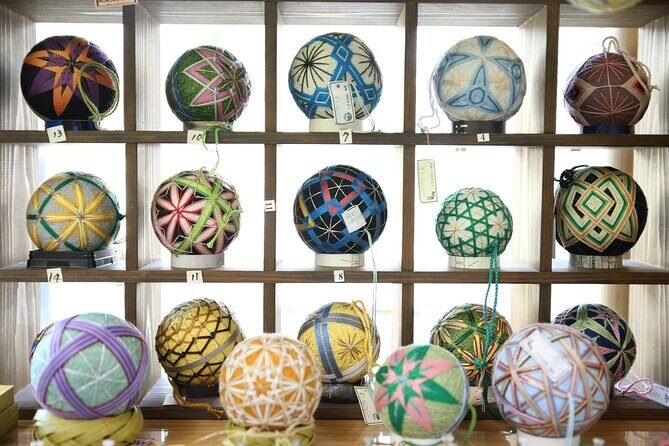
Kurashiki temari is one of those crafts that sounds simple until you try it. A temari is made by wrapping thread around a core filled with rice husks, and then adding embroidery-like pattern work. In this workshop, you’re not just making a generic craft item. You’re making a Kurashiki souvenir with meaning, made in the style that local people have loved for a long time.
The appeal is practical, not just artistic. When you finish, you have a compact object that travels well, takes up little space in your luggage, and becomes a real memory you can point to later. A store-bought magnet can fade. A handmade temari tends to stick in your brain.
I also like the timeline. You’re looking at about 3 hours total. That’s long enough to learn and produce something you can be proud of, but short enough that it fits neatly into a day in Okayama without wrecking your schedule.
You can also read our reviews of more tours and experiences in Kurashiki.



Where you meet: Kobayashi Eyeglasses in Kurashiki
The workshop meets at Kobayashi Eyeglasses, 2-chōme-17-23 Achi, Kurashiki, Okayama 710-0055. The activity ends back at the meeting point, so you’re not dealing with a complex transfer.
This is useful if you’re juggling train lines, buses, and walking. The location is described as being near public transportation, which matters in a place where your plans might otherwise depend on getting taxis every time you switch activities.
Also, meeting at a working shop (not a distant craft studio on the edge of town) gives the experience a grounded feeling. You’re stepping into a real local business, and the instructor is connected to the community in that everyday way.
Tip: If you’re using transit, give yourself a little buffer to find the exact address and settle in. Small workshops run on time, and thread work does not like distractions.
The real workshop flow: from embroidered core to your finished temari
Here’s the core of what you do. Temari starts with a core, and in this workshop that core is already prepared in advance. It’s filled with rice husks, then made ready so you can start the creative part right away.
Your first meaningful step is embroidery on the core. That early stage matters because it sets the foundation for the final pattern look. If you’ve never done anything like embroidery before, don’t worry. The way this class is described, you’re guided through the process rather than being handed a list of instructions.
From there, you work on the thread wrapping and finishing. The goal is a completed ball-shaped temari with your chosen pattern. This part is where a patient instructor makes a real difference. Thread can slip, tension can vary, and it’s easy to get frustrated if nobody helps.
One more detail I appreciate: you’re making something with options at the end. Since you can decorate your room or use your temari as a key chain (or however else you like), you’re not just copying a craft. You’re creating a usable personal item.
Choosing a pattern: making it feel one-of-a-kind
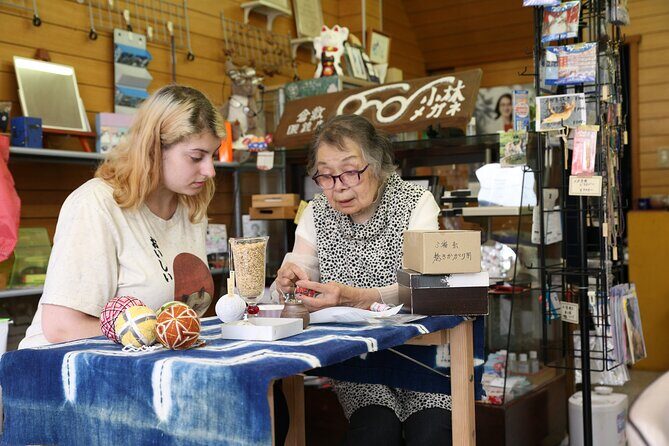
A big part of the value here is choice. You can pick your favorite pattern, and the finished temari becomes your own, not a cookie-cutter souvenir.
Patterns are a key reason craft workshops feel personal. Even when the techniques are similar, small decisions about how you place and build the design lead to a result that looks like it belongs to you. That’s the part you’ll actually notice when you unwrap it at home.
Also, you’ll get a sense of why temari is such a long-running folk craft in Kurashiki. The object isn’t just decorative. It represents a craft tradition where making, not buying, is the point.
If you’re coming with someone who likes arts and crafts, this is a great shared project format. You’ll both end up with something different, even if you follow similar guidance.
Grandma Yasue and Keiko: why the teaching style matters
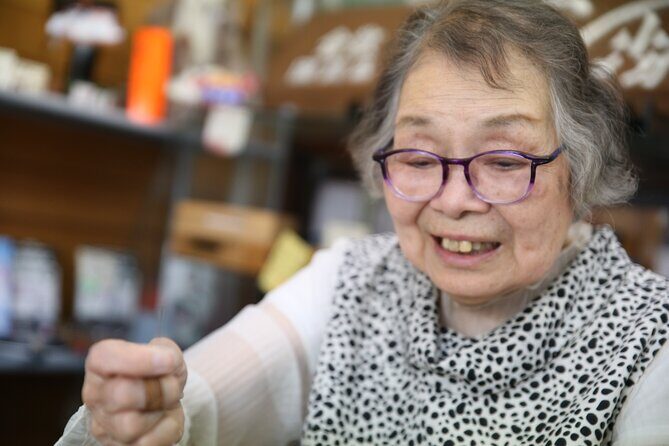
This workshop is guided by Grandma Yasue, who also runs a glasses shop. That blend of everyday life plus careful craft instruction is part of what makes these smaller local experiences feel authentic. You’re learning from someone who lives the culture around the craft, not just someone delivering a scripted class.
Communication is supported by an English interpreter, and a name you’ll hear connected with the experience is Keiko. The role of the interpreter is important because temari needs specific movements and timing. If you’re only understanding half the instructions, you’ll spend your time guessing. With English support, you can focus on your hands and get back on track when something doesn’t go as planned.
The tone you’re aiming for is patient and encouraging. The experience notes emphasize that the instructor’s expertise and patience help people finish their temari balls successfully. That’s what you want from a workshop like this: the class should help you end with a completed object, not just a half-made project you hope to rescue later.




Price and group size: what $85.85 buys you in real life
The price is $85.85 per person, for about 3 hours. That might sound steep compared to a small souvenir shop. But craft workshops usually cost more because they include instructor time, translation support, and hands-on materials and tools.
A standout value factor here is the group limit: maximum 6 travelers. In a small group, you’re less likely to wait in silence while the instructor solves someone else’s problem. You’re also more likely to receive quick corrections, which matters when you’re learning embroidery and thread wrapping.
You’ll also often see that this kind of activity sells well, and in this case it’s commonly booked about 76 days in advance on average. That’s a sign it’s not a walk-in only thing. If you’re serious about crafting during your Kurashiki time, plan ahead.
One more perk that’s practical: the experience offers a mobile ticket and includes group discounts. Even if you’re traveling solo, it’s still a sign the operator thinks about smooth check-ins and real-world groups.
What you can do with your temari after the workshop
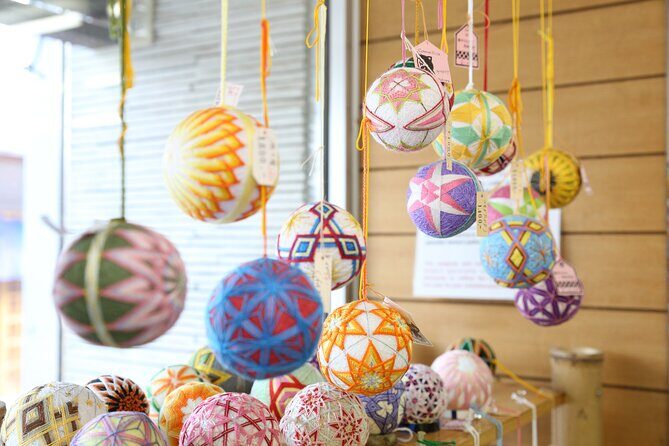
The class is framed around making a temari you’ll want to keep. After you finish, you can decorate your room with it, or use it as a key chain. You could also find other personal uses if your style leans practical.
This matters for value because you’re not just buying an object in a bag. You’re bringing home something small but meaningful, and it’s made with your own pattern choice and your own hands.
If you tend to forget souvenirs by the time you get home, this is the kind of purchase that resists that fate. You’ll remember the steps, the feeling of tension in the thread, and the moment the final shape looked right.
Who this Kurashiki temari workshop suits best
This is a strong fit for:
- People who like hands-on crafts and don’t mind sitting and focusing for a few hours.
- Anyone traveling with a family member or friend who enjoys art projects. The small size makes it easier to share the experience without rushing.
- Visitors who want a Kurashiki souvenir that feels tied to local culture, not just a mass-made item.
- Folks who want English support during a craft class rather than relying on minimal signage.
It’s probably not the best match if your main goal is constant motion and sightseeing. This is craft time first. If your day needs a quick photo stop and then off you go, you might feel a bit “stuck” in the workshop setting.
If you’re worried about difficulty, note that the experience is described as suitable for most travelers, and the class has a structure designed to help people finish.
Should you book the 3 Hours Temari Workshop in Kurashiki?
Book it if you want a compact, meaningful Kurashiki activity that rewards your attention. The combination of a patient instructor (Grandma Yasue), English support (Keiko), and a small group size means you’re more likely to walk away with a finished temari ball rather than a frustrating work-in-progress.
Consider skipping it if you’re chasing landmarks and photos rather than learning a skill. Also, this is a craft session with thread and embroidery steps, so it’s best for people who don’t mind getting fully involved for about three hours.
Finally, if you like experiences that feel grounded in daily local life, meeting at a real business (Kobayashi Eyeglasses) and learning from a local instructor is a compelling reason to choose this over a generic souvenir stop.
FAQ
Where does the workshop start?
It starts at Kobayashi Eyeglasses, 2-chōme-17-23 Achi, Kurashiki, Okayama 710-0055, Japan. The activity ends back at the same meeting point.
How long is the temari workshop?
The workshop lasts about 3 hours.
Is there an English-speaking guide?
Yes. The workshop includes an English-speaking guide and an interpreter named Keiko is connected with the experience.
How many people are in the group?
The workshop has a maximum group size of 6 travelers.
What will I make during the class?
You’ll make a temari by embroidering a prepared core and creating your own pattern. Afterward, your finished temari can be used as room décor or as a key chain.
Can I choose my pattern?
Yes. You can make your temari with your favorite pattern.
Is confirmation sent after booking?
Yes. You’ll receive confirmation within 48 hours of booking, subject to availability.
Do they use a mobile ticket?
Yes. The experience includes a mobile ticket.
Can I cancel and get a full refund?
Yes, the experience offers free cancellation. You can cancel up to 24 hours in advance for a full refund.
Are service animals allowed?
Yes. Service animals are allowed.
If you tell me your travel dates (and whether you’re doing other Kurashiki activities the same day), I can suggest how to time this workshop so you’re not rushing between stops.