REVIEW · KURASHIKI
Kurashiki Half-Day Private Tour with Government-Licensed Guide
Book on Viator →Operated by Japan Guide Agency · Bookable on Viator
Kurashiki’s canals are a slow-motion time machine. This half-day private tour is designed for exactly the kind of trip that feels easy: a government-licensed, multilingual guide, 2–3 chosen stops, and a 4-hour pace that lets you actually enjoy the details instead of just checking boxes. You’ll move through the Bikan quarter’s preserved canal-town vibe, then shift into art, merchant homes, cotton-mill history, and the city’s denim identity.
What I like most is the mix of old-and-new that still feels connected. You get the classic canal setting at the Kurashiki Bikan Historical Quarter, and you can steer your afternoon toward textile history on Denim Street (or split your time between both).
One thing to think about: it’s a walking tour, and several of the museums you may want to visit have tickets that are not included. If you plan carefully and pick the stops that match your energy level, it works beautifully.
In This Review
- Key Things to Know Before You Go
- Kurashiki Bikan Quarter: The Canal Town Vibe You’ll Actually Feel
- Meeting Your Government-Licensed Guide and Building Your 4-Hour Plan
- Stop-by-Stop: Kurashiki Bikan Historical Quarter Canal Walk (Free, ~1 Hour)
- Ohara Museum of Art: Japan’s First Western Art Museum (Ticket Not Included)
- Torajiro Kojima Memorial: Art, Craft, and Collections in Side Buildings (Ticket Not Included)
- Ohashi House: Merchant-Class Kurashiki Life from 1796 (Ticket Not Included)
- Ivy Square and Kurabo Memorial Hall: Cotton Mill Roots You Can Walk Through
- Kurashiki Ivy Square (Free, ~1 Hour)
- Kurabo Memorial Hall (Ticket Not Included)
- Kojima Jeans Street and Denim Street: The Textile Story in Two Directions
- Kojima Jeans Street (Ticket Not Included)
- Kurashiki Denim Street (Not Included, very short time)
- Rice-Warehouse Museums: Natural History and Momotarō Fun (Ticket Not Included)
- Kurashiki Museum of Natural History (~1 Hour)
- Momotarou-no-Karakuri-Hakubutsukan (~1 Hour)
- Price and Value: What You Pay for at $107.50 Per Person
- Smart Tips for a Smoother Half-Day Walk
- Should You Book This Kurashiki Private Tour?
- FAQ
- How long is the Kurashiki half-day private tour?
- Is this tour private?
- Can I choose which places to visit?
- Are entrance fees included?
- Does the tour include a guide?
- Is pickup included?
- Do I get a ticket on my phone?
Key Things to Know Before You Go
- A private, government-licensed guide means your pace and route are built around you, not a big-group script
- Choose 2–3 sites from the list, so you’re not forced to spend time in places that don’t interest you
- Bikan quarter canal history is free at Stop 1, which is a great way to anchor the visit without extra ticket cost
- Art options are flexible: Ohara Museum of Art and the Torajiro Kojima Memorial let you focus on Western art and related collections
- Denim Street can fit your schedule even if you only want a quick fashion stop
- Guide entry fees are covered only for listed stops, so entrance costs depend on which choices you make
Kurashiki Bikan Quarter: The Canal Town Vibe You’ll Actually Feel
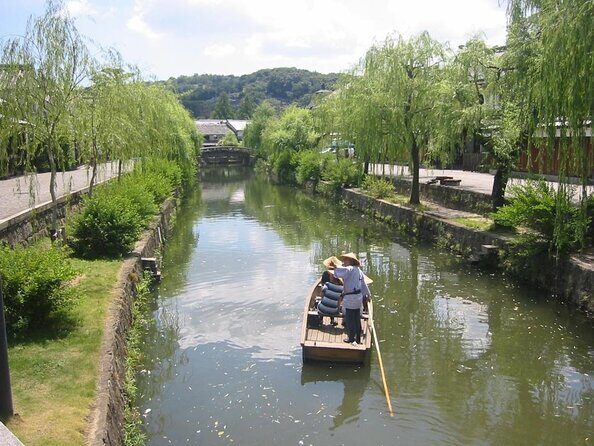
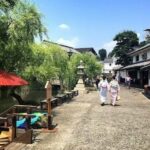
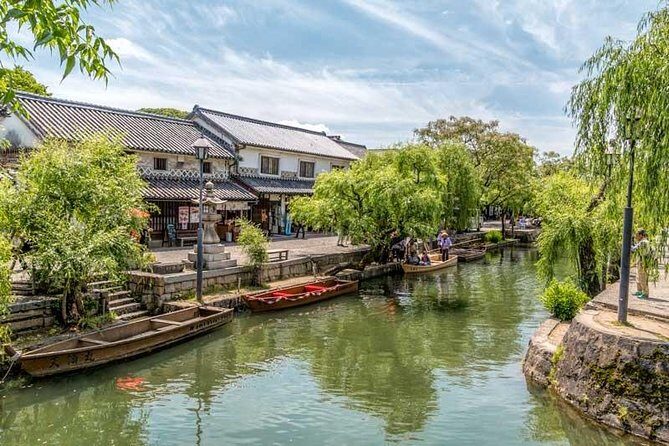
Kurashiki’s Bikan Historical Quarter has that rare effect where the setting does half the work for you. You’re surrounded by preserved storehouse-town layouts, wooden houses, and canals built so boats and barges could move between the city’s storehouses and the port.
The experience works best at walking speed. With a private guide, you can pause when something catches your eye instead of rushing through. Even the free time feels purposeful here because the guide can connect what you’re seeing to the way the town used to function—more than just a pretty postcard.
A practical plus: Stop 1 is free admission, so it’s an easy first choice if you’re trying to keep overall costs under control.
You can also read our reviews of more guided tours in Kurashiki


Meeting Your Government-Licensed Guide and Building Your 4-Hour Plan
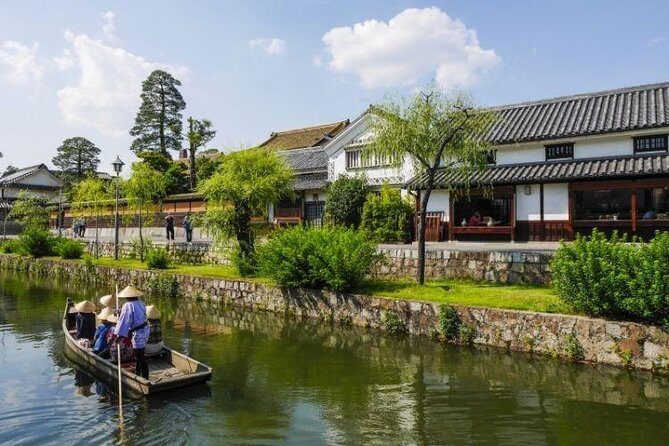
This tour is private, meaning it’s only you and your group. You also get a practical meeting setup: you meet your guide on foot within a designated area in Kurashiki, with pickup offered (but it’s still walk-to-meet style rather than a car pickup).
You’ll receive a mobile ticket, which is handy for quick check-ins. And because the tour is customizable, you get to design your half-day. The key detail is that you pick 2–3 sites from the options, and your guide builds the route around those picks.
In real terms, this is why I like this format. If you care more about canals and merchant-era homes, you don’t have to force the art museums. If you’re an art person, you can prioritize Ohara Museum of Art and the Kojima memorial. If denim is the goal, you can put Denim Street and the Kojima Jeans Street-style stops higher on the list.
Also, there’s a name you’ll likely hear in the process. One guide mentioned in feedback is Sato, praised for bringing stories to life and translating as needed so nothing gets lost.
Stop-by-Stop: Kurashiki Bikan Historical Quarter Canal Walk (Free, ~1 Hour)
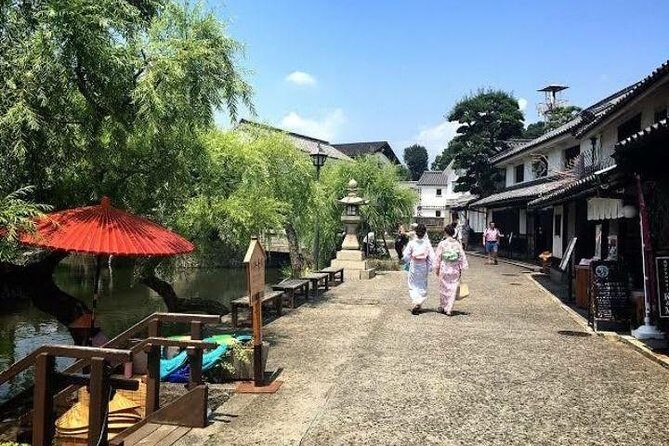
This is where you get your bearings. The canals here weren’t decoration—they were functional routes built to move goods. A central section of the former canal system has been preserved, and that makes it feel like you’re walking inside the way Kurashiki used to trade.
Since admission is free, it’s also a smart anchor stop. It’s a good place to start if you want your guide to set the context early, especially if you’re visiting for only part of a day.
Here’s a small but useful expectation: in feedback tied to this stop, Sato was praised for turning Bikan-quarter history into something you can picture, not just facts on a timeline. That’s exactly what you want on a first-time visit.
Tip for your comfort: wear shoes you can walk in for 4 hours. This isn’t a sit-down tour, and the whole point is the street-level feel.
Ohara Museum of Art: Japan’s First Western Art Museum (Ticket Not Included)
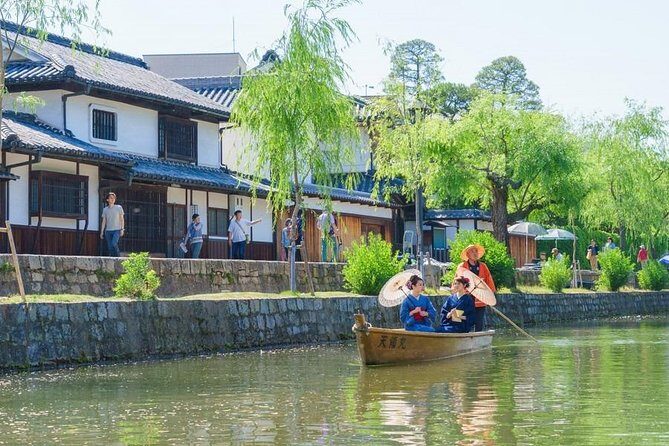
If you want one “big” cultural stop, make it the Ohara Museum of Art. It’s described as Japan’s first museum of Western art, and it’s set up as a private museum with three adjacent buildings near the canal, plus a separate building.
That layout matters. Because the museum is split into parts, it can work well for a half-day: you can see a lot without feeling like you have to sprint through one huge space. Your guide will likely steer you to the pieces and rooms that match your interests.
The one catch is cost. Admission here is not included, so this stop can add to your day depending on ticket prices. If you’re trying to keep the budget tight, you can still include it, but it’s smart to treat it as your “ticket commitment” rather than assuming everything will be covered.
From a value standpoint, I’d say this stop is for you if you like:
- Western art context inside Japan
- Museum time with a guide who can point out what to look for
- An indoor break if weather is unkind
If rain shows up, museum stops like this become your plan B. In feedback tied to one tour experience, bad weather was handled by walking around and leaning into the indoor parts of the day.
Torajiro Kojima Memorial: Art, Craft, and Collections in Side Buildings (Ticket Not Included)
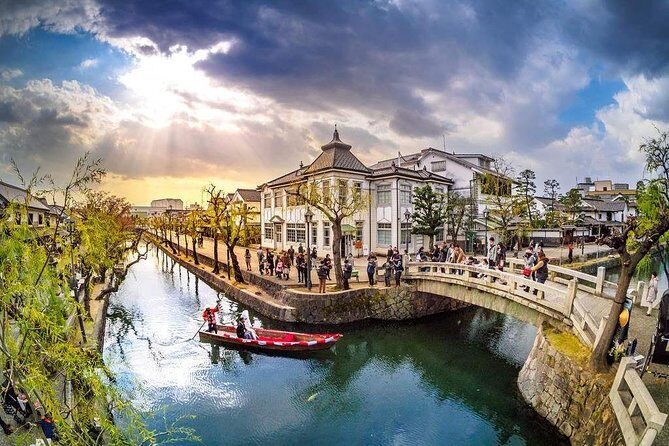
Right next door in spirit, you have the Ohara Museum of Art Torajiro Kojima Memorial. This one is set up as a separate experience with its own focus and galleries.
What makes it interesting is the variety in the spaces:
- The Annex includes works by Japanese artists
- The complex also includes a Craft Art Gallery and an Asiatic Art Gallery
- There are mentions of oil paintings and a broader collection angle tied to Torajiro Kojima
In a half-day tour, this is a good choice if you want art that isn’t only “look, admire, leave.” The Memorial’s emphasis on specific gallery types gives your guide room to explain connections between artists, styles, and collecting tastes.
Just like the main museum, admission is not included. If you want to keep costs down, consider choosing either the main Ohara Museum of Art stop or the Kojima memorial—not both. But if you’re an art-first traveler, fitting both can feel efficient.
You can also read our reviews of more private tours in Kurashiki
Ohashi House: Merchant-Class Kurashiki Life from 1796 (Ticket Not Included)
Ohashi House is your merchant-era reality check. The Ohashi family built this residence in 1796, and it’s described as typical of the machiya—town houses—of Kurashiki.
This stop is where the story shifts from canals and culture to daily life and social status. The merchant class didn’t just trade goods; they shaped the town’s built environment. Seeing a residence built for them helps you connect the earlier canal-and-storehouse world to the people who benefited from it.
Drawback to flag: admission is not included, so this is a ticket-based choice rather than a free wandering stop. If you’re short on budget, you can prioritize Bikan quarter first (free), then pick either an art museum day or the merchant house day depending on what you love more.
If you do love history with real physical spaces, this is one of the better uses of your limited time.
Ivy Square and Kurabo Memorial Hall: Cotton Mill Roots You Can Walk Through
After the art and merchant-home stops, you shift into industrial Kurashiki.
Kurashiki Ivy Square (Free, ~1 Hour)
Ivy Square is a brick-building complex covered in ivy. It includes museums, restaurants, and a hotel, but the real hook is historical: it was the site of the first modern cotton mill in Japan. The brick buildings were originally built as parts of the mill (the tour description frames it as mill-built brick structures that became part of this complex).
Because admission is free, this is a strong “breather” stop. It also helps you break the schedule so you’re not only moving from one ticketed museum to another.
Kurabo Memorial Hall (Ticket Not Included)
Kurabo Memorial Hall focuses on the history of the Kurashiki spinning mill company, Kurashiki Bosekijo (Kurashiki spinning mill). The museum is arranged in five rooms, each aimed at different time periods, starting with the company’s foundation in 1888.
This stop is a good one when you want context for how Kurashiki turned textiles into an identity. You’ll likely come away understanding the city’s denim story as something deeper than branding.
It’s ticket-based here (admission not included), so again, treat it like one of your major “paid” choices if you’re budgeting.
Kojima Jeans Street and Denim Street: The Textile Story in Two Directions
Kurashiki and Okayama are tied to denim history, but this tour lets you hit that theme from multiple angles.
Kojima Jeans Street (Ticket Not Included)
This museum stop is dedicated to Kojima Torajiro (1881–1929), described as an artist who painted in the Western style. The museum displays his works and includes works from his own collection, including Egyptian and Islamic art.
That combination is surprisingly useful for travelers. It connects the “Western-style art” thread you might have already seen at Ohara to a local identity figure tied to Kojima’s creative world. If you like meaningful cross-links between stops, this is one of those anchors.
Admission is not included, so consider it a paid interest stop for denim and art crossover fans.
Kurashiki Denim Street (Not Included, very short time)
Denim Street is the lane where the textile story becomes visible in the form of brands and vintage-styled clothing. The description frames Okayama as Japan’s denim capital since the 1970s, with Kurashiki carrying the heritage forward in its denim identity.
What’s especially practical: this stop is brief. That means it fits into a half-day without chewing up your whole schedule. If you want to shop, you’ll still want to plan how you’ll do it—because a short stop is enough to browse, not enough to compare every store.
My suggestion: decide what you’re looking for before you arrive. If you’re hunting for a specific item, tell your guide so the route and timing can prioritize the right shops first.
Rice-Warehouse Museums: Natural History and Momotarō Fun (Ticket Not Included)
If you want variety beyond canals, art, and denim, these two are your options.
Kurashiki Museum of Natural History (~1 Hour)
This museum sits in an attractive complex of rice warehouses from the late 18th century. That alone makes it worth considering, because you’re not just looking at exhibits—you’re inside historic storage architecture. Exhibits are described as household items from across Japan, including ceramics and glassware, which gives it a cozy, grounded feel.
It’s ticket-based (admission not included), but it can be a great “museum without pressure” option if your day includes multiple paid stops.
Momotarou-no-Karakuri-Hakubutsukan (~1 Hour)
This one is part gallery and part fun-house, focused on the local legend Momotarō. Expect memorabilia, toys, and depictions of the peach boy through the years. The description also notes a collection on the ground floor with an “amusing” angle (the details provided are partial, but the intent is clear: this is meant to be entertaining, not formal-only).
If you’re traveling with someone who enjoys playful museums (or you just want a lighter break), it’s a smart pick. As a half-day option, it adds personality without requiring you to spend hours studying placards.
Price and Value: What You Pay for at $107.50 Per Person
At $107.50 per person for about 4 hours, this tour is priced for private guiding and flexibility. You’re not paying for a big bus or a long itinerary. You’re paying for a licensed guide, customization, and the ability to choose your own “best-of” mix.
Here’s the value math that matters:
- The guide and tour time are included.
- You can select 2–3 sites, so you avoid being forced into paid stops you don’t want.
- Some stops are free (like the Bikan Historical Quarter canal area and Ivy Square), which reduces the add-on cost for your day.
- Entrance fees are not included for many locations, so your final spending depends on your choices.
Also, guide entry fees are covered only for sights listed under what to expect, so if you pick from the listed options, you stay in the included structure. Lunch and transportation fees aren’t included either, so plan for a snack break on your own if you need one.
Booking is often done about 49 days in advance on average. That’s a sign this isn’t the kind of tour people treat as casual last-minute filler.
Smart Tips for a Smoother Half-Day Walk
A few practical habits will make your day feel effortless:
- Pick your 2–3 priorities first: art, merchant-history homes, denim shopping, or museums with a lighter mood
- Wear shoes for steady walking: the tour is designed as a walking experience, not a hop-by-ride route
- Use the guide for translation and context if you want it. In feedback connected with one guide named Sato, translation help was specifically appreciated
- Plan around ticketed stops. Several highlights are not included in admission, so your wallet will feel it mainly through your museum choices
- Bring a backup plan for weather. Museum-heavy choices can save the day if rain or wind makes the canal streets less pleasant
And a small comfort detail: service animals are allowed.
Should You Book This Kurashiki Private Tour?
Book it if you want a half-day in Kurashiki that feels tailored, not generic. The private format with a government-licensed guide is ideal when you care about explanations, want help choosing which sights to see, or you’re short on time and want a logical route through the city.
Skip it (or change your plan) if you hate walking or if you’re trying to minimize entrance fees to nearly zero. Because it’s customizable, you can still keep costs reasonable by stacking more free stops, but many of the most distinctive options here are ticket-based.
If I were advising a friend: choose your mix ahead of time—canals first, then decide whether you’re an art-and-museum person, a textile-and-shopping person, or a merchant-history person. With the guide adjusting the pacing, that selection strategy makes the whole tour feel like it was built for your day.
FAQ
How long is the Kurashiki half-day private tour?
It runs for about 4 hours.
Is this tour private?
Yes. It’s a private tour/activity, and only your group participates.
Can I choose which places to visit?
Yes. You can select 2–3 sites from the list under what to expect, and your guide customizes the route around those choices.
Are entrance fees included?
No. Entrance fees are not included, though some stops are listed as free (such as the canal area at the Bikan quarter and Ivy Square).
Does the tour include a guide?
Yes. It includes a licensed local English-speaking guide, and the tour is described as using a government-licensed multilingual guide.
Is pickup included?
Pickup is offered, but the tour is a walking tour. You meet the guide on foot within a designated area in Kurashiki.
Do I get a ticket on my phone?
Yes. It includes a mobile ticket. Confirmation is received at the time of booking.