REVIEW · KURASHIKI
Japanese Tea Ceremony Private Experience
Book on Viator →Operated by 月と花 Japanese tea ceremony salon · Bookable on Viator
A cup of calm in Kurashiki. This private Japanese tea ceremony puts you inside a traditional tea room, with a qualified tea master explaining what matters and why, while you enjoy matcha made right in front of you.
Two things I especially like: the focus on tea ceremony etiquette and the fact that you get matcha and sweets as part of the lesson, not afterthought snacks. You’ll also get clear guidance on using the utensils, even if this is your first time.
One consideration: the experience is about 1 hour, so it moves at a friendly pace, but it’s not the kind of slow, multi-stage program where you can linger endlessly between steps. Also, because it’s private, the per-person value depends a bit on whether you’re booking solo or with a small group.
In This Review
- Key Highlights You’ll Actually Feel
- Kurashiki Tea Ceremony: Why This Town Makes It Feel Right
- Meeting at 月と花 Japanese tea ceremony salon in Kurashiki
- Traditional Tea Room Setup: What You Don’t Have to Worry About
- The Etiquette Lesson: Using the Utensils Without Feeling Lost
- Matcha, Made in Front of You: The Taste Part That Teaches
- One Hour, Full Feeling: How the Timing Shapes the Experience
- Private and Personal: What “Only Your Group” Changes
- Price and Value: Is $50 for 1 Hour Worth It?
- Practical Tips So Your Tea Ceremony Goes Smoothly
- Who Should Book This (and Who Might Skip It)
- Should You Book This Japanese Tea Ceremony in Kurashiki?
- FAQ
- Where is the meeting point for the Japanese tea ceremony experience?
- How long does the private Japanese tea ceremony last?
- Is this experience private or shared with other groups?
- Do I need special clothes or do I need to bring belongings?
- Will I taste matcha and sweets during the ceremony?
- Is free cancellation available, and how much notice do I need?
Key Highlights You’ll Actually Feel
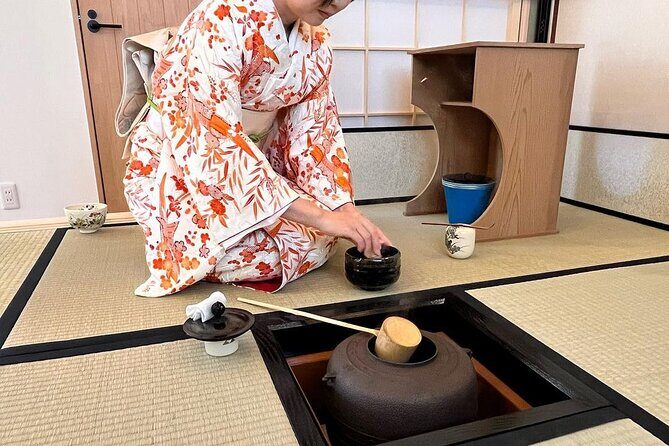
- A private tea master-led lesson in a traditional tea room, tailored to your group
- Etiquette plus hands-on utensil guidance so you’re not just watching
- Matcha prepared in front of you, paired with seasonal Japanese sweets
- Foot-care coaching and careful movement, so the room feels comfortable and respectful
- Close to public transportation in Kurashiki, making it easy to slot into your day
- Group discounts and a mobile ticket, which can simplify planning
Kurashiki Tea Ceremony: Why This Town Makes It Feel Right
Kurashiki has that older-town calm that works perfectly for tea. Before you even sit down, the setting matters: you’re not doing a rushed stop. You’re stepping into a focused cultural moment, and that changes the whole tone.
What I like about this experience is the way it stays casual while still being full-fledged. You’re not asked to be an expert on day one. Instead, you get explained etiquette in a way you can follow while you’re in the room—so you actually learn instead of quietly panicking.
For a first-timer, that balance is gold. You’ll come away knowing what you did, not just what you were supposed to do. And because the program centers on matcha and sweets, it feels like Japanese culture you can taste and understand, not culture you only watch from the outside.
You can also read our reviews of more private tours in Kurashiki
Meeting at 月と花 Japanese tea ceremony salon in Kurashiki
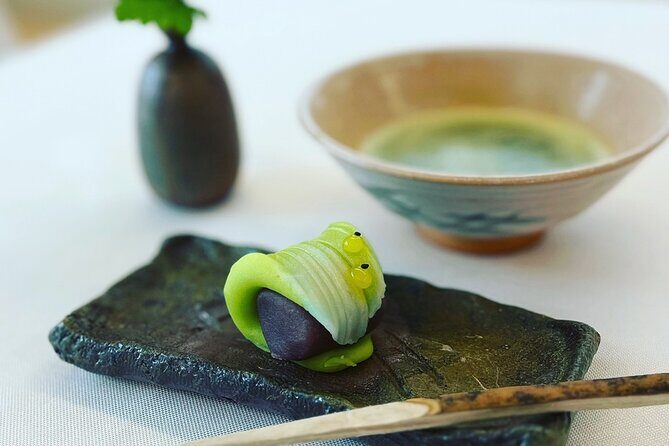
Your start point is 月と花 Japanese tea ceremony salon at 2-chōme-16-11 Achi, Kurashiki, Okayama 710-0055, Japan. The activity ends back at the meeting point, so there’s no confusing handoff or long walk afterward.
This is also listed as being near public transportation. That matters because tea ceremonies are the kind of thing you want to start fresh, not frazzled. If you’re planning a day of exploring Kurashiki, you can usually build this into your route without a big detour.
One practical perk: it’s a private tour/activity, so only your group participates. That means you’re not fighting for attention in a larger class setting. You also avoid the awkward feeling of having everyone else’s pace control the room.
Traditional Tea Room Setup: What You Don’t Have to Worry About
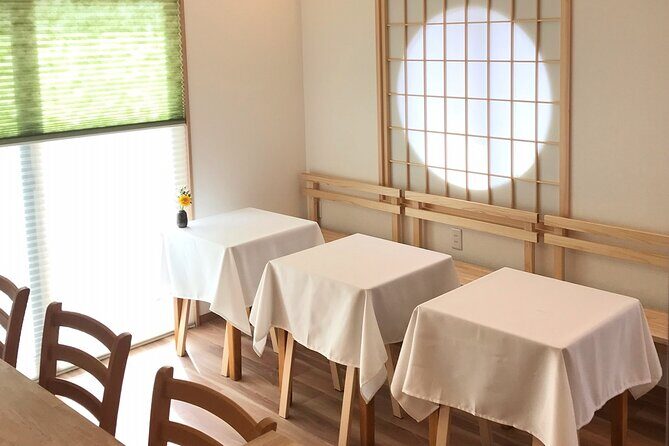
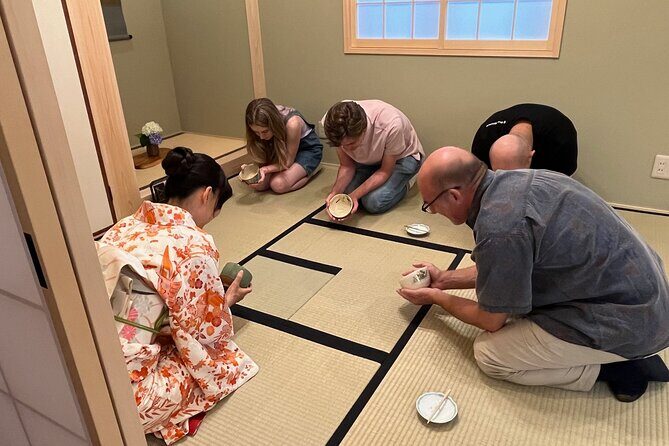
The experience takes place in a tea room built for a traditional ceremony. The nice part is that you don’t have to bring anything special. There’s no need to worry about clothing or personal belongings—everything you need is prepared here.
They also mention careful attention to your feet. That usually hints that movement in the tea room is part of the etiquette: you likely won’t want fast, clumsy steps. In other words, they’re setting you up to feel safe and respectful in the space.
From a practical perspective, this removes friction. I love experiences where you can show up as you are—especially in Japan, where it’s easy to overthink outfits when you’re told to dress “appropriately.” Here, the ceremony is designed to work without you needing to plan your day around wardrobe logistics.
The Etiquette Lesson: Using the Utensils Without Feeling Lost
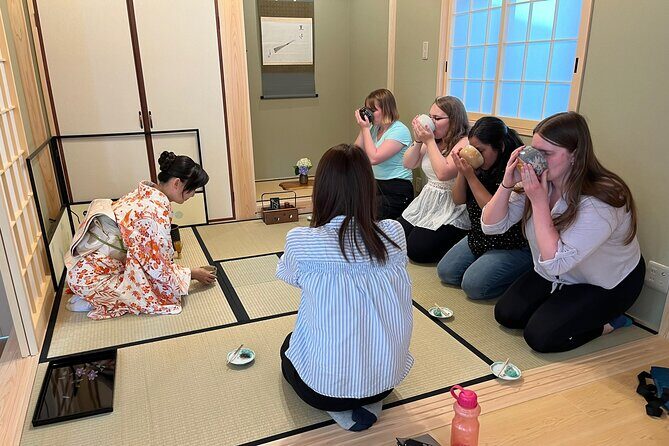
This is where the experience earns its 5/5 love in the ratings. A qualified tea master explains the meaning of etiquette and teaches you how to use the utensils during the ceremony.
Instead of treating etiquette like a mystery code, you get it broken down into steps you can follow in real time. The goal isn’t perfection. It’s understanding. When you know why a gesture exists, you stop treating it like performance and start treating it like communication—between host, guest, and the moment.
Expect guidance that covers both the social side (what the etiquette represents) and the practical side (how to hold and handle the tools). That pairing matters. If you only learn the “what,” you’ll still feel unsure. If you only learn the “how,” the ceremony can feel like mimicry. Here, you get both.
This also means the room becomes a classroom with manners. You can ask questions, and the explanations give you something to remember after you leave—especially if you’re traveling with kids.
Matcha, Made in Front of You: The Taste Part That Teaches
You drink matcha made in front of you. That detail is more than dramatic timing—it helps your brain connect the ritual to the result. You see the process, then you taste the outcome, and the ceremony stops being theoretical.
You’ll also enjoy beautiful Japanese sweets made for the experience, described as seasonal. That word matters: seasonal sweets make the pairing feel like it belongs to the time of year, not a generic “tea set.” Even if you don’t know the specific season theme, you’ll sense that the sweets are chosen to fit the moment.
If you’re picky about beverages or you’re not sure you’ll like matcha, this is still a solid choice because the matcha is central and presented with context. You’re not buying matcha in a shop; you’re learning how it fits into the ceremony. And when you understand what’s happening, you’re more likely to enjoy the taste, not just tolerate it.





One Hour, Full Feeling: How the Timing Shapes the Experience
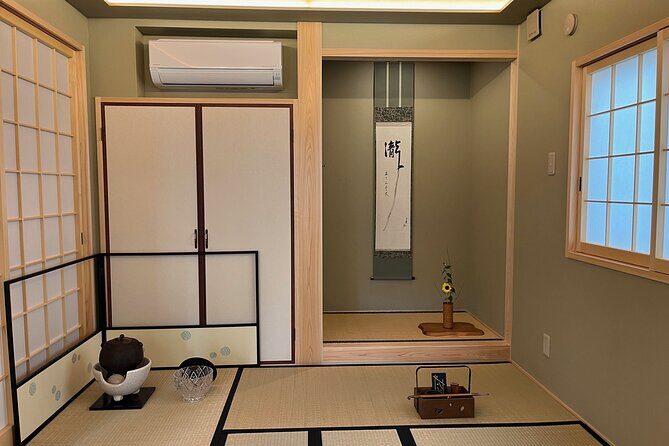
The duration is about 1 hour. For most people, that’s the sweet spot. Long enough to feel like a complete ceremony, short enough that you won’t feel stuck if you need a bathroom break or you’re managing energy levels during sightseeing.
In a one-hour private setting, the ceremony structure has to be efficient. That’s not a drawback when you come with the right expectations. You’ll learn the key etiquette, use the utensils with guidance, and taste matcha and sweets without the experience stretching into something that gets boring.
This format also makes the experience easy to schedule. If you’re doing Kurashiki as a day-trip vibe (old streets, museums, photo stops), this fits neatly as a calm anchor. It breaks up the walking and gives you a cultural activity that isn’t dependent on weather or long lines.
Private and Personal: What “Only Your Group” Changes
Because it’s private, it’s just your group in the tea room. That can matter more than you think. In a group setting, you can end up waiting your turn, watching from the edge, or feeling like you’re interrupting someone else’s learning.
Here, the tea master can focus on your group’s pace. The etiquette explanations also feel more directed to you. It’s the difference between being a student and being a spectator.
It also works well for families. One of the strongest signals from the ratings is that kids—specifically ages 11 and 14—enjoyed it and learned a lot, with tasty tea and treats as the payoff. If you’re traveling with teens, this kind of guided structure can turn a culture activity into something they actually pay attention to.
Price and Value: Is $50 for 1 Hour Worth It?
The price listed is $50 for an approximately one-hour private tea ceremony in Kurashiki. Whether it’s a bargain or a splurge depends on your travel style, but here’s the real value math: you’re paying for a qualified tea master, a private traditional tea room experience, guided etiquette instruction, and a matcha-and-sweets tasting that happens as part of the lesson.
If you’re traveling solo, you might feel the price more clearly, because private experiences usually cost more per person. If you’re booking with two or more people, the cost becomes easier to justify because you split the private component across your group.
Also, you’re not just buying a drink. You’re buying context and coaching. In my view, that’s what turns it into cultural learning instead of a food stop.
Practical Tips So Your Tea Ceremony Goes Smoothly
A few small things will help you enjoy it more:
- Arrive a little early so you’re not rushed when you enter the tea room. A calm start matters here.
- Be ready to move carefully. The experience notes care for your feet, so take your time with steps and positioning.
- Watch the utensil teaching closely, even if you think you’ll remember. The ceremony is short, and you’ll use what you learn in that same window.
- Eat and drink with the flow. The sweets and matcha aren’t separate activities—they’re part of the rhythm.
- Ask simple questions about etiquette meaning while you’re there. You’ll get more out of the experience if you connect the gestures to the intent.
Finally, come with an open mind. Tea ceremony etiquette isn’t about strictness for its own sake. It’s about respect, attention, and comfort for everyone in the room. Once you understand that, the whole thing feels more natural.
Who Should Book This (and Who Might Skip It)
This tea ceremony is a great fit if you want:
- a first-timer-friendly cultural experience
- a private setting where your group gets guidance
- a break from sightseeing that still feels meaningful
- an activity that includes food you’ll actually taste: matcha and seasonal sweets
It might be less ideal if you want a super long, story-heavy workshop or if you’re looking for something that feels more like a performance show than a hands-on etiquette lesson. The structure is concise by design.
If you’re traveling with kids or teens, it’s also promising. The ratings highlight that a family group with ages 14 and 11 had a good time, learned a lot, and enjoyed the tea and treats. That suggests the explanations and pace can work across ages.
Should You Book This Japanese Tea Ceremony in Kurashiki?
I think you should book it if you want a private, guided introduction to Japanese tea culture—one that includes both meaning and technique, plus matcha and seasonal sweets you’ll remember. The 1-hour timing is practical, and the fact that you don’t need special clothing or bring much of anything makes it easy to say yes.
If you’re cost-sensitive and traveling solo, you may want to compare it to other tea experiences in the area. But if you’re splitting the private cost with someone else, the value improves quickly.
Bottom line: this is the kind of experience that turns “I’ve heard of tea ceremony” into “I understand what I did and why,” and that’s a win.
FAQ
Where is the meeting point for the Japanese tea ceremony experience?
The meeting point is 月と花 Japanese tea ceremony salon, 2-chōme-16-11 Achi, Kurashiki, Okayama 710-0055, Japan.
How long does the private Japanese tea ceremony last?
It lasts about 1 hour.
Is this experience private or shared with other groups?
It’s a private tour/activity, so only your group participates.
Do I need special clothes or do I need to bring belongings?
No special clothes are required, and you don’t need to worry about belongings because everything you need for the experience is prepared here.
Will I taste matcha and sweets during the ceremony?
Yes. You’ll enjoy matcha made in front of you and seasonal Japanese sweets as part of the experience.
Is free cancellation available, and how much notice do I need?
Yes, free cancellation is available. You can cancel up to 24 hours in advance of the experience for a full refund.