REVIEW · KURASHIKI
Special Ikebana Experience Guided by an Ikebana Master, Mrs. Inao
Book on Viator →Operated by TAKAHASHIGAWA TRAVEL · Bookable on Viator
Flowers can teach you how to slow down. This Kurashiki ikebana session pairs a calm historic setting with clear instruction from Mrs. Inao, an Ikenobo teacher with decades of practice, plus an interpreter to keep everything understandable. I really like that you start by choosing your materials at Sumire Florist, so the lesson begins with your own selection, not just a “watch and copy” vibe.
You’ll also appreciate the shop’s local roots: the flower store is described as one the community has loved for 70 years, which makes the start feel grounded in real daily life. One consideration: since the whole experience is about 2 hours, it can feel light if you’re specifically hunting for a very long, lecture-style deep history of every style and tradition.
In This Review
- Key highlights you should care about
- Kurashiki Bikan Historical Quarter sets the right pace for ikebana
- Starting at Sumire Florist: the best way to begin is with your own flowers
- Learning the spirit of ikebana: subtraction, not decoration
- Meeting your teacher: Mrs. Inao and the Ikenobo approach
- The guided walk: moving through the Kurashiki Bikan Historical Quarter
- Hands-on workshop: techniques, etiquette, and how to think while you work
- Tea, sweets, and the personal feel that makes it memorable
- Price and value: is $82.42 per person worth it?
- Who this suits best (and who might feel disappointed)
- Should you book the Ikebana experience with Mrs. Inao?
- FAQ
- Where does the experience start?
- How long is the ikebana experience?
- How much does it cost?
- Is there an interpreter during the experience?
- Who teaches the ikebana workshop?
- Do I need to remove my shoes?
- How soon will I get confirmation after booking?
- Can I get a refund if I cancel?
- Is the activity private?
Key highlights you should care about
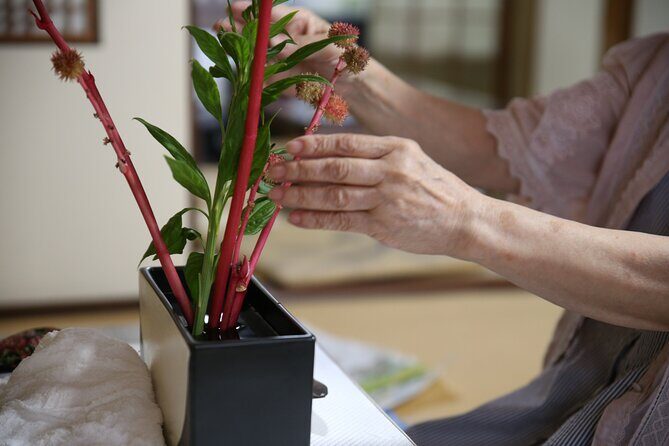
- Pick flowers first at Sumire Florist, then learn how to work with what you chose
- Mrs. Inao teaches from Ikenobo roots, with 65 years of arranging experience behind her
- Etiquette is part of the lesson, not just technique and form
- You’ll walk through Kurashiki Bikan Historical Quarter with an interpreter during the move to class
- Tea and sweets are included, adding a calm, complete cultural break
- Shoe rules apply indoors, so plan ahead with socks
Kurashiki Bikan Historical Quarter sets the right pace for ikebana
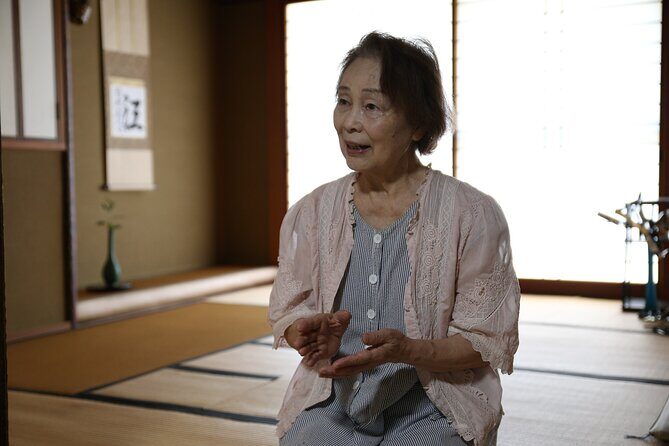
Kurashiki is one of those places that helps you drop your travel speed. The historic quarter atmosphere is quieter and less hectic than many Japan itineraries, and that matters because ikebana rewards focus, patience, and small, careful choices.
This is also why I like pairing ikebana with Kurashiki. You’re not just learning an art form in a classroom-like vacuum. You’re moving between spaces where the culture is visible in everyday life: a long-loved flower shop, then a teaching setting inside the Kurashiki Bikan area.
If you’ve been doing temples and crowds all day, this can work like a reset button. And if you’re traveling with someone who gets tired of constant sightseeing, it’s a creative break that still feels distinctly Japanese.
You can also read our reviews of more guided tours in Kurashiki


Starting at Sumire Florist: the best way to begin is with your own flowers
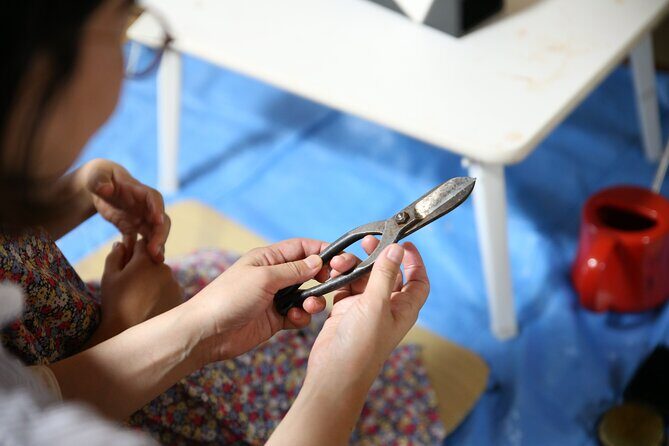
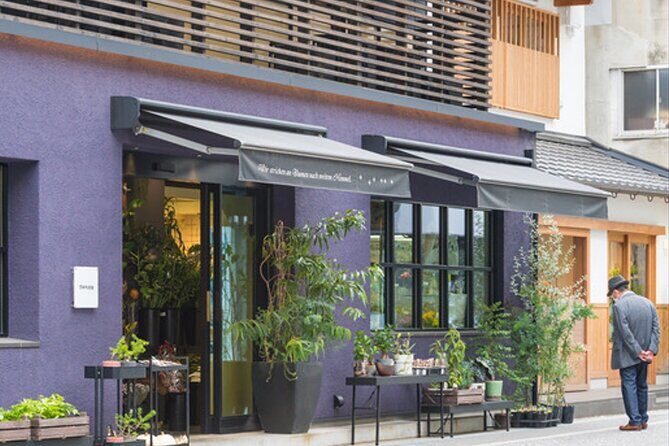
Your day starts at Sumire Florist at 3-chōme-8-8 Achi, Kurashiki, Okayama. It’s conveniently near public transportation, so you’re not stuck planning around a complicated ride.
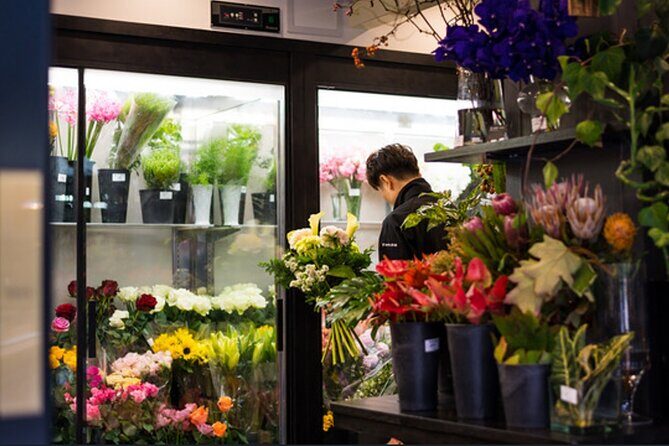
Here’s a big reason this opening works: you choose one type of flower for yourself. That simple constraint changes the whole feeling of the lesson. Instead of the teacher deciding your direction, your selection shapes your arrangement choices. You’ll be thinking in terms of what that specific flower can do—its character, shape, and how it holds up in an arrangement.
The shop itself is described as beloved by locals for 70 years, and that comes through in the vibe. You’re not just grabbing flowers and rushing into the next step. You’re stepping into a place that treats flowers as part of life, not just props for tourists.
Practical tip: expect an indoor environment where you may need to remove shoes. The experience requires it, so wear socks or bring a pair you’re comfortable with for that moment.
Learning the spirit of ikebana: subtraction, not decoration
Before hands-on work begins, you’ll get an explanation of ikebana’s history and spirit. The wording is clear and values-driven: ikebana is rooted in the idea of giving life back to life by arranging flowers that had been cut off.
There’s also a memorable contrast provided during the session: if some Western-style flower arranging leans toward adding more and more, ikebana leans toward subtraction. That means you’re aiming for intentional presence, not clutter. You’re choosing what to leave out as much as what to include.
This matters for you because ikebana can feel intimidating if you think it’s about “getting it right.” The lesson framing helps you understand that the goal is expression and respect for the materials, not artistic perfection.
You’ll also get the “why” behind etiquette. Even if you’ve never done formal crafts in Japan, you’ll learn how the process is meant to be treated: with calm, with attention, and with awareness of the space and tools.
Meeting your teacher: Mrs. Inao and the Ikenobo approach
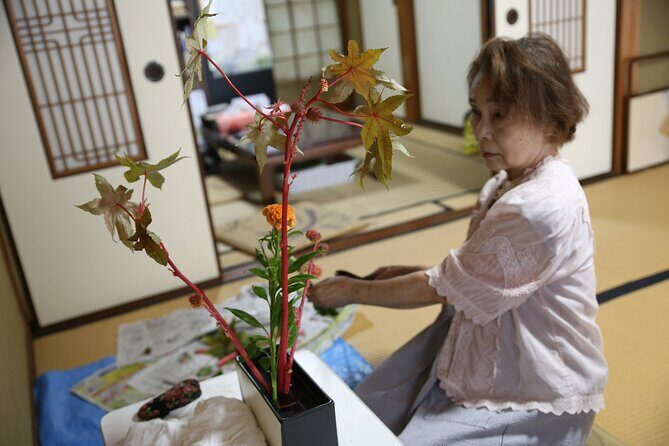
The star of the workshop is Mrs. Inao, described as a teacher from Ikenobo, noted as Japan’s oldest school of ikebana. She’s credited with arranging flowers for 65 years, which you can feel in the teaching style that’s focused on both technique and manners.
Ikenobo instruction often emphasizes form, restraint, and the relationship between line, space, and material. In a two-hour experience, you won’t get every possible style cataloged. But you should walk away with a working understanding of what makes ikebana different from a casual craft: it’s built on method and respect.
One of the best pieces of feedback from past participants is how attentive the instruction felt. In at least one group, the interpreter was named Misa, and the teaching pace was described as clear enough that participants understood what Mrs. Inao was explaining.
That combination—master teacher + interpreter support—helps you avoid the common problem of “I made something, but I’m not sure what I learned.”
The guided walk: moving through the Kurashiki Bikan Historical Quarter
After you choose your flowers, you’ll travel from the flower shop to the classroom through the Kurashiki Bikan Historical Quarter, with an interpreter along the way.
This transition is more than logistics. It’s a slow-down moment that keeps the theme consistent: you’re in a historic area, and your experience keeps moving with it. Instead of rushing from one venue to another, you get a guided connection between the start point and the learning space.
You also benefit from having the interpreter during the move. If you’re a bit nervous about language, the walk time can help you feel oriented. And if you have questions, it’s often easier to ask in a calmer, moving moment than once everyone is seated and the class is underway.

Hands-on workshop: techniques, etiquette, and how to think while you work
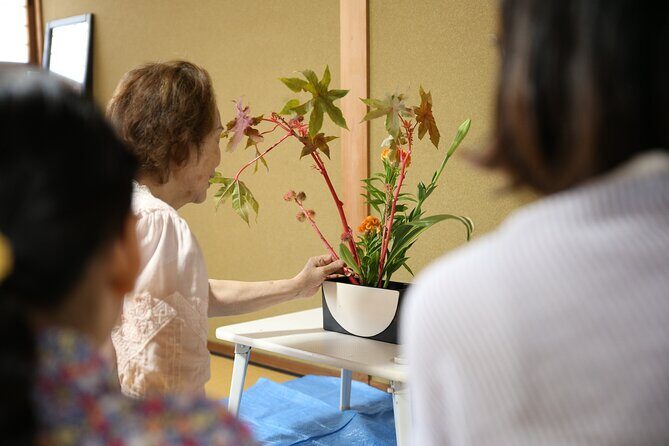
Once in the classroom, the session shifts to hands-on teaching: you’ll learn techniques and etiquette from Mrs. Inao. Even with limited time, the structure is built to help you make progress without feeling overwhelmed.
Here’s what to focus on during the work period so you get the most value:
First, keep your attention on the materials you selected. Since you start by choosing one type of flower, you can build your arrangement around that single material rather than trying to “fix” it with extra choices.
Second, treat etiquette as part of technique. In ikebana, how you handle space, tools, and the flow of the lesson affects the final result. The workshop is designed to teach that, not just list steps.
Third, think in lines and balance, not volume. The subtraction idea should guide your decisions. If you find yourself tempted to pack everything in, pause and ask yourself what you’re leaving out and why.
The workshop is described as more than a one-off craft. It’s meant to be a springboard, meaning you should leave with enough foundation to understand the next ikebana you see in Japan—because you’ll know what you’re supposed to notice.
Tea, sweets, and the personal feel that makes it memorable
One of the charming add-ons you can expect is green tea and sweets. That might sound like a minor detail, but it changes the experience from a quick class into a calmer cultural pause.
There’s also a sweet extra touch mentioned: the teacher’s husband showing his art work. You shouldn’t assume this happens in every session, but it does point to how the event can feel connected to real people, not just a staged performance for visitors.
This is one of the reasons the experience gets such strong ratings. It doesn’t feel like “arrive, make, leave.” It feels like you’re being welcomed into a small corner of Japanese craft life.
Price and value: is $82.42 per person worth it?
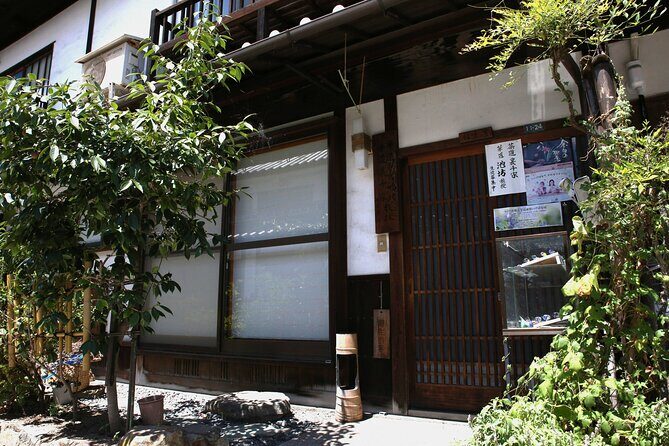
At $82.42 per person, this workshop is not a budget activity. But it may still be good value if you care about instruction quality and cultural context.
Here’s what you’re paying for, based on the structure described:
- A master teacher with a long track record (Mrs. Inao)
- Instruction tied to Ikenobo traditions
- Interpreter support for history, spirit, and etiquette
- Time built around both selecting flowers and making an arrangement
- Included tea and sweets
- A smooth start at a local florist and a guided walk through Kurashiki’s historic quarter
Also, note the timing. It’s listed as running about 2 hours. That’s long enough to learn core technique and etiquette, but short enough that you can fit it into a day of sightseeing without losing your whole schedule.
One more value detail: the tour is private for your group only. That matters because instruction can feel less rushed and more personal than larger group formats.
The main reason it could feel like a miss is what one participant described as expectations not matching the depth they wanted. If you’re the type who wants hours of cultural lecturing, you may find the experience too compact. But if you want a guided, hands-on start into ikebana with a real teacher, the structure is very well matched.
Who this suits best (and who might feel disappointed)
This is a great fit if you want an authentic creative activity in Kurashiki that’s not based on standing in a line. You’ll enjoy it most if you like crafts, enjoy learning about cultural practices, and appreciate thoughtful rules like etiquette and shoe-off indoor manners.
It also works well for couples and families who want a calmer change of pace. One review specifically called out it being a fun, unique experience for a parent and child pair, and the “attentive and helpful” interpreter support was a key part of that comfort.
Who might hesitate? If you’re expecting a very deep, long-form history lesson and a broad survey of different ikebana styles, this may not satisfy that craving. The experience is built as a guided, practical foundation, and it doesn’t promise to cover every angle of ikebana culture in one sitting.
If you can manage expectations and focus on the making and the core teaching, you should be happy with what you get.
Should you book the Ikebana experience with Mrs. Inao?
I’d book this if you want a high-touch cultural workshop where the focus is real technique plus respectful etiquette, taught by a long-time Ikenobo instructor in a setting that naturally slows you down. The flower-first start at Sumire Florist, the guided movement through Kurashiki Bikan Historical Quarter, and the inclusion of green tea and sweets make it feel like a complete little slice of Japan.
Skip it only if you know you want a heavy lecture format or a longer deep-dive into ikebana traditions. With the experience duration around 2 hours, the value is strongest for hands-on learning and a clear introduction, not for exhaustive storytelling.
If you’re unsure, treat it like what it is: a focused, elegant entry point into ikebana, with Mrs. Inao at the center and an interpreter making sure you don’t miss the meaning.
FAQ
Where does the experience start?
It starts at Sumire Florist (3-chōme-8-8 Achi, Kurashiki, Okayama 710-0055, Japan). It ends back at the meeting point.
How long is the ikebana experience?
The duration is about 2 hours.
How much does it cost?
The price is $82.42 per person.
Is there an interpreter during the experience?
Yes. The tour includes an interpreter who helps explain the history and spirit of ikebana and accompanies you to the classroom.
Who teaches the ikebana workshop?
The workshop is taught by Mrs. Inao, a teacher from Ikenobo (Japan’s oldest ikebana school), who has been arranging flowers for 65 years.
Do I need to remove my shoes?
Yes. The experience requires you to remove your shoes, so the tour asks you to wear socks or bring socks.
How soon will I get confirmation after booking?
You’ll receive confirmation within 48 hours of booking, subject to availability.
Can I get a refund if I cancel?
Yes. Cancellation is free up to 24 hours in advance for a full refund, and the cut-off is based on local time.
Is the activity private?
It is listed as private, meaning only your group will participate.