REVIEW · KURASHIKI
Half-Day Shared Tour at Kurashiki with Local Guide
Book on Viator →Operated by TAKAHASHIGAWA TRAVEL · Bookable on Viator
Kurashiki feels different when a local explains it. This half-day shared tour mixes Bikan Historical Quarter sightseeing with family-told context from the Hiroyuki Hara side of town, with interpretation so you don’t miss the good stuff. You end at Cafe Ueda, where you can keep the questions going over a drink.
I especially like two things: first, the pacing works for a 3-hour plan with a small group (max 10), and second, the stops are picked to connect Kurashiki’s story across time—from old temples to wartime alley talk and the Ohara family’s art legacy. Even when a stop is short, the guide gives you the why, not just the what.
One consideration: the visit to Ohara Museum of Art is not included (admission is extra), so if you want to spend real time inside, you’ll likely tack it on later. Also, with multiple sites in a compact route, it’s not the slow, linger-at-every-door kind of day.
In This Review
- Key highlights before you go
- Why Kurashiki fits a 3-hour shared tour
- Mukaimatsu Dorm: where Kurashiki’s origin story starts
- Kanryuji Temple: oldest tells with a specific Kurashiki link
- Achi Shrine and the zodiac sanctum: peace for the city
- Tsurugata Tunnel and Tsurugatayama Park: a passage with a story
- Walking the Bikan alleys: WWII stories you don’t find on postcards
- Kurashiki Ivy Square: a historical name with a modern use
- Yurinso Villa and the Ohara family connection
- Ohara Museum of Art: what’s included, what you may want later
- Cafe Ueda with Hiroyuki Hara: conversation beats crowds
- Price and value: where $86 goes (and what costs extra)
- Best-fit travelers for this Kurashiki local-guide route
- Should you book this Kurashiki half-day tour?
- FAQ
- How long is the Kurashiki half-day shared tour?
- Where does the tour start and end?
- What’s included in the price?
- Is the Ohara Museum of Art included?
- Do we pay anything for shrine prayers?
- How many people are in the group?
Key highlights before you go
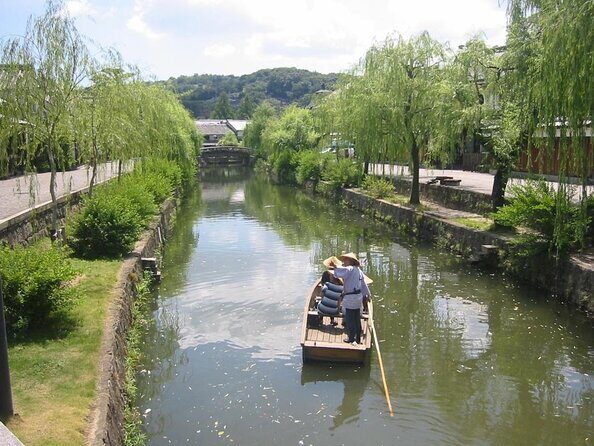
- Family-line storytelling in plain language: the tour ties Kurashiki’s origins to what you see today, including WWII-era alley context.
- Small-group feel (up to 10): you get time to ask questions without feeling like you’re trapped with a crowd.
- Temple and shrine stops that are historically tied: Kanryuji Temple and Achi Shrine are treated as living parts of Kurashiki’s protection and memory.
- Tsurugata Tunnel with Emperor Showa links: the tunnel isn’t just a passage; it’s a historical clue on the route.
- Cafe Ueda conversation at the end: you finish with local coffee/tea and a chance to chat with Hiroyuki Hara.
- What you get for the price is mostly guidance: museum admission isn’t included, but the guide, translator, insurance, and one drink are.
Why Kurashiki fits a 3-hour shared tour
Kurashiki rewards people who want meaning, not just photos. This route is built around the Bikan Historical Quarter area, but the guide keeps pulling you back to how the city formed and changed.
The tour runs about 3 hours, and with a maximum of 10 travelers, you should feel more like you’re walking with locals than checking boxes. The pace is brisk enough to be satisfying, but not so rushed that you can’t stop for pictures and quick questions.
Also, it’s a shared tour with a mobile ticket, so you won’t be stuck juggling paper confirmations. And yes, you do get tiny gifts at the end—small, but it’s a nice touch.
You can also read our reviews of more guided tours in Kurashiki


Mukaimatsu Dorm: where Kurashiki’s origin story starts
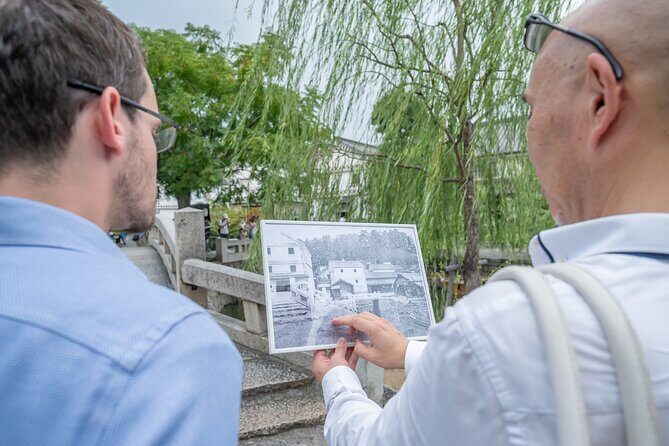
You meet at Mukaimatsu Dorm (2-chōme-5-1 Tsurugata, Kurashiki), and that matters because the guide begins with the city’s foundation and how the Hara family’s long connection to Kurashiki shaped local memory. The tour frames Kurashiki not as a theme park, but as a place people built their lives around for centuries.
This first stop is the warm-up, about 30 minutes, and it sets your mental map. Once you understand the origin line, the later stops feel less random—temples, shrines, and even a tunnel start to read like pieces of one story.
In the reviews, guides and translators are named (Hara, plus support like Kaiko and Misa-san), and that backs up what you’ll feel on the ground: this isn’t memorized trivia. It’s a family-connected narrative translated with care.
Practical note: since this start is outside, wear comfortable shoes. Kurashiki’s charm is in the walking, not the sitting.
Kanryuji Temple: oldest tells with a specific Kurashiki link
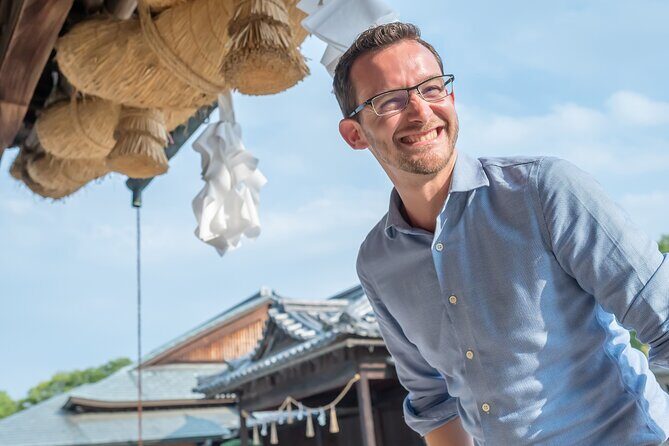
Kanryuji Temple is one of those stops that feels older than the area’s tourist map. The tour highlights it as having a history of over 1000 years, and it’s presented as deeply connected to Kurashiki’s past.
You’ll get around 20 minutes here. That’s long enough to notice details and get the interpretive context, but short enough that you should resist the urge to treat it like a full museum visit. If you want quiet time, save that for later.
The tour also points to a specific historic element: you can actually see remains connected to a samurai story (the description notes remains of a samurai bat). Whether you’re a history person or not, this kind of concrete detail is what turns a temple stop into a memory you can explain later.
Best move: take a photo, then listen for the guide’s link back to Kurashiki’s development. The photo alone won’t carry the meaning—your guide’s explanation will.
Achi Shrine and the zodiac sanctum: peace for the city
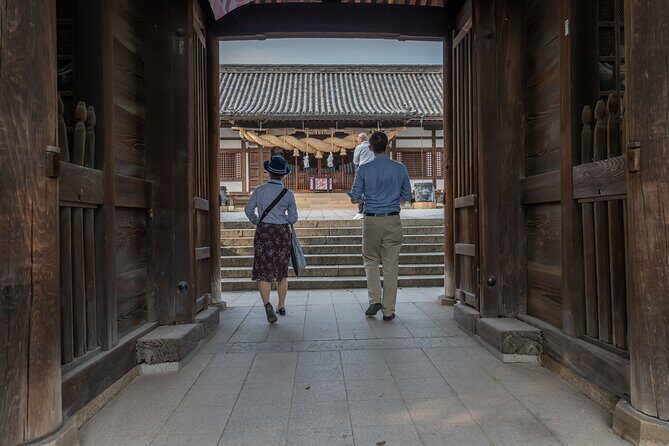
Next comes Achi Shrine, a stop described as protecting the peace of Kurashiki. It’s also a relief from the “yet another shop” fatigue, because shrine time is about stillness and symbols, not sales.
You’ll spend about 40 minutes here, which is generous for a shared tour. That extra time helps because shrine visits aren’t just about looking. It’s about noticing the structure and the themed details, including the zodiac sanctum.
If you’ve visited shrines before, you’ll recognize the basic rhythm—observe, read, respect, and move on. What you might not get on your own is how the tour connects this shrine’s role to the identity of the city you’re walking through.
Consideration: shrine rules and etiquette can vary by location and moment. If you’re unsure, follow what the guide does. That’s the safest way to blend in without stress.
Tsurugata Tunnel and Tsurugatayama Park: a passage with a story
Then you head toward Tsurugatayama Park and the Tsurugata Tunnel. Here the tour shifts from older spiritual sites to an infrastructural piece of history.
The tunnel was built in 1927, and it’s also associated with Emperor Showa. That’s a quick fact, but the real value is how it frames modern Kurashiki as something engineered, not just preserved.
You’ll spend about 20 minutes at this stop. That’s enough time to understand the function and the historical association, then continue through the walking portion of the route without losing momentum.
A small tip: tunnels and underpasses can be cooler and darker than the streets above. If your camera struggles, give it a moment to adjust exposure before you start shooting.


Walking the Bikan alleys: WWII stories you don’t find on postcards
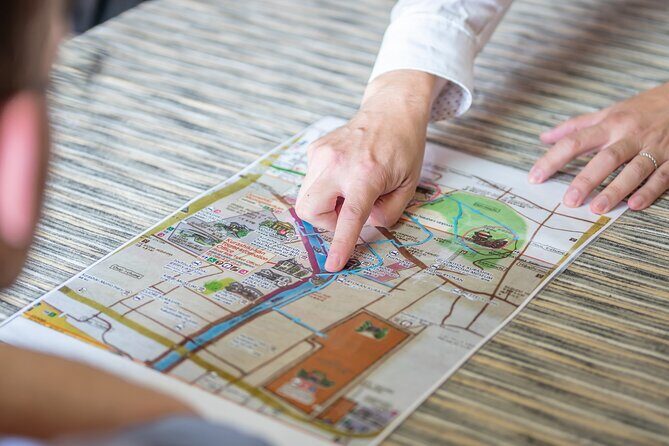
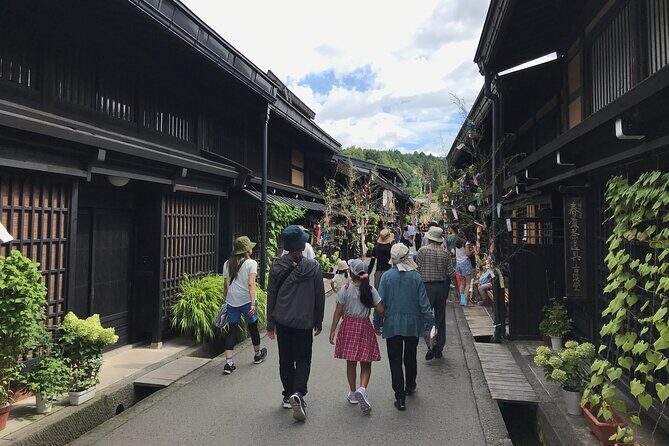
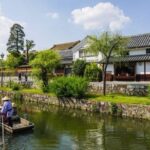
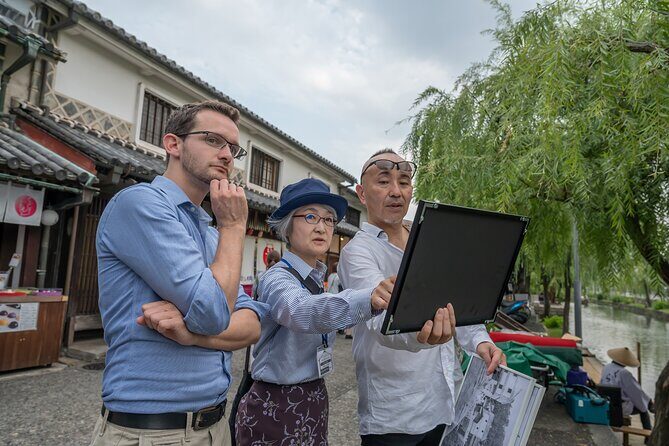
The heart of the experience is time in the Kurashiki Bikan Historical Quarter. Instead of listing famous facades, the guide walks you while explaining stories, including context related to World War II.
The time in this section is about 10 minutes, so treat it like a guided orientation. The goal isn’t to cover every building; it’s to help you understand what you’re looking at so your photos won’t feel like disconnected snapshots.
This is also where the Hara family connection and family-interpreter style show up most. The tour uses everyday streets and alley angles as prompts for what Kurashiki became—and why it still matters.
If you’re the type who likes to wander after a tour, this is a great setup. You’ll leave with a better sense of where the story turns, so your extra time on your own feels purposeful.
Kurashiki Ivy Square: a historical name with a modern use
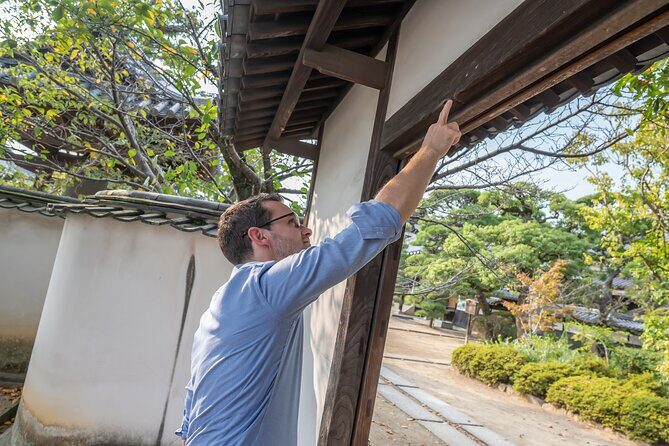
You’ll also hear about Kurashiki Ivy Square, now used as a hotel, and how it relates to Kurashiki’s history. The tour doesn’t ask you to pretend buildings are frozen in time.
The visit is about 20 minutes, which gives the guide room to connect architecture and repurposing to how Kurashiki keeps changing while staying recognizable. Even if you don’t plan to stay at the hotel, the explanation helps you read the neighborhood like a living place.
If you love design or adaptive reuse, this stop can be surprisingly satisfying. If you don’t, it still works because the story helps the “Bikan Quarter aesthetic” feel earned, not staged.
Yurinso Villa and the Ohara family connection
Next is Yurinso, tied to the Ohara family. The tour explains that the villa was built by Magosaburo Ohara, known as the founder of the Ohara Museum of Art. It was built for his sickly wife—an intimate, human detail that makes the building feel less like a label and more like a choice.
You get about 10 minutes here. That’s short, so you’ll want to focus on what makes it specific, not try to see everything. The guide’s aim is to give you a clear thread: Kurashiki’s history isn’t only about the Edo-era past; it also includes modern cultural influence tied to real families.
If you’ve ever wondered why certain art museums exist in specific places, this is where you get a hint of the answer. The city’s identity includes people who pushed culture forward, not just merchants or samurai.
Ohara Museum of Art: what’s included, what you may want later
You’ll reach the Ohara Museum of Art, and the tour notes it as the first private western art museum in Japan, again linked to Magosaburo Ohara’s role in Kurashiki.
Important practical point: admission to the museum is not included. The tour time at the museum is described as about 10 minutes, which is more like a guided setup than a full viewing.
So if western art is your thing, you’ll probably want to come back later, on your own schedule, after you’ve absorbed the why. If western art isn’t your priority, you can treat this stop as a context bridge.
Consideration: because it’s not included, budget for possible extra time and admission if you want more than the guided introduction.
Cafe Ueda with Hiroyuki Hara: conversation beats crowds
The tour ends at Ueda at a coffee shop loved by locals for more than 50 years, Cafe Ueda. This is the part I like most in the whole format because it breaks the sightseeing routine.
You’re there for about 20 minutes, and the tour includes the cost of one drink (coffee and/or tea). What you’re really paying for here is the chance to talk—your questions, your curiosity, and the guide’s family perspective.
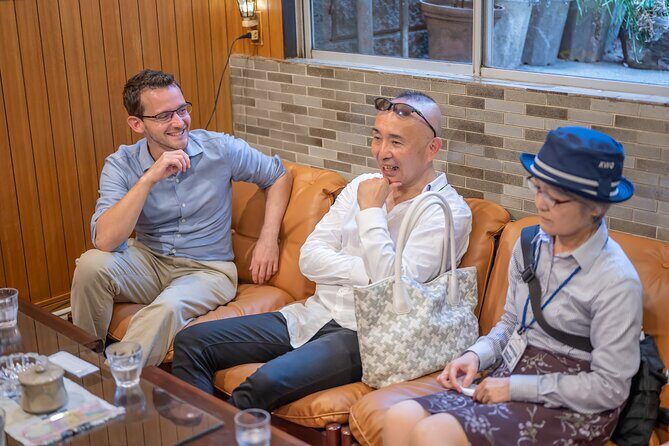
In the tour description, you can talk with Hiroyuki Hara himself. In the reviews, the experience is described as thoughtful and personal, with guides and translators mentioned by name. That matches what this final stop is designed to do: make the city feel human.
Also, you receive a wonderful souvenir at the end. Tiny gift plus souvenir isn’t a dealbreaker for most people, but it’s a nice signal that the host values making the day feel complete.
Price and value: where $86 goes (and what costs extra)
At $86 per person for about 3 hours, this is not a budget bargain tour. But it also isn’t “pay for walking.” You’re paying for guided storytelling, translation, and access to context you won’t get in a lonely self-guided stroll.
What’s included:
- Guide fee and translator fee
- Coffee/tea cost for one drink at Cafe Ueda
- Insurance
- Tiny gifts (and a souvenir at the end)
What’s not included:
- Ohara Museum of Art admission
- Snacks beyond the one included drink
- Saisen money for prayers: the tour notes 10 yen per prayer if you choose to do it
This makes the cost feel fair if you like history-as-experience. If you just want to take photos in the Bikan Quarter and you’re comfortable reading on your own, you might spend less independently. But if you want the story stitched to the streets, the translation and guide time are doing real work.
Group size helps value too. With a maximum of 10 travelers, the guide can actually respond rather than shouting over a dozen strangers.
Best-fit travelers for this Kurashiki local-guide route
This tour fits you best if:
- You want your Kurashiki experience to have connections, not just sights
- You like asking questions and getting straight answers
- You’d rather have a guide explain why places matter than just point and move on
- You want a plan that works even if you only have a short window
It’s also a good match if you’re trying to balance time with trains. Kurashiki can be easy to over-plan. A focused half-day route helps you see more of what matters without wearing yourself out.
If you hate structure, you might feel impatient with the short stop durations. Still, the tour is designed as a foundation. You can always wander longer after you’ve learned the story.
Should you book this Kurashiki half-day tour?
Yes, consider booking if you want the Bikan area to make sense fast. The combination of family-connected storytelling, translation support, and a calm ending at Cafe Ueda is a strong value package for a short day.
Skip it only if your priority is maximum time inside the Ohara Museum of Art or if you’d rather self-guide everything with your own reading. In that case, you might prefer assembling your own route and budget around museum admission.
If you’re aiming for an authentic, low-stress introduction to Kurashiki, this shared half-day with a local guide is a smart way to start.
FAQ
How long is the Kurashiki half-day shared tour?
It runs for about 3 hours.
Where does the tour start and end?
It starts at Mukaimatsu Dorm in Kurashiki and ends at Ueda (Achi, Kurashiki) at Cafe Ueda.
What’s included in the price?
The price includes the guide and translator, one coffee or tea drink at Cafe Ueda, insurance, and tiny gifts (plus a souvenir at the end).
Is the Ohara Museum of Art included?
No. Admission to the Ohara Museum of Art is not included.
Do we pay anything for shrine prayers?
If you choose to do it, the tour notes saisen (money offered to the gods) is 10 yen per one prayer.
How many people are in the group?
The tour has a maximum of 10 travelers.