REVIEW · OSAKA
Cherry Blossom Buddha and Mt.Yoshino with Strawberry Picking Tour
Book on Viator →Operated by H.I.S.Co., Ltd. · Bookable on Viator
Cherry blossoms plus strawberries is a strange combo that works. This spring-only outing strings together Mount Yoshino’s Senbonzakura viewpoints, the temple with the Great Cherry Blossom Buddha, and a strawberry farm stop in one long but well-paced day.
I especially like how the day balances big-ticket sights with real hands-on fun: you get a strawberry picking session in Asuka-mura, then you switch gears to temple statues and blossom viewing. A possible drawback is that cherry blossoms can be disappointing if the weather doesn’t cooperate, and the bus leaves on schedule, so you’ll want to be on time.
In This Review
- Key Things That Make This Tour Worth Your Time
- Spring Cherries and Strawberries: How the Day Flows
- Osaka to Mount Yoshino by Air-Conditioned Bus (and Why That Matters)
- Asuka-mura Strawberry Picking: Sweet, Simple, and Fast
- Tsubosaka-dera Temple and the Great Cherry Blossom Buddha
- Mount Yoshino: Senbonzakura Viewpoints and the Reality of Timing
- Roadside Station Katsuragi: A Quick Local Break
- Bento Lunch Details: Kakinohazushi and What You Can’t Change
- Price and Value: Is $114.02 a Good Deal?
- English, Group Size, and How to Set Yourself Up to Enjoy It
- Who Should Book This Tour (and Who Might Want a Different Plan)
- Should You Book the Cherry Blossom Buddha and Mt. Yoshino Strawberry Tour?
- FAQ
- What time does the tour start?
- Where do I meet the tour?
- How long is the tour?
- Is there air-conditioned transportation?
- Is strawberry picking included?
- Which sights are included with admissions?
- Is lunch included, and can I change it for dietary needs?
- How many people are on the tour?
- Can I expect to see cherry blossoms for sure?
Key Things That Make This Tour Worth Your Time
- Senbonzakura at Mount Yoshino: one of Japan’s most famous blossom areas, with time to move between viewpoints
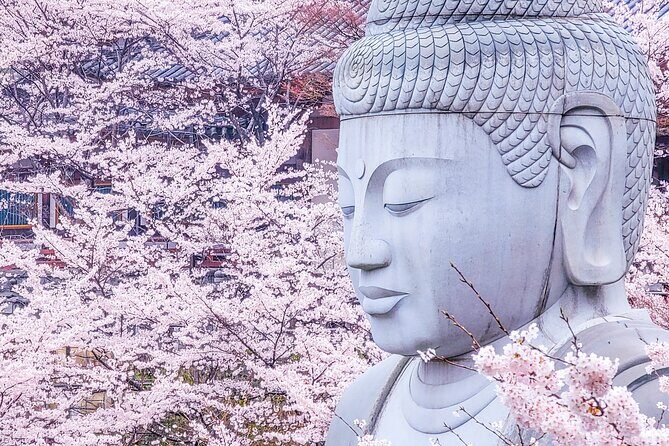
- Tsubosaka-dera’s Cherry Blossom Buddha: a temple visit centered on the Great Cherry Blossom Buddha and big stone Buddhas from India
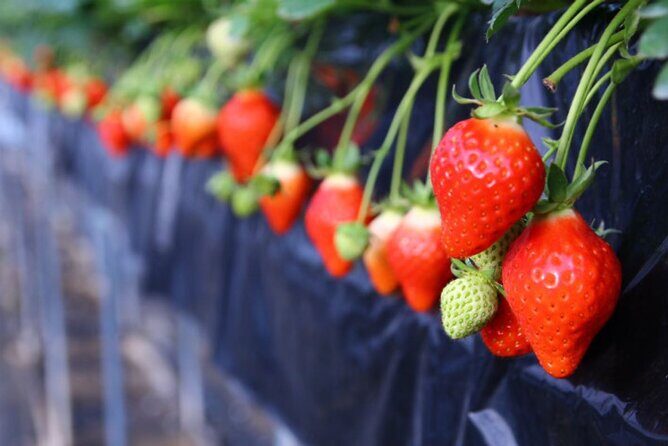
- Strawberry picking in Asuka-mura: an all-you-can-eat style session for sweet strawberries over a short, easy block of time
- All-weather friendly vibes: misty or drizzly spring weather can actually add atmosphere to the Buddha and blossoms
- Comfort-first transport: round-trip, air-conditioned bus from Osaka with a schedule you can count on
Spring Cherries and Strawberries: How the Day Flows
This is a classic cherry blossom trip, but it doesn’t feel like one-note sightseeing. You start with fun (strawberries), switch to culture (Tsubosaka-dera Temple), then end on the main event (Mount Yoshino) before a quick local shopping/sweets stop.
The total day runs about 9 hours 30 minutes, so you’re trading a full afternoon of planning for one clear plan. If you like structure, this format helps you get to Yoshino without figuring out buses and timing on your own.
You can also read our reviews of more tours and experiences in Osaka.
Osaka to Mount Yoshino by Air-Conditioned Bus (and Why That Matters)
The tour uses a comfortable round-trip bus from Osaka, and that’s a big deal when you’re going far in spring. You’re not just saving effort—you’re also keeping the day calmer, since the schedule is handled for you.
Also, the ride sections tend to be manageable. One big plus from the experience is that the longest bus leg doesn’t feel endless, which keeps you from arriving tired and cranky at the places you came for.
Asuka-mura Strawberry Picking: Sweet, Simple, and Fast
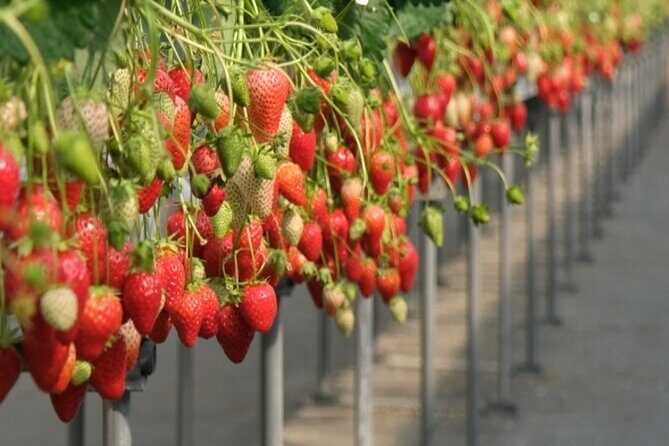
Asuka-mura is where you start your hands-on stop. You’ll do a strawberry picking experience, plus an all-you-can-eat-style tasting option for about 30 minutes.
This time window is short enough that you don’t feel trapped in a farm schedule, but long enough to actually enjoy the fruit. You’ll want to come hungry—not because you’ll be stuck eating nonstop, but because the strawberries are the main point here, and you’ll likely want seconds.
Practical tip: wear shoes you’re comfortable walking in, and keep an eye on how you’ll carry anything (the day doesn’t encourage lugging extra stuff around). Large luggage is not allowed, so travel light.
Tsubosaka-dera Temple and the Great Cherry Blossom Buddha
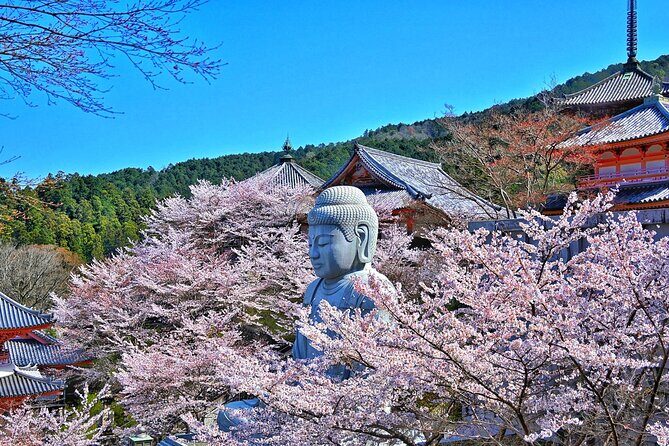
After the farm, the tour turns quietly impressive at Tsubosaka-dera Temple. This stop is designed around the Great Cherry Blossom Buddha, which is the kind of photo moment you don’t forget once you see it in person.
What makes this temple stop feel special is the extra visual layer: you’ll also spot giant stone Buddhas invited from India. It gives the place a broader feel than a standard temple stop, and it keeps you looking around instead of only photographing one focal point.
Time on site is about 45 minutes, so it’s enough for a slow walk and a few photos, but it’s not so long that you’ll lose daylight. Expect the experience to feel atmospheric; even when weather is damp, the Buddha-and-blossom mood can turn into something almost storybook.
Mount Yoshino: Senbonzakura Viewpoints and the Reality of Timing
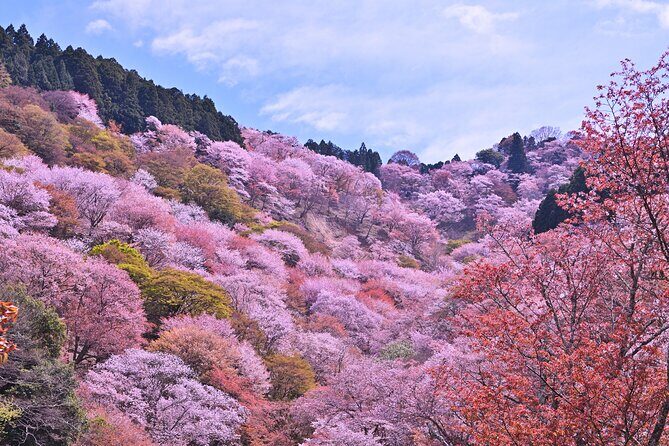
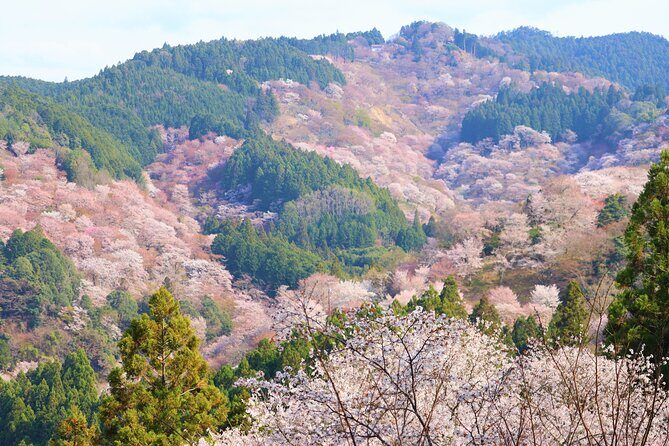
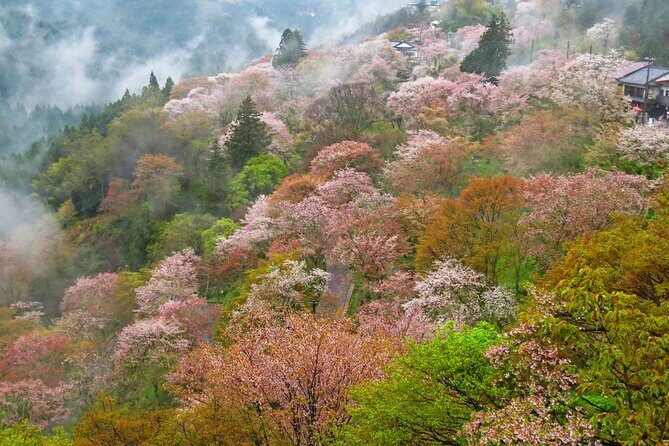
Mount Yoshino is the whole reason to do this trip. You’re getting about 2 hours for cherry blossom viewing at a major Yoshino area, known for Senbonzakura, or thousand cherry blossoms blooming across the mountain.
Here’s the key practical point: Yoshino viewing is great, but it’s weather-dependent. The tour notes that cherry blossoms may not be seen due to conditions, and that’s the one risk you should take seriously when planning your spring trip.
Still, even when blossoms are late or light, the mountain setting and temple-adjacent viewpoint energy can make it feel worthwhile. The best strategy for you is to manage expectations and treat the time like a sightseeing block where you’ll move between viewpoints and enjoy what’s there.
Also note: some days get rain, mist, or drizzle. The upside is that this kind of spring weather can add an extra aura around the Buddha and blossoms, making the scenery feel more dramatic than clear sunshine.
Roadside Station Katsuragi: A Quick Local Break
Between the big sights, you get a short but useful stop at Roadside Station Katsuragi. The goal here is simple: shop for local products and souvenirs and try a few local sweets.
This is only about 20 minutes, so it’s not a wandering market day. Think of it as a chance to grab snack food for later in the trip, buy a small gift, and get your legs moving after more seated time on the bus.
If you like trying regional treats, this stop gives you that without turning the schedule into a free-for-all.
Bento Lunch Details: Kakinohazushi and What You Can’t Change
Lunch is handled with a boxed picnic bento, and the tour is specific about what’s in it. You’ll get four pieces of Kakinohazushi (a Nara local sushi wrapped in persimmon leaves), fried food, a Japanese-style rolled omelet, a seasonal side dish, and a pack of green tea.
One important reality check: the tour says bento ingredients cannot be changed. If you have allergies or dietary restrictions, the plan indicates you should choose a No Lunch plan and prepare your own.
So how should you plan your day? If you have no dietary constraints, lunch is a nice built-in convenience that keeps you from hunting down food during peak blossom crowds. If you do have constraints, treat this as a “know before you book” item and confirm which meal option you’re selecting.
Price and Value: Is $114.02 a Good Deal?
At $114.02 per person, this tour needs to earn its keep—and it mostly does if cherry blossoms and Yoshino are high on your priority list.
Here’s what you’re getting for your money:
- Air-conditioned round-trip bus from Osaka
- An English speaking guide
- Tsubosaka-dera admission tied to the Cherry Blossom Buddha
- Strawberry picking experience
- Lunch (noting that you may need the No Lunch option if you have dietary restrictions)
So you’re paying for transportation and a guided route across multiple sites, not just paying entrance fees. For a day this long, that matters. Without a coordinated bus plan, getting from Osaka to Yoshino plus farm time and the temple stop would take more work—and more chances to miss timing.
One value note: the tour is not private, and it has a cap of 40 travelers. That usually keeps costs down, but it can also mean you’ll share the pace with a mixed group.
English, Group Size, and How to Set Yourself Up to Enjoy It
The tour includes an English speaking guide, which is a great start. At the same time, one review-type issue shows up here: the guide may use limited English, and you might find the group is often majority Japanese.
What you can do to make this smoother:
- Learn a few simple phrases for ordering and asking where to stand or walk next.
- Go with a flexible mindset. A guide who is doing their best still can make the day feel easy.
If you want deep conversation, this isn’t the best match. If you want a guided day that gets you to the right places on time with commentary, it works well.
Who Should Book This Tour (and Who Might Want a Different Plan)
This tour is a strong fit if:
- you want Mount Yoshino without building the transport plan yourself
- you like pairing a big sightseeing anchor with a fun food experience
- you want a day that feels organized, not chaotic
You might want a different plan if:
- you’re traveling during a period when blossoms are uncertain and you need a guaranteed “peak bloom” experience
- you have dietary needs that make the set bento format tricky (since ingredients can’t be changed)
- you hate group pacing or prefer private, slower sightseeing
It also helps if you pack for spring variability. The day can feel magical even in mist, but you should dress for it.
Should You Book the Cherry Blossom Buddha and Mt. Yoshino Strawberry Tour?
If you’re going to Osaka in spring and you want both a famous blossom mountain and a temple moment centered on the Cherry Blossom Buddha, this tour is a very logical choice. The strawberry picking stop adds a fun, memorable break that keeps the day from turning into only photos and walking.
I’d book it if Yoshino is on your list and you’re okay with spring being unpredictable. The tour’s biggest bet is that conditions line up, and the schedule is firm—so show up early, travel light, and keep your plans flexible around the blossoms.
FAQ
What time does the tour start?
The tour starts at 8:30 am, and you’re asked to arrive about 15 minutes early.
Where do I meet the tour?
You meet at the Mainichi Newspaper building, 3-chōme-4-5 Umeda, Kita Ward, Osaka, 530-0001, Japan.
How long is the tour?
The duration is about 9 hours 30 minutes.
Is there air-conditioned transportation?
Yes. The tour includes an air-conditioned bus for round-trip travel.
Is strawberry picking included?
Yes. Strawberry picking in Asuka-mura is included, with an all-you-can-eat-style option for about 30 minutes.
Which sights are included with admissions?
Tsubosaka-dera Temple has an admission fee that is included, tied to the Great Cherry Blossom Buddha.
Is lunch included, and can I change it for dietary needs?
Lunch is listed as included in the plan, but the tour says bento ingredients cannot be changed. If you have allergies or dietary restrictions, you should choose the No Lunch plan and prepare your own.
How many people are on the tour?
It’s not private, with a maximum of 40 travelers.
Can I expect to see cherry blossoms for sure?
No. The tour notes cherry blossoms may not be seen due to weather conditions, and the schedule can also be affected by traffic or other factors.