REVIEW · OSAKA
Osaka: Shinsekai Food Tour – 13 Dishes at 5 Local Eateries
Book on Viator →Operated by Travel Osaka · Bookable on Viator
Neon food and old-school Osaka in three hours. This Shinsekai food tour turns an easy neighborhood walk into a meal plan, with guides like Mike and Victor explaining what you’re eating as you go.
I especially like the combo of 13 dishes across five local eateries and the street-level details you get along the way. One possible drawback: they can’t accommodate gluten-free or vegan diets, and on rare occasions guide quality has been inconsistent.
I also like how the route starts with a quiet reset at the Shinsekai Inari Shrine before you hit the neon. The pacing keeps you moving through arcades and alleyways like a local night out, not a lecture.
And since the group caps at 10, you’re less likely to feel lost in a crowd, which makes it easier to ask questions.
Finally, the tour ends near Tsutenkaku, so you can keep exploring without hauling yourself back across town. Just plan for a weather-friendly evening, since the experience depends on good conditions.
In This Review
- Key things to know before you go
- Why Shinsekai feels like Osaka’s backstage pass
- Price and value: what $79.07 gets you
- Meeting point and timing: a 5:00 pm start near Ebisuhigashi
- Stop 1: Shinsekai Inari Shrine for a calm reset
- Stop 2: Shinsekai streets and the Tsutenkaku vibe (60 minutes)
- Stop 3: Jyanjyan Yokocho, a covered snack street built for quick bites
- Stop 4: Tsutenkaku stop for photos and final context
- How the 13 dishes work in real life
- The real secret sauce: guide communication and night-of confidence
- Dietary limits and what to expect if you need special food
- Comfort, walking, and weather reality for a 3-hour night
- Who should book this Shinsekai food tour
- Should you book this Osaka Shinsekai food tour?
- FAQ
- How many dishes and drinks are included?
- How long is the Osaka Shinsekai Food Tour?
- What time does the tour start?
- Where do I meet the tour guide?
- Where does the tour end?
- Is there a limit on group size?
- Can the tour accommodate gluten-free or vegan diets?
- What’s the cancellation and weather policy?
Key things to know before you go
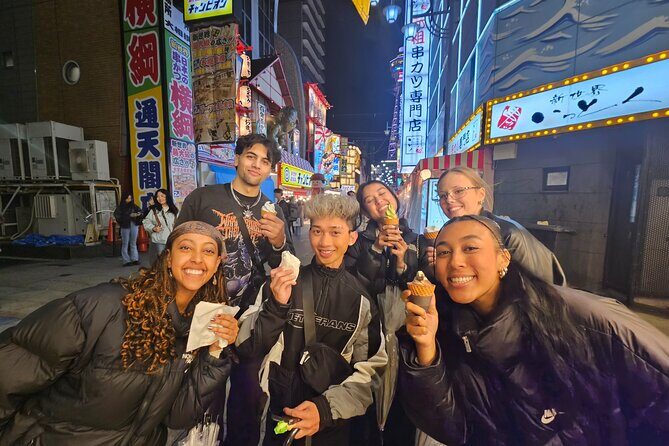
- 13 dishes at 5 local eateries means you won’t waste time wondering what to order
- Small group (max 10) makes it easier to hear explanations and move at a human pace
- Shinsekai Inari Shrine + Tsutenkaku gives you both quiet Shinto context and loud retro Osaka
- Jyanjyan Yokocho (covered 180-meter street) is built for snacks, standing bars, and game-shop energy
- English-speaking guides in many departures help you connect food to culture fast
- Diet limits: no gluten-free or vegan accommodations
Why Shinsekai feels like Osaka’s backstage pass
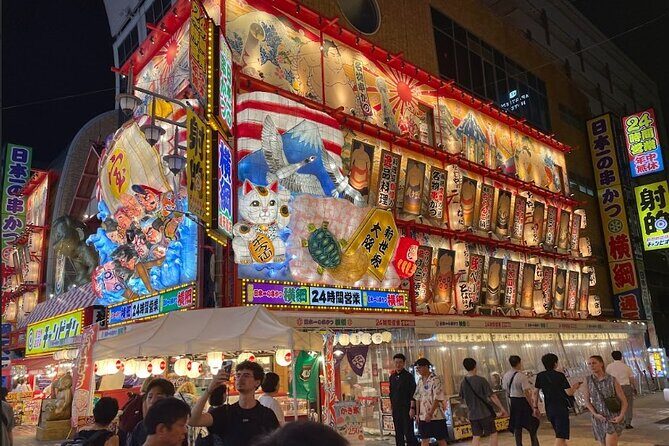
Shinsekai is the part of Osaka that feels less engineered for photos and more for real night life. You’ll be surrounded by neon signs, retro arcades, and the kind of street energy that makes you look up and then look down—because there’s food at both levels.
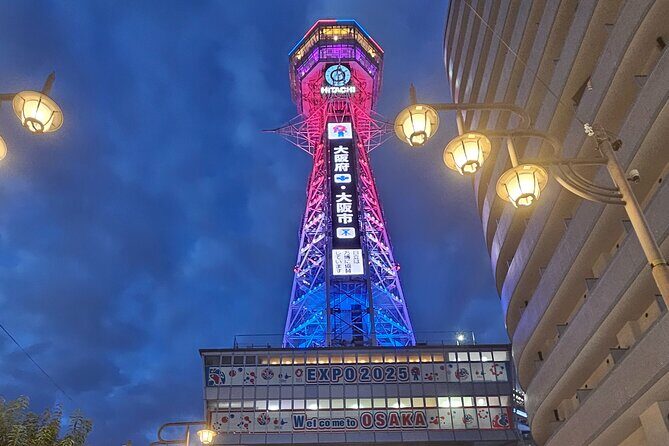
The standout landmark here is Tsutenkaku Tower. It’s the kind of structure you recognize instantly once you see it, and it works like a visual anchor for the neighborhood. Even if you’ve only got a short time in Osaka, this area gives you that classic “Japan’s Kitchen” vibe: people eating, chatting, and moving between small spots without making it complicated.
This tour is built around that atmosphere. It doesn’t try to be a museum. It’s a guided food walk through the older, everyday side of Osaka—exactly the kind of place many first-timers skip because it’s not on every postcard list.
You can also read our reviews of more food & drink experiences in Osaka

Price and value: what $79.07 gets you
$79.07 sounds like a chunk of yen, but you’re not paying for a single meal. You’re paying for a structured night that strings together 13 dishes across five eateries, plus two drinks, over about three hours.
Here’s why that value can add up quickly:
- You get less decision stress. If you’ve ever stared at a Japanese menu and felt your brain freeze, this solves that.
- You sample variety. Instead of one restaurant and a big bill, you get many smaller bites that let you compare textures, flavors, and cooking styles.
- You get explanations. Guides like Mike, Victor, Bel, Camilla, Jess, and Mycal have been singled out for clear communication and food-and-culture context. That’s part of what you’re paying for, not just the food.
The trade-off is simple: you’re choosing a fixed route and a fixed menu style. If you’re hoping for ultra-custom ordering or special diet options, the price can start to feel less fair—because they can’t cater to gluten-free or vegan diets.
Meeting point and timing: a 5:00 pm start near Ebisuhigashi
The tour starts at 5:00 pm. Your meeting point is Daily YamazakiJapan, 556-0002 Osaka, Naniwa Ward, Ebisuhigashi, 3-chōme 78 トリトンビル. The tour ends near Tsutenkaku1-chōme-18-6 Ebisuhigashi.
Because the meeting address is a specific building spot (and not just a broad landmark), I’d strongly recommend arriving a bit early. Not because you’ll be late—because it’s Osaka, and signage and entrances can be more specific than you expect.
You’ll also use a mobile ticket, and the meeting point is near public transportation. That matters if you’re bouncing from a daytime itinerary, since you don’t want your best food hour to get swallowed by train transfers.
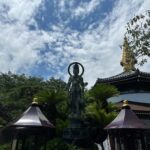
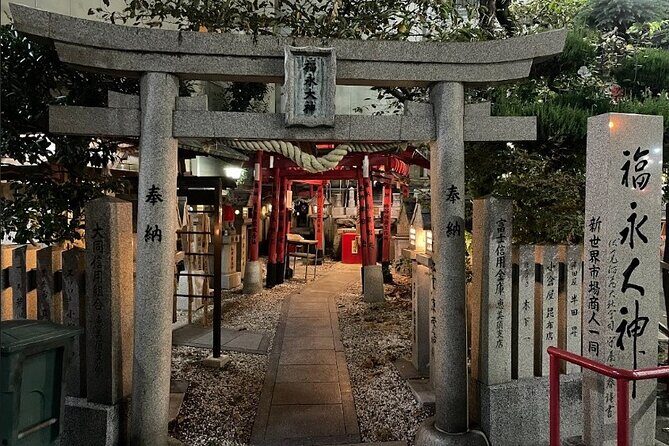
Stop 1: Shinsekai Inari Shrine for a calm reset
You start at Shinsekai Inari Shrine for about 15 minutes, with admission free.
This is a smart first stop. Before you hit the neon, you get a short moment of quiet and symbolism. Inari shrines connect to fortune themes, and guides have been known to explain Shinto basics—so you’re not just standing there for 15 minutes wondering what you’re looking at.
I like this because it helps you read the neighborhood. Shinsekai isn’t only food and games. It’s also a place where religious sites and daily routines sit close together. That context makes the night feel more grounded, not just loud.
Stop 2: Shinsekai streets and the Tsutenkaku vibe (60 minutes)
Next you’ll spend about one hour walking through Shinsekai itself. This is where the tour turns into a true neighborhood stroll: neon signs, retro arcades, and street life around Tsutenkaku Tower.
If you’ve never been in Shinsekai at night, the big thing is how easy it is to lose track of time. One alley leads to another, and arcades pull you in with the smell of fried snacks and the sound of games. The guide keeps you from wandering in circles while still letting you feel the place.
Tsutenkaku is more than a landmark here. It’s part of the rhythm of the district—like the neighborhood’s “center beat.” Expect to see it referenced and used as a navigational marker as you move.
A few more Osaka tours and experiences worth a look


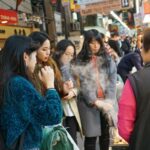
Stop 3: Jyanjyan Yokocho, a covered snack street built for quick bites
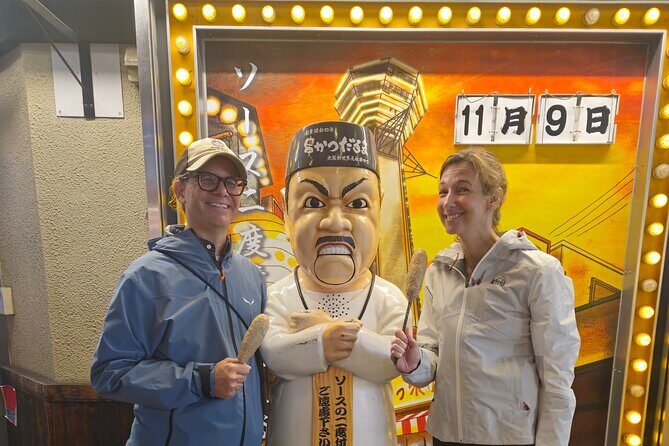
After that, you shift to Jyanjyan Yokocho (also known as the Nanyodori shopping district). You’ll have about one hour here, walking a covered 180-meter street packed with small eateries and street-style stalls.
This stop is about sensory detail. You’ll see tiny spots, standing bars, and game-shop energy all stacked together under one roof. It’s the kind of street where you can taste the neighborhood without needing to commit to a long sit-down meal.
One practical reason I like this layout: if weather shifts, you’re still under shelter for much of the walking. And if you’re the type who gets impatient reading menus, this street’s style matches the tour’s approach—quick, bite-sized sampling.
Stop 4: Tsutenkaku stop for photos and final context
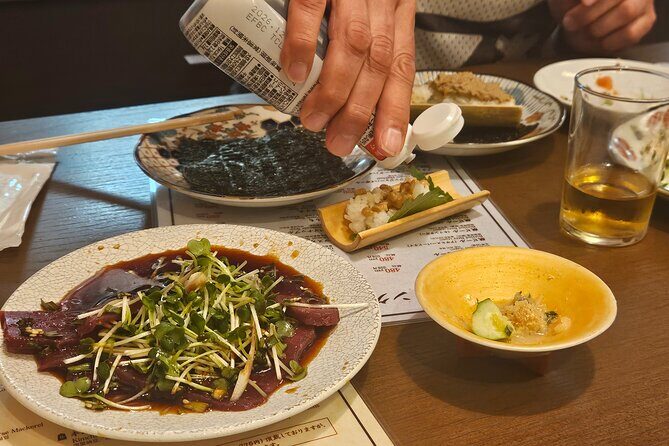
You’ll wrap with another 15-minute visit around Tsutenkaku. Admission is free.
This is the moment to check off the iconic Osaka photo and then soak up the “retro Osaka” feeling one last time. Guides typically use this final stop to tie the night together—how the neighborhood works, why it keeps its old identity, and how all those food stops fit into the bigger Shinsekai story.
It also helps logistically. Since the tour ends near Tsutenkaku, you can keep going right away—either with more snacks or just wandering for the fun of it.
How the 13 dishes work in real life
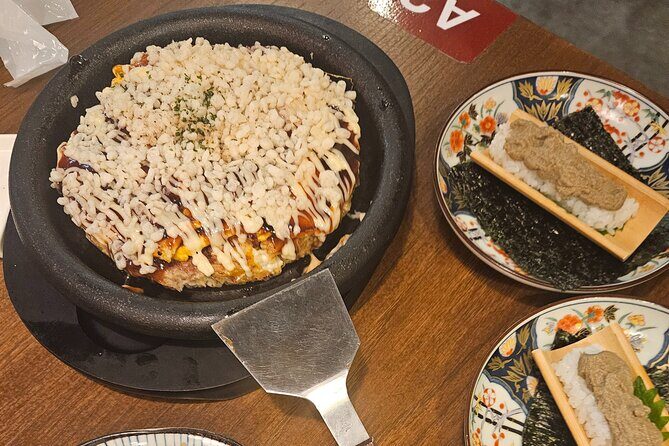
The tour promises 13 dishes across five local eateries and includes two drinks. What that means on the ground is steady pacing: you’re eating often enough to stay excited, but not so fast that you feel sick.
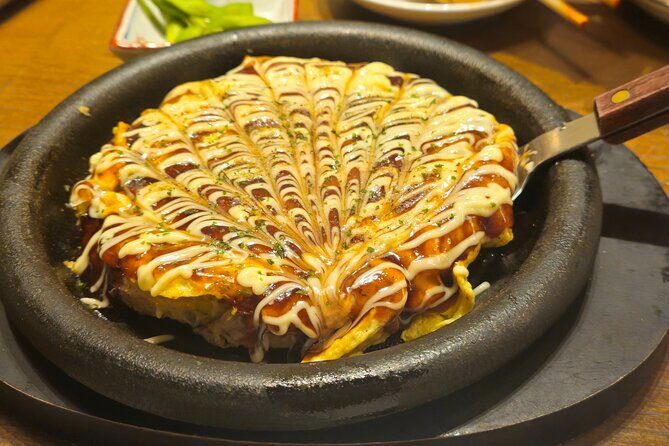
You can also expect a mix of street-food styles. While the exact dish list isn’t provided here, past participants have highlighted a standout fried chicken bite as one of their favorite items in Japan. That’s a helpful clue that the tour leans into classic comfort foods—especially the kind that make sense in a neighborhood like Shinsekai.
Still, keep expectations realistic. You’re doing a walking food tour, so portions tend to be “try it, enjoy it” sized rather than “main course and takeout leftovers” sized. If you’re a big eater who needs a full plate meal, you’ll probably want a light dinner later—because the point here is sampling and variety.
The real secret sauce: guide communication and night-of confidence
This is where the tour separates itself from generic food walks. Multiple guides have been praised for being friendly and for communicating well, with examples including Mike and Victor, Bel and Camilla, and Jess and Mycal.
In particular, I like that the best guides here don’t just point at food. They explain what you’re eating and add short cultural context—like Shinto religion at the shrine, or how the neighborhood’s food scene fits the area. When you understand even a little, it makes the dishes more memorable.
That said, you should know there have been negative reports too: one serious complaint described a no-show with no communication, and another criticized guides for not being well trained in Japan. Those are rare, but they’re enough that I’d treat this as a “good to confirm the day of” kind of tour, especially if you booked last-minute.
Practical tip: when you arrive at the meeting point, take a quick scan for your guide signage or group presence. If you don’t see anyone after a reasonable wait, follow up immediately using whatever contact method you were given at booking.
Dietary limits and what to expect if you need special food
This tour has a clear limitation: they cannot cater for gluten-free or vegan diets.
So if you avoid gluten or animal products strictly, you’ll likely be stuck with choices that don’t meet your needs. That’s not a small detail, because most street-food menus lean heavily on wheat-based sauces, breading, or animal ingredients.
If you have a mild preference (like you don’t love a certain texture), the guide may be able to guide you to better picks. But for hard restrictions, don’t assume you can negotiate your way out of it.
Comfort, walking, and weather reality for a 3-hour night
Expect around three hours of walking with stops. Shinsekai is close together, but it’s still feet-on-the-ground time, and you’ll be moving between a shrine, a main street area, a covered snack lane, and Tsutenkaku.
You’ll want comfortable shoes. Bring a phone with enough battery for photos and for your mobile ticket.
Also note: the experience requires good weather. If it’s canceled due to poor weather, you should expect an option for a different date or a full refund. That’s important in Osaka when rain can show up suddenly.
On the bright side, there’s been praise that the tour was easy to manage for someone with limited mobility. Still, since the route includes walking and narrow areas, you’ll want to judge your own comfort level honestly before booking.
Who should book this Shinsekai food tour
This is a great fit if you:
- Want a short, guided way to sample Shinsekai without guessing where to eat
- Like learning the story behind food and neighborhoods, not just collecting bites
- Prefer smaller-group experiences (max 10) over large, rushed tours
- Enjoy retro streets—arcades, neon, and that Tsutenkaku energy
It may be a poor fit if you:
- Need gluten-free or vegan accommodations
- Can’t handle ongoing walking during a 3-hour evening
- Have to travel on a super tight schedule with no flexibility for rescheduling due to weather
Should you book this Osaka Shinsekai food tour?
If you want Osaka at street level, this booking makes sense. The combination of shrine context, retro neighborhood walking, and a long “try everything” sequence—13 dishes plus two drinks—is a practical way to get a real taste of Shinsekai in one evening.
I’d book it if you’re flexible, curious, and not dealing with strict dietary restrictions. I’d think twice if you need gluten-free or vegan options, or if you’re very risk-sensitive about guide reliability (because the rare no-show complaint is real enough to matter).
Bottom line: if you can do gluten and you’re ready for a guided night walk, this is a strong value play for first-timers and returners alike.
FAQ
How many dishes and drinks are included?
The tour includes 13 dishes across five local eateries, plus two drinks.
How long is the Osaka Shinsekai Food Tour?
The duration is about 3 hours.
What time does the tour start?
It starts at 5:00 pm.
Where do I meet the tour guide?
The meeting point is Daily YamazakiJapan, 556-0002 Osaka, Naniwa Ward, Ebisuhigashi, 3-chōme 78 トリトンビル.
Where does the tour end?
The tour ends near Tsutenkaku Tower at Tsutenkaku1-chōme-18-6 Ebisuhigashi, Naniwa Ward, Osaka.
Is there a limit on group size?
Yes. The tour has a maximum of 10 travelers.
Can the tour accommodate gluten-free or vegan diets?
No. The tour cannot cater for gluten-free or vegan diets.
What’s the cancellation and weather policy?
You can cancel for a full refund up to 24 hours before the experience start time. The experience requires good weather; if it’s canceled due to poor weather, you’ll be offered a different date or a full refund.