REVIEW · KANAZAWA
Full-Day Tour from Kanazawa: Samurai, Matcha, Gardens and Geisha
Book on Viator →Operated by Snow Monkey Resorts Tours (Machinovate Japan Ltd.) · Bookable on Viator
A full day, on foot, in old Kanazawa. This small-group tour links the samurai quarter, a matcha tea stop in a garden setting, and the geisha streets you’d otherwise miss—at a relaxed pace with time built in for wandering and photos. It’s guided, but it still feels like you’re exploring Kanazawa on your own feet.
I love how the day connects big-name sights to the smaller stories behind them. Two standouts for me were the included matcha tea and wagashi sweets at Gyokusen-an and the time at Kenrokuen, where your guide points out what to look for beyond the postcard view.
One drawback to plan for: this is a 10–12 km walking day, and the second half can feel long, especially in heat. If you’re a slower walker or traveling with knee issues, pack a little extra patience for breaks.
In This Review
- Key highlights at a glance
- Why this Kanazawa walk beats a bus day
- Ashigaru Museum and Nagamachi: seeing samurai life up close
- Oyama Shrine and the route toward Kanazawa Castle
- Matcha at Gyokusen-an: a tea break with garden focus
- Kanazawa Castle grounds and Kenrokuen Garden
- Higashi Chaya district: geisha-era streets without the museum vibe
- Ochaya Shima: stepping inside a preserved geisha house
- Kazuemachi Chayagai: a quieter tea district closer to the station
- Price and what you really get for $151.30
- Tips to handle a 10–12 km day without hating your shoes
- Should you book this Samurai, Matcha, Gardens and Geisha tour?
- FAQ
- FAQ
- How long is the full-day tour, and what time does it start?
- Where do I meet, and where does the tour end?
- What is the group size?
- What’s included in the price?
- Is lunch included?
- Which major sites do you visit during the day?
- Do I need good weather for the tour?
- Can I cancel for free?
Key highlights at a glance
- Small group (max 15) keeps the pacing personal and questions easy to answer.
- Samurai street life: you enter Ashigaru homes and walk the Nagamachi district lanes.
- Brick gate detail at Oyama Shrine adds a fun twist to the usual shrine look.
- Gyokusen-an matcha break comes with sweets and garden views, not just a quick stop.
- Geisha districts with real access: Higashi-chaya time plus an included visit to Ochaya Shima.
Why this Kanazawa walk beats a bus day
Kanazawa is walkable, but its best parts are spread out. That’s where this tour earns its keep. I like that you start early and move in a logical chain: samurai area → castle grounds → Kenrokuen → tea districts → back toward the station. You’re not bouncing around or crossing the city twice.
The group stays small—15 people max—so your English-speaking guide can explain the why behind each place without talking over everyone. In past days, guides like Mike, Garrett, Akari, and Lee have been called out for making the history clear and the mood fun, not lecture-y.
One practical note: you meet at Kanazawa Station and you’re back there when the day ends. That makes the whole thing feel “complete,” even if you choose your own lunch spot during the built-in break.
A few more Kanazawa tours and experiences worth a look

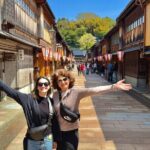
Ashigaru Museum and Nagamachi: seeing samurai life up close
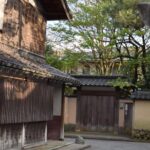
The day kicks off at the Ashigaru Museum. Ashigaru were lower-ranking samurai, and the museum helps you understand that samurai life wasn’t just the top-tier warrior legends you may picture from movies. You can step into two homes that belonged to Ashigaru families, which is the best kind of history: the kind you can walk around in and actually visualize.
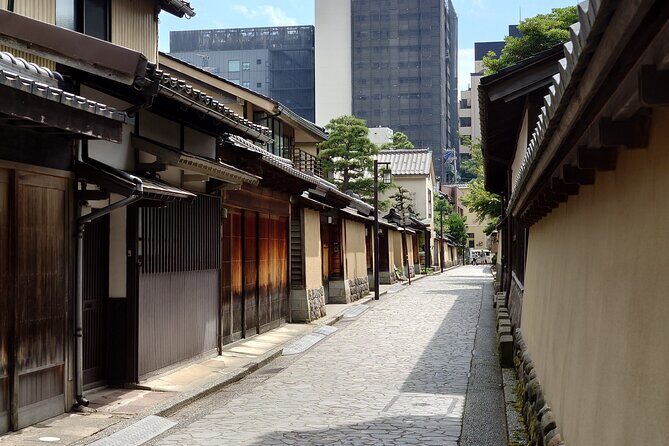
Next comes the Nagamachi Bukeyashiki ruins, the former samurai district. This is where the city’s layout does some of the storytelling for you. The streets keep their old character, and the spacing of the area makes it feel like a place meant for a specific way of living. You’re not only looking at buildings—you’re seeing a neighborhood pattern.
Tip for this section: slow down on the side streets. The big attractions are obvious, but the “how this district worked” clues tend to be in the quieter corners.
Oyama Shrine and the route toward Kanazawa Castle
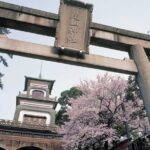
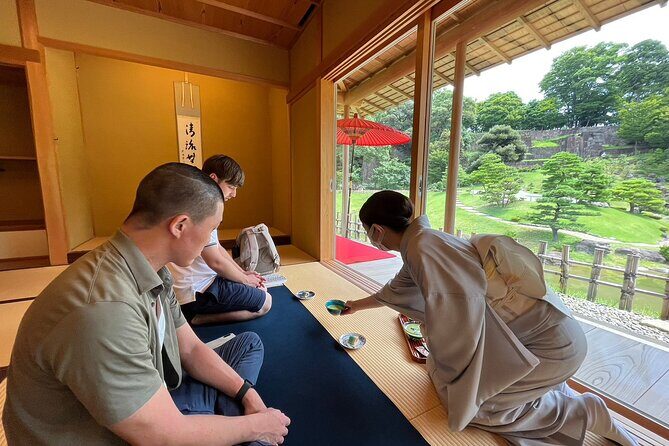
From the samurai lanes you head toward Kanazawa Castle, passing through the Oyama Shrine. One detail I really like here is the brick gate, which is unusual compared to what you might expect at many Japanese shrines. It’s a small thing, but it helps your brain stop treating shrines like identical landmarks.
This stretch also works as a mental reset. You’ve learned a lot about the samurai side of the story, and the castle route gives you the bridge between “old town life” and “power center.” Even if you’re not a castle person, the walk adds context for what comes next.
Photo note: the castle grounds areas offer chances for wide views and skyline shots, but the best light depends on the weather and season, so don’t wait for one perfect moment.
Matcha at Gyokusen-an: a tea break with garden focus
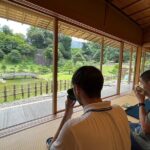
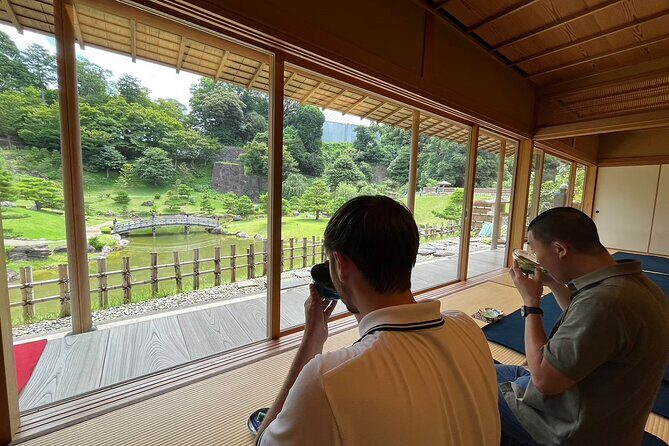
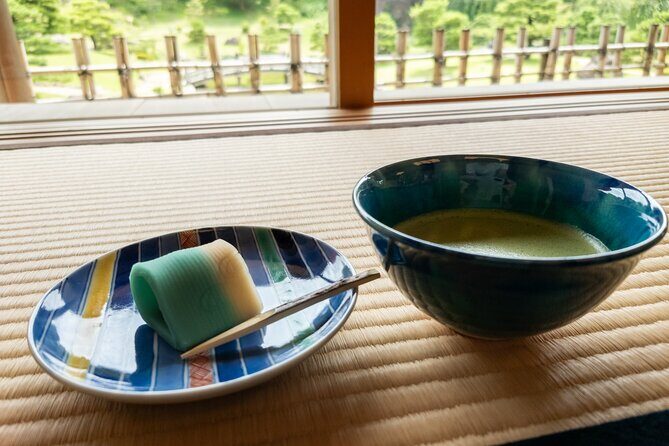
Then you get to the part most people are secretly waiting for: the included matcha experience at Gyokusen-an. This is not a rushed tasting kiosk. You get tea and wagashi sweets, and you’re doing it while enjoying views over a centuries-old garden.
Matcha tastes different when you’re sitting where the garden is part of the experience. Your guide’s explanations help, but even without a lecture, the setting changes how you pay attention—colors, arrangement, water features, and how the space feels from inside the tea house.
Practical tip: this is a good time to drink water too. Once you’ve had tea, you’ll still want hydration for the walk onward. Think of the matcha stop as both a treat and a stamina checkpoint.
Kanazawa Castle grounds and Kenrokuen Garden
Before you reach Kenrokuen, you pass through the Kanazawa Castle grounds. The time here is shorter, but that’s enough to get the scale of the restored buildings and feel the open lawn space around the castle. It’s the “architecture and power” chapter of the day.
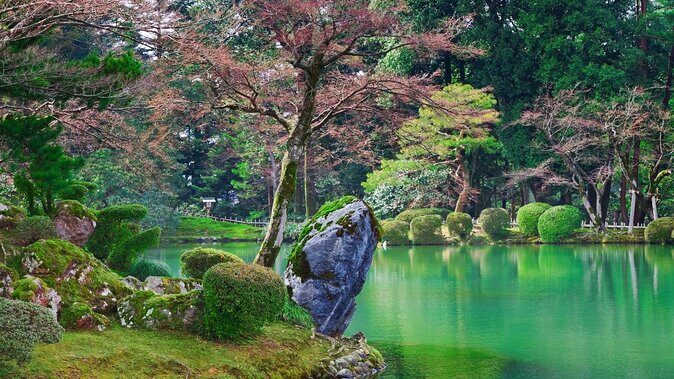
Then comes Kenrokuen Garden, and this is a big reason the tour feels worth the price. You’re getting included entry and around 1.5 hours to wander at a comfortable pace. Kenrokuen is the kind of garden where you can keep noticing new things even after you think you’ve seen everything: ponds, pathways, and the way teahouse structures and tree lines shape viewpoints.
A small but important detail: the tour doesn’t try to force you to rush through. You get guided context, and you also get time to simply look. If you’ve ever felt let down by “garden tours” that treat the garden like a background set, you’ll like this approach.
Seasonal note: if your visit overlaps cherry blossom timing, the garden can be extra special. Even on non-blossom days, the design is made for slow walking.



Higashi Chaya district: geisha-era streets without the museum vibe
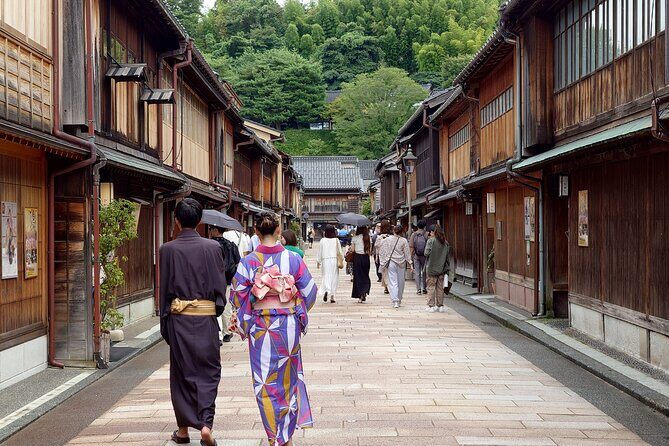
After the garden, you step into the Higashi Chaya district. This is where the day shifts from samurai to tea-house culture. The streets here are lined with traditional chaya (tea houses), and the area is known for its preserved atmosphere—shops, places to eat, and the kind of street scene that makes you look twice at signage and doorways.
This stop includes free time, which matters. You can browse craft items, look into storefront windows, and take your photos without a countdown hammering the schedule.
What you should watch for: the way the district feels lived-in even when you’re just observing. The rhythm of the street—where you pause, where you turn, how narrow the lanes feel—sells the experience better than any single building.
Ochaya Shima: stepping inside a preserved geisha house
The next stop is Ochaya Shima, an included visit to a preserved tea house once inhabited by geisha and frequented by wealthy patrons. This is the difference between “walking past tea houses” and actually getting inside one.
Inside, the colorful walls and musical instruments are part of what communicates the place’s former status. You get a real sense of how the rooms were designed for conversation, hosting, and performance culture. It’s also a rare moment of indoor air-conditioned (or at least sheltered) time during a long walking day.
If you’re wondering whether this will feel touristy: it doesn’t. The visit is short, but it’s specific, and your guide’s context helps you interpret what you’re looking at rather than just snapping photos and moving on.
Kazuemachi Chayagai: a quieter tea district closer to the station
After Higashi Chaya, you head toward the station area and pass by Kazuemachi Chayagai. It’s described as less crowded than Higashi Chaya, and it still connects to the idea of geisha entertaining customers—if you’re lucky.
Even if you’re not there at the exact moment of an outing, the district gives you a second look at the tea-house world without repeating the same street scene. It also adds variety to the end of the day, which helps after all that walking.
My advice here: use this as a gentle “wrap-up” moment. Don’t cram extra shopping right before you’re ready to head back. Just enjoy the streets and save your energy for your train or next dinner plan.
Price and what you really get for $151.30
At $151.30 per person for about 9 hours, this tour can be a good value—mainly because so much is included and because you’re saving time planning your route.
Here’s what’s covered:
- Matcha and wagashi sweets at a tea house
- Kenrokuen Garden entry
- Entrance to Shima Chaya (Ochaya Shima)
- An English-speaking guide
- A long enough day structure that includes a lunch break you choose yourself
What’s not included:
- Lunch (you pick your own restaurant during the break)
Value logic: if you were doing this on your own, you’d still need to arrange a smart walk order and buy garden and tea-house entry tickets. A guided day also helps you interpret things that would otherwise look like pretty streets and buildings with no story attached.
The sweet spot for this price is the combination of (1) paid cultural entries and (2) a guide who connects the samurai side to the tea-house side.
Tips to handle a 10–12 km day without hating your shoes
This tour is 100% walking, and you should plan around that. Based on how long it feels in real life, I’d treat it as roughly 10–12 km total.
To enjoy it:
- Wear shoes you’ve actually tested. No brand-new sneakers on a long travel day.
- Bring water and take it even if you don’t feel thirsty yet.
- Treat Gyokusen-an and Kenrokuen as stamina checkpoints, not just sightseeing.
- If it’s hot, move slower in the open stretches and let your guide know you need extra pacing.
Weather matters too. The experience requires good conditions, and if the weather is poor, you’ll be offered a different date or a refund. I’d still bring a light layer and a compact umbrella, because Kanazawa weather can change your comfort level fast.
Should you book this Samurai, Matcha, Gardens and Geisha tour?
Book it if you want a high-effort day that still feels organized: samurai homes, a garden tea pause, Kenrokuen time, and geisha district street scenes—done by walking, with a guide to connect the dots. It’s also a strong first full day option if you’re trying to get your bearings in Kanazawa quickly.
Consider skipping or pairing it with a lighter plan if you:
- hate long walks, or
- need lots of frequent rest breaks, or
- prefer to linger in one area for hours instead of touching multiple neighborhoods in a single day.
If you’re the kind of traveler who enjoys switching from history to gardens to street culture in one flowing day, this is a great match.
FAQ
FAQ
How long is the full-day tour, and what time does it start?
The tour runs about 9 hours and starts at 9:00 am.
Where do I meet, and where does the tour end?
You meet at Kanazawa Station. The tour ends back at the same meeting point.
What is the group size?
The tour has a maximum of 15 travelers.
What’s included in the price?
Matcha tea and wagashi sweets at a tea house, entry to Kenrokuen Garden, entry to the Shima Chaya preserved geisha house, and an English-speaking guide.
Is lunch included?
Lunch isn’t included. A lunch break is built into the day, and you choose your own restaurant based on the guide’s recommendations.
Which major sites do you visit during the day?
You visit the Ashigaru Museum, the Nagamachi Bukeyashiki area, Oyama Shrine, Gyokusen-an for matcha, Kanazawa Castle grounds, Kenrokuen Garden, Higashi Chaya district, Ochaya Shima, and you pass by Kazuemachi Chayagai on the way back.
Do I need good weather for the tour?
Yes. This experience requires good weather. If it’s canceled due to poor weather, you’ll be offered a different date or a full refund.
Can I cancel for free?
Yes. Free cancellation is available up to 24 hours in advance for a full refund.
If you tell me your travel dates and whether you’re comfortable with long walking days, I can help you decide if this schedule fits your pace.