REVIEW · TOKYO
Tsukiji: Outer Market Walking Tour & Sake Tasting Experience
Book on GetYourGuide →Operated by Sake Lovers Inc · Bookable on GetYourGuide
Sake and seafood in one afternoon. This Tsukiji Hongwanji Temple + Outer Market tour turns an ordinary walk into a hands-on lesson in Japanese food culture, then caps it with unlimited sake tastings guided by a sommelier. I love the start at the temple—learning how to pray like locals do—and I love that the sake experience is wide-ranging, with 50 to 60 different kinds on offer. One thing to consider: the market can get very crowded, and this tour isn’t suitable for wheelchair users or pregnant women.
I also like how the pacing feels realistic. You’re not shoved along; you can stop for bites, compare produce and snacks, and ask your guide for what to try next as you move through the market maze. Guides I’ve seen leading this experience include Kumi, Kyoko, Sarah, Yuki, Hatsumi, and Sally, and they all seem focused on helping you leave with a plan for both food and sake.
By the end, you’ll have a much clearer idea of what sake tastes like beyond the basic stuff. It’s a fun afternoon with real local texture—religious etiquette, market choices, then a tasting room where you can learn and sample at your own speed.
In This Review
- Key things you’ll notice on this Tsukiji tour
- Starting at Tsukiji Hongwanji Temple (and what that adds to your day)
- Tsukiji Outer Market walk: eat, compare, and buy with a local plan
- How the transition works: from market noise to a private sake salon
- Unlimited sake tastings: what you actually get to learn
- What to do during the tasting (so you don’t waste pours)
- Snacks, food pairings, and pacing so you can keep tasting
- Guides and how personal this feels (even with a group)
- Price and value: is $70 per person worth it?
- Timing, closures, and what to bring for a smooth afternoon
- Who should book this (and who might skip it)
- Should you book Tsukiji Outer Market + sake tasting?
- FAQ
- How long is the Tsukiji Outer Market walking tour and sake tasting?
- Where do I meet the guide?
- Is the tour held rain or shine?
- Is the sake tasting unlimited?
- How many sake types are available?
- Is food included in the price?
- What do kids get during the tasting?
- What should I bring with me?
- Is the Outer Market open every day?
Key things you’ll notice on this Tsukiji tour
- Temple prayer etiquette first: you learn how to pray before you walk into the market world
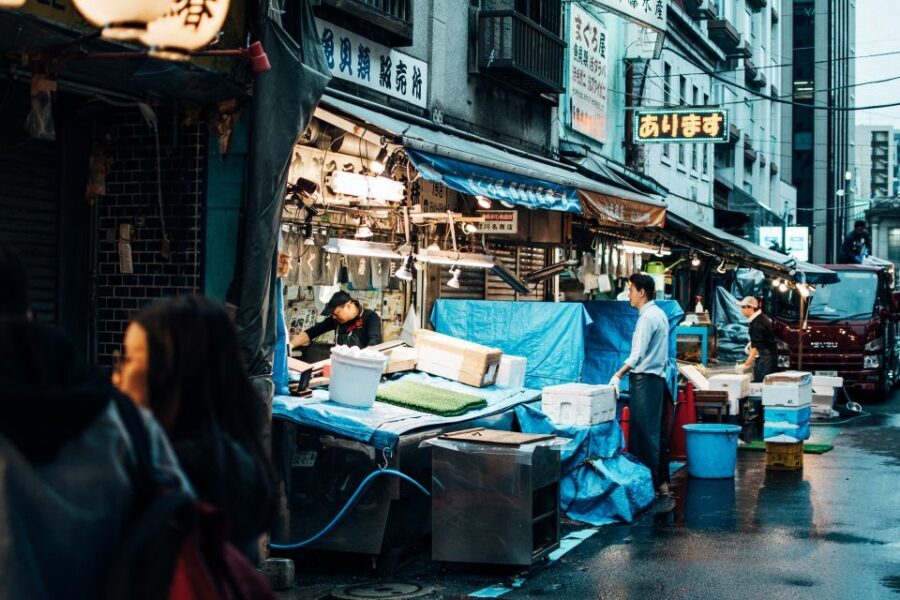
- A guided Outer Market route: you get pointed to stores and items you’d miss on your own
- Unlimited sake tastings: 50 to 60 different types are available, not a small flight
- Sommelier-led explanations: you get brewery and production story while you taste
- Different serving temperatures: you’ll sample sake in more than one temperature style
- Kid-friendly non-alcohol options: soft drinks, tea, and snacks are provided
Starting at Tsukiji Hongwanji Temple (and what that adds to your day)
Most Tsukiji tours jump straight to food. This one starts where food culture starts for a lot of people here: at Tsukiji Hongwanji Temple.
You meet your guide at the main entrance gate, then you go in and learn the basics of how to pray. The practical value is simple: once you understand the etiquette—what you do, when you do it—you stop treating the temple like a photo stop. You also get a calm, human counterpoint to what’s coming next: the loud, sensory intensity of the market.
If you’ve never participated in a Japanese prayer routine before, this step helps you avoid the awkward guess-and-step-in approach. If you’re already comfortable with temple visits, you’ll still appreciate that your guide frames the experience in plain, doable terms before you start walking.
You can also read our reviews of more walking tours in Tokyo

Tsukiji Outer Market walk: eat, compare, and buy with a local plan
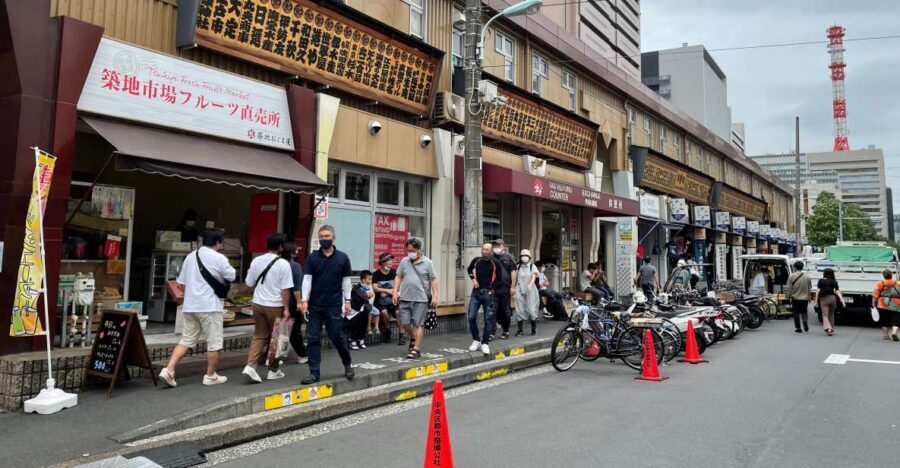
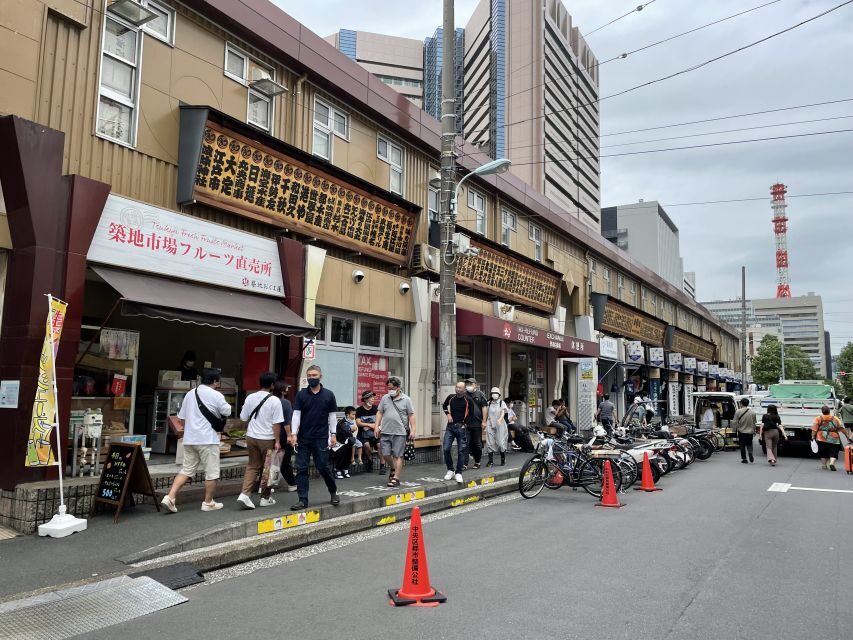
After the temple, you head straight into Tsukiji Outer Market with your food guide. The goal here isn’t just sightseeing. It’s decision-making: what to try, where to go, and how to navigate a market that can feel overwhelming even when you’re excited.
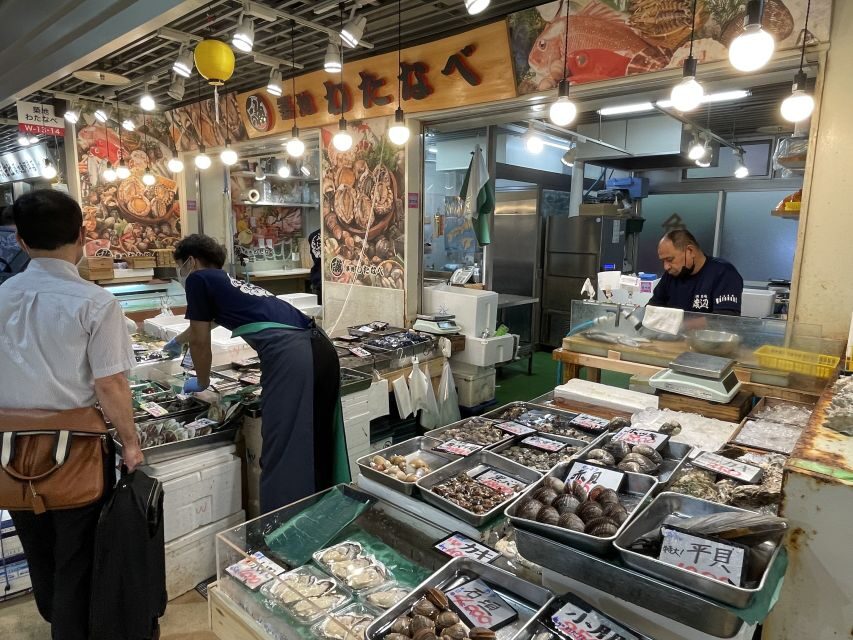
This is where your guide’s judgment matters. Your guide helps you discover interesting stores and local food and produce, then you choose what you want to buy to taste for yourself. A big part of the fun is that the market sells more than one type of bite. You’ll likely find everything from seafood-related snacks to sweet treats and other small options you can try as you go.
Two practical tips I’d follow in your shoes:
- Wear shoes that can handle uneven sidewalks and standing time. You’ll be on your feet for the walking portion.
- Bring curiosity more than hunger. You’ll get better results when you let the guide steer you to what’s good today, instead of only hunting for one specific item.
Crowds are real. You’ll feel the busy atmosphere, especially as the market heats up. The good news: the entire point of the guide is to help you keep moving without feeling lost.
How the transition works: from market noise to a private sake salon
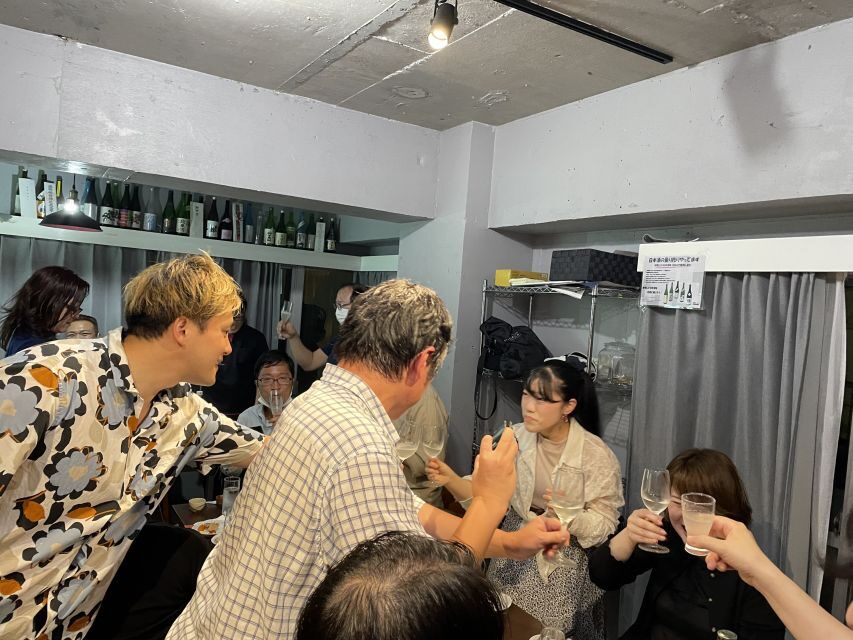
Once the market portion ends, you move on to a private sake salon for the tasting. The tour ends near the station area—only a few minutes from either Tsukiji Station or Shintomicho Station—so you’re not stuck in transit limbo afterward.
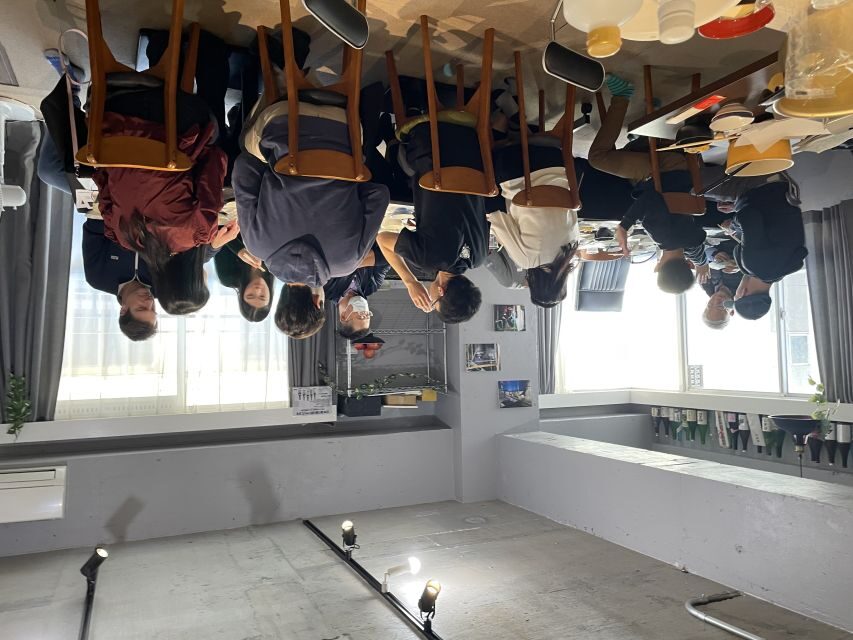
This shift is more than convenience. It changes the whole rhythm of the afternoon. The market asks for fast decisions, standing, and sensory overload. The tasting room asks you to slow down, notice flavors, and connect what you’re tasting to what you’re learning.
And yes, you’re tasting in a setting built for it. That matters for alcohol experiences, because sake gets more interesting when your brain isn’t distracted by crowds and logistics.
Unlimited sake tastings: what you actually get to learn
The headline here is unlimited sake tasting. You’ll sample different sakes from across Japan, with 50 to 60 different kinds on offer. That’s not just a lot of pours—it’s a lesson in range.
Your sake expert shares what each bottle is about before you taste, including brewery and history/story details. Then you try it, and you compare. Since not all sake tastes the same, you’re basically training your palate. You’ll start to recognize differences based on how it’s made and how it presents in the glass.
One of the most useful parts is the temperature element. You’ll try sake at different temperatures and taste how the flavor changes. This helps you understand why people argue about sake like it’s wine: temperature can shift aroma, texture, and how sweet or clean the finish feels.
If you like beer flights, this will feel familiar. If you usually treat sake as one category, this will break that habit fast.
What to do during the tasting (so you don’t waste pours)
Here’s how to get the most out of a tasting where you can keep sampling:
- Pick a few sips to evaluate aroma first, then taste for structure (dry vs. smooth, light vs. round).
- Pay attention to the finish. Many people focus only on sweetness, but the finish often tells you what type of sake you prefer.
- Don’t force yourself to like everything. The goal is to find your favorites, not to prove you can drink them all.
You can also read our reviews of more food & drink experiences in Tokyo


Snacks, food pairings, and pacing so you can keep tasting
Your tasting includes snacks available during the session. The point isn’t to overwhelm you with food; it’s to help the flavors of the different sakes stand up better. That’s especially handy because sake can taste very different depending on what’s on your palate.
Also, the tour itself is built around the market for food discovery. Food is not included, so you’ll want to treat the market portion like your lunch and snacks. Some people end up with a strong food-and-sake loop—market bites to keep you going, then snacks at the salon to stay comfortable while you keep tasting.
For kids, the tasting experience isn’t left to chance. You get soft drinks and tea plus snacks. That means the adults can taste and learn without turning the kids into bored bystanders.
Guides and how personal this feels (even with a group)
Even though this is a scheduled tour, the vibe doesn’t feel like a rigid march. Multiple guides leading this experience—like Kumi, Kyoko, Sarah, Yuki, Hatsumi, Kyoto, and Sally—show up in the record as approachable and flexible.
I like that, because food tours work best when you’re able to follow interest. If you want more savory bites, you should be able to lean that way. If you’re more interested in sweets or produce, your guide can steer the stops accordingly. Flexibility is also helpful if you’re traveling with kids, since everyone’s appetite tends to be less predictable than adults like to admit.
Price and value: is $70 per person worth it?
At $70 per person for about 3 hours, you’re paying for three things: guided market time, a temple start, and a serious sake tasting session.
Let’s be honest. A walk around a market alone would cost less. But this isn’t only a market stroll. The value is the tasting setup: unlimited tastings, guided by a sake specialist, with 50 to 60 types available, plus snacks and the temperature-style tasting element.
If you’re the type who likes learning while tasting—how sake is made, what each style means, and how flavor shifts—this price starts looking fair, because you’re basically buying a structured tasting education, not just a few samples.
The one cost caveat: food isn’t included. You’ll likely spend extra money buying market bites. If you go in with a plan for spending on food (small bites rather than one big meal), you can control total costs easily.
Timing, closures, and what to bring for a smooth afternoon
This tour runs rain or shine, so pack for weather. Also, Outer Market hours can matter a lot here.
A key heads-up:
- Sundays and National Holidays: Outer Market is closed.
- Wednesdays: some stores may be closed (so your guide may adjust what you can see and sample).
Plan around that, especially if you’re visiting on a weekend.
What to bring:
- Comfortable shoes
- Passport or ID card (a copy is accepted)
Where you’ll end up:
- The sake salon is only a few minutes from Tsukiji Station or Shintomicho Station, so it’s easy to continue your Tokyo day afterward.
One more consideration: it’s listed as not suitable for wheelchair users and not suitable for pregnant women. The main reason is the nature of temple and market walking—so check your comfort level before you book.
Who should book this (and who might skip it)
This tour makes a lot of sense if:
- You want a genuine Tsukiji experience that mixes religious etiquette + food culture + sake education
- You enjoy tasting and want variety, not a small sample flight
- You’re traveling with kids who can handle a few hours of walking, plus the non-alcohol options
I’d consider skipping if:
- You hate crowds and long standing time. The market can feel intense.
- You’re looking for a full meal deal with no extra spending. Food isn’t included, so you’ll likely add some purchases.
Should you book Tsukiji Outer Market + sake tasting?
If you’re choosing one Tsukiji food-and-sake activity, this is a strong pick—because it’s built around the two things that make Tsukiji worth the trip: market browsing and sake flavor education.
I’d book it if you want your afternoon to feel like a Tokyo story with real texture: starting at Hongwanji Temple, walking through the Outer Market with an expert guide, then finishing in a sake salon with unlimited tastings and snacks.
If your priority is only a quick look at Tsukiji with zero alcohol focus, you might prefer a simpler market-only walk. But if sake is on your radar—especially if you want to learn how styles differ—this one is hard to beat for the time you spend.
FAQ
How long is the Tsukiji Outer Market walking tour and sake tasting?
It runs for 3 hours.
Where do I meet the guide?
Meet the guide in front of the main entrance gate of Tsukiji Hongwanji Temple.
Is the tour held rain or shine?
Yes. It takes place rain or shine.
Is the sake tasting unlimited?
Yes. The tasting includes unlimited tastings.
How many sake types are available?
There are 50 to 60 different kinds available to sample.
Is food included in the price?
Food is not included. Snacks are included during the tasting session.
What do kids get during the tasting?
Soft drinks and tea are provided, along with snacks.
What should I bring with me?
Wear comfortable shoes, and bring a passport or ID card (a copy is accepted).
Is the Outer Market open every day?
No. It’s closed on Sundays and National Holidays. Some stores may also be closed on Wednesdays.